
Alaa Al Aswany
Author of The Yacoubian Building
About the Author
Alaa Al Aswany addresses himself to all the questions being asked within Egypt and beyond: who will be the next president, and how will he be chosen in a land where heretofore only simpletons, opportunists, and stooges involved themselves with elections? What role will the Muslim Brotherhood play? show more How can democratic reforms be effected among a people used to such contradictions as the religiously observant policeman who commits torture? In a candid and controversial assessment of both the potential and limitations that will determine his country's future, Al Aswany reveals why the revolt that surprised the world was destined to happen. show less
Works by Alaa Al Aswany
الذي اقترب ورأى 2 copies
Extrémisme religieux et dictature: Les deux faces d'un malheur historique (ESSAIS SCIENCES) (2014) 2 copies
As fi vrut sa fiu egiptean 1 copy
مصر على دكة الاحتياطي 1 copy
?????? 1 copy
Si heu ferit una serp 2016 1 copy
Yacoubians hus roman 1 copy
Associated Works
Tagged
Common Knowledge
- Legal name
- Aswānī, ʿAlāʾ al
- Birthdate
- 1957-05-26
- Gender
- male
- Education
- Cairo University
University of Illinois - Occupations
- dentist
writer - Organizations
- Egyptian Movement for Change (Kefaya)
- Awards and honors
- Chevalier des Arts et des Lettres (2016)
- Nationality
- Egypt
- Birthplace
- Cairo, Egypt
- Places of residence
- Cairo, Egypt
Chicago, Illinois, USA - Map Location
- Egypt
Members
Reviews

The Yacoubian Building sits on a once prestigious street in Cairo, a lovely European-style building with retail on the ground floor, apartments on the floors above and, on the roof, a labyrinth of small sheds, housing the people who work for the apartment owners and those lucky enough to get a space. Alaa al-Aswani follows a diverse group of residents as they negotiate their lives in a quickly changing Egypt. Everyone from an elderly and very wealthy man involved in a feud with his widowed show more sister, to an educated newspaper editor, forced to hide his homosexuality, to a young woman who has to work to support her family and so becomes the target of increasingly blatant sexual harassment, and a young man whose dreams are destroyed by the ordinary corruption of bureaucrats.
This is a vivid snapshot of what life was like in Cairo, at a time before the demonstrations in Tahrir Square, but when a religious extremism was on the rise, a reaction to the lack of opportunity for those without money or connections. al-Aswany also looks at the treatment of women and how they are expected to keep themselves removed from public life, as well as the stark disparity between the wealthy and those who are struggling to get by. The author treats all his characters, even the most reprehensible, with understanding and a clear-eyed compassion that made me feel invested in even the characters I actively disliked. show less
This is a vivid snapshot of what life was like in Cairo, at a time before the demonstrations in Tahrir Square, but when a religious extremism was on the rise, a reaction to the lack of opportunity for those without money or connections. al-Aswany also looks at the treatment of women and how they are expected to keep themselves removed from public life, as well as the stark disparity between the wealthy and those who are struggling to get by. The author treats all his characters, even the most reprehensible, with understanding and a clear-eyed compassion that made me feel invested in even the characters I actively disliked. show less
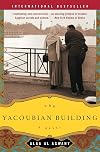
I found it interesting that a real Yacoubian Building exists, exactly where it’s located in the novel, though looking not much like its fictionalized version. The real-made-unreal building foreshadows and reflects the real-made-unreal inhabitants and the Cairo in which they live. The difference between the real and unreal Yacoubian Buildings is cosmetic and that suggests that the story itself, though not identical to Cairo is certainly stretched over the bones of the Cairo that exists in show more our world.
The story begins and ends with Zaki Bey el Dessouki. His father had been one of the richest men in the country before the revolution and it was expected that Zaki Bey would continue on his family’s path. After the revolution, much of his family’s money lost, his engineering career failed, he turned his engineering office in the Yacoubian Building into a more all-purpose “office,” which seems to serve as a place where he goes to drink, eat, meet friends, and conduct his many affairs with women. He’s a charming wastrel, the kind of man who offers advice to any who asks, and who lets no opportunity for seduction pass him by. On the surface he’s symbolic of pre-revolution Cairo and he embodies the decadence others see in that time.
Under the surface he is arguably one of the kindest characters in the novel, and the one who manages to come through nearly unscathed, despite the attempts of others to harm him in one way or another. He is the one who understands that people are not who they seem to be on the surface; as he tells his friend Christine, “You think that the good people should be smiling and jolly and the bad ones have ugly faces with thick, matted eyebrows. Life’s a lot more complicated than that.” (109) At the end of the novel, Zaki Bey, the consummate womanizer, the decadent symbol of a past most other characters would like to bury forever, marries Busayna el Sayed, one of the two clearest representatives of the new-Cairo.
Busayna, and her boyfriend at the beginning of the novel, Taha el Shazli, both live in the shacks on the roof of the Yacoubian Building. The shacks were originally built as storage spaces for each apartment in the building, then became rooms for the servants of tenants to live in (still belonging to the apartments), but now are homes and eventually shops. The rooftop shacks are part of the building by virtue of location but are separate in class and status. In this same way, Busayna and Taha are also separated from the tenants of the building because of their class and status.
We’re first introduced to Busayna through a man—her then-boyfriend Taha—and through most of the novel we see her through the distorted lens of the men with whom she interacts. Before the events in the novel we’re told that Busayna dreamed of a life married to Taha, living in a roomy apartment far away from the Yacoubian Building. After her father died Busayna, after achieving her college degree, had to work to help support her family, taking and leaving many jobs over a year’s time. “How can I look after myself when faced with a boss who opens his fly?” (42) she asked her mother, referring to the rampant sexual harassment she experienced. On the advice of her friend who reminded Busayna that her education was nearly meaningless in an economy as bad as theirs she decided to use her sexual power—the only power available to her in this society—to make her and her family’s lives easier.
It’s Busayna who tells us why she—and presumably the real people serving as the bones upon which this novel is hung—hate Egypt. “You don’t understand because you’re well-off” (138) she tells Zaki Bey, talking about the poverty, corruption, and despair she and others like her experience. He can’t quite understand her hatred because “in [his] day love for one’s country was like a religion” (200). He makes it seem good, as though it is right to love your country that way, but it is impossible to forget that he and Busayna live in two different Cairos, two different Egypts, he in one of masculinity, and wealth and privilege, she in one of femininity, and poverty and injustice.
Taha el Shazli inhabits the same world as Busayna and, like her, dreams of escaping it, though not by leaving Egypt entirely as Busayna wants and is eventually promised by Zaki Bey, but by leaving his class and becoming a governmental police officer. He can’t beat them so he wants to join them. It’s his class, specifically his father the doorman, that prevents him from achieving this dream. He’s angered and devastated by this, wondering why he tried so hard when there was no way he could ever qualify. Taha leaves the Yacoubian Building and goes to college, joining up with a group of other religious young men, a group who is later revealed to be a radical Islamist group.
Because of his involvement with this group Taha is arrested by the very police he had wanted to join. He is tortured by them, beaten and sexually abused, forced to respond to a woman’s name. Taha becomes feminized in this way, treated as less than human in ways Busayna might have understood, had he felt able to tell her. Like Busayna, Taha was shamed and angered by this use and abuse, but unlike her he saw it not as a power to be exploited and turned back around on his abusers but as a reason to kill and die. He joins a militant group, trains to commit terrorist acts/be a martyr, and under the guise of his devout belief in Islam his desire for revenge is always lurking.
At the end of the novel, it’s Taha’s death that seems filled with more joy than Busayna’s marriage. Taha is fully present in his death, hearing bells and melodies, feeling welcomed “into a new world” (243). Busayna, on the other hand, disappears into Zaki Bey’s gaze, becoming the “wondrous, pure, newborn creature” (246) he sees her as. We don’t know how she sees herself or if this is her happy ending because she is nothing more than window dressing in Zaki Bey’s fantasy wedding.
Ultimately there was no happiness for Busayna and Taha, those representatives of new, post-revolution Cairo. They didn’t achieve their original desire—that of being happily married to each other and going far away from the Yacoubian Building—nor did they achieve anything we (the readers) might call happiness. Zaki Bey, however, triumphed over all obstacles and ended the novel in a state of true happiness. If there is no happiness to be found in or for new-Cairo, then where and how can it be found? Zaki Bey has the answer:
“The reason the country’s gone downhill is the absence of democracy. If there were a real democratic system, Egypt would be a great power. Egypt’s curse is dictatorship and dictatorship inevitably leads to poverty, corruption, and failure in all fields.” (200) show less
The story begins and ends with Zaki Bey el Dessouki. His father had been one of the richest men in the country before the revolution and it was expected that Zaki Bey would continue on his family’s path. After the revolution, much of his family’s money lost, his engineering career failed, he turned his engineering office in the Yacoubian Building into a more all-purpose “office,” which seems to serve as a place where he goes to drink, eat, meet friends, and conduct his many affairs with women. He’s a charming wastrel, the kind of man who offers advice to any who asks, and who lets no opportunity for seduction pass him by. On the surface he’s symbolic of pre-revolution Cairo and he embodies the decadence others see in that time.
Under the surface he is arguably one of the kindest characters in the novel, and the one who manages to come through nearly unscathed, despite the attempts of others to harm him in one way or another. He is the one who understands that people are not who they seem to be on the surface; as he tells his friend Christine, “You think that the good people should be smiling and jolly and the bad ones have ugly faces with thick, matted eyebrows. Life’s a lot more complicated than that.” (109) At the end of the novel, Zaki Bey, the consummate womanizer, the decadent symbol of a past most other characters would like to bury forever, marries Busayna el Sayed, one of the two clearest representatives of the new-Cairo.
Busayna, and her boyfriend at the beginning of the novel, Taha el Shazli, both live in the shacks on the roof of the Yacoubian Building. The shacks were originally built as storage spaces for each apartment in the building, then became rooms for the servants of tenants to live in (still belonging to the apartments), but now are homes and eventually shops. The rooftop shacks are part of the building by virtue of location but are separate in class and status. In this same way, Busayna and Taha are also separated from the tenants of the building because of their class and status.
We’re first introduced to Busayna through a man—her then-boyfriend Taha—and through most of the novel we see her through the distorted lens of the men with whom she interacts. Before the events in the novel we’re told that Busayna dreamed of a life married to Taha, living in a roomy apartment far away from the Yacoubian Building. After her father died Busayna, after achieving her college degree, had to work to help support her family, taking and leaving many jobs over a year’s time. “How can I look after myself when faced with a boss who opens his fly?” (42) she asked her mother, referring to the rampant sexual harassment she experienced. On the advice of her friend who reminded Busayna that her education was nearly meaningless in an economy as bad as theirs she decided to use her sexual power—the only power available to her in this society—to make her and her family’s lives easier.
It’s Busayna who tells us why she—and presumably the real people serving as the bones upon which this novel is hung—hate Egypt. “You don’t understand because you’re well-off” (138) she tells Zaki Bey, talking about the poverty, corruption, and despair she and others like her experience. He can’t quite understand her hatred because “in [his] day love for one’s country was like a religion” (200). He makes it seem good, as though it is right to love your country that way, but it is impossible to forget that he and Busayna live in two different Cairos, two different Egypts, he in one of masculinity, and wealth and privilege, she in one of femininity, and poverty and injustice.
Taha el Shazli inhabits the same world as Busayna and, like her, dreams of escaping it, though not by leaving Egypt entirely as Busayna wants and is eventually promised by Zaki Bey, but by leaving his class and becoming a governmental police officer. He can’t beat them so he wants to join them. It’s his class, specifically his father the doorman, that prevents him from achieving this dream. He’s angered and devastated by this, wondering why he tried so hard when there was no way he could ever qualify. Taha leaves the Yacoubian Building and goes to college, joining up with a group of other religious young men, a group who is later revealed to be a radical Islamist group.
Because of his involvement with this group Taha is arrested by the very police he had wanted to join. He is tortured by them, beaten and sexually abused, forced to respond to a woman’s name. Taha becomes feminized in this way, treated as less than human in ways Busayna might have understood, had he felt able to tell her. Like Busayna, Taha was shamed and angered by this use and abuse, but unlike her he saw it not as a power to be exploited and turned back around on his abusers but as a reason to kill and die. He joins a militant group, trains to commit terrorist acts/be a martyr, and under the guise of his devout belief in Islam his desire for revenge is always lurking.
At the end of the novel, it’s Taha’s death that seems filled with more joy than Busayna’s marriage. Taha is fully present in his death, hearing bells and melodies, feeling welcomed “into a new world” (243). Busayna, on the other hand, disappears into Zaki Bey’s gaze, becoming the “wondrous, pure, newborn creature” (246) he sees her as. We don’t know how she sees herself or if this is her happy ending because she is nothing more than window dressing in Zaki Bey’s fantasy wedding.
Ultimately there was no happiness for Busayna and Taha, those representatives of new, post-revolution Cairo. They didn’t achieve their original desire—that of being happily married to each other and going far away from the Yacoubian Building—nor did they achieve anything we (the readers) might call happiness. Zaki Bey, however, triumphed over all obstacles and ended the novel in a state of true happiness. If there is no happiness to be found in or for new-Cairo, then where and how can it be found? Zaki Bey has the answer:
“The reason the country’s gone downhill is the absence of democracy. If there were a real democratic system, Egypt would be a great power. Egypt’s curse is dictatorship and dictatorship inevitably leads to poverty, corruption, and failure in all fields.” (200) show less
In the early 2010s, a series of revolutions broke out across North Africa, helped by the availability of Twitter and other social media. At the time, the West celebrated the possibility of democratic governments emerging in these third world countries. The Republic of False Truths is Alaa al-Aswany’s fictional account of the 2011 Egyptian revolution that toppled the long time reign of President Hosni Mubarak. It captures the ebullience of hope after the protestors’ success. The author show more follows this up to show how, headed by commanders in the Army and the Muslim far right, the powers-that-be were able to break the rebellion’s backbone to regain complete control of the country.
Using narratives of participants and authorities behind the scenes, al-Aswany provides a heartbreaking story of a failed revolution, highlighting how an embattled government used the press and television programming to vilify those taking part in the protests. Ultimately, this led to a backlash from the majority of the population, which allowed the Army and police to carry out a bloody crackdown. While the book is a fictional portrayal of the rebellion, the accounts of the “false lies” used by those in power spotlight what did actually take place in Egypt. Unfortunately, it is a blueprint that has been followed across the globe since the North African revolutions, showing how social media can be closed or used to prevent the possibility of democracies taking root across the globe.
The Republic of False Truths makes for an uncomfortable read. It not only shows how a repressive government can manipulate the truth to stay in power, but the Egyptian revolution has provided a model for numerous other repressive regimes since. It is a novel that documents how lies have sown division even in countries where a free press still persists. Al-Aswany’s account provides a warning shot fired across our own bow here in the United States. show less
Using narratives of participants and authorities behind the scenes, al-Aswany provides a heartbreaking story of a failed revolution, highlighting how an embattled government used the press and television programming to vilify those taking part in the protests. Ultimately, this led to a backlash from the majority of the population, which allowed the Army and police to carry out a bloody crackdown. While the book is a fictional portrayal of the rebellion, the accounts of the “false lies” used by those in power spotlight what did actually take place in Egypt. Unfortunately, it is a blueprint that has been followed across the globe since the North African revolutions, showing how social media can be closed or used to prevent the possibility of democracies taking root across the globe.
The Republic of False Truths makes for an uncomfortable read. It not only shows how a repressive government can manipulate the truth to stay in power, but the Egyptian revolution has provided a model for numerous other repressive regimes since. It is a novel that documents how lies have sown division even in countries where a free press still persists. Al-Aswany’s account provides a warning shot fired across our own bow here in the United States. show less
I could neither like nor care about any of the characters in this book. For me, that is a fatal flaw, preventing me from engaging with the story, and more importantly, preventing me from seeing any of the characters as representative of a given segment of Egyptian society. The author gave us all these people corrupted by power, or greed, or fanaticism, or lust--but he never showed us a worthy alternative. Everyone seemed to give in to "the way it is" without a struggle, and became victims of show more the toxic society almost willingly. It makes me wonder about the author's purpose in writing the novel (which, after all, must have been something of a risk for him). If he hasn't any hope of improvement, why write? And if he DOES have hope for the future, why don't we see any of it reflected in his work? If the author's intention was to convey that living in Egypt is a matter of survival, no matter what your social status, and that there is no real opportunity for fulfillment or happiness under current conditions, he succeeded, but not in a particularly artful way, in my opinion. Part of the reason I wanted to read this book was to get a "feel" for another culture. But when I was finished, I didn't even have the impression that the characters themselves had a feel for their culture. Perhaps that was part of the author's intent, and of course, a book shouldn't be judged by the reader's pre-conceived notions. I wish just one of the characters could have been admirable, or even likable despite his/her faults. As it was, I was happy to be quit of the lot of 'em.
(Review written in 2007.) show less
(Review written in 2007.) show less
Lists
egypt novels (1)
Awards


You May Also Like


Associated Authors
Statistics
- Works
- 29
- Also by
- 4
- Members
- 3,412
- Popularity
- #7,470
- Rating
- 3.6
- Reviews
- 144
- ISBNs
- 210
- Languages
- 24
- Favorited
- 2

