
Tahar Ben Jelloun
Author of The Sand Child
About the Author
Controversial winner of the prestigious French Prix Goncourt (1987), Tahar Ben Jelloun is a Moroccan writer who has not found much favor at home, despite his growing popularity abroad. According to some North African critics, Ben Jelloun intentionally sets out to please foreign readers. The critics show more contend that his writing reinforces European stereotypes by pandering to western tastes for quaint folklore and traditions, and exotic scenery. Moroccan critics have accused Ben Jelloun of creating artificial, fabricated stories that fail to convey a true picture of Morocco. They have also been offended by his criticism of Morocco, and the fact that he reveals sides of Moroccan life that are usually kept hidden. Ben Jelloun's story of a girl dressed as a boy, L'Enfant du Sable (The Sand Child) (1985), was scandalous in their eyes. After Ben Jelloun won the Prix Goncourt, a number of critics changed their minds and have begun to praise his work. (Bowker Author Biography) show less
Works by Tahar Ben Jelloun
Il razzismo spiegato a mia figlia. Con «1998-2018. Il razzismo è in buona salute». Nuova ediz. (2018) 10 copies
Strade 3 copies
زواج المتعة 2 copies
Le mille e una notte - volume primo 2 copies
El Niño de Arena / La noche sagrada 2 copies
Fiancee de l'eau, La (Play) 2 copies
Το πανδοχείο της αγάπης 1 copy
Il libro del buoi 1 copy
Moha Le Fou, Moga Le Sage 1 copy
حين تترنح ذاكرة أمي 1 copy
L'Islam expliqué en images 1 copy
Tanca'da Sessiz Bir Gün 1 copy
Grains de peau: Asilah, mémoire d'enfance — Author — 1 copy
Marocco, romanzo 1 copy
La Prière De L' Absant 1 copy
L' Ange Aveugle 1 copy
Yoksullar Hanı 1 copy
Die tiefste der Einsamkeiten: Das emotionale und sexuelle Elend der nordafrikanischen Immigranten 1 copy
La nuit sacrée 1 copy
L'Ange aveugle - Jour de silence à Tanger - La Réclusion solitaire, coffret de 3 volumes (1996) 1 copy
Islam svar p ̄dina frḡor 1 copy
صلاة الغائب 1 copy
ليلة الغلطة 1 copy
هلوسات على جدران الوحدة 1 copy
الرحيل 1 copy
العقاب 1 copy
حنين إلى نكهة الصبا 1 copy
Arzila: Estação de Espuma 1 copy
La Prière de l'absent ; {L'Enfant} de sable ; La Nuit sacrée ; Les Yeux baissés ; La Nuit de l'erreur (2010) 1 copy
Jelloun Tahar Ben 1 copy
Associated Works
La bibliothèque des écrivains: Le livre qui a changé leur vie (2021) — Contributor — 4 copies, 1 review
Tagged
Common Knowledge
- Canonical name
- Ben Jelloun, Tahar
- Birthdate
- 1944-12-01
- Gender
- male
- Occupations
- Writer
Sociologist - Awards and honors
- doctor honoris causa University of Gent, Belgium (2011)
Prix Goncourt (1987) - Nationality
- Morocco
- Birthplace
- Fes, Morocco
- Places of residence
- Fes, Morocco (birth)
Tangier, Morocco
Rabat, Morocco
El Hajeb disciplinary camp, Morocco
Ahermemou disciplinary camp, Morocco
Tetouan, Morocco (show all 8)
Casablanca, Morocco
Paris, France - Associated Place (for map)
- Morocco
Members
Reviews
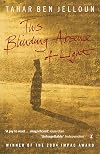
"Most of those who died did not die of hunger but of hatred. Feeling hatred diminishes you. It eats at you from within and attacks the immune system. When you have hatred inside you, it always crushes you in the end."
This book is based on the testimony of Aziz Binebine, a young officer cadet, who in 1971 took part in the coup to overthrow King Hassan II of Morocco at his 42nd birthday celebration at his Skhirat palace. The plot failed, the king survived but almost 100 guests died. Despite show more claiming, like most of the coup participants, to have had no prior knowledge of the plot or having fired no shots Aziz Binebine was sentenced to 20 years in the hellhole prison at Tazmamart with 57 other men.
At Tazmamart the cells were 10ft long and 5ft wide, with ceilings so low the prisoners were unable to stand upright and worse of all were underground so in constant darkness. Each tomb had an air vent, a tiny hole in the floor that served as the lavatory and were crawling with scorpions the men could hear but not see. There was no medical attention, no exercise, and no light. The only time they were allowed out was to bury one of their fellow in-mates.
It took thirteen years before the outside world learnt that Tazmamart existed and another five years before it was shut down by which time there were only 28 survivors.
Despite it's grim background this can by no means be seen as outwardly political neither is it autobiographical although it is told in the first person. Rather it speaks of man's ability to adapt and will to survive. Rather coincidentally I re-watched the movie "Lucy" last night. In that film Morgan Freeman's character talks of human brains desire to propagate if conditions are favourable or to seek immortality if they are not.
To survive and to stay sane, each in-mate takes on a certain role. One becomes a talking clock, another recites passages from the Qur'an, whilst another invents a card game with imaginary cards. The narrator,Salim, becomes the groups storyteller, recounting stories from books that he's read or films that he's seen. He is not religious when he arrives in Tazmamart but to escape the torments of his body he must take on a certain religious mysticism, lose all memories of hate in his past,and seek out the hidden depths of his mind. Horrible deaths alternate with inspired collective efforts to stay alive.
Through Salim the reader realises that ideas can never be imprisoned, they are free to travel everywhere and anywhere, that the human spirit can adapt to almost any circumstances, that it is hatred not love that holds us back. Despite the grim background I found this an up-lifting tale, a shaft of light in a world of darkness, I really enjoyed the author's writing style and as such I would highly recommend it. show less
This book is based on the testimony of Aziz Binebine, a young officer cadet, who in 1971 took part in the coup to overthrow King Hassan II of Morocco at his 42nd birthday celebration at his Skhirat palace. The plot failed, the king survived but almost 100 guests died. Despite show more claiming, like most of the coup participants, to have had no prior knowledge of the plot or having fired no shots Aziz Binebine was sentenced to 20 years in the hellhole prison at Tazmamart with 57 other men.
At Tazmamart the cells were 10ft long and 5ft wide, with ceilings so low the prisoners were unable to stand upright and worse of all were underground so in constant darkness. Each tomb had an air vent, a tiny hole in the floor that served as the lavatory and were crawling with scorpions the men could hear but not see. There was no medical attention, no exercise, and no light. The only time they were allowed out was to bury one of their fellow in-mates.
It took thirteen years before the outside world learnt that Tazmamart existed and another five years before it was shut down by which time there were only 28 survivors.
Despite it's grim background this can by no means be seen as outwardly political neither is it autobiographical although it is told in the first person. Rather it speaks of man's ability to adapt and will to survive. Rather coincidentally I re-watched the movie "Lucy" last night. In that film Morgan Freeman's character talks of human brains desire to propagate if conditions are favourable or to seek immortality if they are not.
To survive and to stay sane, each in-mate takes on a certain role. One becomes a talking clock, another recites passages from the Qur'an, whilst another invents a card game with imaginary cards. The narrator,Salim, becomes the groups storyteller, recounting stories from books that he's read or films that he's seen. He is not religious when he arrives in Tazmamart but to escape the torments of his body he must take on a certain religious mysticism, lose all memories of hate in his past,and seek out the hidden depths of his mind. Horrible deaths alternate with inspired collective efforts to stay alive.
Through Salim the reader realises that ideas can never be imprisoned, they are free to travel everywhere and anywhere, that the human spirit can adapt to almost any circumstances, that it is hatred not love that holds us back. Despite the grim background I found this an up-lifting tale, a shaft of light in a world of darkness, I really enjoyed the author's writing style and as such I would highly recommend it. show less

The narrator, who has been brought up as a boy to secure an inheritance, as described in the earlier book L’enfant de sable, is released when her dying father makes a full confession to her during the 27th night of Ramadan (the Night of Power, Laylat al-Qadr). She cuts off all ties with her family and sets off to create a new life as a woman. Ben Jelloun makes a lot of play with religious and Arabian Nights imagery, as well as the symbolism of blindness and captivity.
This turns the book show more into a kind of Arab Orlando, with (sometimes brutally) realistic episodes intermingled with dreams and fables. There are scenes of rape and FGM, and although the author’s intention is clearly to make us look critically at relations between men and women in Moroccan society, by the standards of forty years later we would probably find that there is rather too much “male gaze” going on in the many sex scenes. Interesting, certainly for the time when it was written, but it perhaps hasn’t aged as well as it might have. show less
This turns the book show more into a kind of Arab Orlando, with (sometimes brutally) realistic episodes intermingled with dreams and fables. There are scenes of rape and FGM, and although the author’s intention is clearly to make us look critically at relations between men and women in Moroccan society, by the standards of forty years later we would probably find that there is rather too much “male gaze” going on in the many sex scenes. Interesting, certainly for the time when it was written, but it perhaps hasn’t aged as well as it might have. show less
Tar Ben Jelloun listened to the stories of one of the survivors of Tazmamart and then crafted those stories into a first person account of one man's experiences during his nineteen years of incarceration in the prison.
A year after a failed coup d'état, 58 men were transferred from their normal prison to a new facility built underground as "a dungeon designed to be in eternal darkness." There they were placed in 6' x 3' cells where they could not stand upright, with a 4" hole in the floor show more as a toilet and a tiny pipe to the surface (shielded against light passing down it) for air.
They were rarely tortured—instead, the intention was to let them die as slowly as could be contrived from the conditions in their cells...most of the original inmates obliged, as well as many political prisoners who were added later.
They had no protection against the bitter cold and damp. They were given one small meal a day of watery starch noodles. They were given no medical treatment regardless of what happened to them. Men died from tuberculosis, starvation, scorpion bites (the cells were infested), eating tainted food and infections. The guards even watched as one man was even eaten alive by insects once he developed gangrene. Efforts were made to prevent them from committing suicide as an escape. All in utter darkness. Those who survived were crippled physically as well as emotionally; several went insane.
Only after decades did a guard's leaked information lead to Amnesty International's intervention and the closing of the prison.
The resulting novel is disturbing and moving, a testament to inhumanity and endurance. If you have a tolerance for reading this, I strongly recommend this book. show less
A year after a failed coup d'état, 58 men were transferred from their normal prison to a new facility built underground as "a dungeon designed to be in eternal darkness." There they were placed in 6' x 3' cells where they could not stand upright, with a 4" hole in the floor show more as a toilet and a tiny pipe to the surface (shielded against light passing down it) for air.
They were rarely tortured—instead, the intention was to let them die as slowly as could be contrived from the conditions in their cells...most of the original inmates obliged, as well as many political prisoners who were added later.
They had no protection against the bitter cold and damp. They were given one small meal a day of watery starch noodles. They were given no medical treatment regardless of what happened to them. Men died from tuberculosis, starvation, scorpion bites (the cells were infested), eating tainted food and infections. The guards even watched as one man was even eaten alive by insects once he developed gangrene. Efforts were made to prevent them from committing suicide as an escape. All in utter darkness. Those who survived were crippled physically as well as emotionally; several went insane.
Only after decades did a guard's leaked information lead to Amnesty International's intervention and the closing of the prison.
The resulting novel is disturbing and moving, a testament to inhumanity and endurance. If you have a tolerance for reading this, I strongly recommend this book. show less
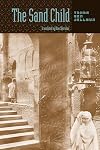
This is a haunting tale of a female child who is born the eighth daughter and raised as a boy on the instructions of her father who wanted a male heir. The novel was written in French and published in 1985. The uncertain ending aroused such interest in readers that Ben Jelloun continued the story in two more novels.
The story starts and ends with storytellers, men in a market sitting on a mat who claim to have the secret journal of our despondent young man, named Ahmed, later reclaiming his show more female identity as Zahra. Ahmed retreated to an attic as a young man and in addition to writing a journal he also corresponded with an anonymous observer, a man who followed his actions in the street.
The life Ahmed lives as a man in a woman's body would be sufficient to fill a novel like this, but the book really took off for me with the inclusion of the multiple narrators. The different endings of the life of our character, given by the different narrators and the diaries make this a book to read more than once. It is not as smooth as the other books I have read by this author but I was glad to reread it as soon as I finished it. show less
The story starts and ends with storytellers, men in a market sitting on a mat who claim to have the secret journal of our despondent young man, named Ahmed, later reclaiming his show more female identity as Zahra. Ahmed retreated to an attic as a young man and in addition to writing a journal he also corresponded with an anonymous observer, a man who followed his actions in the street.
The life Ahmed lives as a man in a woman's body would be sufficient to fill a novel like this, but the book really took off for me with the inclusion of the multiple narrators. The different endings of the life of our character, given by the different narrators and the diaries make this a book to read more than once. It is not as smooth as the other books I have read by this author but I was glad to reread it as soon as I finished it. show less
Lists
Awards


You May Also Like


Associated Authors
Statistics
- Works
- 139
- Also by
- 8
- Members
- 5,004
- Popularity
- #5,007
- Rating
- 3.6
- Reviews
- 127
- ISBNs
- 625
- Languages
- 23
- Favorited
- 8