
Assia Djebar (1936–2015)
Author of Fantasia: An Algerian Cavalcade
About the Author
Assia Djebar was born Fatima-Zohra Imalayan in Cherchell, Algeria on June 30, 1936. She read history at the Sorbonne in Paris, and, after teaching at Tunis and Rabat universities, emigrated to France with her husband and children. Her first novel, La Soif (The Mischief), was published in 1957. She show more wrote more than 15 novels during her lifetime including Algerian White, So Vast the Prison, The Tongue's Blood Does Not Run Dry, and The Children of the New World. She was also a playwright and filmmaker. In 2005, she became the fifth woman to be elected to the Académie Française. She received numerous awards for her work including the International Prize of Palmi, the Peace Prize of the Frankfurt Book Fair, the International Critics' Prize at the Venice Biennale for the film La Nouba des Femmes du Mont Chenoua, and the International Literary Neustadt Prize. She died on February 7, 2015 at the age of 78. (Bowker Author Biography) show less
Image credit: Michel-Georges Bernard
Series
Works by Assia Djebar
Associated Works
Tagged
Common Knowledge
- Legal name
- Imalayen, Fatima-Zohra
- Other names
- آسيا جبار
- Birthdate
- 1936-06-30
- Date of death
- 2015-02-06
- Gender
- female
- Education
- École Normale Supérieure (Sèvres)
Sorbonne University
Paul Valéry University, Montpellier III - Occupations
- university professor
novelist
filmmaker
playwright
poet
university professor (show all 7)
translator - Organizations
- New York University
- Awards and honors
- Neustadt International Prize for Literature (1996)
Friedenspreis des Deutschen Buchhandels (2000)
Commandeur des Arts et des Lettres
Académie française (2005) - Relationships
- Alloula, Malek (spouse)
- Short biography
- Assia Djebar was the pen name of Fatma-Zohra Imalhayène, born to a Berber family in Cherchell, Algeria. She was educated in Algeria and then at the elite École normale supérieure de jeunes filles in France. She earned a B.A. at the Sorbonne in Paris in 1956 and a Ph.D. at Paul Valéry University, Montpellier III in 1999. Her first novel, La Soif (The Mischief), was published in 1957, followed by Les Impatients (The Impatient Ones, 1958). She taught history at the University of Rabat and the University of Algiers, and also was a filmmaker, poet, and playwright. She was married and divorced twice, including to Walid Garn, with whom she collaborated on the 1969 play Rouge L’Aube (Red Dawn). Other works included Les Enfants du nouveau monde (Children of the New World, 1962), Les Alouettes naïves (The Naive Larks, 1967), Poèmes pour l’Algérie heureuse (Poems for a Happy Algeria, 1969), Femmes d’Alger dans leur appartement (Women of Algiers in Their Apartment, 1980), L’Amour, la fantasia (Fantasia: An Algerian Cavalcade, 1985), Ombre sultane (A Sister to Scheherazade, 1987), and Vaste est la prison (So Vast the Prison, 1994), as well as the semi-autobiographical Le Blanc de l’Algérie (Algerian White, 1995). She moved to the USA in 1995 and taught French literature at Louisiana State University and at New York University. In 2005, she was elected to the Académie française, the fifth woman and the first writer from North Africa to be elected.
- Nationality
- Algeria
France - Birthplace
- Cherchell, Algeria
- Places of residence
- Cherchell, Algeria
Mouzaïaville, Algeria
Blida, Algeria
Paris, France
Rabat, Morocco
New York, USA (show all 7)
Baton Rouge, Louisiana, USA - Place of death
- Paris, France
Members
Reviews
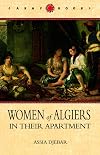
Assia Djebar's book is a set of short stories and an essay about the women of Algeria and their existence in a society that wants to keep them apart from the world, subservient to the male. It isn't the romantic formula of Western literature about the harem; these are stories of oppression, both at the hands of individual men and from two paternalistic societies: French colonial and fundamentalist Islam. More precisely, they are stories about the loss of voice and public identity, about show more disappearing into a private enclave whose keys are held by men. I've re-read her Overture to the book several times, an introduction in which she discusses her choice to write in French, rather than the Arabic imposed upon her country and her sex. After each story, going back and reading it, the words become more clear:
Arabic sounds...but always in feminine tones, uttered from lips beneath a mask...An excoriated language, from never having appeared in the sunlight, from having sometimes been intoned, declaimed, howled, dramatized, but always mouth and eyes in the dark...Words of the veiled body, language that in turn has taken the veil for so long a time.
I found the chronology of the stories interesting; they move backward. They start with the 1970s in the days of post-colonial Algeria as the country moves toward an Islamic society. They pass through the arc at whose zenith women stood relatively equal with men as guerilla fighters, able to pass the French soldiers with a flirt while carrying their bombs and guns. They end with the stories of the colonial days. In comparing the last, with their seraglios, to the first, where the female freedom fighters are deliberately forgotten, their selves dumped into insane asylums under the care of male doctors, you get a real sense that nothing really changed—only the outward form is different.
Perhaps the most surprising aspect of this book for me, given the feminist core, is the situation of men. Of course, many are simply the oppressors in these stories; she makes clear her position that the world would be a better place without them. Yet, the few men who are not the victimizers come across, themselves, as victims...and victims that are, in some ways, even more desperate: lost, alone and isolated. For, despite the subjugation of the women, both past and present, Djebar shows them bound together in a society of their own. When they are hurt or in need, it is always another woman who reaches out to ease their pain or help them understand. Shared suffering, forced seclusion and exclusion have crafted a hidden society, the world of the "apartment" or harem, which has bonds that aren't seen in the outside world.
There's a whole second level to this book, an allegory of Algeria as a woman, her true and diverse voice suppressed, first under the paternalism of a colonial power, later under the paternalism of Islam and Arabic. The language of this book is so dense and opaque that I need several readings. I've read the first story three times and have come away with something new each time.
Highly recommended. show less
Arabic sounds...but always in feminine tones, uttered from lips beneath a mask...An excoriated language, from never having appeared in the sunlight, from having sometimes been intoned, declaimed, howled, dramatized, but always mouth and eyes in the dark...Words of the veiled body, language that in turn has taken the veil for so long a time.
I found the chronology of the stories interesting; they move backward. They start with the 1970s in the days of post-colonial Algeria as the country moves toward an Islamic society. They pass through the arc at whose zenith women stood relatively equal with men as guerilla fighters, able to pass the French soldiers with a flirt while carrying their bombs and guns. They end with the stories of the colonial days. In comparing the last, with their seraglios, to the first, where the female freedom fighters are deliberately forgotten, their selves dumped into insane asylums under the care of male doctors, you get a real sense that nothing really changed—only the outward form is different.
Perhaps the most surprising aspect of this book for me, given the feminist core, is the situation of men. Of course, many are simply the oppressors in these stories; she makes clear her position that the world would be a better place without them. Yet, the few men who are not the victimizers come across, themselves, as victims...and victims that are, in some ways, even more desperate: lost, alone and isolated. For, despite the subjugation of the women, both past and present, Djebar shows them bound together in a society of their own. When they are hurt or in need, it is always another woman who reaches out to ease their pain or help them understand. Shared suffering, forced seclusion and exclusion have crafted a hidden society, the world of the "apartment" or harem, which has bonds that aren't seen in the outside world.
There's a whole second level to this book, an allegory of Algeria as a woman, her true and diverse voice suppressed, first under the paternalism of a colonial power, later under the paternalism of Islam and Arabic. The language of this book is so dense and opaque that I need several readings. I've read the first story three times and have come away with something new each time.
Highly recommended. show less

If I had to describe this book in a single word, it would be "gaze." Assia Djebar, a filmmaker as well as writer, is always aware of sightlines and who is gazing at whom. Women, whose gaze is restricted to a slot through their veils, are like camera lenses, with an intense, directed focus, but one that is too frequently shuttered. Perpetually aware lest they fall under a man's gaze, the women try to remain invisible. Yet there are strong women in the book, who defy their imposed limits, show more often through language: Zoraide, who passes notes to the Captive Captain in [Don Quixote]; Tin Hinan, mother of the Tuareg, who brought the Berber alphabet to the desert; the narrator/author's own writing.
The book is divided into four parts, each with a very distinct style. Part 1, What is Erased in the Heart, is an emotional, non-linear account of the narrator/author's platonic love affair with the younger man she calls The Beloved. The narrator says that, "It is not fiction I desire. I am not driven to unfurl a love story of inexhaustible arabesques," and yet that describes it perfectly. Part 2, Erased in Stone, is the story of the discovery by Europeans of the stele at Dougga, written in both Punic and a Berber alphabet. Each chapter in this section is a short biography of one of the men who was instrumental in bringing the knowledge to Europe that the Berbers had had a written language much longer than scholars knew. Part 3, A Silent Desire, alternates chapters that describe the life of the narrator/author's grandmother and mother, with chapters about making her first film, "The Arable Woman." The title of the film is taken from an Arabic lament, recited at the death of her mother's sister:
O my other self, my shadow, no one so like me,
You are gone, you have deserted me, left me arable,
Your pain, a plowshare, turned me over and seeded me with tears.
Part 4, The Blood of Writing, is short, almost an essay, on writing and Algeria's bloody history.
I had a hard time getting through the first part. I understood that it represented "the daily wretchedness of the women of this city of invisible lusts and repression," but the swirl of emotions was hard to navigate. I much preferred the sections on the history of the language and her family history. It is hard to say how much of the novel is fiction, clearly much of it is about her and her family. It is, perhaps, of a shared style with the oral tradition she describes, of illiterate women whose memories are a history rarely shared. A history told in the female voice, outside the scope of the scribes and clerks who record men's history, less factual and more impressionistic.
Edited to fix formatting show less
The book is divided into four parts, each with a very distinct style. Part 1, What is Erased in the Heart, is an emotional, non-linear account of the narrator/author's platonic love affair with the younger man she calls The Beloved. The narrator says that, "It is not fiction I desire. I am not driven to unfurl a love story of inexhaustible arabesques," and yet that describes it perfectly. Part 2, Erased in Stone, is the story of the discovery by Europeans of the stele at Dougga, written in both Punic and a Berber alphabet. Each chapter in this section is a short biography of one of the men who was instrumental in bringing the knowledge to Europe that the Berbers had had a written language much longer than scholars knew. Part 3, A Silent Desire, alternates chapters that describe the life of the narrator/author's grandmother and mother, with chapters about making her first film, "The Arable Woman." The title of the film is taken from an Arabic lament, recited at the death of her mother's sister:
O my other self, my shadow, no one so like me,
You are gone, you have deserted me, left me arable,
Your pain, a plowshare, turned me over and seeded me with tears.
Part 4, The Blood of Writing, is short, almost an essay, on writing and Algeria's bloody history.
I had a hard time getting through the first part. I understood that it represented "the daily wretchedness of the women of this city of invisible lusts and repression," but the swirl of emotions was hard to navigate. I much preferred the sections on the history of the language and her family history. It is hard to say how much of the novel is fiction, clearly much of it is about her and her family. It is, perhaps, of a shared style with the oral tradition she describes, of illiterate women whose memories are a history rarely shared. A history told in the female voice, outside the scope of the scribes and clerks who record men's history, less factual and more impressionistic.
Edited to fix formatting show less
Children of the New World: A Novel of the Algerian War (Women Writing the Middle East) by Assia Djebar
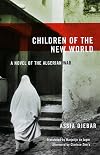
After struggling at first with the style of Djebar's writing and keeping track of the charaters and their relationships, I really got into this book and by the end was completely absorbed. Set during the Algerian war, Children of the New World follows the lives of various people living in one town during a 24 hour period.
The first thing to say about this book is how modern it feels. The writing and the themes have not dated at all (it was first published in 1962). Young men joining an show more insurgency against an outside power and the tensions between Western versus Islamic or traditional culture clearly resonate today (in fact there are many echoes of the Algerian struggle for independence in the current Iraq situation, particularly guerilla warfare and torture).
Many of the main charaters are women and we see the impact of the war on their lives. Cherifa, the wife of a resistance leader, has to leave her house for the first time to warn her husband about his imminent arrest. Lila's husband has gone to join the resistance and she has to live by herself. Hassiba, a young girl, goes to the maquis hiding in the mountains.
I think what I liked most about this book is that Djebar highlights the difficulties experienced by these women in a subtle and interesting way, rather than a 'look at these poor oppressed Muslim women' heavy-handed rant.
As I've said, I did have trouble getting into the rhythm of the writing for a while. Sentences are often long and contain several ideas. And I struggled with the character of Lila - i just couldn't get a grip of her. But I know that these are the things that will bring me back to this book again. There is more for me to discover. show less
The first thing to say about this book is how modern it feels. The writing and the themes have not dated at all (it was first published in 1962). Young men joining an show more insurgency against an outside power and the tensions between Western versus Islamic or traditional culture clearly resonate today (in fact there are many echoes of the Algerian struggle for independence in the current Iraq situation, particularly guerilla warfare and torture).
Many of the main charaters are women and we see the impact of the war on their lives. Cherifa, the wife of a resistance leader, has to leave her house for the first time to warn her husband about his imminent arrest. Lila's husband has gone to join the resistance and she has to live by herself. Hassiba, a young girl, goes to the maquis hiding in the mountains.
I think what I liked most about this book is that Djebar highlights the difficulties experienced by these women in a subtle and interesting way, rather than a 'look at these poor oppressed Muslim women' heavy-handed rant.
As I've said, I did have trouble getting into the rhythm of the writing for a while. Sentences are often long and contain several ideas. And I struggled with the character of Lila - i just couldn't get a grip of her. But I know that these are the things that will bring me back to this book again. There is more for me to discover. show less

This is a collections of novellas and shorter stories that works almost as a sociological document. Oh, it's beautiful ("artistic"), but very much exploratory in an almost scientific way.
Djebar is after the memory, history, the words and very voices of women. Algerian women (and, specifically, Muslim), silenced for centuries. There is a trace of Berber otherness, matrilinearity (interesting that Djebar, like Mernissi, has Berber heritage). But, overall, women are suffocated. They communicate show more quietly, in whispers and murmurs (woman talking is most frequently expressed as "she murmurs"), in fragments and wisps of speech.
Compare to ancient Greek shutting up of women--this is the patriarchal Mediterranean symbolically killing the woman, choking the feminine, over and over again.
This fragmented speech can be hard to take and follow. Between themselves, these women are invariably a small group of relatives, sentenced to a cloistered life in a house doing housework and raising children. So communication is rooted in a common experience and shared context. Their muted words overlap and continue each other.
There's a movie of Djebar's called The Nouba of the Women of Mount Chenoua I'd seen before reading anything of hers, that seems deeply connected to this book. It too has a folkloric-cum-historical aim, and the "nouba", a symphonic musical form, is explicitly used to describe the speech of the female characters.
(You can watch the movie, something of a rarity, on Dailymotion. I had borrowed the DVD from the library but the video quality is the same, not great. Presumably it hasn't been re-released in a better copy. Only in French, sorry, with French subtitles for Arabic. La nouba des femmes du mont Chenoua de Assia Djebbar 1/2.)
There are women who rebel. The French colonisation is almost convenient as a moment where the fight for national liberation can coincide with women's emancipation, surge into the street, grasping of political power. At least this is the hope--running out the French will result in a new society with new rules and new people behaving differently. Algerian women played an important role in the anti-colonial fight. And they suffered horribly, imprisoned, tortured, raped.
Did the new country turn out to be what they hoped or were these sacrifices taken as all female sacrifices, for granted?
In the very important Afterword Djebar ends with the caution that the "harem" may be gone but the structure of the harem still imposes its laws on women: the laws of invisibility and silence. show less
Djebar is after the memory, history, the words and very voices of women. Algerian women (and, specifically, Muslim), silenced for centuries. There is a trace of Berber otherness, matrilinearity (interesting that Djebar, like Mernissi, has Berber heritage). But, overall, women are suffocated. They communicate show more quietly, in whispers and murmurs (woman talking is most frequently expressed as "she murmurs"), in fragments and wisps of speech.
Compare to ancient Greek shutting up of women--this is the patriarchal Mediterranean symbolically killing the woman, choking the feminine, over and over again.
This fragmented speech can be hard to take and follow. Between themselves, these women are invariably a small group of relatives, sentenced to a cloistered life in a house doing housework and raising children. So communication is rooted in a common experience and shared context. Their muted words overlap and continue each other.
There's a movie of Djebar's called The Nouba of the Women of Mount Chenoua I'd seen before reading anything of hers, that seems deeply connected to this book. It too has a folkloric-cum-historical aim, and the "nouba", a symphonic musical form, is explicitly used to describe the speech of the female characters.
(You can watch the movie, something of a rarity, on Dailymotion. I had borrowed the DVD from the library but the video quality is the same, not great. Presumably it hasn't been re-released in a better copy. Only in French, sorry, with French subtitles for Arabic. La nouba des femmes du mont Chenoua de Assia Djebbar 1/2.)
There are women who rebel. The French colonisation is almost convenient as a moment where the fight for national liberation can coincide with women's emancipation, surge into the street, grasping of political power. At least this is the hope--running out the French will result in a new society with new rules and new people behaving differently. Algerian women played an important role in the anti-colonial fight. And they suffered horribly, imprisoned, tortured, raped.
Did the new country turn out to be what they hoped or were these sacrifices taken as all female sacrifices, for granted?
In the very important Afterword Djebar ends with the caution that the "harem" may be gone but the structure of the harem still imposes its laws on women: the laws of invisibility and silence. show less
Lists
THE WAR ROOM (1)
Women in Islam (1)
Awards


You May Also Like


Associated Authors
Statistics
- Works
- 27
- Also by
- 6
- Members
- 1,562
- Popularity
- #16,507
- Rating
- 3.5
- Reviews
- 55
- ISBNs
- 141
- Languages
- 12
- Favorited
- 8