
Boualem Sansal
Author of 2084: The End of the World
About the Author
Image credit: Boualem Sansal en 2005
Works by Boualem Sansal
Gouverner au nom d'Allah: Islamisation et soif de pouvoir dans le monde arabe (2013) — Author — 35 copies
Poste restante : Alger : Lettre de colère et d'espoir à mes compatriotes (2006) — Author — 11 copies, 1 review
Discours pour le Prix de la paix des libraires et éditeurs allemands: Francfort-sur-le-Main, 16 octobre 2011 (2025) 3 copies
Tagged
Common Knowledge
- Canonical name
- Sansal, Boualem
- Other names
- بوعلام صنصال
- Birthdate
- 1949-10-15
- Gender
- male
- Education
- Doctorat, Economie
Ecole nationale polytechnique, Alger (Ingénieur) - Occupations
- Haut-fonctionnaire
Enseignant
Consultant
Chef d'entreprise
Romancier - Organizations
- Ministère de l'Industrie, Algérie (Chargé de mission | 20 03)
- Awards and honors
- Friedenspreis des deutschen Buchhandels (2011)
Grand prix de la francophonie de l'Académie française (2013)
Académie française - Relationships
- Mimouni, Rachid (friend)
- Nationality
- Algeria
- Birthplace
- Algiers, Algeria
- Places of residence
- Algeria
- Map Location
- Algeria
Members
Reviews

A young man confined to a TB sanatorium in the high mountains is forced to reconsider some of his most basic assumptions about the world he is living in ... hang on a minute, this is supposed to be a new take on Orwell, not Thomas Mann, isn't it?
Anyway, it soon becomes clear that we aren't in Davos any more, Toto, but in a dystopian, post-nuclear world, where a benevolent leader, Abi (even I know that means "elder brother", so we're back on track), his face on millions of posters, protects show more his people against a remote but always dangerous enemy, in return for their devotion and complete submission to the intrusion of the state into every corner of their lives and thoughts.
This isn't quite the 1984 we're used to, though. The use of Abilang (Newspeak) constrains the things that can be said and thought, there is no history of any time earlier than 2084, but in place of Orwell's metaphor of the Party, Abistan is a world run under the religious slogan that "there is no god but Yölah, and Abi is his representative". It turns out that a cruelly distorted version of Islam can be used to create a totalitarian, fascist society every bit as effectively as Stalinism did.
As in Orwell's original, we're well aware that a lot of the horrors and abuses Sansal describes are not a million miles away from things that happen in the real world in our time. It's only really the scale that changes in this dystopian view: Abistan claims to be the whole world, but our Winston Smith character, Ati, has his doubts: there are rumours of a frontier, and if there is a frontier, then there must be something on the other side of that frontier.
Clever, angry, engaged humanism, very engaging once you get into it, although I did find the first few chapters, in which the pace of the story is slowed down to Magic mountain-like speeds, quite hard going. Worth the effort, though. show less
Anyway, it soon becomes clear that we aren't in Davos any more, Toto, but in a dystopian, post-nuclear world, where a benevolent leader, Abi (even I know that means "elder brother", so we're back on track), his face on millions of posters, protects show more his people against a remote but always dangerous enemy, in return for their devotion and complete submission to the intrusion of the state into every corner of their lives and thoughts.
This isn't quite the 1984 we're used to, though. The use of Abilang (Newspeak) constrains the things that can be said and thought, there is no history of any time earlier than 2084, but in place of Orwell's metaphor of the Party, Abistan is a world run under the religious slogan that "there is no god but Yölah, and Abi is his representative". It turns out that a cruelly distorted version of Islam can be used to create a totalitarian, fascist society every bit as effectively as Stalinism did.
As in Orwell's original, we're well aware that a lot of the horrors and abuses Sansal describes are not a million miles away from things that happen in the real world in our time. It's only really the scale that changes in this dystopian view: Abistan claims to be the whole world, but our Winston Smith character, Ati, has his doubts: there are rumours of a frontier, and if there is a frontier, then there must be something on the other side of that frontier.
Clever, angry, engaged humanism, very engaging once you get into it, although I did find the first few chapters, in which the pace of the story is slowed down to Magic mountain-like speeds, quite hard going. Worth the effort, though. show less
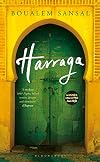
Sansal did an impressive thing in telling a story that talks about the experiences of migrants leaving Algeria, but also acknowledges what (and who) is left behind, and the consequences of losing large numbers of young people. It's made clear that this is a loss both as migrants who don't plan to return and those who can't because they don't survive trafficking.
It is scorching in critique of corruption throughout Algeria, from the police to the civil service, health professionals and even show more the head of state. It is also (bravely) unflinching in criticising Islamist (as opposed to Islamic) influenced politics. From Lamia's attempt to find out what has happened to her brother, Sofiane, who has left to try and make it to Europe:
Maybe I should have told her that the only way to truly extricate this country from hell itself would be to toss the government into the sea, and the wagging tail of the civil service in with it. Then young people wouldn't dream of taking to sea any more for fear of meeting them bobbing on the waves.
The attempts by men to limit women in the name of religion is mocked throughout. In places it reads like a polemic but given the author's agenda and bravery in stating his politics in the face of intimidation I'm not inclined to judge him for using his writing in this way.
For every single person on this planet, there is a book that speaks directly to them, that is a revelation, that tells them everything they need to know. To read that book - your book- without being forever changed is impossible.
I'll be looking out for his other books which have been translated into English. show less
It is scorching in critique of corruption throughout Algeria, from the police to the civil service, health professionals and even show more the head of state. It is also (bravely) unflinching in criticising Islamist (as opposed to Islamic) influenced politics. From Lamia's attempt to find out what has happened to her brother, Sofiane, who has left to try and make it to Europe:
Maybe I should have told her that the only way to truly extricate this country from hell itself would be to toss the government into the sea, and the wagging tail of the civil service in with it. Then young people wouldn't dream of taking to sea any more for fear of meeting them bobbing on the waves.
The attempts by men to limit women in the name of religion is mocked throughout. In places it reads like a polemic but given the author's agenda and bravery in stating his politics in the face of intimidation I'm not inclined to judge him for using his writing in this way.
For every single person on this planet, there is a book that speaks directly to them, that is a revelation, that tells them everything they need to know. To read that book - your book- without being forever changed is impossible.
I'll be looking out for his other books which have been translated into English. show less
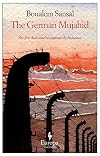
Here I am, faced with a question as old as time: are we answerable for the crimes of our fathers, of our brothers, of our children? Our tragedy is that we form a direct line, there is no way out without breaking the chain and vanishing completely.
This powerful, thought provoking and unsettling novel is narrated by Malrich Schiller, a young man born to a German father and an Algerian mother. He was sent from his home village of Aïn Deb in Algeria to a Parisian banlieue by his parents, in show more order to seek a better life there. Malrich, an abbreviation of his real name, Malek Ulrich, has dropped out of school and has frequently run afoul of the local police in his neighborhood, which is populated by Arab and African emigrants who are largely unemployed, bored and trapped in a meaningless existence, while being cowed by local Islamic fundamentalists. His much older brother Rachel, short for Rachid Helmut, also lives nearby; he has a college degree, a successful career in a multinational corporation, and an enviable but troubled marriage. Despite this, he is viewed as an outsider and a sell out by many residents of the banlieue.
Rachel committed suicide in April 1996, after he became increasingly erratic and unreliable, which caused him to lose his job and his wife, Ophélie. After his death she gave Malrich the keys to their house to live in after she moved to Canada, and he soon discovered his brother's diary.
Their parents and dozens of other residents of Aïn Deb were murdered by Islamic fundamentalists two years earlier, in a senseless response to the Algerian military crackdown that followed the election of an Islamist government earlier in the decade. Rachel traveled to his home village soon afterward, and while retrieving his parents' belongings he makes a shocking discovery. His father Hans emigrated from Germany to Egypt and eventually Algeria at the end of World War II, earned the title Mujahid, or Islamic freedom fighter, after he converted from Christianity to Islam and fought bravely in the resistance during the Algerian War for Independence, and was given the honorary title Cheïkh Hassan by his fellow villagers, who often consulted him and respected him for his wisdom and fairness. However, in his personal effects are honorary medals and papers that indicate that he willingly served in the SS during World War II, and was stationed in several of the most notorious concentration camps.
Rachel is profoundly disturbed by this discovery, and feels a suffocating sense of guilt that haunts him over the remainder of his life. He ignores his responsibilities to his job and his wife, and spends his days retracing his father's path from Germany to Egypt to Algeria, in an effort to learn what role his father played in the Holocaust, and how a man who was dearly loved and respected by his family and neighbors could have participated in such monstrous acts. He is likewise troubled by the rise of Islamic fundamentalism in Algeria and the banlieue where he resides, and he sees an uncanny parallel between the two.
When my parents and everyone else in Aïn Deb were murdered by the Islamists, Rachel got to thinking. He figured that fundamentalist Islam and Nazism were kif-kif—same old same old. He wanted to find out what would happen if people did nothing, the way people did nothing in Germany back in the day, what would happen if nobody did anything in Kabul and Algeria where they've got I don't know how many mass graves, or here in France where we've got all these Islamist Gestapo. In the end, the whole idea scared him so much he killed himself.
Malrich is also deeply affected after reading his brother's diary, as his brother hid this knowledge in an effort to protect him, and he is faced with a dilemma: can he stand by and passively accept the atrocities and restrictions that are being inflicted by the Islamic fundamentalists in the banlieue, or even join them in their cause, or should he stand up to them and openly reject their efforts to impose sharia on the community, knowing that he will could potentially pay for his indiscretions with his life?
The German Mujahid is a valuable and necessary book, which explores the history of former Nazis who escaped to Arabic countries toward the end of the Second World War, and compares their crimes to those being committed by Islamic and other religious fundamentalists and dictators throughout the world. It also questions the roles of citizens in these communities, who frequently passively accept or actively participate in crimes against their neighbors. This novel, and much of Sansal's work, was banned in Algeria after it was released. Sansal was recently vilified after his decision to attend the 2012 Jerusalem Writers Festival, which led to the revocation of the €15,000 prize he was slated to receive after he was awarded the Prix du Roman Arabe last year for his novel Rue Darwin. Sansal is a unique and courageous writer, whose voice must not be allowed to fall silent, and this reader eagerly looks forward to the translation of his past and upcoming works into English and the distribution of his books throughout the Arabic world. show less
This powerful, thought provoking and unsettling novel is narrated by Malrich Schiller, a young man born to a German father and an Algerian mother. He was sent from his home village of Aïn Deb in Algeria to a Parisian banlieue by his parents, in show more order to seek a better life there. Malrich, an abbreviation of his real name, Malek Ulrich, has dropped out of school and has frequently run afoul of the local police in his neighborhood, which is populated by Arab and African emigrants who are largely unemployed, bored and trapped in a meaningless existence, while being cowed by local Islamic fundamentalists. His much older brother Rachel, short for Rachid Helmut, also lives nearby; he has a college degree, a successful career in a multinational corporation, and an enviable but troubled marriage. Despite this, he is viewed as an outsider and a sell out by many residents of the banlieue.
Rachel committed suicide in April 1996, after he became increasingly erratic and unreliable, which caused him to lose his job and his wife, Ophélie. After his death she gave Malrich the keys to their house to live in after she moved to Canada, and he soon discovered his brother's diary.
Their parents and dozens of other residents of Aïn Deb were murdered by Islamic fundamentalists two years earlier, in a senseless response to the Algerian military crackdown that followed the election of an Islamist government earlier in the decade. Rachel traveled to his home village soon afterward, and while retrieving his parents' belongings he makes a shocking discovery. His father Hans emigrated from Germany to Egypt and eventually Algeria at the end of World War II, earned the title Mujahid, or Islamic freedom fighter, after he converted from Christianity to Islam and fought bravely in the resistance during the Algerian War for Independence, and was given the honorary title Cheïkh Hassan by his fellow villagers, who often consulted him and respected him for his wisdom and fairness. However, in his personal effects are honorary medals and papers that indicate that he willingly served in the SS during World War II, and was stationed in several of the most notorious concentration camps.
Rachel is profoundly disturbed by this discovery, and feels a suffocating sense of guilt that haunts him over the remainder of his life. He ignores his responsibilities to his job and his wife, and spends his days retracing his father's path from Germany to Egypt to Algeria, in an effort to learn what role his father played in the Holocaust, and how a man who was dearly loved and respected by his family and neighbors could have participated in such monstrous acts. He is likewise troubled by the rise of Islamic fundamentalism in Algeria and the banlieue where he resides, and he sees an uncanny parallel between the two.
When my parents and everyone else in Aïn Deb were murdered by the Islamists, Rachel got to thinking. He figured that fundamentalist Islam and Nazism were kif-kif—same old same old. He wanted to find out what would happen if people did nothing, the way people did nothing in Germany back in the day, what would happen if nobody did anything in Kabul and Algeria where they've got I don't know how many mass graves, or here in France where we've got all these Islamist Gestapo. In the end, the whole idea scared him so much he killed himself.
Malrich is also deeply affected after reading his brother's diary, as his brother hid this knowledge in an effort to protect him, and he is faced with a dilemma: can he stand by and passively accept the atrocities and restrictions that are being inflicted by the Islamic fundamentalists in the banlieue, or even join them in their cause, or should he stand up to them and openly reject their efforts to impose sharia on the community, knowing that he will could potentially pay for his indiscretions with his life?
The German Mujahid is a valuable and necessary book, which explores the history of former Nazis who escaped to Arabic countries toward the end of the Second World War, and compares their crimes to those being committed by Islamic and other religious fundamentalists and dictators throughout the world. It also questions the roles of citizens in these communities, who frequently passively accept or actively participate in crimes against their neighbors. This novel, and much of Sansal's work, was banned in Algeria after it was released. Sansal was recently vilified after his decision to attend the 2012 Jerusalem Writers Festival, which led to the revocation of the €15,000 prize he was slated to receive after he was awarded the Prix du Roman Arabe last year for his novel Rue Darwin. Sansal is a unique and courageous writer, whose voice must not be allowed to fall silent, and this reader eagerly looks forward to the translation of his past and upcoming works into English and the distribution of his books throughout the Arabic world. show less

Billed as the first Arab novel to confront the Holocaust, The German Mujahid is a book that can be read in many different ways. Some reviewers have focused on Sansal's condemnation of the Algerian military, Islamic fundamentalists, and the corruption of life in modern Algeria. (The book has been banned there). Other reviewers on the oblique comparison of the ways in which the modern Islamic fundamentalists and the former Nazis wield power. What struck me most, however, was the question To show more what extent are we responsible for the crimes of our parents?
Rachel and Malrich Schiller brothers were born in Algeria to a German father and Algerian mother. In an effort to provide them with more opportunities, the parents send first one and then the other brother to France to live with their uncle. Growing up in one of the many tough Muslim ghettos in France, Rachel, the oldest, becomes the model immigrant, boldly striving for success in his new country. Seventeen-year-old Malrich, on the other hand, is struggling to create an identity for himself and is often in trouble with his uncle, his school, and the police. The book begins: Rachel died six months ago.
His brother's death leads Malrich on a voyage of discovery about his family, his brother, and himself. He begins reading Rachel's diary and learns that his brother's descent into madness and suicide began with the massacre of their parents in their backwater Algerian village by Islamic fundamentalists two years ago. Rachel was horrified by the event and returned to the bled to try and reconnect and find closure. Instead he finds that his father has been buried under another name and that he kept a box of memorabilia under his bed which contains Nazi memorabilia. What does this mean? Rachel is driven to get to the truth of his father's past, even if it means destroying his present. As Malrich reads about his brother's life, he also has to make decisions about his own. Should he let himself be persuaded by his brother's posthumous guilt? How should he live with the knowledge that his brother has given him?
Because of the setting and Islamic tie-ins, The German Mujahid is an unusual exploration of the post-Holocaust question of guilt and justice. Equally compelling is the story of these two brothers, linked by the diary. Never especially close growing up, the diary is a way for the brothers to communicate on a completely different level: Rachel revealed as vulnerable and confused, Malrich enabled to make decisions about his life. I found myself wanting to read as fast as I could to uncover the plot, and at the same time wanting to savor and ponder particular descriptions or philosophical questions. With the use of sticky notes and scraps of paper, I was able to do both, but it is definitely a book I see myself reading again. It was a perfect follow up to my reading [The Good German], which deals with these questions from the German perspective. Instead of the immediate post-war period, however, , is set a generation later, but continues to probe the essence of guilt, justice, and reparations.
Edited to fix deleted line. show less
Rachel and Malrich Schiller brothers were born in Algeria to a German father and Algerian mother. In an effort to provide them with more opportunities, the parents send first one and then the other brother to France to live with their uncle. Growing up in one of the many tough Muslim ghettos in France, Rachel, the oldest, becomes the model immigrant, boldly striving for success in his new country. Seventeen-year-old Malrich, on the other hand, is struggling to create an identity for himself and is often in trouble with his uncle, his school, and the police. The book begins: Rachel died six months ago.
His brother's death leads Malrich on a voyage of discovery about his family, his brother, and himself. He begins reading Rachel's diary and learns that his brother's descent into madness and suicide began with the massacre of their parents in their backwater Algerian village by Islamic fundamentalists two years ago. Rachel was horrified by the event and returned to the bled to try and reconnect and find closure. Instead he finds that his father has been buried under another name and that he kept a box of memorabilia under his bed which contains Nazi memorabilia. What does this mean? Rachel is driven to get to the truth of his father's past, even if it means destroying his present. As Malrich reads about his brother's life, he also has to make decisions about his own. Should he let himself be persuaded by his brother's posthumous guilt? How should he live with the knowledge that his brother has given him?
Because of the setting and Islamic tie-ins, The German Mujahid is an unusual exploration of the post-Holocaust question of guilt and justice. Equally compelling is the story of these two brothers, linked by the diary. Never especially close growing up, the diary is a way for the brothers to communicate on a completely different level: Rachel revealed as vulnerable and confused, Malrich enabled to make decisions about his life. I found myself wanting to read as fast as I could to uncover the plot, and at the same time wanting to savor and ponder particular descriptions or philosophical questions. With the use of sticky notes and scraps of paper, I was able to do both, but it is definitely a book I see myself reading again. It was a perfect follow up to my reading [The Good German], which deals with these questions from the German perspective. Instead of the immediate post-war period, however, , is set a generation later, but continues to probe the essence of guilt, justice, and reparations.
Edited to fix deleted line. show less
Lists
Awards


You May Also Like


Associated Authors
Statistics
- Works
- 22
- Members
- 893
- Popularity
- #28,688
- Rating
- 3.4
- Reviews
- 48
- ISBNs
- 107
- Languages
- 16
