
Kamel Daoud
Author of The Meursault Investigation
About the Author
Image credit: By Claude Truong-Ngoc / Wikimedia Commons - cc-by-sa-3.0, CC BY-SA 3.0, https://commons.wikimedia.org/w/index.php?curid=38219535
Works by Kamel Daoud
Tagged
Common Knowledge
- Birthdate
- 1970-06-17
- Gender
- male
- Nationality
- Algeria
- Birthplace
- Mostaganem, Algeria
- Associated Place (for map)
- Mostaganem, Algeria
Members
Reviews

A French graduate student whose main interest is Albert Camus's novel The Stranger and its characters travels to the Algerian port city of Oran, to learn more about what happened to the unnamed Arab that the protagonist, Meursault, shot to death on a beach in Algiers 70 years ago. In a seedy pub he meets Harun, the younger brother of the victim, an irascible old man who still seethes with resentment over the events of that fateful day and its aftermath. Through Harun we learn that his show more brother's name was Musa, and that his corpse was never found, which prevented his mother from achieving a sense of closure, and led her and her son on an futile and endless quest to find him and to gain both revenge and peace.
As the student, who like Musa in The Stranger is also unnamed and voiceless, listens, Harun shares the story of his own absurd life, which mirrors that of Meursault's in many respects. Although Harun is fiercely critical of Meursault and Camus, who chose to ignore his brother, thus dehumanizing him and, therefore, all Arabs, he knows The Stranger by heart and respects what its author has accomplished in writing it. Through him a portrait of Algeria from an Arab viewpoint emerges, from the colonial days when they were often brutally suppressed by the pied noirs, to the War for Independence, and especially the current state of the troubled country, where the possibility of a restricted society run by Islamic fundamentalists is juxtaposed against the similar restrictions of life under the current government run by the military.
The Meursault Investigation is a superb novel, which both mirrors and expounds upon The Stranger to portray the life of Meursault's victim, critique the actions of Meursault and the limited viewpoint of Camus, and explore the near parallel life of the victim's brother and the absurdity of post-independence Algerian society. I would strongly advise you to read The Stranger before starting this book, as it assumes that the reader is familiar with Camus's novel. You will get much more out of this book if you do so. show less
As the student, who like Musa in The Stranger is also unnamed and voiceless, listens, Harun shares the story of his own absurd life, which mirrors that of Meursault's in many respects. Although Harun is fiercely critical of Meursault and Camus, who chose to ignore his brother, thus dehumanizing him and, therefore, all Arabs, he knows The Stranger by heart and respects what its author has accomplished in writing it. Through him a portrait of Algeria from an Arab viewpoint emerges, from the colonial days when they were often brutally suppressed by the pied noirs, to the War for Independence, and especially the current state of the troubled country, where the possibility of a restricted society run by Islamic fundamentalists is juxtaposed against the similar restrictions of life under the current government run by the military.
The Meursault Investigation is a superb novel, which both mirrors and expounds upon The Stranger to portray the life of Meursault's victim, critique the actions of Meursault and the limited viewpoint of Camus, and explore the near parallel life of the victim's brother and the absurdity of post-independence Algerian society. I would strongly advise you to read The Stranger before starting this book, as it assumes that the reader is familiar with Camus's novel. You will get much more out of this book if you do so. show less

Zabor is something of an outcast in his Algerian village, a drop-out from the madrassa and cast out from the family home as a small child by his father the wealthy butcher Hadj Brahim, but he is tolerated and secretly appreciated for his useful — whilst probably dangerous and heretical — gift of saving his neighbours’ lives by writing about them. In French.
But then he is called in by his estranged half-brothers to try to save Hadj Brahim’s life…
This is a complicated and show more multi-layered book about the power of language and literacy, with Zabor casting himself variously as David the psalmist, Isaac (son of a sheep-slaughterer…), Oedipus, Sheherazade, Robinson Crusoe, Ishmael (both biblical and Melville), and a host of other literary and religious figures. We are made to think about the power of written and spoken words, about the way we can travel in our imagination, about reading as a form of masturbation, and much else. A big theme is ’French versus Arabic’: Zabor loves the power and grace of Arabic, but is frustrated by the way, as far as the village is concerned, it has only one book, a book he has fallen out of love with; French is alien to him, and he has largely taught himself to read it, but gives him access to an apparently unlimited — if haphazard — range of books that happen to wash up in the village.
A powerful and fascinating book, but it’s also very claustrophobic sometimes, and Zabor’s a frustrating narrator who feeds us information in fragmented patterns. At first it is difficult to see where he is taking us. It took me quite a long time to get properly into it, but it was worth persisting: about halfway through, everything seems to fall together and from then on I didn’t want to put it down. show less
But then he is called in by his estranged half-brothers to try to save Hadj Brahim’s life…
This is a complicated and show more multi-layered book about the power of language and literacy, with Zabor casting himself variously as David the psalmist, Isaac (son of a sheep-slaughterer…), Oedipus, Sheherazade, Robinson Crusoe, Ishmael (both biblical and Melville), and a host of other literary and religious figures. We are made to think about the power of written and spoken words, about the way we can travel in our imagination, about reading as a form of masturbation, and much else. A big theme is ’French versus Arabic’: Zabor loves the power and grace of Arabic, but is frustrated by the way, as far as the village is concerned, it has only one book, a book he has fallen out of love with; French is alien to him, and he has largely taught himself to read it, but gives him access to an apparently unlimited — if haphazard — range of books that happen to wash up in the village.
A powerful and fascinating book, but it’s also very claustrophobic sometimes, and Zabor’s a frustrating narrator who feeds us information in fragmented patterns. At first it is difficult to see where he is taking us. It took me quite a long time to get properly into it, but it was worth persisting: about halfway through, everything seems to fall together and from then on I didn’t want to put it down. show less
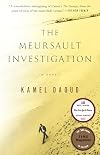
In The Meursault Investigation, Kamel Daoud responds to Albert Camus’ The Stranger as though it were autobiographical. His narrator, Harun, is the brother of the Arab murdered by Meursault in Camus’ most famous novel. For Harun, the popularity of Camus’ book is as though his brother is murdered again and again for more than 70 years because he is never once mentioned by name, only referred to as the Arab. “My brother’s name was Musa. He had a name. But he’ll remain ‘the Arab’ show more forever.” He’s counted and found that Arab appears twenty-five times, but his brother’s name is not mentioned once—his erasure a perpetual murder.
It has been twenty years or so since I read The Stranger and I almost wish I had borrowed it from the library as a companion to The Meursault Investigation because I think reading them together will enrich the experience of both books. Perhaps they will be twinned from now on. It is no literary blasphemy to pair Doaud with Camus; they are both fine writers who consider important themes with insight and discipline. Daoud’s writing would deserve admiration even if it were not linked to Camus.
The brothers are named Musa and Harun, (Moses and Aaron) and it seems to me that their names must be symbolic. After all, in the Torah, Aaron is the spokesman for Moses and Harun is the only one to speak for Musa. Moses and Aaron had a sister named Miriam and Camus’ novel claims the murdered Arab had a sister, though that was not true. However, Harun does fall in love with a woman named Meriem, one who does not reciprocate his passion, unless perhaps she had a sisterly fondness for him.
One one level, The Meursault Investigation calls out the racist colonialist viewpoint of The Stranger, a novel that disappears Musa, the murder victim, making him an “other” anonymous and labelled only as the Arab, someone Meursault could kill simply because the sun got in his eyes, he was bored, he felt like it, because life was meaningless. Someone millions of people would read about without ever thinking about. Daoud is demanding we think about him, see him as a real person, a loving son and brother, alive and corporeal, not an anonymous everyarab dead on the beach.
But The Meursault Investigation is not merely a reproach to the imperialist erasure of that dead victim, it is far more interesting than that. To read the rest of this review, click here show less
It has been twenty years or so since I read The Stranger and I almost wish I had borrowed it from the library as a companion to The Meursault Investigation because I think reading them together will enrich the experience of both books. Perhaps they will be twinned from now on. It is no literary blasphemy to pair Doaud with Camus; they are both fine writers who consider important themes with insight and discipline. Daoud’s writing would deserve admiration even if it were not linked to Camus.
The brothers are named Musa and Harun, (Moses and Aaron) and it seems to me that their names must be symbolic. After all, in the Torah, Aaron is the spokesman for Moses and Harun is the only one to speak for Musa. Moses and Aaron had a sister named Miriam and Camus’ novel claims the murdered Arab had a sister, though that was not true. However, Harun does fall in love with a woman named Meriem, one who does not reciprocate his passion, unless perhaps she had a sisterly fondness for him.
One one level, The Meursault Investigation calls out the racist colonialist viewpoint of The Stranger, a novel that disappears Musa, the murder victim, making him an “other” anonymous and labelled only as the Arab, someone Meursault could kill simply because the sun got in his eyes, he was bored, he felt like it, because life was meaningless. Someone millions of people would read about without ever thinking about. Daoud is demanding we think about him, see him as a real person, a loving son and brother, alive and corporeal, not an anonymous everyarab dead on the beach.
But The Meursault Investigation is not merely a reproach to the imperialist erasure of that dead victim, it is far more interesting than that. To read the rest of this review, click here show less
The Meursault Investigation by Kamel Daoud is an Algerian answer to Albert Camus’ story The Stranger in which a Frenchman, Meursault, casually murders an Arab on the beach at Algiers. This short novel is supposedly narrated by the brother of the murdered Arab and is told some 70 years after the event.
In The Stranger much is written about Meursault, his feelings, his reactions, his story and yet the victim of the crime remains a nameless Arab. In this account we are given his name, Musa, show more and although he is unable to speak for himself, his brother, Harun, tells of his family and home. One of the tragedies of this story is the fact that Harun and his mother were unable to claim the body, as his name is never entered into any of the official records. The mother, tremendously grief-stricken becomes obsessed with seeking retribution. In an effort to appease his Mother, Harun kills a French settler, but instead of calling attention by committing a revenge murder, his action is considered a badly-timed killing as it occured shortly after the cease-fire that signalled the end of the war for independence.
The Meursault Investigation is a literary re-telling but in this version it is more than a simple counterpoint to the original. The country of Algeria becomes more than just the setting as the author meditates on the post-colonial failures of his country and doesn’t particularly sing out praises for how it is now being run. The author has received mixed reactions to this book, some shower him with literary acclaim, while many right-wing Muslims feel he should be on trial for blasphemy. show less
In The Stranger much is written about Meursault, his feelings, his reactions, his story and yet the victim of the crime remains a nameless Arab. In this account we are given his name, Musa, show more and although he is unable to speak for himself, his brother, Harun, tells of his family and home. One of the tragedies of this story is the fact that Harun and his mother were unable to claim the body, as his name is never entered into any of the official records. The mother, tremendously grief-stricken becomes obsessed with seeking retribution. In an effort to appease his Mother, Harun kills a French settler, but instead of calling attention by committing a revenge murder, his action is considered a badly-timed killing as it occured shortly after the cease-fire that signalled the end of the war for independence.
The Meursault Investigation is a literary re-telling but in this version it is more than a simple counterpoint to the original. The country of Algeria becomes more than just the setting as the author meditates on the post-colonial failures of his country and doesn’t particularly sing out praises for how it is now being run. The author has received mixed reactions to this book, some shower him with literary acclaim, while many right-wing Muslims feel he should be on trial for blasphemy. show less
Lists
First Novels (1)
Awards


You May Also Like


Associated Authors
Statistics
- Works
- 9
- Members
- 1,306
- Popularity
- #19,652
- Rating
- 3.5
- Reviews
- 54
- ISBNs
- 76
- Languages
- 12
- Favorited
- 2
