
Oliver Onions (1873–1961)
Author of The Dead of Night: The Ghost Stories of Oliver Onions
About the Author
Disambiguation Notice:
Oliver Onions (1873-1961), English novelist; was actually born as Oliver Onions, but later changed his name to George Oliver; all of his works were published under his birth name
Do not confuse with George Oliver (1782-1867), an Anglican minister who wrote on freemasonry and local churches
Image credit: Photo from The War Illustrated, 31 July 1915, via Wikipedia
Series
Works by Oliver Onions
Phantas 5 copies
The Beckoning Fair One and Other Stories by Oliver Onions (Civitas Library Classics) (2013) 5 copies
Rooum 4 copies
The Cigarette Case 2 copies
Sandokan 2 copies
Tales from a Far Riding 1 copy
The Master Of The House 1 copy
Hic Jacet [short fiction] 1 copy
The Rocker [short fiction] 1 copy
Io [short fiction] 1 copy
Benlian [short fiction] 1 copy
Sandokan/sweet lady blue 1 copy
The drakestone 1 copy
Little devil doubt 1 copy
The Italian Chest 1 copy
Associated Works
There Is a Graveyard That Dwells in Man: More Strange Fiction and Hallucinatory Tales (2020) — Contributor — 65 copies
Fantastic Imaginings: A Journey Through 3500 Years of Imaginative Writing, Comprising Fantasy, Horror, and Science Fiction (2012) — Contributor — 4 copies
About Time: The Forerunners of Time Travel and Temporal Anomalies in Science Fiction and Fantasy (2008) — Contributor — 2 copies
Tagged
Common Knowledge
- Legal name
- Onions, George Oliver
- Other names
- Onions, Oliver
Oliver, George - Birthdate
- 1873-11-13
- Date of death
- 1961-04-09
- Gender
- male
- Education
- National Arts Training Schools, UK
- Occupations
- novelist
- Relationships
- Ruck, Berta (wife)
- Short biography
- George Oliver Onions was born on 13 November 1873 in Bradford, Yorkshire, England, UK, of humble parents. He studied art for three years in London at the National Arts Training Schools (now the Royal College of Art). His interests were motoring and science; and he was also an amateur boxer as a young man. On 1909, he married the also writer Berta Ruck (1878-1978), and they had two sons, Arthur (b. 1912) and William (b. 1913). On 1918, legally changed his name to George Oliver, but continued to publish under the name Oliver Onions. He died on 9 April 1961 in Aberystwyth, Wales.
Originally trained as a commercial artist, Oliver worked as a designer of posters and books, and as a magazine illustrator during the Boer War. Encouraged by the American writer Gelett Burgess, he began writing fiction. The first editions of Oliver Onions's novels were published with dust jackets bearing full-colour illustrations painted by himself. He wrote detective fiction, social comedy, historical fiction and romance novels. But, he is best known for his supernatural and fantasy short-stories and is regarded by many as one of the twentieth century masters of the genre. Interestingly, he was a great pragmatist and did not believe in ghosts or occult agencies of any sort. It is therefore testament to his writing skills that he so convincingly conveys supernatural atmosphere and events. - Nationality
- UK
- Birthplace
- Bradford, Yorkshire, England, UK
- Place of death
- Aberystwyth, Dyfed, Wales, UK
- Disambiguation notice
- Oliver Onions (1873-1961), English novelist; was actually born as Oliver Onions, but later changed his name to George Oliver; all of his works were published under his birth name Do not confuse with George Oliver (1782-1867), an Anglican minister who wrote on freemasonry and local churches
- Associated Place (for map)
- UK
Members
Discussions
Reading Group #22 ('The Beckoning Fair One') in Gothic Literature (December 2011)
Reviews
The Dead of Night: The Ghost Stories of Oliver Onions (Tales of Mystery & the Supernatural) by Oliver Onions
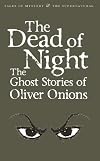
The Dead of Night: The Ghost Stories of Oliver Onions is a mesmerizing collection of elegantly nuanced ghost stories, often with a shadowy psychological bent, as protagonists’ internal demons may indeed lead the external spirits in the pas de deux interplay. But in some cases one might also consider the possibility, and perhaps rightly conclude, that the hauntings are entirely from within. Onions's stories are generally slow-paced and richly appointed in fine detail, sometimes requiring an show more extra bit of patience from the reader, and the payoff is almost always worth the wait.
Certain imagery and themes recur across the stories. Quite often the tales open at the threshold of a door and/or a straircase, clearly symbolic of entry or ascension in another realm (be it external or internal). Indeed the excellent story "The Rosewood Door" centers on an exquisite yet oddly shaped door with mysterious origins, rescued from a house demoliton, and when reinstalled anew sparks bizarre occurences. Artists and their work (painting, sculpture, writing) figure prominently in quite a few stories; their struggles and obsession seem surely one of Onions' signature autobiographical touches.
The standout story is the perfectly crafted and often anthologized "The Beckoning Fair One" wherein a writer moves into a possibly haunted house and experiences a growing obsession with a perceived spiritual presence, as well as a debilitating case of writer's block... or does his mania ensue from his maddening inability to write? Other highlights include "The Rope in the Rafters," a tale of World War I disfigurement; a sculptor's deepening madness and obsession in "Resurrection in Bronze," and a pair of tales concerning time dislocation (past or future events encroaching on the present), "The Cigarette Case" and "The Accident." show less
Certain imagery and themes recur across the stories. Quite often the tales open at the threshold of a door and/or a straircase, clearly symbolic of entry or ascension in another realm (be it external or internal). Indeed the excellent story "The Rosewood Door" centers on an exquisite yet oddly shaped door with mysterious origins, rescued from a house demoliton, and when reinstalled anew sparks bizarre occurences. Artists and their work (painting, sculpture, writing) figure prominently in quite a few stories; their struggles and obsession seem surely one of Onions' signature autobiographical touches.
The standout story is the perfectly crafted and often anthologized "The Beckoning Fair One" wherein a writer moves into a possibly haunted house and experiences a growing obsession with a perceived spiritual presence, as well as a debilitating case of writer's block... or does his mania ensue from his maddening inability to write? Other highlights include "The Rope in the Rafters," a tale of World War I disfigurement; a sculptor's deepening madness and obsession in "Resurrection in Bronze," and a pair of tales concerning time dislocation (past or future events encroaching on the present), "The Cigarette Case" and "The Accident." show less
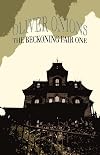
Paul Oleron is 15 chapters through his latest and probably most important book, the one that will make a name for him in the literary world. And by chance, while roaming the streets, trying to procrastinate rather than work on his novel he happens open an old house with a "To Let" sign tacked to the gate. After a few inquiries and a quick viewing of the hosue, he decides that the first floor would be spacious enough for him to work in -- definitely more room than his current cramped show more quarters. He moves in and settles himself nicely into his new surroundings.
When his journalist friend Elsie Bengough pays him a visit, she tells him right away to leave the house, that something doesn't seem quite right. Paul shrugs it off, even when Elsie scratches her wrist on a nail trying to open a window box -- a nail that Paul swears he removed days ago. As the days and weeks progress, a change takes over Paul, and he learns too late that perhaps Elsie was right about the house.
"The Beckoning Fair One" is a classic haunted house story, and what I enjoyed most about it was that the haunting was subtle and psychological. No ghostly vapors or doors opening and slamming shut by themselves. For Paul, a steady drip of water turns into and old Welsh tune or of a sudden he realizes that he's no longer alone in a room though no one else is visible. It reminded me quite a bit of Shirley Jackson's "The Haunting of Hill House" in that respect, where the haunting is alluded to and hides in a far corner to infect the atmosphere. This is the way to tell a haunted house tale, with subtlety and hints rather than ghosts jumping from every page. show less
When his journalist friend Elsie Bengough pays him a visit, she tells him right away to leave the house, that something doesn't seem quite right. Paul shrugs it off, even when Elsie scratches her wrist on a nail trying to open a window box -- a nail that Paul swears he removed days ago. As the days and weeks progress, a change takes over Paul, and he learns too late that perhaps Elsie was right about the house.
"The Beckoning Fair One" is a classic haunted house story, and what I enjoyed most about it was that the haunting was subtle and psychological. No ghostly vapors or doors opening and slamming shut by themselves. For Paul, a steady drip of water turns into and old Welsh tune or of a sudden he realizes that he's no longer alone in a room though no one else is visible. It reminded me quite a bit of Shirley Jackson's "The Haunting of Hill House" in that respect, where the haunting is alluded to and hides in a far corner to infect the atmosphere. This is the way to tell a haunted house tale, with subtlety and hints rather than ghosts jumping from every page. show less
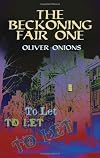
What really makes this story is how what's terrifying about the ghost is how its influence affects the mind and moods of the characters... Over and above shadows and bumps in the night, it's the depression and despair that accompany its presence.
A writer rents out a suite in a decrepit and long-empty home. Sinking his savings into renovations, he's eager to show the apartment off to his lady-friend, whom he anticipates will be delighted by what he's done with the old place. However, her show more reaction is quite the opposite. Even though everything is freshly painted and lovely, she hates it. Moreover, she seems terribly prone to accidents whenever she comes to visit. Meanwhile, the tenant can't seem to get a lick of work accomplished there, and the more he tries to buckle down and get his latest novel written, the more he seems convinced that it's no good, and that he's a failure.
And that's just the beginning of the horror...
(Just as a note, I think what really brought this up to 5 stars for me is the character of Elsie [the friend of the narrator]. She's just so bold and real - 'substantial' in more ways than one. She's one that's going to stick with me.)
(a re-read) show less
A writer rents out a suite in a decrepit and long-empty home. Sinking his savings into renovations, he's eager to show the apartment off to his lady-friend, whom he anticipates will be delighted by what he's done with the old place. However, her show more reaction is quite the opposite. Even though everything is freshly painted and lovely, she hates it. Moreover, she seems terribly prone to accidents whenever she comes to visit. Meanwhile, the tenant can't seem to get a lick of work accomplished there, and the more he tries to buckle down and get his latest novel written, the more he seems convinced that it's no good, and that he's a failure.
And that's just the beginning of the horror...
(Just as a note, I think what really brought this up to 5 stars for me is the character of Elsie [the friend of the narrator]. She's just so bold and real - 'substantial' in more ways than one. She's one that's going to stick with me.)
(a re-read) show less

SPOILER ALERT: Very ingenious title, which could refer to one of three (at least) things: (1) a judicial reconstruction of 'evidence" carefully contrived by the malefactor. (2) the gradual elaboration of motive based on the narrator's constructions (and misconstructions) of the "evidence" he witnesses at first, second or third hand, and (3) an indictment of the grinding social oppression characteristic of Victorian England, "evidence" of the ways that a rigid and pitiless system corrupts show more even the healthiest human impulses. show less
Lists
Awards


You May Also Like


Associated Authors
Statistics
- Works
- 51
- Also by
- 52
- Members
- 753
- Popularity
- #33,775
- Rating
- 3.9
- Reviews
- 10
- ISBNs
- 130
- Languages
- 3
- Favorited
- 4