

Bill Peet (1915–2002)
Author of The Wump World
About the Author
Bill Peet was born William Bartlett Peed on January 29, 1915 in Grandview, Indiana. He graduated from the John Herron Art Institute in Indianapolis. In 1937, he began his artistic career at Walt Disney Studios. While there, he worked on several feature films including Fantasia, Sleeping Beauty, show more Song of the South, Alice in Wonderland, and Peter Pan. He was both an artist and the screenwriter for several films including Cinderella, 101 Dalmatians, and Sword in the Stone. While working at Disney, he also wrote his own children's books and eventually left to become a full-time writer. His first book, Hubert's Hair-Raising Adventure, was published in 1955. During his lifetime, he wrote and illustrated 35 children's books including The Pinkish, Purplish, Bluish Egg; The Whingdingdilly; Chester the Worldly Pig; and Luckiest One of All. His book, Bill Peet: An Autobiography, was named a Caldecott Honor Book in 1989. He died on May 11, 2002 at the age of 87. (Bowker Author Biography) show less
Works by Bill Peet
Lambert the Sheepish Lion (Disney's Wonderful World of Reading) (1977) — Illustrator — 263 copies, 2 reviews
Disney Animation Collection Volume 3: The Prince And The Pauper and 4 short films — Writer — 13 copies
Tavern on the Green Cookbook: Seasonal Recipes and Historical Treasures from New York City's Iconic Restaurant (2026) 4 copies
Taikakukko Jupiter 1 copy
Soup 1 copy
Associated Works
Tagged
Common Knowledge
- Legal name
- Peet, William Bartlett
- Birthdate
- 1915-01-29
- Date of death
- 2002-05-11
- Gender
- male
- Education
- John Herron Art Institute
Arsenal Technical High School - Occupations
- animator
illustrator
screenwriter
children's book author - Organizations
- Walt Disney Studios
- Nationality
- USA
- Birthplace
- Grandview, Indiana, USA
- Places of residence
- Grandview, Indiana, USA
California, USA - Place of death
- Studio City, California, USA
- Associated Place (for map)
- California, USA
Members
Discussions
scifi about a species that advances so fast they pave over the world only to be forced to leave it in Name that Book (August 2010)
Reviews
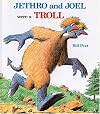
Jethro and Joel are a two-headed troll. Jethro just wants to peacefully grow turnips, but Joel wants to ravage the countryside. When Jethro lets Joel take over, the results are almost fatal. I need to start telling my boys to "keep your Joel in control." See that? It even rhymes, although this book does not.

Animator and children's book author Bill Peet, whose picture-books, while very entertaining, can also be a little message-heavy - I'm looking at you, Wump World and Prewitt Peacock - really hits the mark with How Droofus the Dragon Lost His Head, an endearing story of a vegetarian dragon who finally finds his place in the world. Separated from his family during the course of a long flight, Droofus the dragon crash lands in a remote location, and, having rescued a tiny grasshopper from a show more spider's web, decides that he can no longer eat his fellow creatures, and will subsist on grass. But although his new life (when not hiding from knights intent on beheading him) is peaceful, it is also a little boring. Until, that is, the day that he finally finds his calling as a farm-hand. Will all be well, or will the king's desire for a dragon head on his wall put an end to Droofus' newfound happiness?
I enjoyed the story here, and appreciated the fact that there isn't any overt didactic purpose to it - just an engaging tale that will keep young readers in suspense, as they race through, in order to find out just how Droofus loses his head. I always have a qualm or two, about stories in which animals that would normally be carnivores are depicted as vegetarians - especially when this difference indicates that they are "nicer" than others of their kind - as I think this sends children the wrong message about the natural world, and the creatures in it, and might lead to some misguided ideas about the nature of carnivorous species. But leaving that issue aside, this was just a fun little book, one I would recommend to all young readers who enjoy stories of gentle giants, sad beasts, and good "monsters." show less
I enjoyed the story here, and appreciated the fact that there isn't any overt didactic purpose to it - just an engaging tale that will keep young readers in suspense, as they race through, in order to find out just how Droofus loses his head. I always have a qualm or two, about stories in which animals that would normally be carnivores are depicted as vegetarians - especially when this difference indicates that they are "nicer" than others of their kind - as I think this sends children the wrong message about the natural world, and the creatures in it, and might lead to some misguided ideas about the nature of carnivorous species. But leaving that issue aside, this was just a fun little book, one I would recommend to all young readers who enjoy stories of gentle giants, sad beasts, and good "monsters." show less

Readers who found Dr. Seuss' The Lorax too simplistic a denunciation of pollution (and the causes thereof) will undoubtedly be appalled at Bill Peet's The Wump World, an environmentally-themed picture-book first published in 1970, in which an idyllic world inhabited by peaceful quadrupeds known as (what else?) Wumps, is invaded by the evil Pollutians! Soon, the grassy planet has been paved over, cities have risen, the skies are clogged with smoke, and the once-happy Wumps live in miserable show more exile beneath the surface of their own world. Can things ever be set to rights...?
The answer to that, of course, is yes and no - and that's about the only example of "nuance" in the story. Released the year before The Lorax, this book was definitely a trail-blazer, one of the first children's storybooks to address the issues of pollution and environmental degradation. The story itself is engaging, with classic good guys (gentle Wumps) and bad guys (expansionist Pollutians), and adorable artwork. I found it entertaining enough that I will be seeking out more of Bill Peete's work.
But although The Wump World does a good job of raising awareness about the damage done by pollution (and interplanetary colonization, one presumes) it really does nothing to increase its readers' understanding of that pollution - what causes it, and how to fight it. Many of the pressing environmental problems facing us today have little to do with evil outsiders, and everything to do with bad habits, and unhealthy social and economic structures. With close to half of the human population now living in urban environments, Peet's evident distaste for cities didn't seem very constructive to me. It may be unfair, but I couldn't help comparing this with Pete Brown's excellent The Curious Garden, which chronicles the ways in which a city landscape is improved by gardens.
Still, despite these criticisms, I enjoyed the story, loved the illustrations, and respect Peet's role as a picture-book pioneer. The Wump World is still relevant, and still has a place on the contemporary children's shelf. Just make sure you also have books like The Curious Garden. show less
The answer to that, of course, is yes and no - and that's about the only example of "nuance" in the story. Released the year before The Lorax, this book was definitely a trail-blazer, one of the first children's storybooks to address the issues of pollution and environmental degradation. The story itself is engaging, with classic good guys (gentle Wumps) and bad guys (expansionist Pollutians), and adorable artwork. I found it entertaining enough that I will be seeking out more of Bill Peete's work.
But although The Wump World does a good job of raising awareness about the damage done by pollution (and interplanetary colonization, one presumes) it really does nothing to increase its readers' understanding of that pollution - what causes it, and how to fight it. Many of the pressing environmental problems facing us today have little to do with evil outsiders, and everything to do with bad habits, and unhealthy social and economic structures. With close to half of the human population now living in urban environments, Peet's evident distaste for cities didn't seem very constructive to me. It may be unfair, but I couldn't help comparing this with Pete Brown's excellent The Curious Garden, which chronicles the ways in which a city landscape is improved by gardens.
Still, despite these criticisms, I enjoyed the story, loved the illustrations, and respect Peet's role as a picture-book pioneer. The Wump World is still relevant, and still has a place on the contemporary children's shelf. Just make sure you also have books like The Curious Garden. show less

The other peacocks in Prewitt's pride, from the very grand Phineas, with his magnificent tail, to Phineas' many followers, had little use for their smallest and least significant member, with his scraggly two tail feathers. But when Prewitt's tail begins to take on a rather spooky appearance - with bushy eyebrows beginning to form over the two eye spots, and a jagged mouth, and grasping claws appearing - he is given a choice: lose his tail altogether, or be ejected from the pride. show more Heartbroken, Prewitt contemplates the choice between turning his back on who he is, or turning his back on the only companions he has ever known. Is there, perhaps, a third choice...?
Like The Wump World, the only other Bill Peet title I have read, The Spooky Tail of Prewitt Peacock is a little message-heavy. It is an earnestly delivered, obviously heartfelt, and very good message, of course - namely, that differences can be a strength, and that we shouldn't have to sacrifice our identity, in order to belong to a group - but it still lurks rather prominently, just beneath the surface of the text. Still, if one can ignore that, the story itself is a lot of fun (I was reminded of Tacky the Penguin, another tale of a misfit whose oddity saves the day), and the colorful illustrations are engaging. show less
Like The Wump World, the only other Bill Peet title I have read, The Spooky Tail of Prewitt Peacock is a little message-heavy. It is an earnestly delivered, obviously heartfelt, and very good message, of course - namely, that differences can be a strength, and that we shouldn't have to sacrifice our identity, in order to belong to a group - but it still lurks rather prominently, just beneath the surface of the text. Still, if one can ignore that, the story itself is a lot of fun (I was reminded of Tacky the Penguin, another tale of a misfit whose oddity saves the day), and the colorful illustrations are engaging. show less
Lists
Sonlight Books (1)
Awards


You May Also Like


Associated Authors
Statistics
- Works
- 51
- Also by
- 3
- Members
- 17,978
- Popularity
- #1,223
- Rating
- 4.0
- Reviews
- 182
- ISBNs
- 419
- Languages
- 11
- Favorited
- 18
