
Don Juan Manuel (1282–1348)
Author of Tales of Count Lucanor
About the Author
Works by Don Juan Manuel
The book of Count Lucanor and Patronio : a translation of Don Juan Manuel's El Conde Lucanor (1994) 7 copies
Leer y aprender : Don Juan Manuel : El conde Lucanor [book + sound recording] (2008) — Writer — 3 copies
Associated Works
The Masterpiece Library of Short Stories Vol. XVIII: Spanish & Portuguese (1900) — Contributor — 5 copies
Tagged
Common Knowledge
- Legal name
- Manuel de Castilla y Saboya, Juan
- Other names
- Manuel, Juan
- Birthdate
- 1282-05-05
- Date of death
- 1348-06-13
- Gender
- male
- Occupations
- writer
- Relationships
- Alfonso X (uncle)
- Nationality
- Castile
- Birthplace
- Escalona, Spain
- Places of residence
- Escalona, New Castile
Cordoba, New Castile - Place of death
- Cordoba, Spain
- Map Location
- Spain
Members
Reviews
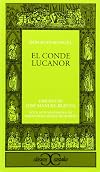
I went into this book with low expectations because, after reading the introductory biography of Don Juan Manuel, I wasn't sure how much I would like him and his collection of medieval exempla. He came off as arrogant and super-serious, and his constant political scheming was off-putting as well. I imagined him as one of the haughty noble enemies of El Cid, a product of the conservative high nobility of medieval Spain whose vanity and pride bred conflict with the lower strata of society. I show more mean, he was the nephew of wise King Alfonso X himself, so he must have come up in the very lap of luxury, consorting with princes, becoming an expert falconer (he loved falconry) and practicing for an adulthood full of political intrigue. Nothing in the pages of this book did much to dispel my mental image of Don Juan Manuel, but as I read, I found myself caring less and less whether I would have liked the man, because I found a lot to like in his writing. He takes himself very seriously, but his conception of morality is less reliant on high birth and nobility and more reliant on good deeds and honor than I expected. Maybe he was arrogant and haughty, but if he wasn't, he probably wouldn't have signed his works, included detailed catalogues of everything he wrote in his prologues, and given so much biographical information about himself in his various manuscripts. It took a man like him (or like his uncle Alfonso X) to rise up out of medieval anonymity, leaving behind a consolidated collection of medieval thought, and also an idea of the writer himself.
El Conde Lucanor is a series of fifty stories with morals, taken from a wide variety of sources. There are interpretations of Aesop's fables, traditional Arabian stories, stories about famous Spaniards like Fernán González and Álvar Fáñez, and other tales from the European tradition. The stories begin with Count Lucanor asking his advisor Patronio for advice on a certain situation he's facing, and each story serves to help him make an honorable and just decision. When each story ends, Don Juan steps in to say that he approves of the message and thought it wise to include it in this collection, summarizing the moral of the story in a few lines of (mediocre) poetry. There were some stories that I especially liked:
--Stories about obtaining honor through one's deeds in life. I was glad to see that Don Juan believed that every man, regardless of his social position, was capable of living a highly honorable life. It reminded me of Sancho Panza's refrain "no con quien naces, sino con quien paces" (not with whom you're born, rather with whom you consort).
--Stories about not resting on your laurels as you grow older because there's a war going on outside no man is safe from, and since doing battle with Moors in Spain is the most honorable thing to do, that's what you've got to do. There were a couple of these where Count Lucanor was like, "hey, I've got all I need right now, let me just sit back and chill." Patronio does not advise him to do this, reminding him that Fernán González once felt the same way, but was convinced of the wrongness of such laziness in the face of Moorish threats in medieval Spain.
--Stories that were especially graphic in nature. There's one where a man succesively butchers his dog, cat and horse in order to illustrate that if his orders aren't followed, there will be consequences. In another, a man is struck with leprosy due to his sins and makes a pilgrimage to the Holy Land, accompanied by his loyal vassals. He thinks they're disgusted by him, and to prove the point that they love him and are with him no matter what, they drink from a basin of water they've just used to wash his decaying body.
--The story of Don Yllán, an alchemist in Toledo who accepts the Dean of Santiago as his pupil in the dark arts. The Dean keeps getting promoted up the church hierarchy, and promises Don Yllán that he'll repay him for his teachings if he's just patient and stays with him as he moves up the ladder. He never does repay Don Yllán, and eventually he pays a hefty price for his ungratefulness. Jorge Luis Borges included this story in his Universal History of Infamy, and I was surprised and happy to encounter it here.
At times I was bored by the repetition, but the stories are all short and relatively entertaining, so I never had any desire to put the book down. The last collection of exempla I read was a newer translation of Arabian Nights, and I remember that I really enjoyed how, in that book, stories fit inside of other stories like a set of Russian dolls. I missed that here, because in this book, it's just one story after another, with limited connections between the various exempla. Nonetheless, I enjoyed reading this collection of popular tales from 14th century Spain, and I hope that I'll recognize little elements of Don Juan's influence when I go back and re-read books I like from the Spanish Golden Age.
After the exempla, there are four more chapters. Don Juan writes that, while his stories are enjoyable and straightforward and all, he's got a friend who has been bothering him to write down some darker stuff. Stuff that the simpler mind might have trouble understanding. So he starts listing proverbs that are more and more difficult to unravel. Some of them are almost like tongue twisters in the way that they build on a specific and repeated word: La razón es razón de razón; Por razón es el omne cosa de razón; La razón da razón. Others, through their syntactic and semantic twists and turns, prefigure some of the complexity of the Spanish Baroque. As a whole, it's quite a collection of proverbs, and I'm glad that Don Juan decided to include this glossary at the end of his book. I'll refer to it when I read Don Quijote again and the proverbs start flowing out of Sancho's mouth, and I'll close with a few of my favorites:
Todas las cosas naçen pequeñas y creçen; el pesar nasçe grande et cada día mengua. (All things are born small and grow; grief is born large and each day lessens)
Todos los omnes se engañan en sus fijos et en su apostura et en sus vondades et en su canto. (All men kid themselves with respect to their sons, their handsomness, their good qualities and their singing voice)
Los cavalleros et el aver son ligeros de nombrar et de perder, et graves de ayuntar et más de mantener. (Knights and possessions are easy to list and to lose, and hard to amass and harder still to maintain)
Qui faze jurar al que bee que quiere mentir, ha parte en l' pecado. (He who takes an oath from a man whom he knows wants to lie, has a part in the sin)
Cuerdo es quien se guía por lo que contesçió a los que passaron. (Wise is he who guides himself by what happened to others in the past) show less
El Conde Lucanor is a series of fifty stories with morals, taken from a wide variety of sources. There are interpretations of Aesop's fables, traditional Arabian stories, stories about famous Spaniards like Fernán González and Álvar Fáñez, and other tales from the European tradition. The stories begin with Count Lucanor asking his advisor Patronio for advice on a certain situation he's facing, and each story serves to help him make an honorable and just decision. When each story ends, Don Juan steps in to say that he approves of the message and thought it wise to include it in this collection, summarizing the moral of the story in a few lines of (mediocre) poetry. There were some stories that I especially liked:
--Stories about obtaining honor through one's deeds in life. I was glad to see that Don Juan believed that every man, regardless of his social position, was capable of living a highly honorable life. It reminded me of Sancho Panza's refrain "no con quien naces, sino con quien paces" (not with whom you're born, rather with whom you consort).
--Stories about not resting on your laurels as you grow older because there's a war going on outside no man is safe from, and since doing battle with Moors in Spain is the most honorable thing to do, that's what you've got to do. There were a couple of these where Count Lucanor was like, "hey, I've got all I need right now, let me just sit back and chill." Patronio does not advise him to do this, reminding him that Fernán González once felt the same way, but was convinced of the wrongness of such laziness in the face of Moorish threats in medieval Spain.
--Stories that were especially graphic in nature. There's one where a man succesively butchers his dog, cat and horse in order to illustrate that if his orders aren't followed, there will be consequences. In another, a man is struck with leprosy due to his sins and makes a pilgrimage to the Holy Land, accompanied by his loyal vassals. He thinks they're disgusted by him, and to prove the point that they love him and are with him no matter what, they drink from a basin of water they've just used to wash his decaying body.
--The story of Don Yllán, an alchemist in Toledo who accepts the Dean of Santiago as his pupil in the dark arts. The Dean keeps getting promoted up the church hierarchy, and promises Don Yllán that he'll repay him for his teachings if he's just patient and stays with him as he moves up the ladder. He never does repay Don Yllán, and eventually he pays a hefty price for his ungratefulness. Jorge Luis Borges included this story in his Universal History of Infamy, and I was surprised and happy to encounter it here.
At times I was bored by the repetition, but the stories are all short and relatively entertaining, so I never had any desire to put the book down. The last collection of exempla I read was a newer translation of Arabian Nights, and I remember that I really enjoyed how, in that book, stories fit inside of other stories like a set of Russian dolls. I missed that here, because in this book, it's just one story after another, with limited connections between the various exempla. Nonetheless, I enjoyed reading this collection of popular tales from 14th century Spain, and I hope that I'll recognize little elements of Don Juan's influence when I go back and re-read books I like from the Spanish Golden Age.
After the exempla, there are four more chapters. Don Juan writes that, while his stories are enjoyable and straightforward and all, he's got a friend who has been bothering him to write down some darker stuff. Stuff that the simpler mind might have trouble understanding. So he starts listing proverbs that are more and more difficult to unravel. Some of them are almost like tongue twisters in the way that they build on a specific and repeated word: La razón es razón de razón; Por razón es el omne cosa de razón; La razón da razón. Others, through their syntactic and semantic twists and turns, prefigure some of the complexity of the Spanish Baroque. As a whole, it's quite a collection of proverbs, and I'm glad that Don Juan decided to include this glossary at the end of his book. I'll refer to it when I read Don Quijote again and the proverbs start flowing out of Sancho's mouth, and I'll close with a few of my favorites:
Todas las cosas naçen pequeñas y creçen; el pesar nasçe grande et cada día mengua. (All things are born small and grow; grief is born large and each day lessens)
Todos los omnes se engañan en sus fijos et en su apostura et en sus vondades et en su canto. (All men kid themselves with respect to their sons, their handsomness, their good qualities and their singing voice)
Los cavalleros et el aver son ligeros de nombrar et de perder, et graves de ayuntar et más de mantener. (Knights and possessions are easy to list and to lose, and hard to amass and harder still to maintain)
Qui faze jurar al que bee que quiere mentir, ha parte en l' pecado. (He who takes an oath from a man whom he knows wants to lie, has a part in the sin)
Cuerdo es quien se guía por lo que contesçió a los que passaron. (Wise is he who guides himself by what happened to others in the past) show less

I read this book in high school and I have to admit that I loved it. The stories of el Conde are hilarious, and they always have a teaching at the enda, as if they were fables. I loved the narrative and the language used; I highly recommend it.

"El Conde Lucanor" de Don Juan Manuel es una obra medieval escrita entre 1331 y 1335. Se compone de 51 cuentos con una estructura repetitiva: el conde Lucanor plantea un problema a su consejero Patronio, quien responde con una historia que contiene una moraleja. La obra es un reflejo de la tradición didáctica y la literatura sapiencial de la época.

I have appeared to review this tale semi-favorably, but the reality may be otherwise
You May Also Like


Associated Authors
Statistics
- Works
- 40
- Also by
- 5
- Members
- 1,010
- Popularity
- #25,529
- Rating
- 3.8
- Reviews
- 23
- ISBNs
- 158
- Languages
- 8
