
David Flusser (1917–2000)
Author of Jesus
About the Author
David Flusser (1917-2000) was professor of early Christianity and Second Temple Judaism at the Hebrew University of Jerusalem.
Image credit: דוד פלוסר (David Flusser)
Works by David Flusser
Die letzten Tage Jesu in Jerusalem. Das Passionsgeschehen aus jüdischer Sicht. Bericht über neueste Forschungsergebnisse (1982) 4 copies
Die rabbinischen Gleichnisse und der Gleichniserzähler Jesus (Judaica Et Christiana, Vol 4) (1981) 3 copies
ספר יוסיפון 1 copy
ספר יוסיפון 1 copy
Esejské dobrodružství : židovské společenství od Mrtvého moře : čeho si lze povšimnout u Ježíše, Pavla, Di (1999) 1 copy
Esejské dobrodružství 1 copy
Freiburger Rundbrief - Beiträge zur christl.-jüd. Begegnung, No. 101/104, Jahrgang: XXVII 1975 1 copy
Das essenische Abenteuer: Die jüdische Gemeinde vom Toten Meer. Auffälligkeiten bei Jesus, Paulus, Didache und Martin Buber (1994) 1 copy
המקורות היהודיים של הנצרות / 1 copy
Associated Works
Tagged
Common Knowledge
- Canonical name
- Flusser, David
- Legal name
- פלוסר, דוד
- Birthdate
- 1917-09-15
- Date of death
- 2000-09-15
- Gender
- male
- Education
- University of Prague
Hebrew University of Jerusalem - Occupations
- Professor of early Christianity and Judaism
- Organizations
- Hebrew University of Jerusalem
- Nationality
- Austria-Hungary
Israel - Birthplace
- Vienna, Austro-Hungarian Empire
- Places of residence
- Jerusalem, Israel
Příbram, Bohemia, Austria-Hungary - Place of death
- Jerusalem, Israel
Members
Reviews
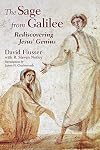
Table of Contents:
Forward, by R. Steven Notley
Introducing David Flusser’s Jesus, by James H. Charlesworth
Preface
1: The Sources
2. Ancestry
3. Baptism
4. Law
5. Love
6. Ethics
7. The Kingdom of Heaven
8. The Son
9. The Son of Man
10. Jerusalem
11. Death
12. Epilogue
Chronological Table
Bibliography
Index of Subjects
Index of Scripture References
From Chapter 1 to the end of Chapter 12 it is 165 pages.
In David Flusser’s own words, “The main purpose of this book is to show that it is possible to write show more the story of Jesus’ life.” This work is the conclusion of many decades of research and dedication to understanding the second temple period and Jesus. Originally, this was German book published in 1968. From that time, this book was translated into English in 1997. The content of the book has matured since the first editions in German and English through the archeological discoveries and maturing of David Flusser’s own thinking. The first edition can be considered a mere beginning of his investigations and this edition is the culmination of his life’s work. As such, this book should be treated more as a new work rather than a revision.
Some of Flusser’s driving belief structures are discussed in chapter 1 and continue to be divulged through the course of the book. Some of these beliefs are 1) it is possible to tell the story of Jesus through the Gospel accounts 2) foundationally, Jesus functioned as a miracle worker and preacher; not a “kerygmatic” risen Lord 3) Jesus learned Judaism (thus was impacted by His contemporary teachers/movements) and revolutionized certain aspects of Judaism 4) the gospel accounts are based on one or more non-extant with Luke being the most accurate at preserving the early source of the historical Jesus.
Pros: David Flusser does a great job of combing through tons of second temple (and post temple period) literature and showing parallels between Jesus and other movements. Flusser did not set down all the technical details of those things which will ease the load for the average reader and provide a foundation for further research. Among varies literatures that the author utilizes, he most often went back to Essene for comparisons which is relatively new scholarship. Flusser also show examples of other people who were similar to Jesus, such as the Galileans Abba Hilkia and Rabbi Hanina ben Dosa. Flusser does a great job in highlighting what Jesus revolutionized: 1) “radical interpretation of the commandment of mutual love” 2) “the call for a new morality” and 3) “the idea of the kingdom of heaven.”
Cons: I can’t mention many cons for myself, but one I know would be important to others. Flusser does not accept that the so called “kerygmatic” is the actual Jesus. As such, he believes there has been some tampering to the gospel accounts to make a “kerygmatic” Christ. This would be the largest stumbling block for some Christians I know.
Conclusions: David Flusser has built the historical Jesus, and this book is well worth the study and read. Even though David Flusser does not accept the full gospel story, it should not prevent the reader from making his/her own judgments on a great deal of material. show less
Forward, by R. Steven Notley
Introducing David Flusser’s Jesus, by James H. Charlesworth
Preface
1: The Sources
2. Ancestry
3. Baptism
4. Law
5. Love
6. Ethics
7. The Kingdom of Heaven
8. The Son
9. The Son of Man
10. Jerusalem
11. Death
12. Epilogue
Chronological Table
Bibliography
Index of Subjects
Index of Scripture References
From Chapter 1 to the end of Chapter 12 it is 165 pages.
In David Flusser’s own words, “The main purpose of this book is to show that it is possible to write show more the story of Jesus’ life.” This work is the conclusion of many decades of research and dedication to understanding the second temple period and Jesus. Originally, this was German book published in 1968. From that time, this book was translated into English in 1997. The content of the book has matured since the first editions in German and English through the archeological discoveries and maturing of David Flusser’s own thinking. The first edition can be considered a mere beginning of his investigations and this edition is the culmination of his life’s work. As such, this book should be treated more as a new work rather than a revision.
Some of Flusser’s driving belief structures are discussed in chapter 1 and continue to be divulged through the course of the book. Some of these beliefs are 1) it is possible to tell the story of Jesus through the Gospel accounts 2) foundationally, Jesus functioned as a miracle worker and preacher; not a “kerygmatic” risen Lord 3) Jesus learned Judaism (thus was impacted by His contemporary teachers/movements) and revolutionized certain aspects of Judaism 4) the gospel accounts are based on one or more non-extant with Luke being the most accurate at preserving the early source of the historical Jesus.
Pros: David Flusser does a great job of combing through tons of second temple (and post temple period) literature and showing parallels between Jesus and other movements. Flusser did not set down all the technical details of those things which will ease the load for the average reader and provide a foundation for further research. Among varies literatures that the author utilizes, he most often went back to Essene for comparisons which is relatively new scholarship. Flusser also show examples of other people who were similar to Jesus, such as the Galileans Abba Hilkia and Rabbi Hanina ben Dosa. Flusser does a great job in highlighting what Jesus revolutionized: 1) “radical interpretation of the commandment of mutual love” 2) “the call for a new morality” and 3) “the idea of the kingdom of heaven.”
Cons: I can’t mention many cons for myself, but one I know would be important to others. Flusser does not accept that the so called “kerygmatic” is the actual Jesus. As such, he believes there has been some tampering to the gospel accounts to make a “kerygmatic” Christ. This would be the largest stumbling block for some Christians I know.
Conclusions: David Flusser has built the historical Jesus, and this book is well worth the study and read. Even though David Flusser does not accept the full gospel story, it should not prevent the reader from making his/her own judgments on a great deal of material. show less

NO OF PAGES: 89 SUB CAT I: First Century Judaism SUB CAT II: Jewish Roots SUB CAT III: DESCRIPTION: In this volume, Prof. Flusser deals, in a clear and popular way, with the Jewish sources of Christianity. One is unable to understand Christianity without knowing its Jewish roots. This volume shows how Christian thought developed from Judaism, and its attempts to develop an independent line of thought of its own.NOTES: SUBTITLE:
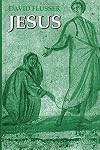
NO OF PAGES: 316 SUB CAT I: Yeshua SUB CAT II: Faith in Yeshua SUB CAT III: DESCRIPTION: This biography of the life of Yeshua approaches the subject from a philological-historical angle. He brings in first-century Jewish society in light of the Dead Sea Scrolls.NOTES: SUBTITLE:
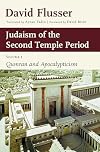
NO OF PAGES: 356 SUB CAT I: Dead Sea Scrolls SUB CAT II: Apocalyptic SUB CAT III: First Century Judaism DESCRIPTION: Flusser examines the influence of apocalypticism on various Jewish sects. He states that the teachings of Jesus, while reflecting first and foremost the views of the sages, were also influenced by Jewish apocalypticism. Examining the Essenes, their effect on Hebrew language, the split of sects, and much more, Flusser's collected essays offer an important source of study for show more any Dead Sea Scrolls scholar.NOTES: Purchased from Jerusalem Perspective. SUBTITLE: Qumran and Apocalypticism show less
You May Also Like


Associated Authors
Statistics
- Works
- 51
- Also by
- 1
- Members
- 701
- Popularity
- #36,119
- Rating
- 4.3
- Reviews
- 8
- ISBNs
- 67
- Languages
- 10
- Favorited
- 1