
Huey P. Newton (1942–1989)
Author of Revolutionary Suicide
About the Author
Image credit: Image of Huey P. Newton from national Archives Footage By Department of Justice. Federal Bureau of Investigation. 1935- (Most Recent)From: Series: Motion Picture Films and Video Recordings, ca. 1936 - ca. 1985Record Group 65: Records of the Federal Bureau of Investigation, 1896 - 2008, Public Domain, https://commons.wikimedia.org/w/index.php?curid=66559222
Works by Huey P. Newton
Essays from the Minister of Defense 4 copies
The Last Speeches of Huey P. Newton 4 copies
Prison, Where is Thy Victory? 3 copies
Huey Newton Talks to the Movement about the Black Panther Party, Cultural Nationalism, Sncc, Liberals, and White Revolutionaries (1968) 2 copies
Huey Newton on "Black Capitalism" 2 copies
Black Politics : A Journal of Liberation Vol. 1, #4 & 5: Special Issue -- Huey P. Newton (1968) 2 copies
Intercommunalism (1974) 1 copy
The Black Panther 1 copy
Associated Works
Tagged
Common Knowledge
- Canonical name
- Newton, Huey P.
- Legal name
- Newton, Huey Percy
- Birthdate
- 1942-02-17
- Date of death
- 1989-08-22
- Gender
- male
- Education
- University of California, Santa Cruz (BA|1974|Ph.D|1980)
Merritt College (AA|1966) - Occupations
- political activist
- Organizations
- Black Panther Party (co-founder)
- Relationships
- Newton, Fredrika (spouse)
- Cause of death
- murder
- Nationality
- USA
- Birthplace
- Monroe, Louisiana, USA
- Places of residence
- Oakland, California, USA
- Place of death
- Oakland, California, USA
- Burial location
- Evergreen Cemetery, Oakland, California, USA
- Associated Place (for map)
- Oakland, California, USA
Members
Reviews
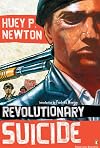
I didn’t know much about the Black Panther Party or Huey P. Newton before reading this book – only what I was “taught” in school. And I don’t think Huey P. Newton was mentioned at all. He was an amazing human being. He was functionally illiterate when he graduated from high school and taught himself to read using Plato’s Republic. Not Dick and Jane – Plato! After that, he read widely and formed a lot of the Black Panther’s philosophy from the books he read – Karl Marx, Mao show more Zedong and the like. He was very intelligent and a great strategist.
In many ways, Black people’s interactions with the police have actually gotten worse since that time. The Black Panthers openly carried firearms in public. Can you imagine if Black people tried to do that today? They also carried law books with them and would read from them to police officers when police officers were trying to wrongly arrest somebody something or otherwise violate a person’s rights. If a Black person tried to pull out a law book today during a police encounter, it would not go over well. The policeman would get mad and the situation would escalate. But back then, it actually worked sometimes.
Sometimes the Black Panthers would come across a policeman stopping a citizen and they would stand at a distance with their weapons to let the police know that they were being watched. Today, people do the same thing by pulling out their cell phones to record these situations. It’s sad that over forty years later, the police still need bystanders to hold them accountable for their behavior.
I learned a lot about Newton and the Black Panthers from reading this book. I still have more to learn and plan on seeking out more books about this topic and time in history. Highly recommended. show less
In many ways, Black people’s interactions with the police have actually gotten worse since that time. The Black Panthers openly carried firearms in public. Can you imagine if Black people tried to do that today? They also carried law books with them and would read from them to police officers when police officers were trying to wrongly arrest somebody something or otherwise violate a person’s rights. If a Black person tried to pull out a law book today during a police encounter, it would not go over well. The policeman would get mad and the situation would escalate. But back then, it actually worked sometimes.
Sometimes the Black Panthers would come across a policeman stopping a citizen and they would stand at a distance with their weapons to let the police know that they were being watched. Today, people do the same thing by pulling out their cell phones to record these situations. It’s sad that over forty years later, the police still need bystanders to hold them accountable for their behavior.
I learned a lot about Newton and the Black Panthers from reading this book. I still have more to learn and plan on seeking out more books about this topic and time in history. Highly recommended. show less
Huey P. Newton understood and explained with astuteness the function of an establishment (u.s.a) whose goal is to continue the exploitation and ultimate genocide of Black and Brown working class people. It was through Newtons lived experiences that I learned what the true difference between revolutionary and reactionary suicide is and most importantly, I understood the amount of power people hold.
Revolutionary Suicide is largely the autobiography of Huey P. Newton. Despite the promise of the Introduction, there is very little theory present.
Nonetheless, as autobiographies go, this is an intriguing one. Newton is a genuine Marxist-Maoist and his interpretation of how that ideology can benefit black Americans is not one that is spoken of much these days. Seeing him apply these ideas throughout his life and actually living his beliefs reminds one of how different the political climate show more is today. An engaging, if uneven, read. show less
Nonetheless, as autobiographies go, this is an intriguing one. Newton is a genuine Marxist-Maoist and his interpretation of how that ideology can benefit black Americans is not one that is spoken of much these days. Seeing him apply these ideas throughout his life and actually living his beliefs reminds one of how different the political climate show more is today. An engaging, if uneven, read. show less
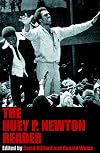
Fascinating if you're interested in the Black Panthers, probably not so much otherwise. The first quarter is an extract from his autobiography Revolutionary Suicide, which I really want to read now and would probably be a better bet if you're not interested in the more detailed parts of his ideology and how it developed - it's a pretty gripping read even with just the short extract. The end chapter is an extract from War Against The Panthers which was his doctoral thesis and talks about the show more ways the FBI tried to bring them down - they're the sort of things that are completely expected but still incredible to have confirmed and I think the book would make an important case study on the issue of police repression.
The biggest frustration here is that he never really explains deeply some of his positions - I'm thinking primarily here of his ideas about intercommunalism. I don't know if he just never wrote more articles answering questions on the topic or what but I didn't really get a good grip on what he's talking about, which is annoying because it seems to have been an important part of his later ideology. Overall the impression you get is of someone who is serious about working in the Marxist tradition (he rejects the term Marxist because of its connotations with dogmatic people who believe in re-runs of 1917) - he talks constantly about dialectics, he references Mao, Che, Marx, Lenin (both directly and through borrowed metaphors etc), he focuses on the economic dimension. He constantly criticises himself and previous party positions and comes across as highly honest and dedicated. I came away from the book impressed by a revolutionary hero. show less
The biggest frustration here is that he never really explains deeply some of his positions - I'm thinking primarily here of his ideas about intercommunalism. I don't know if he just never wrote more articles answering questions on the topic or what but I didn't really get a good grip on what he's talking about, which is annoying because it seems to have been an important part of his later ideology. Overall the impression you get is of someone who is serious about working in the Marxist tradition (he rejects the term Marxist because of its connotations with dogmatic people who believe in re-runs of 1917) - he talks constantly about dialectics, he references Mao, Che, Marx, Lenin (both directly and through borrowed metaphors etc), he focuses on the economic dimension. He constantly criticises himself and previous party positions and comes across as highly honest and dedicated. I came away from the book impressed by a revolutionary hero. show less
Lists
You May Also Like


Associated Authors
Statistics
- Works
- 24
- Also by
- 5
- Members
- 1,151
- Popularity
- #22,319
- Rating
- 4.1
- Reviews
- 10
- ISBNs
- 31
- Languages
- 2