
Patrick Dennis (1921–1976)
Author of Auntie Mame: An Irreverent Escapade
About the Author
Disambiguation Notice:
a.k.a. Edward Everett Tanner, III
Series
Works by Patrick Dennis
Oh, What a Wonderful Wedding 3 copies
Raj 1 copy
Petite Belle, les souvenirs intimes de Belle Poitrine, la grande star de la scène et de l'écran 1 copy, 1 review
La tieta Mame. Tasta'm 1 copy
Associated Works
Tagged
Common Knowledge
- Canonical name
- Dennis, Patrick
- Legal name
- Tanner, Edward Everett, III
- Other names
- Rowans, Virginia
- Birthdate
- 1921-05-18
- Date of death
- 1976-11-06
- Gender
- male
- Education
- Evanston Township High School, Evanston, Illinois, USA
- Occupations
- butler
author - Organizations
- American Field Service (WWII)
- Relationships
- Stickney, Louise (wife)
Tanner, Michael (son) - Short biography
- Patrick Dennis (1921-1976) was the author of sixteen books including the enormously popular bestselling camp classic “Auntie Mame”. He was born Edward Everett Tanner III in Evanston, Illinois in 1921. He began using his nom de plume when he attended Evanston High. Though he struggled with his homosexual urges his entire life, in 1948 he married Louise Stickney and fathered two children.
After writing two novels under a pseudonym, in 1955 Dennis exploded onto the literary scene with “Auntie Mame” – a comic masterpiece that spent 112 weeks on the bestseller list. Written in a mere 90 days, the novel is the witty tale of Chicago born ‘Patrick Dennis' recalling his experiences growing up as the ward of his free-spirited aunt. The advent of ‘Mame Dennis' on popular culture helped him to almost single-handedly introduce mainstream America to high camp. The novel spawned a sequel and was adapted for stage and screen and later revamped as a musical. In 1956, with “Auntie Mame”; “The Loving Couple: His (and Her) Story”; and “Guestward, Ho!” all in release, Patrick Dennis became the first writer to have three books on the New York Times bestseller list simultaneously.
Soon Dennis became a fixture in the New York gay scene. He wrote sixteen books in all, but by the early 1970s they had all gone out of print. Ironically, not unlike the legendary ‘Auntie Mame' he created, Dennis squandered a fortune in royalties with lavish living. Undaunted, he chose to reinvent himself. Using his real name, Edward Tanner, he found employment as a domestic, even working for a while in Chicago as a butler to McDonald's founder, Ray Kroc. His employers had no idea the man on their staff was really world famous author Patrick Dennis.
In the mid-1970s Dennis grew ill, and in 1976, the man who brought ‘Mame Dennis Burnside' to life died from pancreatic cancer at age 55. - Cause of death
- pancreatic cancer
- Nationality
- USA
- Birthplace
- Chicago, Illinois, USA
- Places of residence
- Evanston, Illinois, USA
- Place of death
- New York, New York, USA
- Burial location
- James Episcopal Church Graveyard, St. James, Smithtown, Suffolk, New York, USA
- Map Location
- USA
- Disambiguation notice
- a.k.a. Edward Everett Tanner, III
- Associated Place (for map)
- USA
Members
Reviews
Little Me, The Intimate Memoirs of That Great Star of Stage, Screen and Television, Belle Poitrine by Patrick Dennis

The camp classic "autobiography" of superstar Belle Poitrine (nee Maybelle Schlumpfert), whose memoirs have been "indiscreetly confided" to Patrick Dennis (author or another camp classic, Auntie Mame). As amusing as Dennis' text is in this celebrity-tell-all parody, it's the weird and hilarious photographs of Cris Alexander which push this odd book into a wonderful bizarro stratosphere.
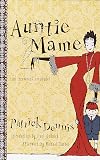
Subtitle: An Irreverent Escapade
Oh, what an absolute delight! I love Mame … she’s outrageous, convivial, adventurous, kind, a bon vivant, prone to exaggeration, unable to resist, unabashedly lacking in marketable skills, and yet full of confidence. She’s also completely and utterly devoted to her nephew, Patrick, who’s been orphaned and placed in her care at the tender age of nine. Oh, what an education he gets!
What started as a few essays in periodicals has been framed into this show more novel “memoir.” It’s funny and tender, horrifying and enthralling. I was appalled at some of Mame’s escapades, but enthralled by others, and always I was in her corner, cheering her on.
I’ve wanted to read this for years, ever since I had seen the marvelous movie starring Rosalind Russell, and I admit to picturing her throughout the novel. show less
Oh, what an absolute delight! I love Mame … she’s outrageous, convivial, adventurous, kind, a bon vivant, prone to exaggeration, unable to resist, unabashedly lacking in marketable skills, and yet full of confidence. She’s also completely and utterly devoted to her nephew, Patrick, who’s been orphaned and placed in her care at the tender age of nine. Oh, what an education he gets!
What started as a few essays in periodicals has been framed into this show more novel “memoir.” It’s funny and tender, horrifying and enthralling. I was appalled at some of Mame’s escapades, but enthralled by others, and always I was in her corner, cheering her on.
I’ve wanted to read this for years, ever since I had seen the marvelous movie starring Rosalind Russell, and I admit to picturing her throughout the novel. show less
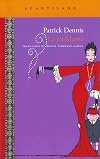
¿Que les digo? Este libro es una delicia de pies a cabeza, de principio a fin, la tía Mame es todo un personaje, alguien digno de conocer y es inevitable amarla, adorarla, querer matarla y darle unas cuantas cachetadas también.
De verdad que disfrute tanto este libro, que no puedo mas que pensar en que todo el mundo debería leerlo y todos deberíamos tener a una tía mame en nuestras vidas, una mujer revolucionaria para su época, una mujer dramática, divertida, salerosa, ingenua, show more inteligente, divertida, complicada, cercana, pero sobre todo muy Mame.
Patrick, queda huérfano a los 10 años y tiene que irse a vivir con su Tía Mame, así empieza esta historia donde Patrick nos cuenta su vida con ella, los años vividos, vemos las idas y venidas, correrías, y experiencias de Patrick a lado de la mujer mas increíble que se le pudo atravesar.
Imposible no soltar las carcajadas, imposible no adorar a Tía Mame, impensable no leer este libro.
Divertida, cercana, entrañable, deliciosa, esta comedia es de lo mas recomendable. show less
De verdad que disfrute tanto este libro, que no puedo mas que pensar en que todo el mundo debería leerlo y todos deberíamos tener a una tía mame en nuestras vidas, una mujer revolucionaria para su época, una mujer dramática, divertida, salerosa, ingenua, show more inteligente, divertida, complicada, cercana, pero sobre todo muy Mame.
Patrick, queda huérfano a los 10 años y tiene que irse a vivir con su Tía Mame, así empieza esta historia donde Patrick nos cuenta su vida con ella, los años vividos, vemos las idas y venidas, correrías, y experiencias de Patrick a lado de la mujer mas increíble que se le pudo atravesar.
Imposible no soltar las carcajadas, imposible no adorar a Tía Mame, impensable no leer este libro.
Divertida, cercana, entrañable, deliciosa, esta comedia es de lo mas recomendable. show less
Sparklingly witty, irreverently satirical, this 1955 novel manages to remain timelessly relevant in its cutting send-up of conformity, conservatism, and cupidity. Mame Dennis first swam into my ken during the long, hot, boring summer of 1973, an anodyne to the astoundingly dreary Watergate hearings on TV. I complained to my mother about the absence of entertainment, and she snorted mightily: "How can *anyone* be bored in this house full of books? Here, read this," and she handed me "Auntie show more Mame."
What can I say? Mother's always right. I love love loved this book then, and on re-reading it now 37 years later, I love it just as much...maybe more, I know more of how adult Mame felt being handed a kid to raise than I did at fourteen.
It's been perfect for me to read in the Auntie-adjustment period, because it's not a novel, it's a series of interconnected short stories that share a frame. I can snag a quick hit before the next issue arises that requires me to pay attention. It's flat-out hilarious, this cocktail culture send-up; Dennis, a pseudonym for the gay (literally) dawg E.E. Tanner III, was Uncle Mame (title of his biogrpahy, BTW) and had an Aunt Marion who was the model for a lot of Mame's characteristics. Dennis hated confromity, he loathed insincerity, he was revolted by Babbittry, and he skewered his targets on brightly colored little cocktail toothpicks with the hula-themed hors d'ouevre.
Mame and Patrick are limousine liberals, rich people who have it in themselves to understand and work to ameliorate the burdens of those not like themsleves. In many ways, I think Teddy Kennedy would identify with Mame and Patrick. I think they're still, to this good day, sterling examples to the well-to-do. The stories here are about Patrick in larval and chrysalis stages, before Mame effects the rowdy transition of her little love into the oddly spotted butterfly he becomes. It's delightful to trot along behind Patrick as he tells us of his life with his Most Unforgettable Character. (Anyone old enough to remember those articles in Reader's Digest is old enough to follow the archaic references in this book.)
Oh, and those references...there are lots of them, and the book's genesis in the Fifties means they're even older still. A working knowledge of the 1930s and the haute couture of the day is helpful, but not necessary. Just realize that each name dropped is hoity-toity, and move on...or use this Interweb thingie to learn *a lot* about the status symbols of a bygone era. Either way, you won't miss the fun and the funny that whizzes around behind you to tickle your ribs and neck mercilessly, making you laugh harder than you'll remember laughing in a very long time.
Read it and weep...from laughter! show less
What can I say? Mother's always right. I love love loved this book then, and on re-reading it now 37 years later, I love it just as much...maybe more, I know more of how adult Mame felt being handed a kid to raise than I did at fourteen.
It's been perfect for me to read in the Auntie-adjustment period, because it's not a novel, it's a series of interconnected short stories that share a frame. I can snag a quick hit before the next issue arises that requires me to pay attention. It's flat-out hilarious, this cocktail culture send-up; Dennis, a pseudonym for the gay (literally) dawg E.E. Tanner III, was Uncle Mame (title of his biogrpahy, BTW) and had an Aunt Marion who was the model for a lot of Mame's characteristics. Dennis hated confromity, he loathed insincerity, he was revolted by Babbittry, and he skewered his targets on brightly colored little cocktail toothpicks with the hula-themed hors d'ouevre.
Mame and Patrick are limousine liberals, rich people who have it in themselves to understand and work to ameliorate the burdens of those not like themsleves. In many ways, I think Teddy Kennedy would identify with Mame and Patrick. I think they're still, to this good day, sterling examples to the well-to-do. The stories here are about Patrick in larval and chrysalis stages, before Mame effects the rowdy transition of her little love into the oddly spotted butterfly he becomes. It's delightful to trot along behind Patrick as he tells us of his life with his Most Unforgettable Character. (Anyone old enough to remember those articles in Reader's Digest is old enough to follow the archaic references in this book.)
Oh, and those references...there are lots of them, and the book's genesis in the Fifties means they're even older still. A working knowledge of the 1930s and the haute couture of the day is helpful, but not necessary. Just realize that each name dropped is hoity-toity, and move on...or use this Interweb thingie to learn *a lot* about the status symbols of a bygone era. Either way, you won't miss the fun and the funny that whizzes around behind you to tickle your ribs and neck mercilessly, making you laugh harder than you'll remember laughing in a very long time.
Read it and weep...from laughter! show less
Lists
Awards


You May Also Like


Associated Authors
Statistics
- Works
- 24
- Also by
- 7
- Members
- 3,367
- Popularity
- #7,575
- Rating
- 4.0
- Reviews
- 90
- ISBNs
- 95
- Languages
- 7
- Favorited
- 13