
Larry Sloman
Author of Scar Tissue
About the Author
Works by Larry Sloman
Associated Works
The Dylan Companion: A Collection of Essential Writing About Bob Dylan (1990) — Contributor, some editions — 103 copies
Live 1975: The Rolling Thunder Revue (The Bootleg Series, Volume 5) [sound recording] (2002) — Liner Notes — 62 copies, 1 review
Tagged
Common Knowledge
- Canonical name
- Sloman, Larry
- Other names
- Sloman, Larry "Ratso"
- Gender
- male
- Education
- City University of New York (BA - Sociology, Queens College)
University of Wisconsin-Madison (MA - Deviance and Criminology) - Occupations
- author
executive editor of National Lampoon Magazine
music journalist
actor
songwriter
screenwriter - Organizations
- Phi Beta Kappa
The Authors Guild - Awards and honors
- National Institute for Mental Health fellowship
- Nationality
- USA
- Places of residence
- New York, New York, USA
Madison, Wisconsin, USA - Associated Place (for map)
- USA
Members
Reviews
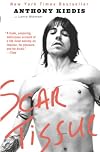
Anyone coming for an autobiography of the Red Hot Chili Peppers might be a little disappointed in this book. Kiedis focuses more on his personal journey through life, and especially on his formative adolescent years. The Chili Peppers are a part of his life, to be sure, but this story is truly Anthony's personal struggles to be a sober, straight-living man.
Anthony spends a significant amount of the book on his teenaged years. He was essentially his father's roommate (not his son, not his show more "charge) in Los Angeles from the age of 12. He experienced more drugs and debauchery before the age of 18 than most people could live through in their entire life. In describing his experiences, however, Kiedis used an inviting tone; he never bragged about his exploits or tried to paint himself in an excessively rosy light. He simply invited the reader along to explore his personal experiences and emotions.
Scar Tissue is truly a book about drug addiction, about the lifelong slippery slope of trying to obtain (and maintain) sobriety. It is amazing that Kiedis can keep his dozens of periods of abuse and relapse straight in his mind, much less transform them into a compelling narrative journey for the reader. Life on drugs was in no way glamorous--Kiedis spent many years at rock bottom, barely surviving, and scrounging for his existence. He also fooled many people about his drug use, and managed to escape any arrest or scrutiny for possession. Reading about how Kiedis has to consider and seize his sobriety each and every day (he's been clean since 24 December 2000) will surely inspire anyone who is struggling with their own personal demons. show less
Anthony spends a significant amount of the book on his teenaged years. He was essentially his father's roommate (not his son, not his show more "charge) in Los Angeles from the age of 12. He experienced more drugs and debauchery before the age of 18 than most people could live through in their entire life. In describing his experiences, however, Kiedis used an inviting tone; he never bragged about his exploits or tried to paint himself in an excessively rosy light. He simply invited the reader along to explore his personal experiences and emotions.
Scar Tissue is truly a book about drug addiction, about the lifelong slippery slope of trying to obtain (and maintain) sobriety. It is amazing that Kiedis can keep his dozens of periods of abuse and relapse straight in his mind, much less transform them into a compelling narrative journey for the reader. Life on drugs was in no way glamorous--Kiedis spent many years at rock bottom, barely surviving, and scrounging for his existence. He also fooled many people about his drug use, and managed to escape any arrest or scrutiny for possession. Reading about how Kiedis has to consider and seize his sobriety each and every day (he's been clean since 24 December 2000) will surely inspire anyone who is struggling with their own personal demons. show less
First published on Booking in Heels.
This is the only biography of Harry Houdini that I have read, so I have no idea how it measures up in comparison to any others. However, I can tell you how much I thoroughly enjoyed this book. I whipped through this thick, fairly heavy non-fiction in three days and enjoyed every second. It's engrossing, accessible and just generally fascinating throughout.
To begin with, it's thorough but not to the point of boredom. I don't feel the need for biographies to show more tell me the minutiae of the subject's life and Mr Kalush and Mr Sloman have respected my wishes in this area. It begins with Houdini's childhood but provides only a brief summary, for which I respect the book even more. Then we're straight onto his magic and escapism, which is conversely extremely in-depth.
It covers a lot of different areas - aviation, films, the Secret Service, the army, his challenges, his fellow magicians, etc. Naturally some are more interesting than others, but I never knew he dabbled in so many different things. Did you know he was the first person to a plane in Australia? Oh, and let's not forget the 'spy' rumours. I hadn't heard these before, but on the blurb of a different edition it says 'in exchange for his cooperation, the governments of these two countries (Britain and America) facilitated his rise to the top of the world stage.' Apparently it's A Thing that Harry Houdini was a secret agent. I would have automatically disbelieved it, but there is evidence (and I'm a lawyer - I'm holding them to a high standard of proof!) that he reported back to his government on the conditions of German jail cells and trained certain agents in escaping from restraints. I'm sceptical that he was involved any more than this, but it's still amazing that he actually was part of the war effort.
That's partly the conclusion I've come to, actually. I'm not sure he was a nice man (judging by his arrogance and how aggressively he denounced his competition), but I do think he was a good one. He spent $50,000 (back then!) just on entertaining the troops during the War and funded several charities with varying objectives, not to mention his perseverance in debunking fake mediums.
Ah yes. Spiritualists. I learnt an awful lot about this particular area and it was written absolutely amazingly. I had no idea he was so politically active - he tried to push a Bill through to prohibit phony mediums completely and attending every meeting to demonstrate how fake seances could be pulled off. He became such a threat that there were several attempts on his life by the spiritualists.
Which leads me neatly to Arthur Conan Doyle. Yes, that one. This part had me on the edge of my seat and opened my eyes to all sorts of new information. Did you know his wife was a medium and he was actually an active Spiritualist? He died with very little money due to opening a psychic bookstore near Westminster, just as an off-side. Anyway, apparently he and Houdini used to be good friends until this debacle exploded and well... spoilers! I didn't have a clue about any of this previously but now I think of it every time I see a Sherlock Holmes book. It just doesn't add up in my head with the methodical fictional detective!
I've somehow ended up reviewing the man instead of the book, haven't I? Sorry. Well, it's good, anyway. It's written in a strange mix of styles that actually works really well. A chapter will begin written almost like a story, with proper dialogue, thoughts and feelings but then switches almost seamlessly into standard non-fiction. It's weird, but I liked it. It might not be for everybody though - my boyfriend started to read this book but the style annoyed him to such an extent that he got distracted by something shiny and gave up.
Clearly Harry Houdini was the basis for books like Jonathan Strange & Mr Norrell. He created his own magical encyclopaedia, controlled his own magazine, refused to recognise any theories but his own... Sound familiar? He does seem like he should have been a fictional character, which makes reading a biography all the more entertaining. The fun of a story, but you're learning! *shocked face*
I've done it again, haven't I? *swooshes back to discussing the actual damn book* Anyway, believe it or not, there are facts about Harry Houdini that I haven't already told you in this review, so you should go buy the book and learn them. It's well-written, entertaining and impartial (for the most part), so it's an excellent place to learn more about the legend you thought you already knew. show less
This is the only biography of Harry Houdini that I have read, so I have no idea how it measures up in comparison to any others. However, I can tell you how much I thoroughly enjoyed this book. I whipped through this thick, fairly heavy non-fiction in three days and enjoyed every second. It's engrossing, accessible and just generally fascinating throughout.
To begin with, it's thorough but not to the point of boredom. I don't feel the need for biographies to show more tell me the minutiae of the subject's life and Mr Kalush and Mr Sloman have respected my wishes in this area. It begins with Houdini's childhood but provides only a brief summary, for which I respect the book even more. Then we're straight onto his magic and escapism, which is conversely extremely in-depth.
It covers a lot of different areas - aviation, films, the Secret Service, the army, his challenges, his fellow magicians, etc. Naturally some are more interesting than others, but I never knew he dabbled in so many different things. Did you know he was the first person to a plane in Australia? Oh, and let's not forget the 'spy' rumours. I hadn't heard these before, but on the blurb of a different edition it says 'in exchange for his cooperation, the governments of these two countries (Britain and America) facilitated his rise to the top of the world stage.' Apparently it's A Thing that Harry Houdini was a secret agent. I would have automatically disbelieved it, but there is evidence (and I'm a lawyer - I'm holding them to a high standard of proof!) that he reported back to his government on the conditions of German jail cells and trained certain agents in escaping from restraints. I'm sceptical that he was involved any more than this, but it's still amazing that he actually was part of the war effort.
That's partly the conclusion I've come to, actually. I'm not sure he was a nice man (judging by his arrogance and how aggressively he denounced his competition), but I do think he was a good one. He spent $50,000 (back then!) just on entertaining the troops during the War and funded several charities with varying objectives, not to mention his perseverance in debunking fake mediums.
Ah yes. Spiritualists. I learnt an awful lot about this particular area and it was written absolutely amazingly. I had no idea he was so politically active - he tried to push a Bill through to prohibit phony mediums completely and attending every meeting to demonstrate how fake seances could be pulled off. He became such a threat that there were several attempts on his life by the spiritualists.
Which leads me neatly to Arthur Conan Doyle. Yes, that one. This part had me on the edge of my seat and opened my eyes to all sorts of new information. Did you know his wife was a medium and he was actually an active Spiritualist? He died with very little money due to opening a psychic bookstore near Westminster, just as an off-side. Anyway, apparently he and Houdini used to be good friends until this debacle exploded and well... spoilers! I didn't have a clue about any of this previously but now I think of it every time I see a Sherlock Holmes book. It just doesn't add up in my head with the methodical fictional detective!
I've somehow ended up reviewing the man instead of the book, haven't I? Sorry. Well, it's good, anyway. It's written in a strange mix of styles that actually works really well. A chapter will begin written almost like a story, with proper dialogue, thoughts and feelings but then switches almost seamlessly into standard non-fiction. It's weird, but I liked it. It might not be for everybody though - my boyfriend started to read this book but the style annoyed him to such an extent that he got distracted by something shiny and gave up.
Clearly Harry Houdini was the basis for books like Jonathan Strange & Mr Norrell. He created his own magical encyclopaedia, controlled his own magazine, refused to recognise any theories but his own... Sound familiar? He does seem like he should have been a fictional character, which makes reading a biography all the more entertaining. The fun of a story, but you're learning! *shocked face*
I've done it again, haven't I? *swooshes back to discussing the actual damn book* Anyway, believe it or not, there are facts about Harry Houdini that I haven't already told you in this review, so you should go buy the book and learn them. It's well-written, entertaining and impartial (for the most part), so it's an excellent place to learn more about the legend you thought you already knew. show less
This book was an adventure in itself, as grueling, but also as entertaining and mystifying as the great Houdini himself must have been on stage. If only one word could be said, that word would be "Thorough". Kalush and Sloman say in their preface that they created, as best they could, a day-by-day time line of Houdini's life, and it is clear that they did exactly that. Almost every gig the magician every played is at least mentioned, if not detailed in this tome, making it certainly one of show more the most complete biographies ever written. At times, the sheer amount of information and number of names can be overwhelming, but they wisely include many anecdotes of the challenges and confrontations that Houdini made along the way to spice up the story a bit. Unfortunately, towards the end, things get a bit stroppy, with scenes and information being randomly shoved into the middle of chapters, having no-where else logical to put them.
The authors clearly respect Houdini, but I do not think that compromised their representation of him. For all of the wonder and amazing feats they describe, they also make it clear that he could have a vengefully temper, near superhuman stubbornness, and moments of incredible hypocrisy. It seems that one of the main arguments against this book is that Kalush and Sloman make some almost far fetched hypothesizes, including that Houdini served as a spy for both American and British intelligence in tours through Europe. I'm as sceptical as the next guy, but truth be told, it could almost be true. They do not try to make up evidence, they just find some rather telling coincidences and communications that could point to Harry having his hands in some pretty heavy stuff. Luckily, at least to my opinion, that did not hijack the book, but indeed increased some of the mystery and made me as the reader even more engrossed. There are a few more incidents they describe which have very little backup besides personal accounts told long after Houdini's death, but again, the added layers may enhance the story as opposed to disrupt it. Only later in the book do things seem to get a little over the top, but they cite sources in there online footnotes that seem reliable, and frankly, it is almost too outrageous to be invented.
By far, the only frustrating part about this book is that they only reveal the methods that Houdini used if the man reveled them himself in his lifetime. Every other trick, from the water-cell to some of his phony 'mind-reading' is left as a mystery. The authors often don't even acknowledge that we don't know what he did, they just take it as unknowable and move along. I suppose that that is just the nature of the magician, is it not?
All in all, this was a very engrossing and entertaining read, even if it sometimes got a little outlandish and a little full of minutiae. In many ways, it also forced me to ask more questions than it actually answered, but to that, we have to look at the subject. The true nature of Harry Houdini has been long lost. No one now alive was ever close to him, and most of the queries we have will never be answered. In a way, his entire life was one of his tricks: stunning and miraculous, but all of the solutions took place behind a curtain. We will never know if he was a spy, if he was murdered, if he really did have some sort of power beyond mortal ken (though he always denied it). These things and more will remain mysteries, and they rightly should do just that. Even in life, Houdini was more Myth than Man, and I do not think he would want it any other way. show less
The authors clearly respect Houdini, but I do not think that compromised their representation of him. For all of the wonder and amazing feats they describe, they also make it clear that he could have a vengefully temper, near superhuman stubbornness, and moments of incredible hypocrisy. It seems that one of the main arguments against this book is that Kalush and Sloman make some almost far fetched hypothesizes, including that Houdini served as a spy for both American and British intelligence in tours through Europe. I'm as sceptical as the next guy, but truth be told, it could almost be true. They do not try to make up evidence, they just find some rather telling coincidences and communications that could point to Harry having his hands in some pretty heavy stuff. Luckily, at least to my opinion, that did not hijack the book, but indeed increased some of the mystery and made me as the reader even more engrossed. There are a few more incidents they describe which have very little backup besides personal accounts told long after Houdini's death, but again, the added layers may enhance the story as opposed to disrupt it. Only later in the book do things seem to get a little over the top, but they cite sources in there online footnotes that seem reliable, and frankly, it is almost too outrageous to be invented.
By far, the only frustrating part about this book is that they only reveal the methods that Houdini used if the man reveled them himself in his lifetime. Every other trick, from the water-cell to some of his phony 'mind-reading' is left as a mystery. The authors often don't even acknowledge that we don't know what he did, they just take it as unknowable and move along. I suppose that that is just the nature of the magician, is it not?
All in all, this was a very engrossing and entertaining read, even if it sometimes got a little outlandish and a little full of minutiae. In many ways, it also forced me to ask more questions than it actually answered, but to that, we have to look at the subject. The true nature of Harry Houdini has been long lost. No one now alive was ever close to him, and most of the queries we have will never be answered. In a way, his entire life was one of his tricks: stunning and miraculous, but all of the solutions took place behind a curtain. We will never know if he was a spy, if he was murdered, if he really did have some sort of power beyond mortal ken (though he always denied it). These things and more will remain mysteries, and they rightly should do just that. Even in life, Houdini was more Myth than Man, and I do not think he would want it any other way. show less
I've read several rock memoirs, but this is far and away my favorite. Kiedis doesn't just tell us what happened, but he speaks from the heart and relives it. There is a humility in his story, from someone who has been at the top of the world but knows it could come crashing down at any minute, and often did.
Kiedis does not tell us his story so that we'll feel sorry for him. It isn't out of arrogance or egotism that he shares his experiences with the Hollywood scene, the music business, and show more drug addiction. No, this is a way that he can pay it forward, embracing all of his experiences (good and bad) and live as an example. He's not preachy in his dislike of addiction. He's not judgmental of those that haven't beaten it. Rather, he lives by example, embracing life and everything it has to offer. What better inspiration could someone have to get clean and make the most of what they have in life?
I was personally touched by this book. Not due to drug addiction - I've never had to experience that. I was a smoker, so I do understand some of the ways that an addiction can mind-fuck a person, but that's not even close to the levels of Hell that Kiedis and others have had to go through. No, I felt connected because of the way Kiedis is always looking forward. He learned (and learns) from experiences, and doesn't spend a lot of time beating himself up about it. Learn and build on the experiences, sharing what you can with those around you. That's the outlook he takes on life and the issues it presents. show less
Kiedis does not tell us his story so that we'll feel sorry for him. It isn't out of arrogance or egotism that he shares his experiences with the Hollywood scene, the music business, and show more drug addiction. No, this is a way that he can pay it forward, embracing all of his experiences (good and bad) and live as an example. He's not preachy in his dislike of addiction. He's not judgmental of those that haven't beaten it. Rather, he lives by example, embracing life and everything it has to offer. What better inspiration could someone have to get clean and make the most of what they have in life?
I was personally touched by this book. Not due to drug addiction - I've never had to experience that. I was a smoker, so I do understand some of the ways that an addiction can mind-fuck a person, but that's not even close to the levels of Hell that Kiedis and others have had to go through. No, I felt connected because of the way Kiedis is always looking forward. He learned (and learns) from experiences, and doesn't spend a lot of time beating himself up about it. Learn and build on the experiences, sharing what you can with those around you. That's the outlook he takes on life and the issues it presents. show less
Lists
You May Also Like


Associated Authors
Statistics
- Works
- 8
- Also by
- 7
- Members
- 3,200
- Popularity
- #7,992
- Rating
- 3.8
- Reviews
- 47
- ISBNs
- 69
- Languages
- 13