
Michael D. Yapko
Author of Breaking the Patterns of Depression
About the Author
Michael D. Yapko, Ph.D., is a clinical psychologist in Solana Beach, California. He has published extensively and conducts clinical trainings nationally and internationally on the therapeutic applications of hypnosis, methods of brief psychotherapy, and the strategic treatment of depression
Works by Michael D. Yapko
Depression Is Contagious: How the Most Common Mood Disorder Is Spreading Around the World and How to Stop It (1992) 62 copies, 1 review
Treating Depression With Hypnosis: Integrating Cognitive-Behavioral and Strategic Approaches (2001) 16 copies
Depression Is Contagious: How the Most Common Mood Disorder Is Spreading Around the World and How to Stop It (2013) 7 copies
The Discriminating Therapist: Asking "How" Questions, Making Distinctions, and Finding Direction in Therapy (2016) 5 copies
La Depresion es Contagiosa: Elige Bien tu Entorno para Mantener una Vida Emocional Sana (Spanish Edition) (2010) 4 copies
Lo Esencial De La Hipnosis/ Essentials of Hypnosis (Psicologia, Psiquiatria, Psicoterapia) (Spanish Edition) (1999) 3 copies
Para romper los patrones de la depresion: No tienes por que sufrir para vivir (Spanish Edition) (2007) 2 copies
Calm Down! - A Self-Help Program for Managing Anxiety - By Michael Yapko [4 Audio CDs] (2008) 1 copy
Associated Works
The Mummy at the Dining Room Table: Eminent Therapists Reveal Their Most Unusual Cases (2003) — Contributor, some editions — 156 copies, 3 reviews
Tagged
Common Knowledge
- Birthdate
- 1954-05
- Gender
- male
- Education
- University of Michigan, Ann Arbor (B.A.|1976|Psychology)
United States International University (M.A.|Psychology|1978) (Ph. D.|Professional Psychology, Clinical Specialization|1980) - Occupations
- psychologist
Marriage and Family therapist
professor - Organizations
- The Milton H. Erickson Institute
- Short biography
- Michael Yapko has written a dozen books about treating depression using a combination of methods that include clinical hypnosis as well as cognitive and strategic therapies. Three of his recent books,
- Nationality
- USA
- Places of residence
- San Diego, California, USA
- Associated Place (for map)
- California, USA
Members
Reviews
Trancework: An Introduction to the Practice of Clinical Hypnosis, Second Edition by Michael D. Yapko
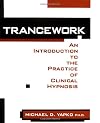
I was very impressed by "Trancework." This was handed down to me by a clinical psychologist who was no longer in private practice and gave up using hypnosis (he went academic) and I was one of his students who was technically still a lay hypnotist but wanted to be clinical. This book is primarily Ericksonian (which is my favourite) but if you are not keen on that perspective you are not going to like it. It is a very large book, 450 pages, and is incredibly well written. I could see this as show more possibly being used as a textbook assuming there are any introductory hypnosis classes out there in academia. I think one of my favourite little charts was the difference in different types of hypnosis in Appendix A. show less
Depression Is Contagious: How the Most Common Mood Disorder Is Spreading Around the World and How to Stop It by Michael D. Yapko
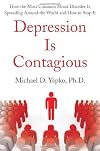
This is a workbook for combating depression. Every few pages there is a sidebar. They come is two flavors: One is “Learn by Doing” sidebar. The other is called: “Pause and Reflect.” Dr. Yapko doesn’t just tell us how it is, he asks us to consider it ourselves.
I think I first became aware of this book from a podcast which had the following in the transcript:
“And when you look at all of the things that antidepressant medications cannot do, not just will not do, but cannot do. They show more cannot teach you better social skills and social problem-solving skills. They cannot build a support network for you. They cannot teach you coping skills or problem-solving skills. And the reality is that life is challenging.”
https://www.neilsattin.com/blog/2019/02/181-depression-what-you-can-do-with-mich....
I made a few notes while reading this book:
Section: Who is at risk for depression?
“If you are capable of having a mood, you are capable of having a mood disorder.” (Chapter 1, Page 16)
“I’m not suggesting you need to explore your childhood endlessly, but I am suggesting you will get further in your own personal development if you know that the attitudes and perspectives you hold were absorbed through those all-important relationships.” (Chapter 2, Page 31)
Section: Depression and negative frames of reference
“Depressed people tend to see themselves negatively and they tend to see others negatively. They tend to think about the future negatively and they are likely to interpret life experiences negatively. As a direct result, they are likely to react Negatively to life situations and thereby make their depression even worse.” (Chapter 32, Page 37)
“I want to encourage youth practice assessing virtually everyone you meet and engage with in some way… Any time you are going to be in a position of potentially being influenced by the actions of someone else, you need to have a better-than-average grasp of how this person does things in order to know how to position yourself with him or her. (Chapter 3, Page 55)
“Using your feelings to make decisions is very risky to do when your feelings are depressed. They can easily lead you to over analyze things, Miss options, respond half heartedly, overestimate risk, underestimate yourself, and otherwise misstep.” ... “Make your decisions according to the results you want, not just the way you feel.“ (Chapter 4, Page 87)
“Cult members hang around train stations and bus stations looking for people who look lost and without someplace they belong. Cult members (and pimps and sex traffickers) approach such people and begin the ‘love bombing’” (Chapter 7, page 153-4)
“Your Problems never go completely away: the tough issues in life will always be there. Guarding a good relationship, keeping fun from draining away from it, is an ongoing task. The same is true for closeness, support, sexuality, kindness, politeness, and generosity.” (Chapter 8, page 164-5)
Contents
1. Depression doesn’t arise in a social vacuum: The social foundation of depression
2. Other people are NOT just like you: Frames of reference, flexibility and acceptance
3. Expectations and relationship satisfaction: Learn to asses others realistically
4. Thinking too much and too deeply: Learn to take action
5. Don’t bring others down with you: Learn to “Lighten up”
6. Self-Decption and Seeking the Truth: Learn to Test Your Beliefs
7. Drawing the lines: Protect your personal boundaries
8. Marriage can save your life: How to keep yours healthy
9. Hand-me-down blues: Learn to reduce your child’s “Depression inheritance”
10. Afterword
* Notes (I am impressed that these are bi-directional since they have the page number the note was from)
* Appendix A: Exercises: A Table of Contents for of the exercises with page numbers. I count 56 exercises listed here. How long will it take to do all of them? How long will it take to recover from depression? Is it with the time it will take to get better?
* Appendix B: Self-help materials: Mostly programs that can be ordered on his website
* Appendix C: Websites of note “I have mentioned only a few of the ones in which I have a high level of confidence for their relevance and accuracy.”
* Acknowledgments
* Index
Some Books Mentioned:
(There is a quantity of books given favorable mention in the text, however, there is not a list at the back. Here are a few that caught my attention)
* Mistakes Were Made, (But Not by Me) by Carol Tavris and Eliot Aronson, 2007 “is an informative, funny, and vexing tiptoe through the minefield of self-deception.” (Chapter 2, Page 37-38)
* The Promise of Sleep by William Dement (Chapter 4, Page 76)
* Divorce Busting by Michele Weiser-Davis and Should You Leave? By Peter Kramer. Both are helpful in making one of life’s toughest decisions. (Self Deception chapter, page 129)
* Hold Me Tight: Seven Conversations for a Lifetime of Love by Sue Johnson (Marriage Can Save Your Life chapter, page 163)
* The How of Happiness: ... by Sonja Lyubomirsky (same page) show less
I think I first became aware of this book from a podcast which had the following in the transcript:
“And when you look at all of the things that antidepressant medications cannot do, not just will not do, but cannot do. They show more cannot teach you better social skills and social problem-solving skills. They cannot build a support network for you. They cannot teach you coping skills or problem-solving skills. And the reality is that life is challenging.”
https://www.neilsattin.com/blog/2019/02/181-depression-what-you-can-do-with-mich....
I made a few notes while reading this book:
Section: Who is at risk for depression?
“If you are capable of having a mood, you are capable of having a mood disorder.” (Chapter 1, Page 16)
“I’m not suggesting you need to explore your childhood endlessly, but I am suggesting you will get further in your own personal development if you know that the attitudes and perspectives you hold were absorbed through those all-important relationships.” (Chapter 2, Page 31)
Section: Depression and negative frames of reference
“Depressed people tend to see themselves negatively and they tend to see others negatively. They tend to think about the future negatively and they are likely to interpret life experiences negatively. As a direct result, they are likely to react Negatively to life situations and thereby make their depression even worse.” (Chapter 32, Page 37)
“I want to encourage youth practice assessing virtually everyone you meet and engage with in some way… Any time you are going to be in a position of potentially being influenced by the actions of someone else, you need to have a better-than-average grasp of how this person does things in order to know how to position yourself with him or her. (Chapter 3, Page 55)
“Using your feelings to make decisions is very risky to do when your feelings are depressed. They can easily lead you to over analyze things, Miss options, respond half heartedly, overestimate risk, underestimate yourself, and otherwise misstep.” ... “Make your decisions according to the results you want, not just the way you feel.“ (Chapter 4, Page 87)
“Cult members hang around train stations and bus stations looking for people who look lost and without someplace they belong. Cult members (and pimps and sex traffickers) approach such people and begin the ‘love bombing’” (Chapter 7, page 153-4)
“Your Problems never go completely away: the tough issues in life will always be there. Guarding a good relationship, keeping fun from draining away from it, is an ongoing task. The same is true for closeness, support, sexuality, kindness, politeness, and generosity.” (Chapter 8, page 164-5)
Contents
1. Depression doesn’t arise in a social vacuum: The social foundation of depression
2. Other people are NOT just like you: Frames of reference, flexibility and acceptance
3. Expectations and relationship satisfaction: Learn to asses others realistically
4. Thinking too much and too deeply: Learn to take action
5. Don’t bring others down with you: Learn to “Lighten up”
6. Self-Decption and Seeking the Truth: Learn to Test Your Beliefs
7. Drawing the lines: Protect your personal boundaries
8. Marriage can save your life: How to keep yours healthy
9. Hand-me-down blues: Learn to reduce your child’s “Depression inheritance”
10. Afterword
* Notes (I am impressed that these are bi-directional since they have the page number the note was from)
* Appendix A: Exercises: A Table of Contents for of the exercises with page numbers. I count 56 exercises listed here. How long will it take to do all of them? How long will it take to recover from depression? Is it with the time it will take to get better?
* Appendix B: Self-help materials: Mostly programs that can be ordered on his website
* Appendix C: Websites of note “I have mentioned only a few of the ones in which I have a high level of confidence for their relevance and accuracy.”
* Acknowledgments
* Index
Some Books Mentioned:
(There is a quantity of books given favorable mention in the text, however, there is not a list at the back. Here are a few that caught my attention)
* Mistakes Were Made, (But Not by Me) by Carol Tavris and Eliot Aronson, 2007 “is an informative, funny, and vexing tiptoe through the minefield of self-deception.” (Chapter 2, Page 37-38)
* The Promise of Sleep by William Dement (Chapter 4, Page 76)
* Divorce Busting by Michele Weiser-Davis and Should You Leave? By Peter Kramer. Both are helpful in making one of life’s toughest decisions. (Self Deception chapter, page 129)
* Hold Me Tight: Seven Conversations for a Lifetime of Love by Sue Johnson (Marriage Can Save Your Life chapter, page 163)
* The How of Happiness: ... by Sonja Lyubomirsky (same page) show less
Trancework: An Introduction to the Practice of Clinical Hypnosis, Second Edition by Michael D. Yapko
This is a very good overview of clinical hypnosis. "Trancework" examines the practice of hypnosis from a Eriksonian perspective. It offers an indepth examination of the charateristics of the hypnotic state and the tools that state provides access to for the purposes of clinical work with a client. Will it teach you how to hypnotize someone? I doubt it. But, if you can already work in the hypnotic state it gives a clearer idea of the trance and how to help people within that state. It is well show more written and designed for study. It contains study questions and brief outlines of important points. Well organized. Contains some practical application script examples. Good all around intermediate work on hypnosis. show less
You May Also Like


Statistics
- Works
- 26
- Also by
- 1
- Members
- 598
- Popularity
- #42,015
- Rating
- 3.9
- Reviews
- 4
- ISBNs
- 71
- Languages
- 4