
Lina Meruane
Author of Seeing Red
About the Author
Lina Meruane teaches Latin American Cultures in New York University's Global/Liberal Studies Program, USA. She is a Chilean critic and a distinguished writer of fiction, author of the novels Pstuma, Cercada, Fruta podrida, and Sangre en el ojo, which was awarded the prestigious Sor Juana Ins de la show more Cruz Prize (Mexico, 2012). She has also receive the Anna Seghers Prize for her work in fiction and literary fellowships from the Cuggenheim Foundation and the National Endowment for the Art. Viral Voyages was originally published in Spanish by Fondo de Cultura Eonmica (Chile, 2012). show less
Image credit: wikipedia
Works by Lina Meruane
Nervensystem (German Edition) 2 copies
Seeing Red by Lina Meruane 1 copy
Ay 2014 1 copy
Associated Works
Tagged
Common Knowledge
- Legal name
- Meruane Boza, Lina
- Birthdate
- 1970
- Gender
- female
- Education
- New York University (PhD)
- Occupations
- Latin American Cultures professor, New York University
- Organizations
- New York University
- Nationality
- Chile
- Birthplace
- Santiago de Chile, Chile
- Map Location
- Chile
Members
Reviews
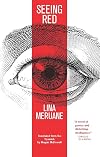
Lina Meruane’s title seems to have a double meaning. She was quite literally seeing red because of bleeding into her eyes that was slowly making her go blind; but metaphorically, she was seeing red (i.e., becoming angry) because of the predicament that this unfortunate condition placed her in.
The novel’s narrator is based loosely on Meruane, who experienced a brief period of blindness as a complication of diabetes. It is an intimate portrayal of a person determined to preserve her show more eyesight at all costs. Joined to this intense, unsettling and highly personal account of what it is like for a sighted person to experience blindness, Meruane also manages to explore several larger themes: illness and identity, caregiving and predation, frailty and need, culture and language, medicine and its limitations.
Meruane’s narrative is lyrical and often poetic. But foremost, it is a remarkable evocation of what it is like to be ill: the inconveniences of endless doctor’s appointments, fear and the need for reassurance, surgery and hospitalization, loving and often cloying concern of loved ones, the intense demands of rehabilitation, denial and anger. Strangely, the one thing Meruane does not touch upon is acceptance. Instead Lina rages throughout. show less
The novel’s narrator is based loosely on Meruane, who experienced a brief period of blindness as a complication of diabetes. It is an intimate portrayal of a person determined to preserve her show more eyesight at all costs. Joined to this intense, unsettling and highly personal account of what it is like for a sighted person to experience blindness, Meruane also manages to explore several larger themes: illness and identity, caregiving and predation, frailty and need, culture and language, medicine and its limitations.
Meruane’s narrative is lyrical and often poetic. But foremost, it is a remarkable evocation of what it is like to be ill: the inconveniences of endless doctor’s appointments, fear and the need for reassurance, surgery and hospitalization, loving and often cloying concern of loved ones, the intense demands of rehabilitation, denial and anger. Strangely, the one thing Meruane does not touch upon is acceptance. Instead Lina rages throughout. show less
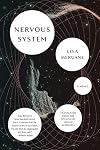
We are probably always sick and don’t know it. And although as a child Ella had thought they were trying to scare her with all those stories of what a body can suffer, only later has she understood that those stories were nothing but a gloss. Because the strangest thing is to live. So much can go wrong, she thinks, looking away from her book to check the bag of urine and its changing color.
Combining the fragmentary style of Renata Adler/Jenny Offill with the temporal interlacing style of show more Emily St. John Mandel, “Nervous System” is a novel focused on not so much a plot as a theme: the frailty of human bodies and the anxiety produced by this frailty. Each of the book’s five chapters takes on the medical issue of one member of a family, whose history gradually becomes clearer. And each of these five chapters is titled with an astronomical term, reflecting connections the author is presumably attempting to make between the very intimate and the very distant, the organic and the inorganic, which I’m afraid I didn’t cotton on to terribly well on a first read (not that there’ll be a second one).
Most of the chapters feature an unclear cause and progression of illness. The protagonist’s nerve and spinal pain, the boyfriend’s gastrointestinal problems, the brother’s too-frequent bone fractures, the father’s bleeding and infection. Only the mother’s has a clear diagnosis: cancer. The father and mother are medical doctors and so have commentary to offer throughout. The effect is to make the reader highly aware of the fragility of these bodies we inhabit, and the brief good fortune we are (hopefully) enjoying with them generally working as they should.
The novel will keep most readers at a distance through its various characteristics: the fragmentary narrative, the time hopping, the emphasis on theme over plot, the characters not given names (the partial exception of “Ella” and “El” due to Spanish pronouns becoming English proper nouns in an interesting translation choice).
One way the novel brings astronomy into the text is through the protagonist’s (“Ella’s”) failed attempts over many years to finish her dissertation in that field. In the meanwhile she teaches to mostly uninterested students. In one fragment that seems to be Meruane using symbolism that I feel on the edge of grasping but that just keeps slipping away, Elle is lecturing on the black hole at the center of our galaxy before taking leave to be with the mother during her cancer surgery:
Don’t panic, she told her students on her last day before taking a week off to be with the Mother in her surgery. Don’t be scared, she repeated, our black hole, unlike others farther away, is largely asleep, she told them, quiescent, she said, we’ll all be dead before it wakes up and devours us.
Hmm, I think. Sounds interesting, and ominous, but there’s some connection here I’m not quite getting, I fear. Maybe you will. show less
While not exactly autofiction, the narrator is a Chilean writer named Lina Meruane, and the narrative is a fictionalized maturation of an event in the author’s own life. At a friend’s party in New York, aforementioned narrator Lina suffers a mild stroke that leaves her completely blind in one eye and partially blind in the other. Lina has to navigate through a few major life events which are difficult (but not impossible) and many small, daily life events which become more and more so. show more She not only has to learn for herself what it means not just to be blind, she has to teach her loved ones as well–when she literally and figuratively can’t see the future ahead of her. Lina is incapable of speaking the same emotional language of her loved ones. The prose is composed of short scenes, rather than chapters, with titles that are impressionistic rather than episodic. Entire sentences burn away rather than conclude. A searing view of the world through the disabled body is published by Deep Vellum–my new favorite publisher of international literary fiction in translation. show less

Struggling with her dissertation, a woman wishes that she could come down with some sort of injury or disease that would buy her some time away from teaching to finish it. When she becomes ill, leaving her too tired and unable to concentrate to work on it, it's hard for her to not see some sort of cosmic karma at work. This starts out seeming like a novel about how a woman deals with life with a chronic illness, but that's not what the author is interested in, turning to a larger exploration show more into the ways our bodies can fail, whether through injury, accident, disease or simply aging.
There's a lot less plot and a lot more ambiguity to this novel than I enjoy. I'm not entirely sure what Meruane was doing here. There were some interesting moments, but far too often, something interesting happened and is brushed aside for something less interesting. I'm glad the Tournament of Books pushed me well out of my comfort zone, but I'm happy to be back in it now that I've read this one. show less
There's a lot less plot and a lot more ambiguity to this novel than I enjoy. I'm not entirely sure what Meruane was doing here. There were some interesting moments, but far too often, something interesting happened and is brushed aside for something less interesting. I'm glad the Tournament of Books pushed me well out of my comfort zone, but I'm happy to be back in it now that I've read this one. show less
Lists
Awards


You May Also Like


Associated Authors
Statistics
- Works
- 20
- Also by
- 3
- Members
- 393
- Popularity
- #61,673
- Rating
- 3.7
- Reviews
- 15
- ISBNs
- 70
- Languages
- 6