
Cindy Patton
Author of Inventing AIDS
About the Author
Cindy Patton is professor of women's studies, sociology, and anthropology at Simon Fraser University. She is the author of Inventing AIDS, Fatal Advice, Globalizing AIDS (Minnesota, 2002), and Cinematic Identity (Minnesota, 2007).
Works by Cindy Patton
Rebirth of the Clinic: Places and Agents in Contemporary Health Care (A Quadrant Book) (2010) 4 copies
Associated Works
Performativity and Performance (Essays from the English Institute) (1995) — Contributor, some editions — 50 copies
Tagged
Common Knowledge
- Birthdate
- 1956-02-12
- Gender
- female
- Education
- University of Massachusetts (PhD | Communications)
Harvard University (MTA | Theology, women's studies)
Appalachian State University (BA | Anthropology, economics) - Nationality
- USA
- Associated Place (for map)
- USA
Members
Reviews
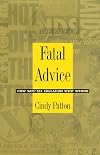
Patton (1996) problematizes safe sex education during the AIDS crisis of the 1980s and early 90s, showing how much of this education was "fatal" — in that it produces and reinforces certain social categories and did little to change behavior because it "downplayed the need to think about sexual behavior" and equated homosexual anal sex as the only risky behavior (28). Patton shows how risk of infection was associated with a "subculture" of homosexuals, which helped to create a "new public" show more of heterosexuals "now itself constructed oppositionally; not at risk of contracting HIV" (20, 21).
In her discussion of safe sex education for youth, Patton shows how future white (supposedly straight) adolescents were taught compassion and understanding toward those with HIV/AIDS in the national pedagogy, while not necessarily taught how to evaluate and reduce their own risk (36). The two exceptions to this approach were gay youth "responsible for their own fate" (56), constituted as a subculture that heterosexual youth were outside (59-53); and youth of color, figured as premodern lost causes (57-61). The effects: straight white youth are viewed as innocent and don't get educated about risks, gay youth learn "on the job" from older gay men, and young people of color are viewed as virtual adults who can't be reached (62).
Chapter 3 explores who gets framed as innocent in discussions of HIV transmission.
Chapter 4 chronicles the development of organizing and activism amongst safe sex educators. One problem with much of the education was the information-deficit model that proposed the solution was knowledge (99-102). Later approaches tried to eroticize safe sex, but in doing so often worked on a development model, wherein gay culture needed to mature, and reduced sexual acts that weren't anal sex to "poor substitutes" (106).
Chapter 5 discusses arguments about safe sex in gay porn. A few key points: technologies such as home VCRs changed the way porn was viewed, from a voyeuristic event at a theatre to a realistic event at home (133). Patton also argues that gay identity, in order to remain in opposition to straight culture (proper citizens), needed to "refuse" safe sex (138).
Patton concludes with a discussion that both visibility and the closet may be too limiting of paradigms, and offers a number of important points about sexuality — including that perhaps queers need to be even more antinational, thinking about sex as something that can save, and perhaps even rejecting the term "safe sex". show less
In her discussion of safe sex education for youth, Patton shows how future white (supposedly straight) adolescents were taught compassion and understanding toward those with HIV/AIDS in the national pedagogy, while not necessarily taught how to evaluate and reduce their own risk (36). The two exceptions to this approach were gay youth "responsible for their own fate" (56), constituted as a subculture that heterosexual youth were outside (59-53); and youth of color, figured as premodern lost causes (57-61). The effects: straight white youth are viewed as innocent and don't get educated about risks, gay youth learn "on the job" from older gay men, and young people of color are viewed as virtual adults who can't be reached (62).
Chapter 3 explores who gets framed as innocent in discussions of HIV transmission.
Chapter 4 chronicles the development of organizing and activism amongst safe sex educators. One problem with much of the education was the information-deficit model that proposed the solution was knowledge (99-102). Later approaches tried to eroticize safe sex, but in doing so often worked on a development model, wherein gay culture needed to mature, and reduced sexual acts that weren't anal sex to "poor substitutes" (106).
Chapter 5 discusses arguments about safe sex in gay porn. A few key points: technologies such as home VCRs changed the way porn was viewed, from a voyeuristic event at a theatre to a realistic event at home (133). Patton also argues that gay identity, in order to remain in opposition to straight culture (proper citizens), needed to "refuse" safe sex (138).
Patton concludes with a discussion that both visibility and the closet may be too limiting of paradigms, and offers a number of important points about sexuality — including that perhaps queers need to be even more antinational, thinking about sex as something that can save, and perhaps even rejecting the term "safe sex". show less

In Cinematic Identity: Anatomy of a Problem Film (2007), Cindy Patton argues that problem films of the 1940s and 50s, particular with method acting, served as "a venue for working out the meaning and mode of representing authentic selfhood" (3). Particularly, these films, situated at the beginning of the civil rights movement, helped to develop perceptions of social identity, including perceiving universality and otherness (4). Unlike theorists who focus on performatives for identity show more construction, Patton is more interested in how we come to understand identity and interiority (11). (She also criticizes performativity theory for focusing too much on the individual and not "on the simultaneously reconstituting social university necessary to make a performative sensical" [137:]).
Thus, she focuses on the pedagogy of films such like Pinky that teach citizens to understand identity in certain ways. Problem films helped to "universalize" oppression, making the feelings understood in a way that everyone could understand. Thus, under the logic of method acting, only a black actor could have the experience to play a black character, but white audiences could understand the "authentic" relayed feelings of that character. This developed a new citizenship after World War II, one based on empathy and social cohesion instead of a war-based connection (22-23). Black bodies in film began to be understood as a signing racism, that as, as representing racism to white audiences (110).
Relating this empathy to national identity, Patton argues that queerness must involve a non-identification of sorts, a refusal of "political love" (43-46). show less
Thus, she focuses on the pedagogy of films such like Pinky that teach citizens to understand identity in certain ways. Problem films helped to "universalize" oppression, making the feelings understood in a way that everyone could understand. Thus, under the logic of method acting, only a black actor could have the experience to play a black character, but white audiences could understand the "authentic" relayed feelings of that character. This developed a new citizenship after World War II, one based on empathy and social cohesion instead of a war-based connection (22-23). Black bodies in film began to be understood as a signing racism, that as, as representing racism to white audiences (110).
Relating this empathy to national identity, Patton argues that queerness must involve a non-identification of sorts, a refusal of "political love" (43-46). show less
Awards


You May Also Like


Associated Authors
Statistics
- Works
- 63
- Also by
- 5
- Members
- 310
- Popularity
- #76,068
- Rating
- 4.0
- Reviews
- 2
- ISBNs
- 27
- Favorited
- 1