
Alice Dunbar-Nelson (1875–1935)
Author of Give Us Each Day: The Diary of Alice Dunbar-Nelson
About the Author
Image credit: Source: "Scott's Official History of
the American Negro in the World War" (1919)
WWI Commentaries/Articles
the American Negro in the World War" (1919)
WWI Commentaries/Articles
Series
Works by Alice Dunbar-Nelson
“The Stones of the Village” 1 copy
Associated Works
Words of Fire: An Anthology of African-American Feminist Thought (1995) — Contributor — 264 copies, 1 review
African American Poetry: 250 Years of Struggle and Song (2020) — Contributor — 234 copies, 4 reviews
No More Masks: An Anthology of Twentieth-Century American Women Poets (1993) — Contributor, some editions — 226 copies, 3 reviews
Daughters of Africa: An International Anthology of Words and Writings by Women of African Descent from the Ancient Egyptian to the Present (1992) — Contributor — 187 copies
Black Like Us: A Century of Lesbian, Gay, and Bisexual African American Fiction (2002) — Contributor — 127 copies, 1 review
Nepantla: An Anthology Dedicated to Queer Poets of Color (2018) — Contributor — 124 copies, 2 reviews
Go the Way Your Blood Beats: An Anthology of Lesbian and Gay Fiction by African-American Writers (1996) — Contributor — 91 copies
The Portable Nineteenth-Century African American Women Writers (2017) — Contributor — 77 copies, 1 review
The Heath Anthology of American Literature, Concise Edition (2003) — Contributor — 73 copies, 1 review
Black Noir: Mystery, Crime, and Suspense Fiction by African-American Writers (2009) — Contributor — 61 copies, 1 review
Revolutionary Tales: African American Women's Short Stories, from the First Story to the Present (1995) — Contributor — 54 copies
Women in the Trees: U.S. Women's Short Stories About Battering and Resistance, 1839-1994 (1996) — Contributor — 45 copies
The Haves and Have Nots: 30 Stories About Money and Class in America (1999) — Contributor — 37 copies
Centers of the Self: Stories by Black American Women, from the Nineteenth Century to the Present (1994) — Contributor — 31 copies
Women of the Harlem Renaissance (Macmillan Collector's Library) (2022) — Contributor — 24 copies, 1 review
The Unforgetting Heart: An Anthology of Short Stories by African American Women, 1859-1993 (1993) — Contributor — 23 copies
Tagged
Common Knowledge
- Legal name
- Nelson, Alice Ruth Moore Dunbar
- Other names
- Nelson, Alice Dunbar
Moore, Alice Ruth
Wright, Monroe - Birthdate
- 1875-07-19
- Date of death
- 1935-09-18
- Gender
- female
- Education
- Straight University
Cornell University
Pennsylvania School of Industrial Art
University of Pennsylvania - Occupations
- novelist
poet
essayist
critic
teacher
columnist (show all 9)
public speaker
diarist
women's suffrage leader - Relationships
- Dunbar, Paul Laurence (husband)
- Short biography
- Alice Ruth Moore was born to a racially-mixed, middle-class family in New Orleans, Louisiana. In 1892, she graduated from Straight University (now Dillard) and began her career as a teacher. Her first collection of short stories and poems, Violets and Other Tales, was published in 1895 in The Monthly Review. In 1898, she married Paul Laurence Dunbar, a poet and journalist, after a courtship by correspondence that began when he saw Alice's picture printed with one of her poems. She moved with him to Washington, D.C. Paul Dunbar provide to be an alcoholic and abusive husband, and Alice left him in 1902 and moved to Wilmington, Delaware, where she taught at Howard University. She continued to publish under the name Alice Dunbar. Many of her short stories and plays were rejected by publishers and producers because they focused on racial oppression. She also wrote poetry, essays, and newspaper articles. In 1913-1914, she was co-editor and writer for the A.M.E. Review, one of the most influential church publications of the era. She published Masterpieces of Negro Eloquence in 1914. The collection Caroling Dusk (1927) included "I Sit and Sew," her powerful poem about World War I. She became a field organizer for the women's suffrage movement and campaigned for the passage of the Dyer Anti-Lynching Bill. After her third marriage in 1916 to Robert J. Nelson, a poet and civil rights activist, she used the surname Dunbar-Nelson. In 1920, she edited and published The Dunbar Speaker and Entertainer, a literary and news magazine aimed at a Black audience. With Nelson, she co-edited the Wilmington Advocate. She became a successful columnist for various newspapers and a popular public speaker. Her diary was published in 1984.
- Nationality
- USA
- Birthplace
- New Orleans, Louisiana, USA
- Places of residence
- Harlem, New York, USA
- Place of death
- Philadelphia, Pennsylvania, USA
- Associated Place (for map)
- USA
Members
Reviews
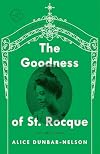
1895-99 Creole New Orleans
Review of The Modern Library paperback edition (February 2022) of the original hardcover "The Goodness of Saint Rocque" (1899) + selected stories from "Violets and Other Tales" (1895)
I subscribe to the newsletter from The Modern Library and the last one announced a new printing in their Torchbearers series of the early short story fiction of journalist/ suffragette/ activist Alice Dunbar-Nelson (1875-1935). I didn't previously know Dunbar-Nelson's work, but the synopsis that promised "this vivid collection transports readers to New Orleans, from the delights of Mardi Gras on Bourbon Street, to the quiet Bayou where lovers meet, and to fish fries on the shore of the Mississippi Sound" did make it sound intriguing.
Only a few of the stories are completely immersive in the mixed French/English patois of Creole vernacular and I enjoyed those the most. The French language texts are not translated in footnotes, but even with my poor French knowledge I had no trouble understanding sentences such as "Ah, ma petite, you tak'? Cing sous, bébé , may le bon Dieu keep you good!"*. I think the context will make for easy comprehension by most readers.
The stories are quite short. There are 20 of them in the 125 pages of story texts. 14 of them are from the original The Goodness of St. Rocque (1899), and that includes 3 which are repeated from the earlier Violets and Other Tales (1895). A further 6 stories from the earlier collection are then added in this 2022 edition. The 3 repeated stories have minor edits. I didn't do a complete A/B comparison, but the conclusion of Titee was turned into a "happy ending" version from the earlier oneThe charitable young boy dies from exposure in the first version, but survives in the second. .
So there was nothing earthshaking here, but this was a very enjoyable period fiction collection that takes you back to late 19th century Creole New Orleans.
Other Reviews
She Was Hard to Impress by Brent Staples, New York Times, April 14, 1985. This is actually a review of the posthumous publication of her diaries in Give Us Each Day: The Diary of Alice Dunbar-Nelson (Norton, 1985), but it gives quite an excellent portrait of her. Her fiction is not even remembered, as she is described as a "columnist, poet, popular platform speaker, former suffragette and - though she secretly chafed under this identifier - the widow of the poet Paul Laurence Dunbar."
Trivia and Links
* excerpt from The Praline Woman.
Alice Dunbar-Nelson's two books of fiction and poetry are in the public domain and can be read online at Project Gutenberg.
Table of Contents
1. The Goodness of Saint Rocque
2. Tony's Wife
3. The Fisherman of Pass Christian
4. M'sieu Fortier's Violin
5. By the Bayou St. John
6. When the Bayou Overflows
7. Mr. Baptiste
8. A Carnival Jangle [repeated from the original Violets and Other Tales]
9. Little Miss Sophie [repeated from the original Violets and Other Tales]
10. Sister Josepha
11. The Praline Woman
12. Odalie
13. La Juanita
14. Titee [repeated (but w/edits) from the original Violets and Other Tales]
Selected Stories from Violets and Other Tales**
15. Violets
16. The Woman
17. Anarchy Alley
18. A Story of Vengeance
19. In Our Neighbourhood
20. The Bee-Man
** The complete book contains 14 poems and 15 stories. show less
Review of The Modern Library paperback edition (February 2022) of the original hardcover "The Goodness of Saint Rocque" (1899) + selected stories from "Violets and Other Tales" (1895)
There had been a picnic the day before, and as merry a crowd of giddy, chattering Creole girls and boys as ever you could see boarded the ramshackle dummy-train that puffed its way wheezily out wide Elysian Fields Street, around the lily-covered bayous, to Milneburg-on-the-Lake. Now, ashow more
picnic at Milneburg is a thing to be remembered for ever. One charters a rickety-looking, weather-beaten dancing-pavilion, built over the water, and after storing the children—for your true Creole never leaves the small folks at home—and the baskets and mothers downstairs, the young folks go up-stairs and dance to the tune of the best band you ever heard. For what can equal the music of a violin, a guitar, a cornet, and a bass viol to trip the quadrille to at a picnic? - excerpt from the short story "The Goodness of Saint Rocque."
I subscribe to the newsletter from The Modern Library and the last one announced a new printing in their Torchbearers series of the early short story fiction of journalist/ suffragette/ activist Alice Dunbar-Nelson (1875-1935). I didn't previously know Dunbar-Nelson's work, but the synopsis that promised "this vivid collection transports readers to New Orleans, from the delights of Mardi Gras on Bourbon Street, to the quiet Bayou where lovers meet, and to fish fries on the shore of the Mississippi Sound" did make it sound intriguing.
Only a few of the stories are completely immersive in the mixed French/English patois of Creole vernacular and I enjoyed those the most. The French language texts are not translated in footnotes, but even with my poor French knowledge I had no trouble understanding sentences such as "Ah, ma petite, you tak'? Cing sous, bébé , may le bon Dieu keep you good!"*. I think the context will make for easy comprehension by most readers.
The stories are quite short. There are 20 of them in the 125 pages of story texts. 14 of them are from the original The Goodness of St. Rocque (1899), and that includes 3 which are repeated from the earlier Violets and Other Tales (1895). A further 6 stories from the earlier collection are then added in this 2022 edition. The 3 repeated stories have minor edits. I didn't do a complete A/B comparison, but the conclusion of Titee was turned into a "happy ending" version from the earlier one
So there was nothing earthshaking here, but this was a very enjoyable period fiction collection that takes you back to late 19th century Creole New Orleans.
Other Reviews
She Was Hard to Impress by Brent Staples, New York Times, April 14, 1985. This is actually a review of the posthumous publication of her diaries in Give Us Each Day: The Diary of Alice Dunbar-Nelson (Norton, 1985), but it gives quite an excellent portrait of her. Her fiction is not even remembered, as she is described as a "columnist, poet, popular platform speaker, former suffragette and - though she secretly chafed under this identifier - the widow of the poet Paul Laurence Dunbar."
Trivia and Links
* excerpt from The Praline Woman.
Alice Dunbar-Nelson's two books of fiction and poetry are in the public domain and can be read online at Project Gutenberg.
Table of Contents
1. The Goodness of Saint Rocque
2. Tony's Wife
3. The Fisherman of Pass Christian
4. M'sieu Fortier's Violin
5. By the Bayou St. John
6. When the Bayou Overflows
7. Mr. Baptiste
8. A Carnival Jangle [repeated from the original Violets and Other Tales]
9. Little Miss Sophie [repeated from the original Violets and Other Tales]
10. Sister Josepha
11. The Praline Woman
12. Odalie
13. La Juanita
14. Titee [repeated (but w/edits) from the original Violets and Other Tales]
Selected Stories from Violets and Other Tales**
15. Violets
16. The Woman
17. Anarchy Alley
18. A Story of Vengeance
19. In Our Neighbourhood
20. The Bee-Man
** The complete book contains 14 poems and 15 stories. show less

This is a nice reprint from Mint Editions of a 1914 pamphlet containing three essays about poet Paul Laurence Dunbar. The first, and longest, is by Dunbar's wife, Alice Dunbar Nelson; her writing is erudite, but it reads like she is responding to some contemporary criticism so at times I felt like I was reading only one half a conversation. The remaining two pieces are powerful panegyrics by William S. Scarborough and Reverdy C. Ransom.
 This review was written for LibraryThing Early Reviewers.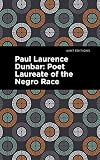
Quite a few years ago I acquired a rather bedraggled book entitled "The Complete Poems of Paul Laurence Dunbar", published in 1926. I knew nothing about the poet but was interested in the fact that he was Black. So, despite the condition of the book, I added it to the twenty some books of American, English and German poetry that I already had in my library. Over the years I have enjoyed reading Dunbar's poetry, even getting a kick out of some of his Black dialect renderings. I did a bit of show more research on him. He died young of tuberculosis in 1906 at the age of just 33. He had a number of challenges in his life, not the least being alchohol and a tendency toward volence under its influence. But he was recognized in the United States and Europe during his short life as a poet of merit.
So, when Library Thing as part of its Early Rviewer program listed the booklet "Paul Laurence Dunbar: Poet Laureate of the Negro Race", I requested a copy and was fortunate enough to receive one.
The booklet (soft cover and just 32 pages of text) contains three essays on Dunbar's life and poetry, written by other recognized Black poets or scholars of the time. Originally published in 1914, the booklet being reviewed here is a 2021 reprint by Mint Editions.
The first essay is a lengthy one by his wife, Alice Dunbar Nelson. They were married just four years before she separated from him in 1902 because of his alcholholism and abuse. She was a poet and a master of the English language in her own right, as demonstrated by her essay in honor of Dunbar's attachment to nature. The second essay is by William S. Scarborough, a Black acedemic. The third essay, the shortest of the three, is by Reverdy C. Ransom, a Black minister. Each essay gives interesting insights into the life of Dunbar and the depth of his creativity through his poetry. It is a welcome supplement to my sad looking but precious book of Dunbar's poetry.
There is a bit of a fly in the ointment, however. While the booklet is attractively laid out and the cover is intereesting, the editing of the volume was sadly lacking. I fear that we have become too dependent on computers to do spell check, grammar checks and sentence structure analysis. But it is my opinion that there is nothing to compare to the ability of a good, live editor when it comes to the actual act of editing a work. The number of errors that slipped by in just 32 pages of text does not speak well of Mint Editions editing department. show less
So, when Library Thing as part of its Early Rviewer program listed the booklet "Paul Laurence Dunbar: Poet Laureate of the Negro Race", I requested a copy and was fortunate enough to receive one.
The booklet (soft cover and just 32 pages of text) contains three essays on Dunbar's life and poetry, written by other recognized Black poets or scholars of the time. Originally published in 1914, the booklet being reviewed here is a 2021 reprint by Mint Editions.
The first essay is a lengthy one by his wife, Alice Dunbar Nelson. They were married just four years before she separated from him in 1902 because of his alcholholism and abuse. She was a poet and a master of the English language in her own right, as demonstrated by her essay in honor of Dunbar's attachment to nature. The second essay is by William S. Scarborough, a Black acedemic. The third essay, the shortest of the three, is by Reverdy C. Ransom, a Black minister. Each essay gives interesting insights into the life of Dunbar and the depth of his creativity through his poetry. It is a welcome supplement to my sad looking but precious book of Dunbar's poetry.
There is a bit of a fly in the ointment, however. While the booklet is attractively laid out and the cover is intereesting, the editing of the volume was sadly lacking. I fear that we have become too dependent on computers to do spell check, grammar checks and sentence structure analysis. But it is my opinion that there is nothing to compare to the ability of a good, live editor when it comes to the actual act of editing a work. The number of errors that slipped by in just 32 pages of text does not speak well of Mint Editions editing department. show less
This review was written for LibraryThing Early Reviewers.
“Sister Josepha” by Alice Dunbar
The lead into the story sets a tone of boredom of a routine life. The author begins the story by showing us Sister Josepha in church doing what must have been part of her daily routine. This dullness is well represented in the text by using such verbs and adjectives as in this sentence “…hold her beads mechanically, her fingers numb with the accustomed exercise,” (407). Again, the author sets the tone of monotony with “always the same old show more work…” and “filling the same old lamps,” (407). The reader instantly notices how dull Sister Josepha feels that life in a convent is.
But Sister Josepha, the reader learns, is battling herself in her search for identity. She faces the decision of either living a mundane life as a nun or escaping into the world outside of the church that she knows hardly anything about. She finds herself torn between wanting excitement and freedom and wanting safety and security. The first glimpse of this we see is when a couple comes to the convent and wants to adopt her. Sister Josepha refuses to go with them because she thinks that the man looks at her in a vulgar way. “Untutored in worldly knowledge, she could not divine the meaning of the pronounced leers and admiration of her physical charms which gleamed in the man’s face, but she knew that it made her feel creepy, and stoutly refused to go,” (408). I took this to mean that although she is not highly educated she is smart enough to reject this couples’ offer because of the way the man looks at her. He looked at her in a sexual way. Why else would it make her feel creepy?
The author’s focus is on Sister Josepha’s identity. All she knows about herself is that her name is Camille and she is beautiful, but outside of that, she knows not much. That is why she stays at the convent after thinking about running away. At least at the convent she has an identity as “Sister Josepha” she is a nun. In the world outside, she would be nothing but a beautiful nameless object. She realizes this after overhearing Sister Francesca talking about her: “…how hard it would be for her in the world, with no name but Camille, no friends, and her beauty…” (411). I think Sister Josepha, as a character, was quite wise to chose staying with the mundane life where she knew what she could expect over the life beyond the convent’s walls. I expected her to runaway from the convent after she spotted the young military man and their eyes met. But found myself glad that she didn’t. After all routine and mundane can be a good thing. show less
The lead into the story sets a tone of boredom of a routine life. The author begins the story by showing us Sister Josepha in church doing what must have been part of her daily routine. This dullness is well represented in the text by using such verbs and adjectives as in this sentence “…hold her beads mechanically, her fingers numb with the accustomed exercise,” (407). Again, the author sets the tone of monotony with “always the same old show more work…” and “filling the same old lamps,” (407). The reader instantly notices how dull Sister Josepha feels that life in a convent is.
But Sister Josepha, the reader learns, is battling herself in her search for identity. She faces the decision of either living a mundane life as a nun or escaping into the world outside of the church that she knows hardly anything about. She finds herself torn between wanting excitement and freedom and wanting safety and security. The first glimpse of this we see is when a couple comes to the convent and wants to adopt her. Sister Josepha refuses to go with them because she thinks that the man looks at her in a vulgar way. “Untutored in worldly knowledge, she could not divine the meaning of the pronounced leers and admiration of her physical charms which gleamed in the man’s face, but she knew that it made her feel creepy, and stoutly refused to go,” (408). I took this to mean that although she is not highly educated she is smart enough to reject this couples’ offer because of the way the man looks at her. He looked at her in a sexual way. Why else would it make her feel creepy?
The author’s focus is on Sister Josepha’s identity. All she knows about herself is that her name is Camille and she is beautiful, but outside of that, she knows not much. That is why she stays at the convent after thinking about running away. At least at the convent she has an identity as “Sister Josepha” she is a nun. In the world outside, she would be nothing but a beautiful nameless object. She realizes this after overhearing Sister Francesca talking about her: “…how hard it would be for her in the world, with no name but Camille, no friends, and her beauty…” (411). I think Sister Josepha, as a character, was quite wise to chose staying with the mundane life where she knew what she could expect over the life beyond the convent’s walls. I expected her to runaway from the convent after she spotted the young military man and their eyes met. But found myself glad that she didn’t. After all routine and mundane can be a good thing. show less
Lists
Awards

You May Also Like


Associated Authors
Statistics
- Works
- 27
- Also by
- 34
- Members
- 206
- Popularity
- #107,331
- Rating
- 4.0
- Reviews
- 8
- ISBNs
- 60
- Languages
- 1

