
Anthony Dunne
Author of Speculative Everything: Design, Fiction, and Social Dreaming (The MIT Press)
Works by Anthony Dunne
Speculative Everything: Design, Fiction, and Social Dreaming (The MIT Press) (2013) 131 copies, 1 review
Hertzian Tales: Electronic Products, Aesthetic Experience, and Critical Design (1999) 88 copies, 1 review
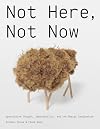
Not Here, Not Now: Speculative Thought, Impossibility, and the Design Imagination (2025) 4 copies, 1 review
Tagged
Common Knowledge
- Gender
- male
Members
Reviews
An excellent manual for operating one's imagination. This is both intellectual (based in close reading of relevant academics) and practical (offering the reader useful tools for inventing strange ideas). I also believe that Dunne and Raby have intentions aligned with my own hopes that the world can be changed, or extended, in such a way that all people (or intermediately, more people) can at all times (or intermediately, more often) give and receive dignity and compassion.
I really like this show more book. show less
I really like this show more book. show less

The book is a rather mature reflection on many years of notable design and teaching practice, providing a concise account of a design stance called speculative design. Ever since the authors coined the notion of critical design in the mid 1990s, they have seen design as a way to make people stop and think. In this book, they pull together a wealth of design examples with a conceptual framework to clarify how design can help us question big assumptions like capitalism and consumerism, and how show more it can help us probe alternate futures. It is highly significant for interaction design in at least two ways. First, it demonstrates coherently that design can go beyond fixing problems or styling features to engage with societal challenges in fruitful ways. Moreover, it illustrates how the gallery and exhibition route complements the more common view of design as sociotechnical intervention where artsy ambitions are sometimes seen as less authentic. show less
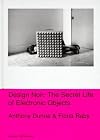
This book builds further upon Hertzian Tales and goes beyond it in articulating the values and intentions of critical design, or design as way of creating distance and posing questions. One of the main questions concerns the relations between people and domestic technology, which is addressed in the better part of the book in the detailed story of the fascinating Placebo project.
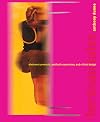
Anthony Dunne outlines the position of the artist-designer and a manifesto of sorts for critical design, where a key concept is parafunctionality (see chapter 2). His examples cover broad fields of electronic products and art practice and the work is an important source of inspiration for interaction designers.
You May Also Like


Statistics
- Works
- 9
- Members
- 293
- Popularity
- #79,899
- Rating
- 4.0
- Reviews
- 4
- ISBNs
- 22