
Jasper Griffin (1937–2019)
Author of The Oxford History of the Classical World
About the Author
Jasper Griffin is Professor of Classical Literature in the University of Oxford and Fellow of Balliol College.
Image credit: via The Guardian (UK)
Works by Jasper Griffin
The Oxford Illustrated History of Greece and the Hellenistic World (2001) — Editor — 138 copies, 1 review
The Mirror of Myth: Classical Themes and Variations (T.S. Eliot Memorial Lectures, 1984) (1986) 5 copies
Mastering the irrational 1 copy
Obituary: Russell Meiggs 1 copy
Associated Works
Owls to Athens: Essays on Classical Culture Presented to Sir Kenneth Dover (1990) — Contributor — 13 copies
Hesperos: Studies in Ancient Greek Poetry Presented to M. L. West on his Seventieth Birthday (2007) — Contributor — 7 copies
Zeitgenosse Horaz : der Dichter und seine Leser seit zwei Jahrtausenden (1996) — Contributor — 2 copies
Tagged
Common Knowledge
- Canonical name
- Griffin, Jasper
- Birthdate
- 1937-05-29
- Date of death
- 2019-11-22
- Gender
- male
- Education
- Christ's Hospital, Horsham, Sussex, England, UK
Balliol College, University of Oxford (BA|1960) - Occupations
- classicist
professor - Organizations
- University of Oxford
- Awards and honors
- Fellow of Balliol College, Oxford University
Fellow, British Academy (1986) - Relationships
- Griffin, Miriam T. (wife)
- Cause of death
- pneumonia
- Nationality
- UK
- Birthplace
- London, England, UK
- Places of residence
- Oxford, Oxfordshire, England, UK
- Associated Place (for map)
- England, UK
Members
Reviews

11. Homer (Past Masters) by Jasper Griffin
published: 1980
format: 80 page little hardcover
acquired: borrowed from my library
read: Feb 24-25
rating: 3 stars
In his introduction Griffin quotes [[Matthew Arnold]] as saying Homer is great "in the noble and profound application of ideas to life.". Then he writes that he hopes "to explain and justify" this statement. I wish he hadn't. Actually all I wanted was a version of a very short introduction to Homer. But that's not really what this is. By show more taking the high ground in a way, he lets us down a bit. He never comes close to providing the explanation and justification promised, and he also never boils these poems down. But he does allow himself to go his own way, and, when he finally gets somewhere, he has some very interesting things to say.
He takes some time to get there. Shortly after telling the reader we should read the poems before we read his book and he goes on to use up many of his 80 pages with a plot summary of the Iliad. Finally - along about page 30 where he writes, "Perhaps even now, despite the long insistence by churches and philosophers that there is one single set of standards, unambiguously moral and the same for everybody, the common man still retains at heart some Homeric values. " - we start getting somewhere.
The rest of the book has really interesting things to say about the Iliad, which he claims is the greater poem, and the Odyssey. He tells us "And Helen is a legendary figure not for her achievements or her virtue but for her guilt and suffering." That is the expression of suffering is her purpose; and it's same for Achilles and Hektor, making the Iliad quite the tragedy. The main mechanism is heroism, and its restrictions and their consequences provide the plays tragedy. To put it another way, characters suffer and die because of choices forced on them in order to maintain their heroic role.
When he writes about the its largely to contrast it, where characters don't exactly abandon the heroic code, but certainly Odysseus stretches its definition.
So, overall I'm pleased I read this, even if I felt the need to beat it up a little bit.
2016
https://www.librarything.com/topic/209547#5489979 show less
published: 1980
format: 80 page little hardcover
acquired: borrowed from my library
read: Feb 24-25
rating: 3 stars
In his introduction Griffin quotes [[Matthew Arnold]] as saying Homer is great "in the noble and profound application of ideas to life.". Then he writes that he hopes "to explain and justify" this statement. I wish he hadn't. Actually all I wanted was a version of a very short introduction to Homer. But that's not really what this is. By show more taking the high ground in a way, he lets us down a bit. He never comes close to providing the explanation and justification promised, and he also never boils these poems down. But he does allow himself to go his own way, and, when he finally gets somewhere, he has some very interesting things to say.
He takes some time to get there. Shortly after telling the reader we should read the poems before we read his book and he goes on to use up many of his 80 pages with a plot summary of the Iliad. Finally - along about page 30 where he writes, "Perhaps even now, despite the long insistence by churches and philosophers that there is one single set of standards, unambiguously moral and the same for everybody, the common man still retains at heart some Homeric values. " - we start getting somewhere.
The rest of the book has really interesting things to say about the Iliad, which he claims is the greater poem, and the Odyssey. He tells us "And Helen is a legendary figure not for her achievements or her virtue but for her guilt and suffering." That is the expression of suffering is her purpose; and it's same for Achilles and Hektor, making the Iliad quite the tragedy. The main mechanism is heroism, and its restrictions and their consequences provide the plays tragedy. To put it another way, characters suffer and die because of choices forced on them in order to maintain their heroic role.
When he writes about the its largely to contrast it, where characters don't exactly abandon the heroic code, but certainly Odysseus stretches its definition.
So, overall I'm pleased I read this, even if I felt the need to beat it up a little bit.
2016
https://www.librarything.com/topic/209547#5489979 show less
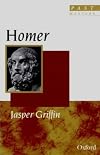
A masterful introduction to the Iliad and the Odyssey. Griffin is interested in the literary themes and ideas that drive these two classics, and what he serves up is a feast of incisive observation and interpretation. Along the way he traces the effect of the Homeric epics on Western civilisation and writing. Also helpful is the way he contrasts the unique distinctives of each epic vis-a-vis the other. A recommended short introduction and companion to the first literary works of Europe.
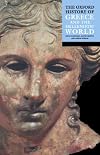
This is very much an introductory book where each chapter ends with a list of further reading, which meant that it didn't really tell me things I didn't already know, but it was a good refresher and kept me interested all the way through.
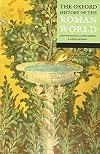
Solid enough introduction to the Roman world, tracing its history from its origins as a cluster of villages to the foundation of the Empire and its growth in the first two centuries. I used it as a primer during my course on the Roman Empire, and though rather uninspiring, it does lay out the basic facts which one needs to grasp.
Lists
You May Also Like


Associated Authors
Statistics
- Works
- 21
- Also by
- 20
- Members
- 3,279
- Popularity
- #7,809
- Rating
- 3.9
- Reviews
- 14
- ISBNs
- 49
- Languages
- 3