
Stephen Leeb
Author of The Coming Economic Collapse: How You Can Thrive When Oil Costs $200 a Barrel
About the Author
Stephen Leeb, PhD, is one of the leading investment experts in the U.S. He is a regular contributor to all the major financial TV networks and radio stations, including CNN' CNBC, FOX Business, and Bloomberg. His last book, The Coming Economic Collapse: How you Can Thrive When Oil Costs $200 a show more Barrel, was a national bestseller. show less
Works by Stephen Leeb
The Coming Economic Collapse: How You Can Thrive When Oil Costs $200 a Barrel (2006) 195 copies, 2 reviews
Red Alert: How China's Growing Prosperity Threatens the American Way of Life (2011) 18 copies, 1 review
Market Timing for the Nineties: The Five Key Signals for When to Buy, Hold, and Sell (1993) 10 copies
China's Rise And The New Age Of Gold: How Investors Can Profit From A Changing World (2020) 3 copies
Tagged
Common Knowledge
- Gender
- male
- Education
- Wharton School of the University of Pennsylvania
Members
Reviews
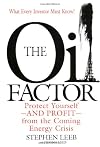
Beware of the Pivotal Role of Oil
The Leebs arm readers with an investment strategy to survive, what they see, as the coming energy crisis.
Energy is crucial to the world’ economy. The Leebs believe we are transitioning away from reliance on oil and gas as our primary energy sources. As supplies dwindle, the price is experiencing an upside breakout, which will place inflationary pressures on the economy in conjunction with deflationary threats.
The Leebs predict the dwindling energy supplies show more will cause oil price will rise to $100 a barrel by the end of this decade, if not sooner. They observe that oil prices are the single most reliable predictor of stock market performance. That is why they urge investors to alternate between inflation and deflation positions using their “amazing oil indicator.”
Generally, I am skeptical of simplistic investment approaches. In my experience these indicators work only for investors whom I charitably call “donators.” Donators are a necessary market group, but I do not generally want to join. In this case, however, I agree with the underlying thesis. Energy is a non-renewable resource to which the world’s economy is hopelessly addicted. As the world transitions, there will be disruptions. I doubt they will take the form of a short-term, neat, predictable package. show less
The Leebs arm readers with an investment strategy to survive, what they see, as the coming energy crisis.
Energy is crucial to the world’ economy. The Leebs believe we are transitioning away from reliance on oil and gas as our primary energy sources. As supplies dwindle, the price is experiencing an upside breakout, which will place inflationary pressures on the economy in conjunction with deflationary threats.
The Leebs predict the dwindling energy supplies show more will cause oil price will rise to $100 a barrel by the end of this decade, if not sooner. They observe that oil prices are the single most reliable predictor of stock market performance. That is why they urge investors to alternate between inflation and deflation positions using their “amazing oil indicator.”
Generally, I am skeptical of simplistic investment approaches. In my experience these indicators work only for investors whom I charitably call “donators.” Donators are a necessary market group, but I do not generally want to join. In this case, however, I agree with the underlying thesis. Energy is a non-renewable resource to which the world’s economy is hopelessly addicted. As the world transitions, there will be disruptions. I doubt they will take the form of a short-term, neat, predictable package. show less
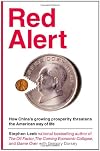
America is in a race with China that will go a long way toward determining our future quality of life. Few Americans know that this race is underway.
World supplies are growing very tight of certain key minerals (sometimes called strategic minerals) that are absolutely vital for the smooth running of a 21st century economy. Names like neodymium, europium, indium and niobium may sound very boring, but you can't run a high-tech economy without them. China has spent years, and a lot of money show more around the world, getting its hands on every bit of such materials that it can find. China is doing it not just to keep their economy growing, but because, one day, the supply will run out, and they want to be in the driver's seat.
For a number of other, equally important, minerals, of which America imports all of its supply, the world's biggest supplier is China. The American attitude is that technology will save the day. How is that going to happen if China decides that some vital mineral will be much less available?
Estimates put the cost of the wars in Iraq and Afghanistan at nearly $3 trillion. Even a portion of that money would have been much better spent on renewable energy, especially solar energy. China is the world leader in making solar panels, and their lead widens every day. How can America have any hope of catching up when federal investments are in the hundreds of millions of dollars (at the most), and China's investments are in the billions of dollars?
Everyone has seen pictures of acres and acres of electronic equipment dumped all over China. The methods to extract the metals inside may be low-tech and toxic, but even a small amount of gold, for instance, per monitor, multiplied by millions of monitors, is a substantial amount of gold that China can use elsewhere.
America can not depend on new sources of oil to power its economy, because the authors assert that "peak oil" has arrived. It is the point at which the era of "easy" oil extraction has ended, and any new discoveries will be harder and harder to extract ("Drill, baby, drill" is simplistic, at best).
This is a fascinating and very important book. It is very much worth reading for all Americans, and especially for all members of Congress. show less
World supplies are growing very tight of certain key minerals (sometimes called strategic minerals) that are absolutely vital for the smooth running of a 21st century economy. Names like neodymium, europium, indium and niobium may sound very boring, but you can't run a high-tech economy without them. China has spent years, and a lot of money show more around the world, getting its hands on every bit of such materials that it can find. China is doing it not just to keep their economy growing, but because, one day, the supply will run out, and they want to be in the driver's seat.
For a number of other, equally important, minerals, of which America imports all of its supply, the world's biggest supplier is China. The American attitude is that technology will save the day. How is that going to happen if China decides that some vital mineral will be much less available?
Estimates put the cost of the wars in Iraq and Afghanistan at nearly $3 trillion. Even a portion of that money would have been much better spent on renewable energy, especially solar energy. China is the world leader in making solar panels, and their lead widens every day. How can America have any hope of catching up when federal investments are in the hundreds of millions of dollars (at the most), and China's investments are in the billions of dollars?
Everyone has seen pictures of acres and acres of electronic equipment dumped all over China. The methods to extract the metals inside may be low-tech and toxic, but even a small amount of gold, for instance, per monitor, multiplied by millions of monitors, is a substantial amount of gold that China can use elsewhere.
America can not depend on new sources of oil to power its economy, because the authors assert that "peak oil" has arrived. It is the point at which the era of "easy" oil extraction has ended, and any new discoveries will be harder and harder to extract ("Drill, baby, drill" is simplistic, at best).
This is a fascinating and very important book. It is very much worth reading for all Americans, and especially for all members of Congress. show less
Oriented towards investors but still a good overview of the oil factor i.e. why we need to watch out for high oil prices. And also a good overview of the alternative energy sources to oil.
His first book (The Oil Factor) was more self-consistent and coherent, making a convincing case that oil price volatility is a principle determinant of financial market inflation/deflation. This one is more slapdash and contradictory. Disappointing.
Awards


You May Also Like


Associated Authors
Statistics
- Works
- 12
- Members
- 396
- Popularity
- #61,230
- Rating
- 3.3
- Reviews
- 6
- ISBNs
- 41
- Languages
- 2