
Esteban Echeverría (1805–1851)
Author of The Captive / The Slaughteryard
About the Author
Works by Esteban Echeverría
Associated Works
Introducción a la literatura hispanoamericana : de la conquista al siglo XX (1997) — Contributor — 23 copies
The Serpent and the Fire: Poetries of the Americas from Origins to Present (2024) — Contributor — 16 copies
Tagged
Common Knowledge
- Canonical name
- Echeverría, Esteban
- Legal name
- Echeverría Espinosa, José Esteban Antonio
- Birthdate
- 1805-09-02
- Date of death
- 1851-01-19
- Gender
- male
- Education
- La Sorbona
- Occupations
- Escritor
Poeta
Ensayista
Político - Organizations
- Generación del 37 (Integrante)
- Nationality
- Argentina
- Birthplace
- Buenos Aires, Virreynato del Río de La Plata
- Place of death
- Montevideo, Uruguay
- Associated Place (for map)
- Buenos Aires, Virreynato del Río de La Plata
Members
Reviews
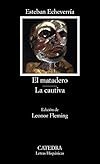
I keep stacks of books to be read, library books that I've checked out months ago or books I recently and excitedly purchased; however, sometimes I like to forego those queues and stand in front of my bookcase, choosing a book at random. I decided to take it back to the early days of independent Argentina, and re-read a book I first read as an undergraduate taking a class on Argentine literature the semester before departing for a year of studies in Buenos Aires. As I recall we opened that show more class with Esteban Echeverría's two most famous works, and my professor introduced the literature with a brief history lesson about Juan Manuel de Rosas and the conflicts between Federales and Unitarios. I remember I thought it was funny that the supporters of Rosas, the Federales, wore the biggest moustaches they could grow (I'd make a lousy Federal), while the Unitarios went rather blatantly moustacheless with giant neck beards that framed their faces in the shape of a "U". Of course, those were serious times, and I may have had to surpress a giggle or two as my professor talked about Rosas' reign of terror and the execution of countless Unitarios by the Mazorca, the strong arm of the Rosas political machine. It's just hard to keep a straight face as you sit in class imagining neck beards. When I finished the class and went to Argentina, I was glad that I'd read a few of the classics and studied them under a professor who could explain them in the context of his nation's history.
As I stared at my bookshelf, I realized I remembered very little about these two works. El matadero is about a slaughterhouse; La cautiva is about a captive, or two captives, and the desert. That's about as much as I could recall. I wanted to reacquaint myself with these two stories (the former is a short story, the latter a narrative poem) because I've become increasingly familiar with Argentine literature since I took this class, and I thought I'd find more to appreciate as I read them for a second time.
El matadero describes the arrival of a troop of cattle to a suburban Buenos Aires slaughterhouse during Lent, a time in which the city is starved for meat and suffering to the point that the benevolent dictator Rosas agreed to allow the recommencement of productive activities at the slaughterhouse. The hunger for animal flesh sets the stage for a later depiction of a different sort of hunger in the hearts of the laborers, who are described in their various roles in the early pages of the story. Echeverría does not recur to flowery and ornate language in this text (he will in La Cautiva), describing the crude reality of the slaughter in all its bloody glory. The brutish laborers, partisans of Rosas' Federal party, are not looked at entirely unkindly: there are hints of admiration in the depiction of their domination of the incoming cattle. One bull breaks loose and runs rampant across the yard. In the process, a young boy meets a violent end in a horrible accident involving one of the tools of the trade. The bull eventually exits the slaughterhouse and breaches the streets, and as he's being brought to submission, the workmen come across a Unitario obliviously passing by on his way uptown. They begin toying with him, and their games become increasingly cruel. Their pursuit of him is not unline their pursuit of the escaped bull. While this book was written around the same time as La cautiva (between 1835 and 1840), it was not published until many years later, after the author's death. It just wasn't safe in the age of Rosas to publish something so overtly political.
In La cautiva the heroic María, knife in hand, escapes from captivity in an Indian camp on the pampa, taking her beloved Brian along with her into the open countryside. They soon find themselves captive once again, this time to the vast and limitless desert. Brian is weak and can barely stand on his own two feet, but María refuses to give up and they push on. They find water, but then a fire sweeps across the desolate landscape. Things do not look good for the couple, and Brian falters more than once, ready to give up and resigned to death. María continues to fight for their survival, eventually taking Brian onto her shoulders and carrying him when he's too weak to walk. Each step of the way, from the late-night drunken revelry of the victorious Indians to the desperate wanderings of Brian and María, Echeverría paints the people and the landscape of his native Argentina into literary being, not always hitting the perfect note (the editor of my book was quick to point out his shortcomings in footnotes), but often writing particularly compelling and original passages. It's a very Romantic (with a capital R) story. The introductory study of my edition recounts the author's years spent in Paris as a young student, during which he was exposed to the Romantic works of English and German authors popular at the time. When he crossed the ocean and returned to Argentina, he looked at the landscapes of his own country with his eyes and mind attuned to a certain interpretation of the plants, animals and people of his homeland.
These stories were thrilling to return to years after I first read them, years during which I read a lot of Argentine literature. The themes are iconic: the civilization and barbary of El matadero, the desert as a vast and inescapable prison in La cautiva, the final image of the ombu tree marking the division between city and pampa. It's amazing how, in two short works, Echeverría was able to prefigure so much of his country's literature. When Borges writes about the desert, he's writing in part about Echeverría's desert; without Echeverría, maybe Sarmiento doesn't write Facundo. They're not perfect, and they probably wouldn't have endured for more than a century and a half if not for their surprising originality. He was able to look at his country and distill it into two short pieces that expressed enduring aspects of the Argentine reality. show less
As I stared at my bookshelf, I realized I remembered very little about these two works. El matadero is about a slaughterhouse; La cautiva is about a captive, or two captives, and the desert. That's about as much as I could recall. I wanted to reacquaint myself with these two stories (the former is a short story, the latter a narrative poem) because I've become increasingly familiar with Argentine literature since I took this class, and I thought I'd find more to appreciate as I read them for a second time.
El matadero describes the arrival of a troop of cattle to a suburban Buenos Aires slaughterhouse during Lent, a time in which the city is starved for meat and suffering to the point that the benevolent dictator Rosas agreed to allow the recommencement of productive activities at the slaughterhouse. The hunger for animal flesh sets the stage for a later depiction of a different sort of hunger in the hearts of the laborers, who are described in their various roles in the early pages of the story. Echeverría does not recur to flowery and ornate language in this text (he will in La Cautiva), describing the crude reality of the slaughter in all its bloody glory. The brutish laborers, partisans of Rosas' Federal party, are not looked at entirely unkindly: there are hints of admiration in the depiction of their domination of the incoming cattle. One bull breaks loose and runs rampant across the yard. In the process, a young boy meets a violent end in a horrible accident involving one of the tools of the trade. The bull eventually exits the slaughterhouse and breaches the streets, and as he's being brought to submission, the workmen come across a Unitario obliviously passing by on his way uptown. They begin toying with him, and their games become increasingly cruel. Their pursuit of him is not unline their pursuit of the escaped bull. While this book was written around the same time as La cautiva (between 1835 and 1840), it was not published until many years later, after the author's death. It just wasn't safe in the age of Rosas to publish something so overtly political.
In La cautiva the heroic María, knife in hand, escapes from captivity in an Indian camp on the pampa, taking her beloved Brian along with her into the open countryside. They soon find themselves captive once again, this time to the vast and limitless desert. Brian is weak and can barely stand on his own two feet, but María refuses to give up and they push on. They find water, but then a fire sweeps across the desolate landscape. Things do not look good for the couple, and Brian falters more than once, ready to give up and resigned to death. María continues to fight for their survival, eventually taking Brian onto her shoulders and carrying him when he's too weak to walk. Each step of the way, from the late-night drunken revelry of the victorious Indians to the desperate wanderings of Brian and María, Echeverría paints the people and the landscape of his native Argentina into literary being, not always hitting the perfect note (the editor of my book was quick to point out his shortcomings in footnotes), but often writing particularly compelling and original passages. It's a very Romantic (with a capital R) story. The introductory study of my edition recounts the author's years spent in Paris as a young student, during which he was exposed to the Romantic works of English and German authors popular at the time. When he crossed the ocean and returned to Argentina, he looked at the landscapes of his own country with his eyes and mind attuned to a certain interpretation of the plants, animals and people of his homeland.
These stories were thrilling to return to years after I first read them, years during which I read a lot of Argentine literature. The themes are iconic: the civilization and barbary of El matadero, the desert as a vast and inescapable prison in La cautiva, the final image of the ombu tree marking the division between city and pampa. It's amazing how, in two short works, Echeverría was able to prefigure so much of his country's literature. When Borges writes about the desert, he's writing in part about Echeverría's desert; without Echeverría, maybe Sarmiento doesn't write Facundo. They're not perfect, and they probably wouldn't have endured for more than a century and a half if not for their surprising originality. He was able to look at his country and distill it into two short pieces that expressed enduring aspects of the Argentine reality. show less
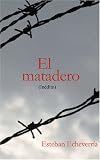
La Cautiva constituye el poemario más valioso de todos los publicados por Echeverría, sobre todo, porque contiene un poema largo que consta de nueve partes: El desierto, El festín, El puñal, La alborada, El pajonal, La espera, La quemazón, Brian, María y un epílogo que completa el poema.
El matadero fue escrito entre los años 1838 y 1840, pero permaneció inédito hasta que en 1871. Para muchos críticos este pequeño texto representa el primer cuento breve de la literatura argentina; show more aunque para algunos eruditos, la discusión se les hizo un poco más larga. No conformes con que haya sido considerado el primer cuento argentino, con que haya sido el texto precursor del realismo y de la narrativa argentina moderna, se preocupan en discutir si es un cuadro de costumbres, si es realista debido a la crítica social de la cual se hace eco el narrador omnisciente, o si introdujo el estilo de la narrativa de Larra, ya que si bien la generación del 37 estaba en contra de lo españolizante, no se oponían a la nueva narrativa que había surgido después de la revolución de la independencia. show less
El matadero fue escrito entre los años 1838 y 1840, pero permaneció inédito hasta que en 1871. Para muchos críticos este pequeño texto representa el primer cuento breve de la literatura argentina; show more aunque para algunos eruditos, la discusión se les hizo un poco más larga. No conformes con que haya sido considerado el primer cuento argentino, con que haya sido el texto precursor del realismo y de la narrativa argentina moderna, se preocupan en discutir si es un cuadro de costumbres, si es realista debido a la crítica social de la cual se hace eco el narrador omnisciente, o si introdujo el estilo de la narrativa de Larra, ya que si bien la generación del 37 estaba en contra de lo españolizante, no se oponían a la nueva narrativa que había surgido después de la revolución de la independencia. show less
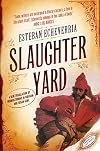
Key short story by Echeverria, political activist in 1830s Argentina, in a new and very complete edition by The Friday Project containing a long and helpful-for-context foreword by translator which set the historical context (without which I would have been lost), text, glossary, original text with note, further poetry by Echeverria, and translation of foreword to original posthumous edition.
The story is barely 30 pages long, and there is no doubt about its gore and grisliness. The political show more satire/parody is very extreme - portrays bleak and bloody events and then says they show the glory of the regime. 5/10 awarded because I find it very difficult to award any sort of mark - so short and bizarre. show less
The story is barely 30 pages long, and there is no doubt about its gore and grisliness. The political show more satire/parody is very extreme - portrays bleak and bloody events and then says they show the glory of the regime. 5/10 awarded because I find it very difficult to award any sort of mark - so short and bizarre. show less
Awards

You May Also Like


Associated Authors
Statistics
- Works
- 25
- Also by
- 5
- Members
- 300
- Popularity
- #78,267
- Rating
- 3.4
- Reviews
- 14
- ISBNs
- 75
- Languages
- 2