

Leif Davidsen
Author of Lime's Photograph
About the Author
Image credit: Photo: Mogens Engelund, Wikipedia
Series
Works by Leif Davidsen
Associated Works
Tagged
Common Knowledge
- Canonical name
- Davidsen, Leif
- Birthdate
- 1950-07-25
- Gender
- male
- Occupations
- journalist
- Awards and honors
- Bog & Idé-prisen (2006)
- Nationality
- Denmark
- Birthplace
- Otterup, Dänemark
- Places of residence
- Otterup, Denmark (birth)
- Associated Place (for map)
- Otterup, Denmark
Members
Reviews
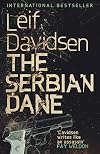
Sara Santanda is a female Iranian author who is the subject of a fatwa due to the criticisms she has made of her country. She is in hiding in London but wants to make a public appearance and chooses Copenhagen, Denmark to do so. Lise Carlsen is the arts journalist for the newspaper that has invited Santanda and will be the paper’s main contact for the event. Per Toftlund is the ex-Navy frogman that the secret service puts in charge of security for Santanda’s visit. Vuk is the assassin show more hired to carry out the contract on Santanda’s life. How these lives intersect is the subject of the book.
The story unfolds in alternating chapters told from the view points of the three main characters though the majority are from either Vuk’s or Lise Carlsen’s perspective. The characterisations are multi-faceted and very engaging, though I found myself a little more compelled by and even empathetic towards Vuk the assassin. Perhaps because we first meet him as he kills a bigoted, hate mongering radio announcer (a sub-species of humanity I believe the world could well do without) but I always retained more sympathy for him than I suspect I was supposed to. The depiction of him as man who could have been a ‘normal’ member of society but who was broken by events largely beyond his control was superbly done. The other two main characters were also well-rounded as we see both their professional and personal lives impacted by events. I must admit thought that I didn’t find Lise Carlsen quite as realistic as the two male characters, particularly in the fairly passive attitude she displays towards the potential breakdown of her marriage.
The other standout feature of the novel for me was its depiction of both international and local politics. The background to Vuk’s part of the story is the war that is still ongoing at the time of the story in the former Yugoslavia between the Croations and the Serbs and, like all wars, it has created its share of living victims. Within Denmark, and this is long before the ‘war on terror’, the politicians are shown to be like politicians pretty much everywhere: self-serving people more intent on preserving trade links and looking important than standing up for anything that remotely resembles a principle.
I will admit here on the blog that my woefully inadequate knowledge of Danish society has pretty much been gained from reading the Australian women’s magazines that populate local hairdressing salons in which there are endless stories of the tribulations of ‘our Mary’ who married their Prince Frederik (who even gets a mention in the book) in 2004. So I’m not sure I’d know the real Denmark if I tripped over it but I feel I did get some sense of the real country here. Denmark was shown as a relatively safe country where the media makes mountains out of whatever molehills they come across because, by and large, things are really pretty good there and the country struggles a bit to project an international image without the benefit of a huge population and/or a nice long history of being strife-torn like all the really cool countries. If this is remotely true then ‘our Mary’ would have felt right at home because that could describe Australia perfectly (though we do a nice line in venomous creatures to single us out a bit).
But I digress.
Rather than a whodunnit The Serbian Dane is a highly compelling ‘will it be done?’ novel. The suspense built in a gradual, quite understated way as the date for Santanda’s visit draws closer and you know that everyone will intersect somehow but are never quite sure how this will happen and what the resolution will be. The flow of the writing appears to have been expertly captured by Scottish born translator Barbara Haveland as the novel was a particularly easy and engaging read and I would recommend it heartily. As someone who tends to bang on a bit about politics in books being done poorly in fiction I’d especially recommend this as a great example of making the politics part of the story instead of a lecture. show less
The story unfolds in alternating chapters told from the view points of the three main characters though the majority are from either Vuk’s or Lise Carlsen’s perspective. The characterisations are multi-faceted and very engaging, though I found myself a little more compelled by and even empathetic towards Vuk the assassin. Perhaps because we first meet him as he kills a bigoted, hate mongering radio announcer (a sub-species of humanity I believe the world could well do without) but I always retained more sympathy for him than I suspect I was supposed to. The depiction of him as man who could have been a ‘normal’ member of society but who was broken by events largely beyond his control was superbly done. The other two main characters were also well-rounded as we see both their professional and personal lives impacted by events. I must admit thought that I didn’t find Lise Carlsen quite as realistic as the two male characters, particularly in the fairly passive attitude she displays towards the potential breakdown of her marriage.
The other standout feature of the novel for me was its depiction of both international and local politics. The background to Vuk’s part of the story is the war that is still ongoing at the time of the story in the former Yugoslavia between the Croations and the Serbs and, like all wars, it has created its share of living victims. Within Denmark, and this is long before the ‘war on terror’, the politicians are shown to be like politicians pretty much everywhere: self-serving people more intent on preserving trade links and looking important than standing up for anything that remotely resembles a principle.
I will admit here on the blog that my woefully inadequate knowledge of Danish society has pretty much been gained from reading the Australian women’s magazines that populate local hairdressing salons in which there are endless stories of the tribulations of ‘our Mary’ who married their Prince Frederik (who even gets a mention in the book) in 2004. So I’m not sure I’d know the real Denmark if I tripped over it but I feel I did get some sense of the real country here. Denmark was shown as a relatively safe country where the media makes mountains out of whatever molehills they come across because, by and large, things are really pretty good there and the country struggles a bit to project an international image without the benefit of a huge population and/or a nice long history of being strife-torn like all the really cool countries. If this is remotely true then ‘our Mary’ would have felt right at home because that could describe Australia perfectly (though we do a nice line in venomous creatures to single us out a bit).
But I digress.
Rather than a whodunnit The Serbian Dane is a highly compelling ‘will it be done?’ novel. The suspense built in a gradual, quite understated way as the date for Santanda’s visit draws closer and you know that everyone will intersect somehow but are never quite sure how this will happen and what the resolution will be. The flow of the writing appears to have been expertly captured by Scottish born translator Barbara Haveland as the novel was a particularly easy and engaging read and I would recommend it heartily. As someone who tends to bang on a bit about politics in books being done poorly in fiction I’d especially recommend this as a great example of making the politics part of the story instead of a lecture. show less
I can't remember the last thriller styled book from a Scandinavian author that I've read - but I certainly hope I'll find another one soon. THE SERBIAN DANE lingered too long on the unread piles around here - but once started it was fascinating. A Serbian hitman, Vuk, born in Denmark but very much formed by the collapse of the former Yugoslavia, is hired to kill an Iranian author. Sara Santanda has decided to come out of hiding, and her first appearance is scheduled for Copenhagen. show more
Santanda's contact in Denmark, Lise Carlesen works for the newspaper Politiken. Despite the Danish government's reservations about their relationship with Iran, they agree to provide security protection, and the man in charge is Per Toftlund. Lise's marriage is already on the skids, and Per is a very attractive man. In an interesting twist her increasing absence allows a mysterious stranger to befriend her husband, a combination of all the relationships and events combining to form the catalyst for a quite dramatic conclusion.
Given that this book is a thriller in style, there is quite a lot of action. Alongside that though there are some great character explorations - particularly that of Vuk, the hitman with so many identities that he seems to have lost who he really is. It's strange, but there's something quite vulnerable and complicated about Vuk - as cold-blooded and as ruthless a killer as he is. It seems that you get a real glimpse into the damage that war can do. At the same time Per and Lise's relationship is an interesting development. What is most interesting, however, is that this is a book that was originally published in 1996, yet the issues discussed, the action portrayed and the tension engendered really felt quite contemporary and believable.
This is a really good thriller with a full range of the required elements (tension / pace / threat and a sense of menace), alongside some suprisingly good characterisations and just a touch of human insight. show less
Santanda's contact in Denmark, Lise Carlesen works for the newspaper Politiken. Despite the Danish government's reservations about their relationship with Iran, they agree to provide security protection, and the man in charge is Per Toftlund. Lise's marriage is already on the skids, and Per is a very attractive man. In an interesting twist her increasing absence allows a mysterious stranger to befriend her husband, a combination of all the relationships and events combining to form the catalyst for a quite dramatic conclusion.
Given that this book is a thriller in style, there is quite a lot of action. Alongside that though there are some great character explorations - particularly that of Vuk, the hitman with so many identities that he seems to have lost who he really is. It's strange, but there's something quite vulnerable and complicated about Vuk - as cold-blooded and as ruthless a killer as he is. It seems that you get a real glimpse into the damage that war can do. At the same time Per and Lise's relationship is an interesting development. What is most interesting, however, is that this is a book that was originally published in 1996, yet the issues discussed, the action portrayed and the tension engendered really felt quite contemporary and believable.
This is a really good thriller with a full range of the required elements (tension / pace / threat and a sense of menace), alongside some suprisingly good characterisations and just a touch of human insight. show less
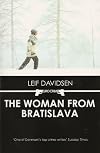
This is a Danish thriller about spies, the influence of history and family ties. Set during the early days of NATO bombing of Serbia, Leif Davidsen explores the history of Nazism in Denmark and the more recent history of the Cold War, when Denmark's location on the Baltic Sea gave it strategic importance.
Teddy is a university lecturer whose dissertation concluding that the Soviet Union would remain strong for the foreseeable future came out early enough to get him his current position, but show more too late for him to have become a full professor before his field of study became obsolete. He frequently joins groups traveling through eastern Europe, and it's on one of those tours that he's visited by a Yugoslavian woman who claims to be his half-sister. Meanwhile, his other sister is arrested when the opening of Stasi files indicates that she is the Danish spy, formerly known only as Edelweiss, who had passed important state secrets to the Soviet Union. The police officer assigned to find out who fed her the information is sent all over eastern Europe, from Prague to Budapest to the Albania port city of Durrës, as he seeks to find the woman who claimed to be Teddy's sister, and who seems to hold the key to all the secrets.
Spy thrillers are not really my thing, but the novel did a fantastic job of illuminating a time and place that I know less than I should about. From the Danish history of having troops fighting on the side of the Germans during WWII, until the war was lost and those same men who had fought in the SS were vilified and imprisoned when they returned home, to those chaotic days when formerly communist countries became capitalist overnight, to the disintegration of Yugoslavia, this book was full of historical events I know little or nothing about.
The translation was iffy, and seemed to have been either done in a rush, or by someone with less than complete fluency in English. Eye shadow sets off the color of a woman's iris, for example, and clothing is referred to as "self-colored" more than once. Still, I was happy to have a less than stellar translation than none at all. show less
Teddy is a university lecturer whose dissertation concluding that the Soviet Union would remain strong for the foreseeable future came out early enough to get him his current position, but show more too late for him to have become a full professor before his field of study became obsolete. He frequently joins groups traveling through eastern Europe, and it's on one of those tours that he's visited by a Yugoslavian woman who claims to be his half-sister. Meanwhile, his other sister is arrested when the opening of Stasi files indicates that she is the Danish spy, formerly known only as Edelweiss, who had passed important state secrets to the Soviet Union. The police officer assigned to find out who fed her the information is sent all over eastern Europe, from Prague to Budapest to the Albania port city of Durrës, as he seeks to find the woman who claimed to be Teddy's sister, and who seems to hold the key to all the secrets.
Spy thrillers are not really my thing, but the novel did a fantastic job of illuminating a time and place that I know less than I should about. From the Danish history of having troops fighting on the side of the Germans during WWII, until the war was lost and those same men who had fought in the SS were vilified and imprisoned when they returned home, to those chaotic days when formerly communist countries became capitalist overnight, to the disintegration of Yugoslavia, this book was full of historical events I know little or nothing about.
The translation was iffy, and seemed to have been either done in a rush, or by someone with less than complete fluency in English. Eye shadow sets off the color of a woman's iris, for example, and clothing is referred to as "self-colored" more than once. Still, I was happy to have a less than stellar translation than none at all. show less
Jag har inte läst Conn Igguldens böcker men från denna bok kommer det bli fler. Stäppens Krigare innehåller allt en bra bok ska ha, äventyr, spänning , historia, bra karaktärer och både miljö och person beskrivningar. Kan inget annat än ge denna bok 5 i betyg och rekommendera den. :
Lists
Scandicrime (1)
Global Mysteries (1)
Awards


You May Also Like


Associated Authors
Statistics
- Works
- 34
- Also by
- 2
- Members
- 1,228
- Popularity
- #20,901
- Rating
- 3.4
- Reviews
- 51
- ISBNs
- 273
- Languages
- 15