

Grace Elizabeth Hale
Author of Making Whiteness: The Culture of Segregation in the South, 1890-1940
About the Author
Grace Elizabeth Hale is Professor of History and American Studies at the University of Virginia. She is the author of Making Whiteness: The Culture of Segregation in the South, 1890-1940.
Works by Grace Elizabeth Hale
Cool Town: How Athens, Georgia, Launched Alternative Music and Changed American Culture (2020) 76 copies, 3 reviews
A Nation of Outsiders: How the White Middle Class Fell in Love with Rebellion in Postwar America (2011) 42 copies, 1 review
Associated Works
Georgia in Black and White: Explorations in the Race Relations of a Southern State, 1865-1950 (1994) — Contributor — 10 copies
Tagged
Common Knowledge
- Birthdate
- 1964
- Gender
- female
- Occupations
- Professor of History and American Studies, University of Virginia
- Nationality
- USA
- Associated Place (for map)
- USA
Members
Reviews

I picked this book up from the new books shelf of my local library at the same time I picked up The Blueprint. While The Blueprint explores what would have happened if the Civil Rights movement had been met with outright Civil War won by the south, In the Pines explores the history of white supremacy in Jefferson Davis County, Mississippi including a lynching carried out and covered up by the author’s own grandfather. It describes how white southerners systematically destroyed and show more dismantled what they were unwilling to integrate—from swimming pools, to schools, to democracy itself. The reality is we are not far from the dystopia described in The Blueprint, even without the 2nd civil war. Although I appreciated the author’s personal perspective, and growing up in the south I have personal experience with racism in the family, the author’s relationship with the perpetrator makes for a very uncomfortable telling. She does not shy away from exposing (to the extent possible) what must have occurred, but neither does she shy away from her childhood memories of a grandfather she loved and who loved her. It’s hard to reconcile. It also points to the reality that many of us know people who have lynched, but just haven’t sought to know it. show less
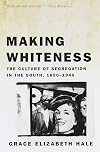
In order to justify a segregated society, the American South constructed whiteness as the norm and relegated blackness to the perimeter of mainstream culture. Hale’s insightful study of white Southerners’ methods of distancing and identity construction is carefully laid out in Making Whiteness. She deftly charts the construction of the institution of segregation from the end of Reconstruction to what is arguably the beginning of black civil rights consciousness during World War II. The show more dialectic construction of black identity based on paternal fantasies and fear is described as occurring concurrently with the creation of the Lost Cause and Old South myths in the late nineteenth century—thereby creating whiteness and its other, blackness. Hale then recounts two cultural revolutions that occurred at the turn of the century and grew to complicate and eventually undermine white identity as separate from black: the domestic shift from plantation life to the white middle class, and the development of modern consumerism in the southern United States. Both changes, one private and one public, necessitated the need for southern whites to create public and powerful means to reestablish their primacy in the face of ambiguous racial relationships in the home and in the store—Hale suggests that spectacle lynchings and public monuments served this purpose. Her conclusions indicate that southern violence towards blacks inevitably caused larger American sentiment to wane in support of white supremacy as it manifested itself in the South. In addition, the interaction between blacks and whites in consumerism and domestic service served to undermine the separation that occurred in other public spaces causing African-Americans in the region to begin boldly demanding equal rights in all spheres of society.
In spite of the ambitious nature of her project, Hale does a remarkable job of illustrating the construction of segregation and its inherent tenuousness. She draws from remarkable sources, including local newspapers from small southern towns boasting of mobs torturing black men in the defense of southern womanhood, as well as the work of scholars from historical, literary, sociological, and political backgrounds. Comparative literary analysis of divergent works like Mitchell’s Gone With the Wind and Smith’s Strange Fruit is coupled with photographic analysis of blacks and whites shopping side by side in the early twentieth century, providing the reader, no matter what discipline, some point of engagement with her research. Well organized and well executed, Making Whiteness provides a unique insight into the justifications and social strategies of southern whites to maintain power over their former slaves, as well as black responses and resistance to those efforts by the likes of early activists Ida B. Wells and W. E. B. DuBois.
One of the more interesting parts of the book occurs in the epilogue, in which Hale traces out the subsequent historical changes that eventually took place after the developments detailed in the body of her work. The final two pages of her book warn that the social implications of her work are still relevant today, optimistically calling for a restoration of faith in “humanity’s ability to effect progressive change." Scholarship as overt activism does cause one to pause and wonder if a political agenda may have affected Hale’s work. While the politics are fairly broad and non-offensive, she obviously sees her work as part of a process of instigating and perpetuating social change in racial relations. Reservations only occur to the extent that political bias might have directed what was included and what may have been left out of her research. Hale’s wealth of sources and extensive endnotes indicate that concern is most likely unmerited.
Making Whiteness implies the possible changes that can be made to avoid the illogical justifications of segregation from ever occurring again. Racism is not inherent to the human condition, according to Hale, but is created from within cultures and societies. Therefore, it can be unmade. show less
In spite of the ambitious nature of her project, Hale does a remarkable job of illustrating the construction of segregation and its inherent tenuousness. She draws from remarkable sources, including local newspapers from small southern towns boasting of mobs torturing black men in the defense of southern womanhood, as well as the work of scholars from historical, literary, sociological, and political backgrounds. Comparative literary analysis of divergent works like Mitchell’s Gone With the Wind and Smith’s Strange Fruit is coupled with photographic analysis of blacks and whites shopping side by side in the early twentieth century, providing the reader, no matter what discipline, some point of engagement with her research. Well organized and well executed, Making Whiteness provides a unique insight into the justifications and social strategies of southern whites to maintain power over their former slaves, as well as black responses and resistance to those efforts by the likes of early activists Ida B. Wells and W. E. B. DuBois.
One of the more interesting parts of the book occurs in the epilogue, in which Hale traces out the subsequent historical changes that eventually took place after the developments detailed in the body of her work. The final two pages of her book warn that the social implications of her work are still relevant today, optimistically calling for a restoration of faith in “humanity’s ability to effect progressive change." Scholarship as overt activism does cause one to pause and wonder if a political agenda may have affected Hale’s work. While the politics are fairly broad and non-offensive, she obviously sees her work as part of a process of instigating and perpetuating social change in racial relations. Reservations only occur to the extent that political bias might have directed what was included and what may have been left out of her research. Hale’s wealth of sources and extensive endnotes indicate that concern is most likely unmerited.
Making Whiteness implies the possible changes that can be made to avoid the illogical justifications of segregation from ever occurring again. Racism is not inherent to the human condition, according to Hale, but is created from within cultures and societies. Therefore, it can be unmade. show less
Not only does she tell the story of her grandfather's time as sheriff in Jefferson Davis County in Mississippi and his part in an "underground lynching" in 1947, but she also gives a history of lynching in the South after the Civil War.
I liked her honesty to tell the story as an historian. It took courage to show her family not in a good light. As I read more of these types of books, the scales are removed more from my eyes, and I see how I am a product of white privilege. I like that we show more are seeing more of the dark side of history coming out. The more we know, the more we can be pro-active and change things.
I learned a lot. While I knew some of this "separate but equal" history, she opens it up more to show how it was handled through lies and intimidation. Her documentation is good. What she has to say is very timely. I hope I have her courage as this issue is more in the news now. show less
I liked her honesty to tell the story as an historian. It took courage to show her family not in a good light. As I read more of these types of books, the scales are removed more from my eyes, and I see how I am a product of white privilege. I like that we show more are seeing more of the dark side of history coming out. The more we know, the more we can be pro-active and change things.
I learned a lot. While I knew some of this "separate but equal" history, she opens it up more to show how it was handled through lies and intimidation. Her documentation is good. What she has to say is very timely. I hope I have her courage as this issue is more in the news now. show less
This was a tough book to rate. I picked it up based on its description as an in-depth analysis of a lynching that involved members of the author's family. Unfortunately, despite a herculean research effort by the author, very little information about the event was uncovered, barely even to justify a comprehensive article, let alone a book.
That said, Prof. Hale provides a tremendous amount of information about 20th-century life in the American South, racism, and her area of specialty, white show more supremacy. While the subject matter is very important and the story needs to be told, it's not what I was looking forward to. show less
That said, Prof. Hale provides a tremendous amount of information about 20th-century life in the American South, racism, and her area of specialty, white show more supremacy. While the subject matter is very important and the story needs to be told, it's not what I was looking forward to. show less
Lists
Awards


You May Also Like


Associated Authors
Statistics
- Works
- 4
- Also by
- 2
- Members
- 435
- Popularity
- #56,231
- Rating
- 4.0
- Reviews
- 10
- ISBNs
- 18