
Bret Lott
Author of Jewel
About the Author
Bret Lott is editor of The Southern Review and professor of English at Louisiana State University.
Image credit: Courtesy of the author
Series
Works by Bret Lott
Not Safe, but Good: Short Stories Sharpened by Faith [Volume 2] (2007) — Editor & Introduction — 23 copies
The Train The Lake The Bridge 2 copies
crazyhorse, number 65 1 copy
Associated Works
The Year's Best Fantasy and Horror: Fourteenth Annual Collection (2001) — Contributor — 258 copies, 2 reviews
Take My Advice: Letters to the Next Generation from People Who Know a Thing or Two (2002) — Contributor — 50 copies
A Confederacy of Crime: New Stories of Southern-Style Mystery (2001) — Contributor — 42 copies, 1 review
Family Resemblance: An Anthology and Exploration of 8 Hybrid Literary Genres (2015) — Contributor — 25 copies
Tagged
Common Knowledge
- Canonical name
- Lott, Bret
- Birthdate
- 1958-10-08
- Gender
- male
- Occupations
- novelist
short story writer
editor - Organizations
- The Southern Review (editor-in-chief)
- Awards and honors
- The Denise Levertov Award (2004)
- Nationality
- USA
- Birthplace
- Los Angeles, California, USA
- Places of residence
- Charleston, South Carolina, USA
- Associated Place (for map)
- USA
Members
Reviews
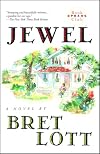
Just when you think your own life is hard and unfair, you read a book like this and realize you have it pretty damn good and had better shut up and stop whining.
Every sentence is a work of art and if I jotted down my favorite quotes I'd be re-writing the whole book. It's just that good.
Definitely goes on my Favorites shelf.
Now I need to find the movie starring Farrah Fawcett.
Every sentence is a work of art and if I jotted down my favorite quotes I'd be re-writing the whole book. It's just that good.
Definitely goes on my Favorites shelf.
Now I need to find the movie starring Farrah Fawcett.
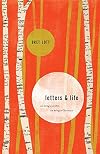
I'm hopeful for the future of art produced by Christians. This book is one of the reasons for my hope. Lott does a good job of explaining the need for Christian fiction to address all of reality, including the sinfulness of man and its consequences. So much art created by followers of Jesus is garbage, not reflecting the beauty and complexity of our Creator nor this universe that has been so profoundly touched by sin and grace. Lott encourages would-be writers and artists to create works show more that are full of truth and Truth, not mere sentimentality.
For anyone desiring to think more deeply about what it means for a Christian to pursue the vocation of artistry, I would heartily commend this book to you. show less
For anyone desiring to think more deeply about what it means for a Christian to pursue the vocation of artistry, I would heartily commend this book to you. show less

This book was so poorly plotted I began to wonder if it was a spoof. Obviously a retelling of the biblical story of Ruth & Naomi, I can't imagine a real daughter-in-law being so in love with her mother-in-law, or 70+ yr old women so enmeshed with "girls", or that age of a woman being so broken up about the death of her son. Ruth is made as meek & full of self-doubt as a teenager (from the '50's, not current era). Were Ruth & her husband really happy sharing their morning breakfast routine show more with Naomi?
The writing is too full of similes. I can't believe this woman goes around thinking about "trying the empty words...like some sort of sales pitch for a product she'd had no choice but to buy" (p.90)or, driving down the street, compares herself to the last dead leaves on trees in winter (p. 74). And Lott obviously wanted us to ponder his use of the image of Naomi's arthritic hands, constantly referring to them and to the pain whenever she holds someone's hand (altho noticeably not when she holds Ruth's p. 90) and finally "painlessly" (p. 290, 292) at the resolution of the story's crisis.
Even up in Massachusetts the characters (except for the German immigrant) all talk with the same cliched style "bless your heart", "might could", the use of "to" instead of "at" as in "a rummage sale out to Belchertown" (p. 61).
I have no empathy for this woman who goes around thinking God has visited sorrows on her (p. 65) yet also remembering the love she shared with her husband. SPOILER ALERT!!! She is harping on a single adulterous incident, which apparently didn't bother her so much when her husband was alive. She can only let go of her shame after a near-death experience which convinces her to let joy and love back into her life. So I guess the moral of the story is you can't change who you are unless you almost die.
So, yes, this could be a spoof. Yet reading the author's brief bio, I notice he resides in the same town featured in the novel. I can only imagine the ladies in his Baptist Church saying "you've got to write our story, you've got to write a good Christian story about the power of God's love." Hence this duty tale, without life. show less
The writing is too full of similes. I can't believe this woman goes around thinking about "trying the empty words...like some sort of sales pitch for a product she'd had no choice but to buy" (p.90)or, driving down the street, compares herself to the last dead leaves on trees in winter (p. 74). And Lott obviously wanted us to ponder his use of the image of Naomi's arthritic hands, constantly referring to them and to the pain whenever she holds someone's hand (altho noticeably not when she holds Ruth's p. 90) and finally "painlessly" (p. 290, 292) at the resolution of the story's crisis.
Even up in Massachusetts the characters (except for the German immigrant) all talk with the same cliched style "bless your heart", "might could", the use of "to" instead of "at" as in "a rummage sale out to Belchertown" (p. 61).
I have no empathy for this woman who goes around thinking God has visited sorrows on her (p. 65) yet also remembering the love she shared with her husband. SPOILER ALERT!!! She is harping on a single adulterous incident, which apparently didn't bother her so much when her husband was alive. She can only let go of her shame after a near-death experience which convinces her to let joy and love back into her life. So I guess the moral of the story is you can't change who you are unless you almost die.
So, yes, this could be a spoof. Yet reading the author's brief bio, I notice he resides in the same town featured in the novel. I can only imagine the ladies in his Baptist Church saying "you've got to write our story, you've got to write a good Christian story about the power of God's love." Hence this duty tale, without life. show less
This is quite the saga. We meet Jewel when young and follow her as she marries, has children, persuades her husband to move from Mississippi to California to obtain the best education she can for her Down Syndrome daughter, and all in all become quite a force in her family's life.
Brenda Kay is born in 1943, the youngest of six. Not much was known about Down Syndrome at the time (Brenda Kay was called a "Mongoloid Idiot" and her family encouraged to put her into an institution) but Jewel is show more the kind of mother we meet at all times. She is determined that her child will have the best life possible for however long she lives, and she is willing to overturn heaven and earth to get it.
I am always interested in how well the author portrays someone with a specific condition. I wasn't convinced that Lott had Brenda Kay right. Her manner of speaking is rather telegraphic, lacking in articles. It's true, from what I read, that Down Syndrome people generally speak less complex sentences but their main difficulty is actually physical: the difficulty in making the sounds.
Brenda Kay's attitude is often portrayed as "empty", as if she does not grasp what she is seeing or hearing and so tunes it out. I don't believe this is correct, either, from what I have read. As I understand it, a person with Down Syndrome is not stupid or unobservant but rather just slower to put things together. Of course there is a spectrum of cases that all fall under this label and we can imagine that Brenda Kay is reasonably well-functioning as compared to those who never are able to do basic things.
Ultimately I liked Jewel well enough and appreciated the effort she put into her family and her marriage. It is a story from another time in that sense. show less
Brenda Kay is born in 1943, the youngest of six. Not much was known about Down Syndrome at the time (Brenda Kay was called a "Mongoloid Idiot" and her family encouraged to put her into an institution) but Jewel is show more the kind of mother we meet at all times. She is determined that her child will have the best life possible for however long she lives, and she is willing to overturn heaven and earth to get it.
I am always interested in how well the author portrays someone with a specific condition. I wasn't convinced that Lott had Brenda Kay right. Her manner of speaking is rather telegraphic, lacking in articles. It's true, from what I read, that Down Syndrome people generally speak less complex sentences but their main difficulty is actually physical: the difficulty in making the sounds.
Brenda Kay's attitude is often portrayed as "empty", as if she does not grasp what she is seeing or hearing and so tunes it out. I don't believe this is correct, either, from what I have read. As I understand it, a person with Down Syndrome is not stupid or unobservant but rather just slower to put things together. Of course there is a spectrum of cases that all fall under this label and we can imagine that Brenda Kay is reasonably well-functioning as compared to those who never are able to do basic things.
Ultimately I liked Jewel well enough and appreciated the effort she put into her family and her marriage. It is a story from another time in that sense. show less
Lists
Awards


You May Also Like


Associated Authors
Statistics
- Works
- 28
- Also by
- 10
- Members
- 3,253
- Popularity
- #7,856
- Rating
- 3.4
- Reviews
- 44
- ISBNs
- 94
- Languages
- 1
- Favorited
- 1