

Chapman Pincher (1914–2014)
Author of Their Trade Is Treachery
About the Author
Henry Chapman Pincher was born in Ambala, India on March 29, 1914 to British parents. He received a degree in botany and zoology at King's College London. He taught at the Liverpool Institute high school for boys from 1936 until 1940. During World War II, he served as a tank gunner in the Royal show more Armoured Corps and then became involved in rocket research. In 1946, he became the defence, science and health editor for the Daily Express. He worked there until 1979 becoming famous for his pursuit of traitors and supposed traitors in the British secret service. He wrote more than 30 books during his lifetime including The Breeding of Farm Animals and Their Trade Is Treachery. He died on August 5, 2014 at the age of 100. (Bowker Author Biography) show less
Works by Chapman Pincher
Too Secret Too Long: The Great Betrayal Of Britain's Crucial Secrets, And The Cover-Up (1984) 90 copies, 1 review
The Secret Offensive: A Saga of Deception, Disinformation, Subversions, Terrorism, Sabotage and Assassination (1985) 24 copies, 1 review
Their Trade Is Treachery 4 copies
Too Secret Too Long 2 copies
TRUQUES SUJOS 1 copy
Truques Sujos 1 copy
The Giantkiller 1 copy
The Breeding of Farm Animals 1 copy
A study of fishes 1 copy
Tagged
Common Knowledge
- Legal name
- Pincher, Harry Chapman
- Birthdate
- 1914-03-29
- Date of death
- 2014-08-05
- Gender
- male
- Education
- Darlington Grammar School
King's College, London - Occupations
- journalist
fisherman - Organizations
- Daily Express
- Awards and honors
- Carter Gold Medal (King's College London) 1935
- Relationships
- Pincher, Billee Chapman (wife)
- Nationality
- UK
- Birthplace
- Ambala, India
- Place of death
- Kintbury, England, UK
- Associated Place (for map)
- UK
Members
Reviews
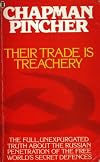
Some interesting stuff in here and I have no doubt that the KGB tried seriously to undermine Western institutions during the Cold War. Nevertheless, the author's very obvious right wing prejudices make him, I think, exaggerate the spread and depth of such activities; he seems to believe that anyone on the Left was an actual or potential Soviet agent. Unfortunately, this makes me doubt some of what he writes. I am not sure I am convinced that Roger Hollis was really a KGB agent, as the show more admittedly extensive evidence is totally circumstantial (no smoking gun) and I can't help thinking that a real agent would have been cleverer and less evasive and clumsy than Hollis appears to have been. show less

Chapman Pincher was famous in the 1960s and 1970s as a journalist (particularly on security matters), and had something of a right-wing reputation. He's still with us at the age of 100. This piece of science fiction from the mid-'sixties is pretty much forgotten now, and appears to be out of print.
That's a pity, because it's a splendid piece of hokum written in a way that makes it oddly believable. A British scientist discovers the secret of eternal youth and markets it as Juvenex. What show more happens next can be for the reader to discover, but it's a rattling good read.
The book was written, one assumes, mainly as an entertainment and it is a good one, but there is an unstated message here: that we do not always know what we are doing. But Pincher's real skill here is to set the story in an entirely familiar world so that we suspend disbelief very easily - a trick used to equal effect in a much more famous work of science fiction, Orwell's 1984. If you find this in your local Oxfam shop for a quid, grab it quick. show less
That's a pity, because it's a splendid piece of hokum written in a way that makes it oddly believable. A British scientist discovers the secret of eternal youth and markets it as Juvenex. What show more happens next can be for the reader to discover, but it's a rattling good read.
The book was written, one assumes, mainly as an entertainment and it is a good one, but there is an unstated message here: that we do not always know what we are doing. But Pincher's real skill here is to set the story in an entirely familiar world so that we suspend disbelief very easily - a trick used to equal effect in a much more famous work of science fiction, Orwell's 1984. If you find this in your local Oxfam shop for a quid, grab it quick. show less
Treachery: Betrayals, Blunders, and Cover-ups: Six Decades of Espionage Against America and Great Britain by Chapman Pincher

“Treachery: Betrayals, Blunders, and Cover-ups” is a painstakingly long account (679pp) of alleged spying of 27 year career of Roger Hollis, Head of British Intelligence (MI5). Makes a fair case the Brits missed it altogether. Some interesting stories embedded within, but often lost in the meandering narrative. I could only finish half of entire tome as I was in danger of the sheer weight of the volume breaking my nose as I dozed off on repeated nights. Recommended only for die hard spy show more buffs that love historical trivia AND are suffering from severe insomnia. show less
Treachery: Betrayals, Blunders, and Cover-ups: Six Decades of Espionage Against America and Great Britain by Chapman Pincher

I think my initial reaction to finishing this book is, "Ugh, it's finally done." That isn't to say that it was a bad book, but I certainly wouldn't recommend it to most people.
The subject matter was incredibly interesting. This was my first reading of anything in depth into the happenings of MI5 and certainly my first exposure to the insidious Soviet threat that they faced. Since Chapman Pincher had been a Fleet Street reporter during this time, he was able to provide a unique perspective on show more the information that he provided.
This book is also incredibly well researched, which is demonstrated by Pincher's relentless drive to proving his belief that MI5 director, Roger Hollis, had been a Soviet mole with disastrous consequences for Great Britain's counter-espionage efforts. Pincher is able to pull information from his prior publications, both as a reporter and in the several books he's written on this topic since his retirement. He also referenced documents declassified by the Russian government about their espionage effort, which further proved a lot of his speculation. Although, there is still no official confirmation that Hollis had been a spy for the Soviet government (a fact that MI5 would probably seek to hide at all costs anyway), Pincher does offer considerable circumstantial evidence that certainly suggests this case.
The "Ugh" part comes from Pincher's driven and somewhat repetitive style. There were definitely parts in the book where he restated information that had appeared earlier in the book. Also, I understand that Pincher's purpose in writing this book was to primarily reveal new information regarding the Hollis mystery from newly declassified KGB documents, it seemed very single-minded in showing how this information proves Pincher's case. I would probably have preferred a book that was focused more on the history of MI5's traitors rather then focused on proving Hollis's possible guilt.
In short, the book was not bad by any means, but it was not what I was really looking for when I picked it up. show less
The subject matter was incredibly interesting. This was my first reading of anything in depth into the happenings of MI5 and certainly my first exposure to the insidious Soviet threat that they faced. Since Chapman Pincher had been a Fleet Street reporter during this time, he was able to provide a unique perspective on show more the information that he provided.
This book is also incredibly well researched, which is demonstrated by Pincher's relentless drive to proving his belief that MI5 director, Roger Hollis, had been a Soviet mole with disastrous consequences for Great Britain's counter-espionage efforts. Pincher is able to pull information from his prior publications, both as a reporter and in the several books he's written on this topic since his retirement. He also referenced documents declassified by the Russian government about their espionage effort, which further proved a lot of his speculation. Although, there is still no official confirmation that Hollis had been a spy for the Soviet government (a fact that MI5 would probably seek to hide at all costs anyway), Pincher does offer considerable circumstantial evidence that certainly suggests this case.
The "Ugh" part comes from Pincher's driven and somewhat repetitive style. There were definitely parts in the book where he restated information that had appeared earlier in the book. Also, I understand that Pincher's purpose in writing this book was to primarily reveal new information regarding the Hollis mystery from newly declassified KGB documents, it seemed very single-minded in showing how this information proves Pincher's case. I would probably have preferred a book that was focused more on the history of MI5's traitors rather then focused on proving Hollis's possible guilt.
In short, the book was not bad by any means, but it was not what I was really looking for when I picked it up. show less
You May Also Like


Statistics
- Works
- 31
- Members
- 538
- Popularity
- #46,305
- Rating
- 3.6
- Reviews
- 10
- ISBNs
- 51
- Languages
- 2