
Alfred F. Young (1925–2013)
Author of The Shoemaker and the Tea Party: Memory and the American Revolution
About the Author
Alfred F. Young is Emeritus Professor of History at Northern Illinois University and Senior Research Fellow at the Newberry Library in Chicago.
Image credit: Diana O. Rasche
Works by Alfred F. Young
Revolutionary Founders: Rebels, Radicals, and Reformers in the Making of the Nation (2011) 118 copies, 1 review
The American Revolution: Explorations in the History of American Radicalism (1976) — Editor — 90 copies
Associated Works
The Transforming Hand of Revolution: Reconsidering the American Revolution as a Social Movement (1995) — Contributor — 13 copies
Tagged
Common Knowledge
- Legal name
- Young, Alfred Fabian
- Birthdate
- 1925-01-17
- Date of death
- 2013-11-06
- Gender
- male
- Education
- Northwestern University (PhD)
- Occupations
- historian
university professor - Organizations
- Northern Illinois University
Newberry Library - Awards and honors
- Organization of American Historians Distinguished Service Award, 2000
- Nationality
- USA
- Birthplace
- New York, New York, USA
- Place of death
- Durham, North Carolina, USA
- Associated Place (for map)
- USA
Members
Reviews
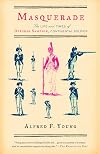
That was a lot of facts smooshed into only 300 or so pages (as an aside I'm not sure I've ever read a book, even a historical non-fiction one, with so many notes in the back).
The book was about Deborah Samson Gannett of Massachusetts, on of the most well known women to disguise themselves as a man and join the Continental Army. Not the only one, but one of the most successful. And, this book, unlike a lot of the other works about her, this was about her entire life, birth to death, not just show more one part, like her speaking tour, or her time in the army.
On the whole it was a good book, though a bit wordy. I really love that the author found out that, using Deborah's spelling her her diary during her speaking tour and a few of her letters that she may have had quite the Mass. accent. (Pahk the Cah, will ya, of course, they didn't have cars yet, so that may be a bad example of the accent, hers was more like she spelled audience with an o... etc.)
But, I didn't love it all. Even though here and there the author sort of barely allows that Deborah may have flirted with or had a relationship with a woman or two, he repeatedly states that it's totally and utterly 'improbable'. But, that's heteronormative HIStory for you. Although, to be fair to this author, Deborah Samson's original biographer Herman Mann was even worse, wildly vacillating between depicting Deborah in more 'animal love' (not platonic love) situations with women to 'lalalalala' she couldn't even physically have sex with another woman 'lalalala'.
Maybe she was straight, maybe she wasn't, but while in his final chapter the author gives sixteen paragraphs to whether or not she was a person of color, he only gives five to whether or not she had any same sex relationships. More HIStory.
So, a good book, sure, and the author obviously put a ton of research into it, but not a great book. show less
The book was about Deborah Samson Gannett of Massachusetts, on of the most well known women to disguise themselves as a man and join the Continental Army. Not the only one, but one of the most successful. And, this book, unlike a lot of the other works about her, this was about her entire life, birth to death, not just show more one part, like her speaking tour, or her time in the army.
On the whole it was a good book, though a bit wordy. I really love that the author found out that, using Deborah's spelling her her diary during her speaking tour and a few of her letters that she may have had quite the Mass. accent. (Pahk the Cah, will ya, of course, they didn't have cars yet, so that may be a bad example of the accent, hers was more like she spelled audience with an o... etc.)
But, I didn't love it all. Even though here and there the author sort of barely allows that Deborah may have flirted with or had a relationship with a woman or two, he repeatedly states that it's totally and utterly 'improbable'. But, that's heteronormative HIStory for you. Although, to be fair to this author, Deborah Samson's original biographer Herman Mann was even worse, wildly vacillating between depicting Deborah in more 'animal love' (not platonic love) situations with women to 'lalalalala' she couldn't even physically have sex with another woman 'lalalala'.
Maybe she was straight, maybe she wasn't, but while in his final chapter the author gives sixteen paragraphs to whether or not she was a person of color, he only gives five to whether or not she had any same sex relationships. More HIStory.
So, a good book, sure, and the author obviously put a ton of research into it, but not a great book. show less
Very detailed and well researched. Can be a bit difficult to read and follow but the amount of detail included makes it worth the effort.
The book takes on a journalistic approach, asking how, why, and when for some of the biggest pre-war events in Boston.
A great addition to any reader who wishes to maximize their knowledge and potentially embrace the mindset of the 18th century Boston colonials.
The book takes on a journalistic approach, asking how, why, and when for some of the biggest pre-war events in Boston.
A great addition to any reader who wishes to maximize their knowledge and potentially embrace the mindset of the 18th century Boston colonials.
An incisive social-history examines the Boston Tea Party through the life of one its participants and examines how history is both preserved and changed in the popular memory. An excellent work of historical research.

Substance: Anthology of articles by historians about lesser-know figures from the US revolutionary and Constitutional era. Highlights those who opposed the Federalists and fought for the rights of the less-wealthy colonial Americans, the native Americans, and the slaves. Gives less-familiar views of better-know figures such as Tom Paine, whose full views are usually slighted in the standard history books.
Style: Most of the essays are easy to read and generally contain enough contextual show more information for the non-expert. Don't know how much of the data & interpretation is "real" or "puffed"; most writers don't sound overtly revisionist (e.g., Marxist, etc.) , but all have obvious sympathies for their subjects rather than their opponents.
Includes: Ebenezer Mackintosh (Alfred F. Young); Timothy Bigelow (Ray Raphael); Samuel Thompson (T. H. Breen); Philadelphia Caucus (Gary B. Nash); Thomas Paine (Jill Lepore); Phillis Wheatley (David Waldstreicher); Private Joseph Plumb Martin (Philip Mead); James Cleveland, Edward Wright (Michael A. McDonnell); Mary Perth, Harry Washington, Moses Wilkinson, black Methodists (Cassandra Pybus); James Ireland, John Leland, John Waller, Baptists (Jon Butler); Draggng Canoe, Chickamauga (Colin G. Calloway); Han Yerry and Tyona Doxtader, Oneida Nation(James Kirby Marin); "Satan, Smith, Shattuck, and Shays" (Gregory Nobles); William Findley, David Bradford, Pennsylvania Regulation (Terry Bouton); Herman Husband, New Jerusalem (Wythe Holt); Abigail Adams (Woody Holton); Judith Sargent Murry, ERA (Sheila Skemp); Prince Hall, Richard Allen, Daniel Coker, Black communities (Richards S. Newman); Richard and Judith Randolph, St. George Tucker, George Wythe, Syphax Brown, Hercules White (Melvin Patrick Ely); Robert Coram, populism (Seth Cotlar); Thomas Greenleaf (Jeffrey L. Pasley); Jedediah Peck, "The Plough-Jogger" (Alan Taylor). show less
Style: Most of the essays are easy to read and generally contain enough contextual show more information for the non-expert. Don't know how much of the data & interpretation is "real" or "puffed"; most writers don't sound overtly revisionist (e.g., Marxist, etc.) , but all have obvious sympathies for their subjects rather than their opponents.
Includes: Ebenezer Mackintosh (Alfred F. Young); Timothy Bigelow (Ray Raphael); Samuel Thompson (T. H. Breen); Philadelphia Caucus (Gary B. Nash); Thomas Paine (Jill Lepore); Phillis Wheatley (David Waldstreicher); Private Joseph Plumb Martin (Philip Mead); James Cleveland, Edward Wright (Michael A. McDonnell); Mary Perth, Harry Washington, Moses Wilkinson, black Methodists (Cassandra Pybus); James Ireland, John Leland, John Waller, Baptists (Jon Butler); Draggng Canoe, Chickamauga (Colin G. Calloway); Han Yerry and Tyona Doxtader, Oneida Nation(James Kirby Marin); "Satan, Smith, Shattuck, and Shays" (Gregory Nobles); William Findley, David Bradford, Pennsylvania Regulation (Terry Bouton); Herman Husband, New Jerusalem (Wythe Holt); Abigail Adams (Woody Holton); Judith Sargent Murry, ERA (Sheila Skemp); Prince Hall, Richard Allen, Daniel Coker, Black communities (Richards S. Newman); Richard and Judith Randolph, St. George Tucker, George Wythe, Syphax Brown, Hercules White (Melvin Patrick Ely); Robert Coram, populism (Seth Cotlar); Thomas Greenleaf (Jeffrey L. Pasley); Jedediah Peck, "The Plough-Jogger" (Alan Taylor). show less
Lists
Awards

You May Also Like


Associated Authors
Statistics
- Works
- 11
- Also by
- 2
- Members
- 918
- Popularity
- #27,945
- Rating
- 3.9
- Reviews
- 7
- ISBNs
- 33