
Harry Blamires (1916–2017)
Author of The New Bloomsday Book
About the Author
Harry Blamires is a highly respected teacher and author of important works including The Christian Mind and The Tyranny of Time.
Image credit: Harry Blamires 1998 By FloreBlam - Own work, CC BY-SA 4.0, https://commons.wikimedia.org/w/index.php?curid=64361260
Works by Harry Blamires
Repair the ruins; reflections on educational matters from the Christian point of view (1950) 6 copies
English in education 1 copy
The Faith And Modern Error [Paperback] by Harry Blamires; - — Author — 1 copy
Tagged
Common Knowledge
- Birthdate
- 1916-11-06
- Date of death
- 2017-11-21
- Gender
- male
- Occupations
- theologian
literary critic
novelist
teacher - Organizations
- King Alfred's College, Winchester (head of the English department)
- Relationships
- Lewis, C. S. (tutor)
- Nationality
- UK
- Birthplace
- Yorkshire, England, UK
- Places of residence
- England, UK
- Map Location
- England, UK
Members
Reviews
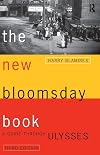
The most helpful, least pretentiously academic, companion book to Ulysses. Written by a now retired professor, it's intended audience is individuals that are reading Ulysses for the first time and assumes little or no scholarly background to the work. At times, it's chapter summaries read like New Yorker articles -- intelligent line by line analysis with hints as to how it fit into the whole, without being too condescending or too simplistic.
The New Bloomsday Book: A Guide Through Ulysses (Routledge International Studies in) by Harry Blamires
Blamires' "The New Bloomsday Book" is an incredible scholarly achievement. Line by line he gives us all the background needed to understand the context and direction of Ulysses. With detailed references he also provides all the information necessary to delve even deeper into Ulysses. Blamires' work is both accessible to the reader and invaluable for any further study of Ulysses.
A question that did come to mind in reading Blamires was what is the distinction (if any) between providing show more information/context on a work and interpreting a work. Blamires does both.
In all honesty, I lack the expertise, intellect, and/or credentials to credibly challenge Blamires' interpretations of Ulysses. Yet, I do begin to chafe when Blamires begins to "interpret" and provide the "meaning" of sections. One could say, reasonably, that if I don't want interpretation, don’t read a "guide". I accept that charge.
However, that does leave me with another question. What is the validity of "interpreting" works of fiction? And, is a novel meant to be decoded or simply experienced? Is the author simply dressing up for show her/his theories and/or perspectives in the wardrobe of elaborate prose and plotting? Or, could it be that the author actually intends the ambiguity produced in their work as it reflects the ambiguity of life/experience? Do we do a disservice to the author and the work when we provide exegesis? Do we create the illusion of orthodox and heterodox interpretations of a work?
I lean to the position of experiencing the work. But I also realize that my extremely meager formal education in literature probably both supports and requires that position. show less
A question that did come to mind in reading Blamires was what is the distinction (if any) between providing show more information/context on a work and interpreting a work. Blamires does both.
In all honesty, I lack the expertise, intellect, and/or credentials to credibly challenge Blamires' interpretations of Ulysses. Yet, I do begin to chafe when Blamires begins to "interpret" and provide the "meaning" of sections. One could say, reasonably, that if I don't want interpretation, don’t read a "guide". I accept that charge.
However, that does leave me with another question. What is the validity of "interpreting" works of fiction? And, is a novel meant to be decoded or simply experienced? Is the author simply dressing up for show her/his theories and/or perspectives in the wardrobe of elaborate prose and plotting? Or, could it be that the author actually intends the ambiguity produced in their work as it reflects the ambiguity of life/experience? Do we do a disservice to the author and the work when we provide exegesis? Do we create the illusion of orthodox and heterodox interpretations of a work?
I lean to the position of experiencing the work. But I also realize that my extremely meager formal education in literature probably both supports and requires that position. show less
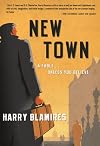
I approached this book with some skeptcism because the cover blurb compared it to C.S.Lewis and G.K. Chesterton, but to my pleased surprise the comparison was not inapt; I'd say the ideas owed something to Lewis (and in fact Lewis was Blamire's tutor at Oxford), but the writing was indeed somewhat reminiscent of Chesterton. This is Blamire's take on the afterlife. Not quite as well handled as The Great Divorce (which in turn wasn't quite up to La Divina Comedia) but undoubtedly worth an show more afternoon's reading time. A bit more of a straight allegory than either of the other two. Sometimes I thought the author had almost too much fun writing it. The acronymic organizations made me, if not literally laugh out loud, snort quietly. The ideas about what in life is of ultimate importance and where our attention should be directed were utterly serious and worth thinking on. show less
After just completing my first reading of Ulysses, I am joining my voice to the GR chorus of appreciation for Blamires's guide. MJ referred to it as indispensable in his review, and I concur with his assessment.
Blamires provides short, beautifully written overviews of each episode, but these overviews are not simply summaries (although his summaries are indispensable in certain passages and episodes that otherwise could be difficult to follow). Instead, Blamires also discusses some show more approaches to interpreting Ulysses, indicating themes and motifs that reappear throughout the novel, providing some gentle guidance for the reader to begin appreciating the intricate connections that Joyce weaves throughout the novel.
I have described Blamires's The New Bloomsday Book as serving a function similar to that of synopses of operas in playbills. He provides a sense of the action and some important elements to consider when reading Ulysses, but he does so in such a way that readers remain free to respond to Ulysses on their own terms. It's a very difficult balancing act, and one that he executes perfectly. show less
Blamires provides short, beautifully written overviews of each episode, but these overviews are not simply summaries (although his summaries are indispensable in certain passages and episodes that otherwise could be difficult to follow). Instead, Blamires also discusses some show more approaches to interpreting Ulysses, indicating themes and motifs that reappear throughout the novel, providing some gentle guidance for the reader to begin appreciating the intricate connections that Joyce weaves throughout the novel.
I have described Blamires's The New Bloomsday Book as serving a function similar to that of synopses of operas in playbills. He provides a sense of the action and some important elements to consider when reading Ulysses, but he does so in such a way that readers remain free to respond to Ulysses on their own terms. It's a very difficult balancing act, and one that he executes perfectly. show less
Lists
You May Also Like


Associated Authors
Statistics
- Works
- 43
- Members
- 2,962
- Popularity
- #8,614
- Rating
- 3.6
- Reviews
- 26
- ISBNs
- 106
- Languages
- 2
- Favorited
- 2