
Linda Jacobs Altman
Author of Amelia's Road
About the Author
Linda Jacobs Altman specializes in writing about history, social issues, and multicultural subjects for young people
Image credit: Linda Jacobs Altman
Series
Works by Linda Jacobs Altman
The Warsaw Ghetto Uprising: Striking a Blow Against the Nazis (The Holocaust Through Primary Sources) (2012) 27 copies, 1 review
Hidden Teens, Hidden Lives: Primary Sources from the Holocaust (True Stories of Teens in the Holocaust) (2010) 21 copies
Shattered Youth in Nazi Germany: Primary Sources from the Holocaust (True Stories of Teens in the Holocaust) (2010) 14 copies
Escape--Teens on the Run: Primary Sources from the Holocaust (True Stories of Teens in the Holocaust) (2010) 14 copies
Adolf Hitler: Evil MasterMind of the Holocaust (Holocaust Heroes and Nazi Criminals) (2005) 9 copies, 1 review
Hitler, Goebbels, Himmler: The Nazi Holocaust Masterminds (Remembering the Holocaust) (2014) 7 copies
The Politics of Slavery: Fiery National Debates Fueled by the Slave Economy (Slavery in American History) (2004) 6 copies
Resisters and Rescuers: Standing Up Against the Holocaust (The Holocaust in History) (2003) 6 copies
The American Civil Rights Movement: The African-American Struggle for Equality (Issues in Focus) (2004) 4 copies
Tagged
Common Knowledge
- Other names
- Blackburn, Claire
- Gender
- female
Members
Reviews
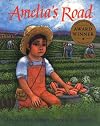
I really liked this book! This book provides a window into the life of a child who moves around frequently, specifically in this story the girl was a migrant farmer and had to travel to harvest. I really liked the plot of this story, it begins with Amelia feeling uneasy about not having a sense of belonging anywhere "last year Amelia spent six weeks at Filmore Elementary school and the teacher had never bothered to learn her name". This quote helps emphasize Amelia's feelings of loneliness show more as she moves from town to town. I also really liked the characters in this story. Amelia is a very believable character. Once she is praised and included in class her whole day turns around and she decides to take a new way home. This way lead her to her tree where she finally felt at home. "Almost every day after work or school Amelia would sit under the tree and pretend she had finally come home". Through this writing I felt emotional for Amelia as she had to move away from her tree to another harvest. The main idea of this story is to show how people can find a place where they belong even when it seems as though there is no hope. show less
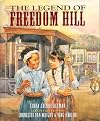
This story is a about two young girls during the 1850s. These girls were both outsiders, Rosabel was back and Sophie was Jewish. One day the slave catcher came into town and captured Rosabel’s mother who was a runaway. Rosabel and Sophie needed to buy Miz Violet’s freedom, and the only way they knew how to make a lot of money quickly was to go searching for gold. While the older men searched in open places, Rosabel and Sophie wiggled themselves between rocks and eventually found enough show more gold to buy Miz Violet’s freedom. Since the two girls were the first to find gold in this new area, they had received a claim document stating that the gold in that area was theirs. However, when the slave catcher came around with his cart and let out Rosabel’s mother, the girls knew that they had to set the rest of the people free too, and that’s just what they did. They gave the slave trader the claim to their land in exchange for the other slaves’ freedom.
I really enjoyed this story for its overall message and the authentic language that the author used to make you feel like you were really in the setting. The message of the story was that people’s lives are more important than some gold. For the girls knew that their claimed land was worth a lot, yet they traded it in exchanged for the rest of the slaves in the wagon because they knew that was the right thing to do. Money and riches cannot replace family and friends is what I took away from this message. The other reason I enjoyed this book was because of the language. Right from the beginning it caught me off guard because it does not read like a story written in Standard English, for instead it uses a Southern dialect with distinct slang words. For example, “See that hill over yonder? That’s Freedom Hill. Round these parts, everybody knows how it got the name.” The narrator was also talking to the reader as though they were actually speaking to them which allows for the lack of correct sentence structure and grammar. For example, “Trouble was, they had this thing called the Fugitive Slave Act, meaning runaways who got caught would be shipped back to their owners.” Even though I am not used to reading this style of language, it had me feeling more connected to the story which I liked. Lastly the illustrations really brought the story to life. Each page was filled with emotional events happening in the story. The paintings of the characters and the setting helped show the reader how long ago the story took place with the older style of clothing and the cast iron stove in the kitchen. Overall, I think the author and illustrators did a great job with this book. show less
I really enjoyed this story for its overall message and the authentic language that the author used to make you feel like you were really in the setting. The message of the story was that people’s lives are more important than some gold. For the girls knew that their claimed land was worth a lot, yet they traded it in exchanged for the rest of the slaves in the wagon because they knew that was the right thing to do. Money and riches cannot replace family and friends is what I took away from this message. The other reason I enjoyed this book was because of the language. Right from the beginning it caught me off guard because it does not read like a story written in Standard English, for instead it uses a Southern dialect with distinct slang words. For example, “See that hill over yonder? That’s Freedom Hill. Round these parts, everybody knows how it got the name.” The narrator was also talking to the reader as though they were actually speaking to them which allows for the lack of correct sentence structure and grammar. For example, “Trouble was, they had this thing called the Fugitive Slave Act, meaning runaways who got caught would be shipped back to their owners.” Even though I am not used to reading this style of language, it had me feeling more connected to the story which I liked. Lastly the illustrations really brought the story to life. Each page was filled with emotional events happening in the story. The paintings of the characters and the setting helped show the reader how long ago the story took place with the older style of clothing and the cast iron stove in the kitchen. Overall, I think the author and illustrators did a great job with this book. show less
The story begins with a young girl named Amelia extolled her hatred for all manner of roads. Quickly we discover that Amelia's family are migrant workers, and she resents the constant travel and moving necessitated by her family's need to move for work. Amelia has to get up and pick apples for three hours before school starts. Unlike previous years, this year Amelia's teacher takes steps to make sure she is included in the class. After school, Amelia discovers an "accidental" road, more of show more an overgrown footpath, that leads her to a large tree. Following her personal road each day, she sits beneath the tree, a rare representation of permanence in her life. However, the end of the harvest nears and Amelia begins to dread the impending move. Amelia comes to the solution of creating an "Amelia box" full of things that she identified with, and buried it at the old tree like a time capsule. Now that she had a place to call her own, Amelia didn't dread moving so much anymore. Many more children than specifically the children of migrant workers are going to be able to identify with this book, particularly military children, but really any kids that have had to make significant moves in their lives. The sense of belonging and security is something universally experienced and desired, so we can all find some part of ourselves in Amelia. On the surface level, this book can also introduce the concept of migrant workers to school-age children, and in some schools, help normalize the population of migrant children to other students unfamiliar with the practice. show less
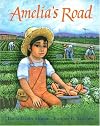
I liked reading "Amerlia's Road", a story that tells the message of finding strength and solace even in times of turmoil and change, because of two main reasons. First, I believe the author helped the reader connect to the story through the development of the main character, Amelia, a young daughter of a migrant farmer, through her believable innocence. This character presented the information about her life in a child-like way, like when she describes that her family has to move a lot and show more dreaming of a real home in a confused in troubled manner, for example. Second, I enjoyed reading on as the plot progressed because it constantly became more complex, with new aspects and details appearing to the reader as they read. The inclusion of side details and events kept the reader engaged, as it slowly uncovered what would come next in the story. A good example of this is when Amelia discovers a "remembrance box" at the base of the tree she comes to find comfort in, and the emotional significance it has to both Amelia, and therefor the development of the story. show less
Lists
Awards


You May Also Like


Associated Authors
Statistics
- Works
- 80
- Members
- 1,896
- Popularity
- #13,577
- Rating
- 3.8
- Reviews
- 35
- ISBNs
- 165
- Languages
- 1
- Favorited
- 1