

Michael R. Emlet
Author of Cross Talk: Where Life and Scripture Meet
About the Author
Michael R. Emlet, MDIV, MD, practiced as a family physician for over ten years before becoming a counselor and faculty member at the Christian Counseling Educational Foundation (CCEF). He is the author of CrossTalk and numerous articles and minibooks.
Image credit: Dr. Michael R. Emlet
Works by Michael R. Emlet
Tagged
Common Knowledge
- Birthdate
- 1961-09-04
- Gender
- male
Members
Reviews
Descriptions and Prescriptions: A Biblical Perspective on Psychiatric Diagnoses and Medications (Helping the Helpers) by Michael R. Emlet
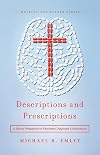
Short and helpful. Argues for a balanced approach to psychiatric diagnoses and medication. Medications are neither sin nor savior. Most helpful to receive medicine and treatments with thanksgiving to God, but also to not neglect the issues of the heart. We need to address both the physical and the spiritual together.
TOC:
Introduction: The Goldilocks Principle
Part 1: Understanding Psychiatric Diagnoses
Chapter 1. Diagnosis Is Unavoidable
Chapter 2. How Are Psychiatric Problems Diagnosed?
Chapter show more 3. How Did We Get Here? A Brief History of Psychiatric Diagnosis
Chapter 4. The Problems and Pitfalls of Psychiatric Diagnosis: Descriptions, not Explanations
Chapter 5. Problems and Pitfalls: Abnormalizing the Normal
Chapter 6. Problems and Pitfalls: Redefining Behavior
Chapter 7. Problems and Pitfalls: The Influence of Culture
Chapter 8. Implications for Ministry
Chapter 9. The Value of Psychiatric Diagnoses in Ministry
Chapter 10. Conclusion: What's in a Name?
Part 2: Understanding Psychoactive Medications
Introduction: What Do You Hear?
Chapter 11. Classes of Psychoactive Medications
Chapter 12. Do Medications Treat a "Chemical Imbalance"?
Chapter 13. How Effective Are Psychoactive Medications?
Chapter 14. Walking the Wisdom Tightrope
Chapter 15. Relieving and Redeeming Suffering
Chapter 16. Hazards to Spiritual Growth
Chapter 17. Gifts or Gods?
Chapter 18. Motives Good and Bad
Chapter 19. Medications and the Heart, for Better and for Worse
Chapter 20. Putting It All Together
Chapter 21. The Wisdom Framework in Action
Chapter 22. Goldilocks Revisited show less
TOC:
Introduction: The Goldilocks Principle
Part 1: Understanding Psychiatric Diagnoses
Chapter 1. Diagnosis Is Unavoidable
Chapter 2. How Are Psychiatric Problems Diagnosed?
Chapter show more 3. How Did We Get Here? A Brief History of Psychiatric Diagnosis
Chapter 4. The Problems and Pitfalls of Psychiatric Diagnosis: Descriptions, not Explanations
Chapter 5. Problems and Pitfalls: Abnormalizing the Normal
Chapter 6. Problems and Pitfalls: Redefining Behavior
Chapter 7. Problems and Pitfalls: The Influence of Culture
Chapter 8. Implications for Ministry
Chapter 9. The Value of Psychiatric Diagnoses in Ministry
Chapter 10. Conclusion: What's in a Name?
Part 2: Understanding Psychoactive Medications
Introduction: What Do You Hear?
Chapter 11. Classes of Psychoactive Medications
Chapter 12. Do Medications Treat a "Chemical Imbalance"?
Chapter 13. How Effective Are Psychoactive Medications?
Chapter 14. Walking the Wisdom Tightrope
Chapter 15. Relieving and Redeeming Suffering
Chapter 16. Hazards to Spiritual Growth
Chapter 17. Gifts or Gods?
Chapter 18. Motives Good and Bad
Chapter 19. Medications and the Heart, for Better and for Worse
Chapter 20. Putting It All Together
Chapter 21. The Wisdom Framework in Action
Chapter 22. Goldilocks Revisited show less
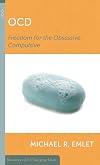
What causes Obsessive-Compulsive Disorder? Why can't the sufferer just summon enough willpower to shake off the entangling obsessions? Are there spiritual issues involved or is OCD a purely physical problem in the brain? To someone who has never struggled with this disorder, these questions are merely theoretical. But when you watch someone agonize over the smallest things, when waking life becomes torment and even dreams are haunted with the all-mastering obsessions, these questions — and show more their answers — take on a pressing practical importance. The daughter of a dear friend of mine lives in the stranglehold of OCD, and I wanted to educate myself a little about the disorder and its spiritual consequences and possible causes. Though OCD: Freedom for the Obsessive-Compulsive is just a short pamphlet, it does a good job of describing the disorder to a layperson like myself and compassionately outlining its spiritual implications from a biblical perspective.
A big question for Christians is whether OCD is a disorder or a case of disobedience. If it's just a physical problem within the brain, the OCD sufferer is not really culpable for his or her behavior and can do little to change a physical defect. If it's disobedience, the OCD sufferer is responsible for his or her behavior and can do something about it. How we define OCD is crucial because the implications are immense. In this essay, author and counselor Michael Emlet appears to take a stance somewhere in the middle of these two opposing definitions. There is, of course, so much that we don't know about the disorder and its causes, and so much fuzziness among both Christian and secular therapists and researchers. But this is what I think Emlet is saying: some cases of OCD may have physical factors that contribute to or perhaps cause the disorder, but our sinful hearts amplify the consequences of our obsessions. For Christians, we can never brush aside the foundational doctrine of human depravity. It influences everything and has to be our starting-point in any definition of human ills.
This is not to say that OCD sufferers are worse sinners than other people, just that they have unusual circumstances (their OCD-entangled brains) which provide the arena for their individual struggles with obedience and truth. I struggle with those two things on a daily basis, just not in the realm of obsessions and compulsions. My friend describes her daughter's disorder as almost being unable to reject the lies that her OCD tells her, even though she knows they are false. Emlet writes that the obsessions themselves are not sinful; just as with temptations, it's what we do with them that leads us into sin or godliness.
The reason we don't know if OCD is caused by physical factors, despite some differences between the brains of OCD and non-OCD people, is that we can't prove a causal relationship. Does OCD come from those brain irregularities, or does the OCD actually develop those characteristics in the brain? We might as well ask what came first, the chicken or the egg. One thing that I found fascinating is that young children with strep throat sometimes can display OCD-like symptoms that dissipate with the strep throat when antibiotics are taken. Is that real OCD, or just some strange flukey state that mimics OCD symptoms? Right now we just don't know.
Emlet acknowledges the physical aspect of OCD while emphasizing the truths that OCD sufferers are missing when they act on their obsessions, writing, "While affirming that the body and brain are ultimately not the "cause" of sin, we should not underestimate the overwhelming tyranny that these bombarding thoughts can exert on these sufferers. At the same time, we can also affirm that as the OCD struggler addresses the heart issues involved, the symptoms (the frequency and severity of the obsessions and compulsions) should decrease" (24). He lists a series of heart (that is, spiritual) issues that may be related to OCD: the need for certainty, the demand for control and mastery, the desire for a "black and white" world, perfectionism, guilt, and self-atonement. Each of these issues represent faulty theology in some form, and that can be combated with the truth of Scripture.
But I want to stop and clarify something here. While we affirm the sufficiency and power of God's Word, Emlet is not saying that memorizing a few verses will cure the person. Though the exact causes of the disorder are not known, there is a physical component to OCD and to ignore it is dangerous. Medication may be needed, though all it can do is treat the symptoms. But we can't stop there, just treating the symptoms; there are always spiritual implications. Emlet writes, "there may be a time and place for targeting the symptoms themselves, particularly if the person's struggle is so severe that he cannot benefit from counseling. The use of medication is a wisdom issue and must be individualized for each counselee. There are biblical guidelines for making such a decision, but there is no "one size fits all" approach... The Bible speaks positively about both the relief of suffering and the benefits of enduring it... [medication] may be wise for certain individuals with severe symptoms, but we must never lose sight of the heart dynamics invariably present with OCD" (25).
As I think and work through these issues, I am reminded of the limits of human wisdom. I really don't see the purpose of OCD in my friend's daughter's life — why, God? Why do You let people suffer like this? Is there an end (besides Heaven) in sight for her? But the answer for Christians doesn't change: trust God, trust His wisdom. We walk by faith and not by sight; we know that He loves us and that He is good. That's all we need to know. It isn't a platitude when you cling to this truth in the middle of the OCD nightmare.
This pamphlet is part of the "Resources For Changing Lives" series published by P&R. I recommend it. show less
A big question for Christians is whether OCD is a disorder or a case of disobedience. If it's just a physical problem within the brain, the OCD sufferer is not really culpable for his or her behavior and can do little to change a physical defect. If it's disobedience, the OCD sufferer is responsible for his or her behavior and can do something about it. How we define OCD is crucial because the implications are immense. In this essay, author and counselor Michael Emlet appears to take a stance somewhere in the middle of these two opposing definitions. There is, of course, so much that we don't know about the disorder and its causes, and so much fuzziness among both Christian and secular therapists and researchers. But this is what I think Emlet is saying: some cases of OCD may have physical factors that contribute to or perhaps cause the disorder, but our sinful hearts amplify the consequences of our obsessions. For Christians, we can never brush aside the foundational doctrine of human depravity. It influences everything and has to be our starting-point in any definition of human ills.
This is not to say that OCD sufferers are worse sinners than other people, just that they have unusual circumstances (their OCD-entangled brains) which provide the arena for their individual struggles with obedience and truth. I struggle with those two things on a daily basis, just not in the realm of obsessions and compulsions. My friend describes her daughter's disorder as almost being unable to reject the lies that her OCD tells her, even though she knows they are false. Emlet writes that the obsessions themselves are not sinful; just as with temptations, it's what we do with them that leads us into sin or godliness.
The reason we don't know if OCD is caused by physical factors, despite some differences between the brains of OCD and non-OCD people, is that we can't prove a causal relationship. Does OCD come from those brain irregularities, or does the OCD actually develop those characteristics in the brain? We might as well ask what came first, the chicken or the egg. One thing that I found fascinating is that young children with strep throat sometimes can display OCD-like symptoms that dissipate with the strep throat when antibiotics are taken. Is that real OCD, or just some strange flukey state that mimics OCD symptoms? Right now we just don't know.
Emlet acknowledges the physical aspect of OCD while emphasizing the truths that OCD sufferers are missing when they act on their obsessions, writing, "While affirming that the body and brain are ultimately not the "cause" of sin, we should not underestimate the overwhelming tyranny that these bombarding thoughts can exert on these sufferers. At the same time, we can also affirm that as the OCD struggler addresses the heart issues involved, the symptoms (the frequency and severity of the obsessions and compulsions) should decrease" (24). He lists a series of heart (that is, spiritual) issues that may be related to OCD: the need for certainty, the demand for control and mastery, the desire for a "black and white" world, perfectionism, guilt, and self-atonement. Each of these issues represent faulty theology in some form, and that can be combated with the truth of Scripture.
But I want to stop and clarify something here. While we affirm the sufficiency and power of God's Word, Emlet is not saying that memorizing a few verses will cure the person. Though the exact causes of the disorder are not known, there is a physical component to OCD and to ignore it is dangerous. Medication may be needed, though all it can do is treat the symptoms. But we can't stop there, just treating the symptoms; there are always spiritual implications. Emlet writes, "there may be a time and place for targeting the symptoms themselves, particularly if the person's struggle is so severe that he cannot benefit from counseling. The use of medication is a wisdom issue and must be individualized for each counselee. There are biblical guidelines for making such a decision, but there is no "one size fits all" approach... The Bible speaks positively about both the relief of suffering and the benefits of enduring it... [medication] may be wise for certain individuals with severe symptoms, but we must never lose sight of the heart dynamics invariably present with OCD" (25).
As I think and work through these issues, I am reminded of the limits of human wisdom. I really don't see the purpose of OCD in my friend's daughter's life — why, God? Why do You let people suffer like this? Is there an end (besides Heaven) in sight for her? But the answer for Christians doesn't change: trust God, trust His wisdom. We walk by faith and not by sight; we know that He loves us and that He is good. That's all we need to know. It isn't a platitude when you cling to this truth in the middle of the OCD nightmare.
This pamphlet is part of the "Resources For Changing Lives" series published by P&R. I recommend it. show less
Descriptions and Prescriptions: A Biblical Perspective on Psychiatric Diagnoses and Medications by Michael R. Emlet
At first I wasn’t going to read this book because it is geared toward pastors and Christian counseling. My curiosity got the best of me and I decided I wanted to see how the author stood on this issue. I was pleasantly surprised to see how he balanced what the worlds view and the Christian view is. This is a very tough topic for many to talk about, but is much needed as many suffer from mental disabilities.
There was a time when someone was diagnosed with a mental illness and it seemed show more like people thought they had the plague. With the authors careful and thoughtful research, we can better understand how to cope with it. I did like the example the author gave about medicine for depression. There are so many different medications on the market today for depression, it is hard to figure out which one is best to prescribe . He goes on to explain that speaking with someone about your depression is important because it helps to balance their thinking. Don’t we all go to a friend or spouse when we are feeling down? Just talking to someone helps us feel less stress. I liked the point he made that “Rather, my aim is simply to get you thinking about the fact that helping a struggling person to evaluate his emotions and thoughts and to bring them into line with reality affects change in depression. God does not bypass the body in the sanctification process. To the extent that a person’s thoughts, emotions, desires, motivations, and actions align with God’s revealed way of living in Scripture, our neutral patterns should reveal that reality.”
I loved the scriptures he gave referring to suffering and how God is there to help us. He doesn’t want us to suffer, but to have health and wisdom. Throughout the book, the author provides both sides of this subject with compassion in a non bias approach. For me, I think it should be left up to each individual how they want to pursue treatment. However there may be times when others may need to step in if they think a person may be in danger of hurting themselves or others. Whatever path a person decides to take, it is important not to judge or condemn them. We can best help by reaching out and listening to them. I enjoyed the book and the authors way he presented both sides in a clear and concise manner.
I received a copy of this book from LitFuse. The review is my own opinion. show less
There was a time when someone was diagnosed with a mental illness and it seemed show more like people thought they had the plague. With the authors careful and thoughtful research, we can better understand how to cope with it. I did like the example the author gave about medicine for depression. There are so many different medications on the market today for depression, it is hard to figure out which one is best to prescribe . He goes on to explain that speaking with someone about your depression is important because it helps to balance their thinking. Don’t we all go to a friend or spouse when we are feeling down? Just talking to someone helps us feel less stress. I liked the point he made that “Rather, my aim is simply to get you thinking about the fact that helping a struggling person to evaluate his emotions and thoughts and to bring them into line with reality affects change in depression. God does not bypass the body in the sanctification process. To the extent that a person’s thoughts, emotions, desires, motivations, and actions align with God’s revealed way of living in Scripture, our neutral patterns should reveal that reality.”
I loved the scriptures he gave referring to suffering and how God is there to help us. He doesn’t want us to suffer, but to have health and wisdom. Throughout the book, the author provides both sides of this subject with compassion in a non bias approach. For me, I think it should be left up to each individual how they want to pursue treatment. However there may be times when others may need to step in if they think a person may be in danger of hurting themselves or others. Whatever path a person decides to take, it is important not to judge or condemn them. We can best help by reaching out and listening to them. I enjoyed the book and the authors way he presented both sides in a clear and concise manner.
I received a copy of this book from LitFuse. The review is my own opinion. show less
In today’s world, Biblical illiteracy is becoming widespread. Even in America, one will find people without any knowledge of even the most basic Bible stories. The evangelical church doesn’t fare much better, unfortunately. While the average church-goer is familiar with Bible stories and even Bible trivia, they are often unable to connect the Bible’s message to the real, every-day problems life throws their way. As a result, the Bible stays tucked away on a dusty shelf, while the show more latest self-help book lies half-read on the nightstand.
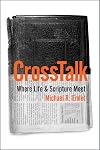
Michael Emlet addresses this problem head on in his new book, CrossTalk: Where Life and Scripture Meet. The book explains how to understand and apply the Bible to the problems of life. Along the way it deals with questions of nature and interpretation: What is the Bible all about? How do we interpret the Bible? What are the real nature of life’s many problems? How should we understand these real life situations?
The book opens by explaining the concept of ditches and canyons in relation to the Bible. Some passages have a relatively simple connection to our modern day life. The separation from the original world and context of the Bible to today is comparable to a shallow ditch. Other passages seem, in contrast, like canyons. It is hard to visualize any kind of contemporary application from the endless genealogies of 1 Chronicles or the bloody conquest of Canaan. Functionally, this leaves many Christians with an abridged Bible. Ditch passages resonate with us and: “In practical terms, we end up ministering with an embarrassingly thinner but supposedly more relevant Bible.” (pg. 16) Of course, the Bible wasn’t given to us in such an abridged manner. In fact, upon closer examination of several passages, Emlet shows how the ditches are actually wider than they seem, and canyons may not be quite so deep.
The next 2 chapters discuss what the Bible is and what it isn’t. For me, this was the best part of the book. Emlet confronts several popular misconceptions of Scripture. The Bible is not primarily a book of Do’s and Don’ts. It is not a book of timeless principles for the problems of life. The Bible is not primarily a casebook of characters to imitate or avoid. It is not primarily a system of doctrines. In all of this, Emlet emphasizes that for too many, the Bible has become Gospel-deficient! “You could talk about how to discipline your child…, draw encouragement from God’s presence as you start a demanding new job…, emulate David’s courage…, and discuss predestination…, without ever referring to the coming of the kingdom in Jesus Christ or encountering him yourself! Shouldn’t the life, death and resurrection of Christ have some practical connection to disciplining children, God’s presence, living with courage, and the doctrine of predestination?” (pg. 37-38) The Bible is a story – The Story. It’s chapters include creation, fall, and redemption. It’s main character is Jesus. It is all about Him!
Emlet draws important implications from this understanding of what the Bible is. We should read it back to front and front to back. Using a bigger Bible, results in a richer ministry. God’s mission is central. Our lives should be lived bidirectionally. Interpretation and application should be a community (church) affair.
The next few chapters address the story aspect of life. The bits and pieces of life, which are so easy to diagnose and correct, actually have a “narrative skeleton” on which they hang. These pieces “add up to a cohesive whole”. “Despite (their) diversity… certain patterns can be discerned. Life histories are going somewhere.” (pg. 65-66) In light of the True Story, our lives are a combination of competing stories. Focusing too narrowly on individual aspects of one’s life may ignore the larger picture of what God is doing, and where the real battle is.
We are fallen people. But created in God’s image, and redeemed by Christ, we are simultaneously saints, sufferers and sinners. It is important to provide hope to those we minister to. “Ministry to others is much more than correction or reproof. It is also encouragement…, vision-casting, and hope-building.” (pg. 95)
The final chapters of the book apply the approach to two case studies. “Tom” and “Natalie” present challenging life situations and varying degrees of understanding Scripture. Michael Emlet models how to apply Scripture carefully from a variety of texts (both ditches and canyons) to their life stories. This fleshes out the book’s message and offers a practical explanation for how this perspective to the Bible and people works out. Emlet takes pains to emphasize that this isn’t an exact science, nor is ministry only to be performed by people who have everything figured out. You will learn and grow, and the more you do, the better able you will be to connect the Bible to life, and the more impact you will have on people’s lives.
The book covers a lot of ground as it seeks to explain how to approach Scripture and how to approach people. Both skills are needed. “In ministry we are reading two ‘texts’ simultaneously, the story of Scripture and the story of the person we serve…. Reading the person without reading the Bible is a recipe for ministry lacking the life-changing power of the Spirit working through his Word.” (pg. 90)
I appreciated the immense practical value of this book. I can’t think of a more important topic for Christians to study. We need to minister to our own selves and speak the Word into the lives of those around us. Readers will find the book laid out in a helpful way, and very easy to read. Discussion questions after each chapter make the book ideal for group studies.
I can’t recommend this book more highly. The “whole Bible”, redemptive-historical approach to Scripture that is explained is life changing. The pattern for personal application of Scripture for use in ministry to others will multiply that change exponentially. You need to get this book!
Disclaimer: This book was provided by New Growth Press for review. I was under no obligation to offer a favorable review.
An expanded version of this review is available at CrossFocusedReviews.com, where you can find book excerpts, giveaways, promotional offers, audio reviews and more. show less
Michael Emlet addresses this problem head on in his new book, CrossTalk: Where Life and Scripture Meet. The book explains how to understand and apply the Bible to the problems of life. Along the way it deals with questions of nature and interpretation: What is the Bible all about? How do we interpret the Bible? What are the real nature of life’s many problems? How should we understand these real life situations?
The book opens by explaining the concept of ditches and canyons in relation to the Bible. Some passages have a relatively simple connection to our modern day life. The separation from the original world and context of the Bible to today is comparable to a shallow ditch. Other passages seem, in contrast, like canyons. It is hard to visualize any kind of contemporary application from the endless genealogies of 1 Chronicles or the bloody conquest of Canaan. Functionally, this leaves many Christians with an abridged Bible. Ditch passages resonate with us and: “In practical terms, we end up ministering with an embarrassingly thinner but supposedly more relevant Bible.” (pg. 16) Of course, the Bible wasn’t given to us in such an abridged manner. In fact, upon closer examination of several passages, Emlet shows how the ditches are actually wider than they seem, and canyons may not be quite so deep.
The next 2 chapters discuss what the Bible is and what it isn’t. For me, this was the best part of the book. Emlet confronts several popular misconceptions of Scripture. The Bible is not primarily a book of Do’s and Don’ts. It is not a book of timeless principles for the problems of life. The Bible is not primarily a casebook of characters to imitate or avoid. It is not primarily a system of doctrines. In all of this, Emlet emphasizes that for too many, the Bible has become Gospel-deficient! “You could talk about how to discipline your child…, draw encouragement from God’s presence as you start a demanding new job…, emulate David’s courage…, and discuss predestination…, without ever referring to the coming of the kingdom in Jesus Christ or encountering him yourself! Shouldn’t the life, death and resurrection of Christ have some practical connection to disciplining children, God’s presence, living with courage, and the doctrine of predestination?” (pg. 37-38) The Bible is a story – The Story. It’s chapters include creation, fall, and redemption. It’s main character is Jesus. It is all about Him!
Emlet draws important implications from this understanding of what the Bible is. We should read it back to front and front to back. Using a bigger Bible, results in a richer ministry. God’s mission is central. Our lives should be lived bidirectionally. Interpretation and application should be a community (church) affair.
The next few chapters address the story aspect of life. The bits and pieces of life, which are so easy to diagnose and correct, actually have a “narrative skeleton” on which they hang. These pieces “add up to a cohesive whole”. “Despite (their) diversity… certain patterns can be discerned. Life histories are going somewhere.” (pg. 65-66) In light of the True Story, our lives are a combination of competing stories. Focusing too narrowly on individual aspects of one’s life may ignore the larger picture of what God is doing, and where the real battle is.
We are fallen people. But created in God’s image, and redeemed by Christ, we are simultaneously saints, sufferers and sinners. It is important to provide hope to those we minister to. “Ministry to others is much more than correction or reproof. It is also encouragement…, vision-casting, and hope-building.” (pg. 95)
The final chapters of the book apply the approach to two case studies. “Tom” and “Natalie” present challenging life situations and varying degrees of understanding Scripture. Michael Emlet models how to apply Scripture carefully from a variety of texts (both ditches and canyons) to their life stories. This fleshes out the book’s message and offers a practical explanation for how this perspective to the Bible and people works out. Emlet takes pains to emphasize that this isn’t an exact science, nor is ministry only to be performed by people who have everything figured out. You will learn and grow, and the more you do, the better able you will be to connect the Bible to life, and the more impact you will have on people’s lives.
The book covers a lot of ground as it seeks to explain how to approach Scripture and how to approach people. Both skills are needed. “In ministry we are reading two ‘texts’ simultaneously, the story of Scripture and the story of the person we serve…. Reading the person without reading the Bible is a recipe for ministry lacking the life-changing power of the Spirit working through his Word.” (pg. 90)
I appreciated the immense practical value of this book. I can’t think of a more important topic for Christians to study. We need to minister to our own selves and speak the Word into the lives of those around us. Readers will find the book laid out in a helpful way, and very easy to read. Discussion questions after each chapter make the book ideal for group studies.
I can’t recommend this book more highly. The “whole Bible”, redemptive-historical approach to Scripture that is explained is life changing. The pattern for personal application of Scripture for use in ministry to others will multiply that change exponentially. You need to get this book!
Disclaimer: This book was provided by New Growth Press for review. I was under no obligation to offer a favorable review.
An expanded version of this review is available at CrossFocusedReviews.com, where you can find book excerpts, giveaways, promotional offers, audio reviews and more. show less
Lists
You May Also Like


Statistics
- Works
- 15
- Members
- 1,734
- Popularity
- #14,822
- Rating
- 4.3
- Reviews
- 8
- ISBNs
- 33
- Languages
- 4
- Favorited
- 1