
Ethel Mannin (1900–1984)
Author of Late Have I Loved Thee
About the Author
Works by Ethel Mannin
Two Studies in Integrity: Gerald Griffin and the Rev. Francis Mahony ("Father Prout") (1955) 10 copies
Ann and Peter in Sweden 4 copies
Linda Shawn 3 copies
The wild swans, and other tales based on the ancient Irish : illustrated by Alex Jardine (1952) 3 copies
Ann and Peter in Austria 2 copies
The flowery sword; travels in Japan 2 copies
All Experience 2 copies
Dryad 2 copies
German journey 2 copies
Ann and Peter in Japan 1 copy
Idylle in de dauw 1 copy
Living Lotus 1 copy
The burning bush 1 copy
Dryad and other tales 1 copy
Associated Works
Tagged
Common Knowledge
- Legal name
- Mannin, Ethel Edith
- Birthdate
- 1900-10-06
- Date of death
- 1984-12-05
- Gender
- female
- Occupations
- novelist
travel writer
anarchist
suffragist
journalist - Organizations
- Shrewsbury Town Football Club
Independent Labour Party - Relationships
- Reynolds, Reginald (Husband)
Yeats, W. B. (lover)
Russell, Bertrand (lover) - Nationality
- Ireland (parentage)
England (birth)
UK - Birthplace
- Clapham, London, England, UK
- Places of residence
- Connemara, Ireland
London, England, UK
Shrewsbury, Shropshire, England, UK - Place of death
- Teignmouth Hospital, Devon, England, UK
- Associated Place (for map)
- England, UK
Members
Reviews

Parts of this journey undertaken in 1954 could have been lifted directly from my travel diary of Burma in 2013. So much has remained the same in Burma, including the suicidal method of gaining access to a river boat in Mandalay. You walk a narrow (no more than 6 inches wide) plank slung between the shore and the bobbing boat. Ethel didn't like it and neither did I. Only Ethel was lucky - she only had to walk one plank, but the boat I was taking had moored out in the stream, seven boats and show more seven planks away. No one explained this to me. The last plank between the two boats was narrower and canted to one side, and at that point I decided to go home. However, I hadn't counted on the fact that the Burmese are a helpful and resourceful people, so I was ushered below decks while they aligned the two boats, then pushed me through the porthole of one into the other. I was brought up triumphantly by the owner of the boat to cheers and laughter, while I subsided into a bamboo chair and proceeded to quietly have hysterics.
Many of the sights Ethel saw have been cleaned up, perhaps a little too much, the political situation is very different and of course there are more "mod cons" available, but most of Burma is very much the same. A traveller to the country could still learn a lot from this book. show less
Many of the sights Ethel saw have been cleaned up, perhaps a little too much, the political situation is very different and of course there are more "mod cons" available, but most of Burma is very much the same. A traveller to the country could still learn a lot from this book. show less
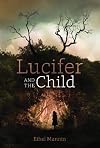
This book was first published in 1945. The lead up to, and the early years of World War II are the backdrop to the story. I can see how the author has been drawing from that background and has incorporated some of it in her tale. I am tempted to say the book contains a description of the battle between good and evil, but that is too simple. It is more the struggle between two views of the world rather than one view being good and one being evil. Witchcraft is presented as a part of nature show more and those who look down on it and consider it evil are presented as not understanding its true nature. In the final pages of the book it becomes somewhat philosophical.
The long running argument of the relative strengths of nature and nurture get an airing while the participants in the discussion, poles apart in their opinions, can still discuss the topic rationally rather than resorting to fighting and dogma.
A comparison is also shown between the lives of the comfortably off and those less well off, also demonstrating the dichotomy between rural and urban living at the time.
The answers to my three acid-test review questions about this book are presented below.
1. Would I read another book by this author?
Yes, and I am intrigued enough to want to research more about her writing and life.
2. Would I recommend this book to anyone?
Yes.
3. To whom would I recommend this book?
I would recommend this book to anyone interested in sociology, particularly sociology relating to inner-city living. This book is really about growing up in an environment that presents challenges and suffers deprivation.
I would ask myself another question about this book:
Any words of warning?
The author is obviously well versed in magic and presents a convincing story with much detail given on various dates, daemons and practices. However, this is much more than a story of witchcraft. It does, however, keep the reader guessing and wondering about the supernatural. It contains sufficient doubt to have the reader wondering what is real or what might be coincidence or a young child's imagination.
I feel the witchcraft is simply a vehicle to facilitate discussion about deprivation and the difficulties of growing up in an environment that is not ideal.
This book is a coming of age story highlighting the challenges faced by a young girl growing up in a deprived area with limited support or guidance. It is a very human book written by a very knowledgeable author who writes well and gives the reader a clear, objective view of a child's difficult upbringing.
This is a very worthwhile read. Five stars. show less
The long running argument of the relative strengths of nature and nurture get an airing while the participants in the discussion, poles apart in their opinions, can still discuss the topic rationally rather than resorting to fighting and dogma.
A comparison is also shown between the lives of the comfortably off and those less well off, also demonstrating the dichotomy between rural and urban living at the time.
The answers to my three acid-test review questions about this book are presented below.
1. Would I read another book by this author?
Yes, and I am intrigued enough to want to research more about her writing and life.
2. Would I recommend this book to anyone?
Yes.
3. To whom would I recommend this book?
I would recommend this book to anyone interested in sociology, particularly sociology relating to inner-city living. This book is really about growing up in an environment that presents challenges and suffers deprivation.
I would ask myself another question about this book:
Any words of warning?
The author is obviously well versed in magic and presents a convincing story with much detail given on various dates, daemons and practices. However, this is much more than a story of witchcraft. It does, however, keep the reader guessing and wondering about the supernatural. It contains sufficient doubt to have the reader wondering what is real or what might be coincidence or a young child's imagination.
I feel the witchcraft is simply a vehicle to facilitate discussion about deprivation and the difficulties of growing up in an environment that is not ideal.
This book is a coming of age story highlighting the challenges faced by a young girl growing up in a deprived area with limited support or guidance. It is a very human book written by a very knowledgeable author who writes well and gives the reader a clear, objective view of a child's difficult upbringing.
This is a very worthwhile read. Five stars. show less

In its pinkish dust jacket are some wonderful short stories. At first I thought they were by James Joyce, e.g. Making a fool of a man and The cough. Phobia was fascinating, the man who never married, and was never quite perfect.

This novel is the story of a twentieth century Augustine -- a worldly young man who forsakes his worldly status and success when he finds God. The title is a quotation from Book I of St Augustine of Hippo's Confessions -- "Late have I loved Thee, beauty ever ancient and ever new!" The plot is largely a fictionalized updating of Augustine's own journey into faith. I first read this as a teenager, many years before I ever read Augustine's Confessions, and a few years before I discovered Thomas show more Merton's The Seven Story Mountain, the true story of Merton's own life, which in many ways also parallels that of St Augustine. show less
Lists
You May Also Like


Associated Authors
Statistics
- Works
- 82
- Also by
- 1
- Members
- 400
- Popularity
- #60,684
- Rating
- 3.7
- Reviews
- 5
- ISBNs
- 42
- Languages
- 2
- Favorited
- 3