
Keith Christiansen
Author of Italian Painting
About the Author
Image credit: Keith Christiansen
Works by Keith Christiansen
From Filippo Lippi to Piero della Francesca : Fra Carnevale and the making of a Renaissance master (2005) 45 copies
Duccio and the Origins of Western Painting: Metropolitan Museum of Art Bulletin, Summer, 2008 (2008) 37 copies
The Genius of Andrea Mantegna (The Metropolitan Museum of Art bulletin, v. 67, no. 2, fall 2009) (2009) 27 copies, 1 review
Secular Painting in 15th-Century Tuscany: Birth Trays, Cassone Panels and Portraits (1980) 12 copies, 1 review
The Ca' Dolfin Tiepolos (The Metropolitan Museum of Art Bulletin, Spring 1998, Volume LV, No. 4) (1998) 9 copies
Going for Baroque: Bringing 17th-Century Masters to the Met (The Metropolitan Museum of Art bulletin, v. 62, no. 3, winter 2005 (2005) 8 copies
Fourteenth-century Italian altarpieces : The Metropolitan Museum of Art Bulletin, Summer 1982 (Volume XL, Number 1) (1982) 1 copy
Valentin de Boulogne. Réinventer Caravage (cat. exp., Paris, Musée du Louvre, 22 février - 22 mai 2017) (2017) 1 copy
The Metropolitan Museum of Art Bulletin, Spring 1998 (Vol. LV, Number 4); The Ca' Dolfin Tiepolos (1998) 1 copy
Italian Painting 1 copy
Associated Works
From Van Eyck to Bruegel : early Netherlandish painting in the Metropolitan Museum of Art (1998) — Editor — 118 copies
Tagged
Common Knowledge
- Canonical name
- Christiansen, Keith
- Birthdate
- 1947-01-06
- Gender
- male
- Education
- Harvard University (Ph.D|1977)
University of California, Los Angeles (MA|1972)
University of California, Santa Cruz (AB|1969) - Occupations
- art historian
museum curator - Organizations
- Metropolitan Museum of Art
- Nationality
- USA
- Birthplace
- Seattle, Washington, USA
- Associated Place (for map)
- Washington, USA
Members
Reviews
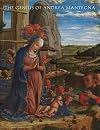
A clear and helpful basic introduction to Mantegna, breaking down his career into chunks defined by key projects: the Overtari Chapel; the San Zeno Altarpiece; the Camera Picta; and the Triumphs of Caesar. There is also a short discussion of the artist's involvement with printmaking at the end, which lays out the academic debate in this area. At only 64 pages it does not pretend to be an exhaustive monograph and there are many works which are not considered: unsurprisingly, the focus is very show more much on the Mantegnas in the Met's own collection. Nevertheless, it's a helpful place to start, giving the reader a sense of Mantegna's innovations, his reception by contemporaries, and the way motifs and themes move between different aspects of his work. show less
The Metropolitan Museum of Art Bulletin - Summer 1980 - Volume XXXVIII Number 1 - Secular Painting in 15th-Century Tuscany: Birth Trays, Cassone Panels, and Portraits by John Pope-Hennessy

Of particular interest here are a number of birth-trays (trays used and displayed in the lying-in room in Renaissance Italy:
* One with scenes from Bocaccio's Comedia delle Ninfe Fiorentine showing hunters conversing with nymphs in a garden/sylvan setting
* A 1428 Florentine tray with a birthscene on one side and on the other, a naked child with coral amulet,pinwheel and hobbyhorse, urinating silver and gold, in a forest setting along with 2 inset coats of arms and the motto, being show more translated, "May God grant health to every woman who gives birth and to their father... may [the child] be born without fatigue or peril. I am an infant who lives on a [rock?] and I make urine of silver and gold."
* a Medici birth tray with a triumph, to commemorate the birth of Lorenzo il Magnifico in 1449.
Also a number of painted cassones, or chests, including a number with battle scenes, the story of Jason and the Argonauts, the labors of Hercules, and a 1460-70 depiction of the book of Esther, with a dinner scene. Another cassone depicting Plutarch's life of Publicola shows a wide variety of circa 1480 women's clothing, as well as maidens (fully clothed) swimming the Tiber. Another set of fragments depict a handsome young man and a beautiful young woman (both with the huge blonde hair fashion) playing chess surrounded by a crowd of onlookers of both sexes.
A set of panels (probably for wall display) depicting the Old Testament story of Jospeh is especially vivid and entrancing, though the story of the queen of Sheba might be of interest to those curious about triumphal city entries. Also of interest would be fragments of a cassone panel showing the Triumph of Chaste Love.
For jewelers and scholars of hairdressing, the portraits included here are especially interesting though there are less than 10-- in one case, the critics comment, "it is as though the painter had been invited to prepare a visual catalogue of the jewels owned by the Scolari" (59).
NOTE: I did not read all the text, but browsed it along with the images. show less
* One with scenes from Bocaccio's Comedia delle Ninfe Fiorentine showing hunters conversing with nymphs in a garden/sylvan setting
* A 1428 Florentine tray with a birthscene on one side and on the other, a naked child with coral amulet,pinwheel and hobbyhorse, urinating silver and gold, in a forest setting along with 2 inset coats of arms and the motto, being show more translated, "May God grant health to every woman who gives birth and to their father... may [the child] be born without fatigue or peril. I am an infant who lives on a [rock?] and I make urine of silver and gold."
* a Medici birth tray with a triumph, to commemorate the birth of Lorenzo il Magnifico in 1449.
Also a number of painted cassones, or chests, including a number with battle scenes, the story of Jason and the Argonauts, the labors of Hercules, and a 1460-70 depiction of the book of Esther, with a dinner scene. Another cassone depicting Plutarch's life of Publicola shows a wide variety of circa 1480 women's clothing, as well as maidens (fully clothed) swimming the Tiber. Another set of fragments depict a handsome young man and a beautiful young woman (both with the huge blonde hair fashion) playing chess surrounded by a crowd of onlookers of both sexes.
A set of panels (probably for wall display) depicting the Old Testament story of Jospeh is especially vivid and entrancing, though the story of the queen of Sheba might be of interest to those curious about triumphal city entries. Also of interest would be fragments of a cassone panel showing the Triumph of Chaste Love.
For jewelers and scholars of hairdressing, the portraits included here are especially interesting though there are less than 10-- in one case, the critics comment, "it is as though the painter had been invited to prepare a visual catalogue of the jewels owned by the Scolari" (59).
NOTE: I did not read all the text, but browsed it along with the images. show less
Lists
Awards

You May Also Like


Associated Authors
Statistics
- Works
- 36
- Also by
- 4
- Members
- 734
- Popularity
- #34,611
- Rating
- 4.3
- Reviews
- 2
- ISBNs
- 55
- Languages
- 3