

Jonathan Harr
Author of A Civil Action
About the Author
Author Jonathan Harr is best known for his compelling account of a tragic toxic waste case that plagued Woburn, Massachusetts during the 1980s, entitled A Civil Action. This story traces the formulation and outcome of a legal complaint filed by eight families against three local Woburn industries show more for improper handling and disposal of toxic chemicals. A Civil Action won Harr the 1996 National Book Critics Circle Award for nonfiction and earned him a spot on the New York Times Best Sellers List for 65 weeks. He also received the 1997 Environmental Awareness Award from the League of Conservation Voters for his ability to incorporate an environmental protection issue into his work and for his efforts to help raise awareness of environmental issues. Jonathan Harr is a former staff writer at New England Monthly and has contributed to The New Yorker. He has also taught at Smith College. (Bowker Author Biography) show less
Image credit: uchicago.edu
Works by Jonathan Harr
Associated Works
For the Love of Books: 115 Celebrated Writers on the Books They Love Most (1999) — Contributor — 479 copies, 4 reviews
Tagged
Common Knowledge
- Birthdate
- 1948
- Gender
- male
- Education
- College of William and Mary
Marshall University - Occupations
- professor (nonfiction writing | Smith College)
volunteer (Vista)
journalist - Organizations
- New England Monthly
- Nationality
- USA
- Birthplace
- Beloit, Wisconsin, USA
- Places of residence
- Beloit, Wisconsin, USA (birth)
Northampton, Massachusetts, USA
France
Germany
Israel
Chicago, Illinois, USA (show all 8)
San Francisco, California, USA
Washington, D.C., USA - Associated Place (for map)
- USA
Members
Reviews

Something is very much amiss in eastern Woburn - a small community in Massachusetts. The tap water tastes strange, like chemicals. Pipes corrode far too quickly, inhabitants suffer from burning eyes and skin problems. But worst of all - children are dying slowly and painfully of leukemia.
This rare disease has cropped up in several cases just doors away from one another. The families are ruined by medical bills and torn apart by grief. One such stricken mother begins a lonely crusade against show more the city and ultimately against two corporations to hold someone accountable for the suffering and death of her child.
But Woburn is a case no one wanted - expensive to put together and moreso to try. Without settled medical proof of the cuases of leukemia, it's a risky case too. A risky case, but with the possibility of a massive payout and important policy implications, which is just the kind of case Jan Schlichtmann thrives on. Schlichtmann's handling of the case with his brinksmanship, bravado, and relative inexperience, is the real focus of this non-fiction work.
Nonfiction generally isn't my cup of tea, but this was an exception. Written much like a thriller - with insight into the very human drama involved in the case - and as such rarely dry or boring, the author makes the story accessible without bogging it down with legalese or the finer geological points. He illuminates the workings of a trial, the greed and the injustices the system produces, and the emotions at stake, not just for the clients, but for the lawyers who invest so much of themselves in their cases.
Fascinating but devastating look at the justice system and how, in the end, no one gets what they want, and nothing is truly resolved. show less
This rare disease has cropped up in several cases just doors away from one another. The families are ruined by medical bills and torn apart by grief. One such stricken mother begins a lonely crusade against show more the city and ultimately against two corporations to hold someone accountable for the suffering and death of her child.
But Woburn is a case no one wanted - expensive to put together and moreso to try. Without settled medical proof of the cuases of leukemia, it's a risky case too. A risky case, but with the possibility of a massive payout and important policy implications, which is just the kind of case Jan Schlichtmann thrives on. Schlichtmann's handling of the case with his brinksmanship, bravado, and relative inexperience, is the real focus of this non-fiction work.
Nonfiction generally isn't my cup of tea, but this was an exception. Written much like a thriller - with insight into the very human drama involved in the case - and as such rarely dry or boring, the author makes the story accessible without bogging it down with legalese or the finer geological points. He illuminates the workings of a trial, the greed and the injustices the system produces, and the emotions at stake, not just for the clients, but for the lawyers who invest so much of themselves in their cases.
Fascinating but devastating look at the justice system and how, in the end, no one gets what they want, and nothing is truly resolved. show less
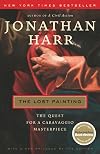
There are books that, although not thrillers, have the same ability to leave you breathless as a good action novel. This is the case of “The Lost Painting: The Quest for a Caravaggio Masterpiece” by Jonathan Harr, which tells the story of the hunt for one of the masterpieces of one of the most enigmatic masters of Italian Baroque painting. From rumors to research in libraries; from a certain skepticism on the part of the experts to a completely unpredictable location; from a fraudulent show more sale to avoid paying taxes (nothing new under the sun) to an auction where it was sold for a pittance as warehouse stock; up to an adventurous restoration, the story of The Taking of Christ is a continuous series of twists and turns told with the skill typical of someone who religiously sticks to the facts, keeping the reader glued to the page. show less

I enjoyed this to some extent, though I have serious reservations about Harr's technique.
This is one of those non-fiction books about which some will say, "It reads like a novel!", and it does. However, that is not necessarily a recommendation.
The book is about Caravaggio scholarship, particularly the serendipitous discovery of his* painting, The Taking of Christ. It delves into questions of archival access, conservation techniques and rivalry amongst art historians. All very interesting show more stuff.
But . . .
Although there is a bibliography, there are NO footnotes or endnotes, NO attributions, and, in a book about art, NO illustrations!
There is also a bit of false advertising about the book. Harr spends most of his time in Italy, with Italian researchers who are investigating another Caravaggio, doing research into various provenances, etc. He seems quite taken with one young graduate student. The difficulty, though, is that the discovery of the painting in Ireland had little to do with these people.
This absence of scholarly technique is something that is becoming all too common in non-fiction these days, and I do *not* approve! Write a strong, compelling narrative, by all means, but give your reader the necessary bibliographic information, too.
*Whether the painting about which Harr writes is the original or a copy is a matter of some dispute, something that Harr does not touch on, although his book was published *after* the controversy arose. I don't know if this was a matter of timing (the issue was apparently first raised in early 2004 and the book was published in late 2005, but that doesn't necessarily mean he had time to incorporate new information) or if he felt it would detract from his story. show less
This is one of those non-fiction books about which some will say, "It reads like a novel!", and it does. However, that is not necessarily a recommendation.
The book is about Caravaggio scholarship, particularly the serendipitous discovery of his* painting, The Taking of Christ. It delves into questions of archival access, conservation techniques and rivalry amongst art historians. All very interesting show more stuff.
But . . .
Although there is a bibliography, there are NO footnotes or endnotes, NO attributions, and, in a book about art, NO illustrations!
There is also a bit of false advertising about the book. Harr spends most of his time in Italy, with Italian researchers who are investigating another Caravaggio, doing research into various provenances, etc. He seems quite taken with one young graduate student. The difficulty, though, is that the discovery of the painting in Ireland had little to do with these people.
This absence of scholarly technique is something that is becoming all too common in non-fiction these days, and I do *not* approve! Write a strong, compelling narrative, by all means, but give your reader the necessary bibliographic information, too.
*Whether the painting about which Harr writes is the original or a copy is a matter of some dispute, something that Harr does not touch on, although his book was published *after* the controversy arose. I don't know if this was a matter of timing (the issue was apparently first raised in early 2004 and the book was published in late 2005, but that doesn't necessarily mean he had time to incorporate new information) or if he felt it would detract from his story. show less
This was a very surprising non-fiction book. It read more like a historical mystery novel than a non-fiction true story about the art and the life of Michelangelo Caravaggio, a 16 century Renaissance painter. Caravaggio had a very short and tumultuous life, but he is famous for his bright and colourful paintings, and for the way he displayed light in his work. He often used self-portraits in his paintings. His paintings are hanging in galleries all over the world, but unfortunately a lot of show more them have been lost. This book is a book about the treasure hunt involved with trying to find one of his lost paintings. The book starts out with a young Italian graduate student discovering a record of one of his paintings that had been lost for almost two centuries. She discovers the origin of the painting in a dusty old family archive, and she is determined to try to trace where this painting is now. She manages to trace it all the way to Scotland, but then the trail is lost, until a very discerning art restorer discovers what he thinks might be "The Taking of the Christ" in a small Irish Jesuit mission. I am a newbie in the world of art and art restoration, so therefore this whole book was a revelation to me. Johnathan Harr made the story so captivating and so rife with tension and discovery that it held my interest throughout. Caravaggio and his beautiful paintings came alive for me as I read. This is why I adore non-fiction. When you find a book written with such skill and about such a captivating subject, it is a exciting and a revelation. A bygone era came alive for me, and I've been introduced to a whole new world. show less
Lists
Awards


You May Also Like


Associated Authors
Statistics
- Works
- 6
- Also by
- 1
- Members
- 4,612
- Popularity
- #5,457
- Rating
- 3.8
- Reviews
- 106
- ISBNs
- 48
- Languages
- 8
- Favorited
- 1