
Amy Brill
Author of The Movement of Stars: A Novel
Works by Amy Brill
one story, ReMem 1 copy
Il sentiero delle stelle 1 copy
Associated Works
Tagged
Common Knowledge
- Gender
- female
- Places of residence
- Brooklyn, New York, USA
- Associated Place (for map)
- New York, USA
Members
Reviews

This was an extraordinary book full of the inner dialogue of a brilliant woman. Modeled after a real life Northeastern woman astronomer, this fictional heroine lives during a time of strict rules imposed by the Nantucket Quakers on dress, actions, and education. Hannah Price lives at home with her father, her twin brother has earlier sailed out on a whaling vessel to earn the funds to marry. All Hannah wishes to do is watch the stars and gain the opportunity to control her own life. Into her show more life of measurement and repairing nautical instruments is a dark-skinned man from the Azores who wishes to become her student. So she takes up the offer and both their lives are changed.
Reading this book in this moment in modern history is timely: as the Quakers discuss the sin of slavery, they are also unable to fully accept the African Americans and darker skinned peoples on their island. Their patronizing attitude towards others speaks volumes towards the later "hands-off" view of Northern Reconstructionists who fail to honor true freedom, including voting rights, land rights, and freedom of movement, of newly freed slaves in the South.
Set in the 1840's, Hannah's story is well told and her internalized oppression is a literary triumph. She remains true to herself, mostly, and merely wants to stand on her own two feet, gazing at the stars, and earn her own way in the world. show less
Reading this book in this moment in modern history is timely: as the Quakers discuss the sin of slavery, they are also unable to fully accept the African Americans and darker skinned peoples on their island. Their patronizing attitude towards others speaks volumes towards the later "hands-off" view of Northern Reconstructionists who fail to honor true freedom, including voting rights, land rights, and freedom of movement, of newly freed slaves in the South.
Set in the 1840's, Hannah's story is well told and her internalized oppression is a literary triumph. She remains true to herself, mostly, and merely wants to stand on her own two feet, gazing at the stars, and earn her own way in the world. show less

With all the lights in cities and suburbia, it can be hard to look up and see the stars overhead. But when you get out into an area where the artificial lights don't overwhelm the stars, the night sky is magnificent. I have never learned the names of the constellations but that hasn't stopped me from wanting to lie down on the ground, look up, and just sink into the vastness of the universe. So I can certainly understand the fascination that astronomers have with stars and space and show more celestial objects. In Amy Brill's debut novel inspired by Maria Mitchell, the first American female astronomer, The Movement of Stars, a very unlikely character, a nineteenth Quaker woman, is seduced by science and the night sky.
Hannah Gardner Price lives on Nantucket in 1845 in the tightly knit, strict Quaker community there. Her father is a clockmaker and an astronomer and he has taught Hannah both his work and his passion. She is an intellectually curious young woman, drawn to the stars and the workings of the universe and as capable of scientific observation as he is. When her father, who has been long widowed, announces that he is going to marry and move to Philadelphia, he assumes that Hannah, as an unmarried daughter, will certainly be moving with him. She is desperate not to leave Nantucket and her observation of the night sky, searching as she is for an undiscovered comet so that she can claim King Gustav of Denmark's prize and the acclaim and recognition that goes with it.
While her father prepares to leave the island and Hannah considers her limited options, she takes on a student, teaching Isaac Martin, a dark skinned sailor from the Azores, celestial navigation so that he can advance in his field. Isaac is an outsider like Hannah, he for the color of his skin and his foreignness, she for her unfeminine craving for education and knowledge and her desire not to marry but instead to contribute to her chosen field. So it is no surprise that Hannah and Isaac are drawn to each other. But her association with this sailor will cost her in her little community despite the fact that she has always dutifully adhered to the letter of the rules they have set out.
Hannah not only flouts convention by rejecting the traditional women's sphere when her father was willing to accommodate her chosen life path but she continues to reject convention when it seems that she will be shunned entirely if she is not under the protection of a father, a husband, or her beloved twin brother, Edward, whose own wife is such a proper Quaker women that Hannah cannot see past her own prejudices to appreciate her new sister in law for the gifts that she does offer, like her acceptance and appreciation of Hannah's brilliant intelligence.
Brill has written a well-researched and interesting novel about the place of women in science and the obstacles that they had to overcome just to practice, never mind to shine and be outstanding. Hannah was a very smart character, quick to learn and willing to persevere in the face of disapproval but she wasn't quite as schooled in the way of emotions and relating to people and her relationship with Isaac teaches her to love out of more than obligation, to examine her feelings and to know her own heart. Their romance perhaps distracted a bit from the fascinating idea of this woman with her eyes trained on the sky, waiting for her comet to appear and to be confirmed but it did contribute to her eventual self-discovery and offered narrative tension of a different sort. Women's choices were so constrained and it took such strength of character for Hannah to pursue her loves, both of Isaac and of astronomy and choices she eventually made were certainly unique. The novel takes a little time to get going and the pacing speeds up quite a bit at the end but over all, this was a satisfying historical novel about one woman's personal and professional growth at a time when certainly the latter was disregarded as important. show less
Hannah Gardner Price lives on Nantucket in 1845 in the tightly knit, strict Quaker community there. Her father is a clockmaker and an astronomer and he has taught Hannah both his work and his passion. She is an intellectually curious young woman, drawn to the stars and the workings of the universe and as capable of scientific observation as he is. When her father, who has been long widowed, announces that he is going to marry and move to Philadelphia, he assumes that Hannah, as an unmarried daughter, will certainly be moving with him. She is desperate not to leave Nantucket and her observation of the night sky, searching as she is for an undiscovered comet so that she can claim King Gustav of Denmark's prize and the acclaim and recognition that goes with it.
While her father prepares to leave the island and Hannah considers her limited options, she takes on a student, teaching Isaac Martin, a dark skinned sailor from the Azores, celestial navigation so that he can advance in his field. Isaac is an outsider like Hannah, he for the color of his skin and his foreignness, she for her unfeminine craving for education and knowledge and her desire not to marry but instead to contribute to her chosen field. So it is no surprise that Hannah and Isaac are drawn to each other. But her association with this sailor will cost her in her little community despite the fact that she has always dutifully adhered to the letter of the rules they have set out.
Hannah not only flouts convention by rejecting the traditional women's sphere when her father was willing to accommodate her chosen life path but she continues to reject convention when it seems that she will be shunned entirely if she is not under the protection of a father, a husband, or her beloved twin brother, Edward, whose own wife is such a proper Quaker women that Hannah cannot see past her own prejudices to appreciate her new sister in law for the gifts that she does offer, like her acceptance and appreciation of Hannah's brilliant intelligence.
Brill has written a well-researched and interesting novel about the place of women in science and the obstacles that they had to overcome just to practice, never mind to shine and be outstanding. Hannah was a very smart character, quick to learn and willing to persevere in the face of disapproval but she wasn't quite as schooled in the way of emotions and relating to people and her relationship with Isaac teaches her to love out of more than obligation, to examine her feelings and to know her own heart. Their romance perhaps distracted a bit from the fascinating idea of this woman with her eyes trained on the sky, waiting for her comet to appear and to be confirmed but it did contribute to her eventual self-discovery and offered narrative tension of a different sort. Women's choices were so constrained and it took such strength of character for Hannah to pursue her loves, both of Isaac and of astronomy and choices she eventually made were certainly unique. The novel takes a little time to get going and the pacing speeds up quite a bit at the end but over all, this was a satisfying historical novel about one woman's personal and professional growth at a time when certainly the latter was disregarded as important. show less
 This review was written for LibraryThing Early Reviewers.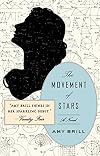
Amy Brill has loosely tethered her fictional protagonist to the life story of Maria Mitchell, America’s first “lady astronomer,” though Hannah Gardner Price is very much her own person. Like her literary sisters from Cape Cod and the Islands – Sena Jeter Naslund’s Una Spenser, Geraldine Brooks’ Bethia Mayfield, and all of Sally Gunning’s historical heroines – Hannah is an intelligent, singular woman who bends the conventions of her time. With a deep sensitivity to character show more and place, The Movement of Stars reveals her story. It is a luminously written novel about connections, both scientific and emotional, and how the people around us can either limit or expand our world.
Hannah is an admirable character who’s difficult to warm to, at first. Unwed at age 24 in the year 1845, she keeps her personal feelings under control – except when it comes to the wondrous sights in the night sky she observes from her roof walk in Nantucket Town. Her Quaker community values women’s education, and she has already surpassed what her father Nathaniel, a former astronomer turned banker, can teach her.
Using her Dollond telescope, Hannah hopes to discover a comet, which will not only vindicate her pursuits but could earn her a medal from the King of Denmark, which could fund future research and let her become self-supporting. Otherwise, she will have to move with her father to his future wife’s home in Philadelphia or find someone convenient to marry. She doesn’t like either option, and her predicament is painful and heartfelt: “The idea that she had always been powerless over her own future, but not realized it, was excruciating.” Hannah has been so occupied with stargazing that she has miscalculated her own future… but that’s nothing compared with what’s to come.
When the dark-skinned Azorean second-mate of a whaling vessel, Isaac Martin, asks her for instruction in navigation to improve his skill (and therefore his lot in life), Hannah takes him on as a pupil. Their association and growing closeness cause a disturbance that threatens her continued acceptance by her fellow Quakers. One scene in which Hannah lets Isaac guide her imagination is moving and powerfully rendered, and when she begins to question the ideals she was brought up to believe, the plot intensifies and really begins to take off.
With loving devotion to detail, Brill paints a vibrant picture of Nantucket and Quaker life in the mid-19th century: the seaside buildings, the bonnets and drab colors worn by believers, the plain speech with which they address each other, and their remoteness from the mainland – and how communication between scientists was slowed but not hindered by physical distance. Hannah has colleagues at Harvard, family friends who encourage her efforts, and it’s rewarding to see the mutual support system that lets her thrive.
Within her own town, though, people aren’t as understanding. Her status as a junior librarian and amateur astronomer is respected, if considered eccentric for an unmarried woman. However, while Quakers abhor slavery and favor manumission, their tolerance for the influence of outsiders, especially those of another race, has limits. One of the novel’s most strongly evoked themes involves the point at which industrious self-reliance becomes close-mindedness and xenophobia. “Socializing with the world’s people was grounds for disownment from Meeting these days,” Brill writes of Hannah and Isaac. “How had they strayed so far off course?”
Struggling within an atmosphere of social repression, Hannah stands fast, and her hesitancy to act on occasion makes her seem more real. The members of her family are equally as well defined, and the author’s prose is lyrical and poignant, the one distraction being repeated use of the same nautical metaphors. The novel’s finale suits the times as well as the personality of its complex, spirited protagonist. In all, this breathtaking debut about the mysteries of the heavens and the heart honors the perseverance of trailblazing women everywhere. show less
Hannah is an admirable character who’s difficult to warm to, at first. Unwed at age 24 in the year 1845, she keeps her personal feelings under control – except when it comes to the wondrous sights in the night sky she observes from her roof walk in Nantucket Town. Her Quaker community values women’s education, and she has already surpassed what her father Nathaniel, a former astronomer turned banker, can teach her.
Using her Dollond telescope, Hannah hopes to discover a comet, which will not only vindicate her pursuits but could earn her a medal from the King of Denmark, which could fund future research and let her become self-supporting. Otherwise, she will have to move with her father to his future wife’s home in Philadelphia or find someone convenient to marry. She doesn’t like either option, and her predicament is painful and heartfelt: “The idea that she had always been powerless over her own future, but not realized it, was excruciating.” Hannah has been so occupied with stargazing that she has miscalculated her own future… but that’s nothing compared with what’s to come.
When the dark-skinned Azorean second-mate of a whaling vessel, Isaac Martin, asks her for instruction in navigation to improve his skill (and therefore his lot in life), Hannah takes him on as a pupil. Their association and growing closeness cause a disturbance that threatens her continued acceptance by her fellow Quakers. One scene in which Hannah lets Isaac guide her imagination is moving and powerfully rendered, and when she begins to question the ideals she was brought up to believe, the plot intensifies and really begins to take off.
With loving devotion to detail, Brill paints a vibrant picture of Nantucket and Quaker life in the mid-19th century: the seaside buildings, the bonnets and drab colors worn by believers, the plain speech with which they address each other, and their remoteness from the mainland – and how communication between scientists was slowed but not hindered by physical distance. Hannah has colleagues at Harvard, family friends who encourage her efforts, and it’s rewarding to see the mutual support system that lets her thrive.
Within her own town, though, people aren’t as understanding. Her status as a junior librarian and amateur astronomer is respected, if considered eccentric for an unmarried woman. However, while Quakers abhor slavery and favor manumission, their tolerance for the influence of outsiders, especially those of another race, has limits. One of the novel’s most strongly evoked themes involves the point at which industrious self-reliance becomes close-mindedness and xenophobia. “Socializing with the world’s people was grounds for disownment from Meeting these days,” Brill writes of Hannah and Isaac. “How had they strayed so far off course?”
Struggling within an atmosphere of social repression, Hannah stands fast, and her hesitancy to act on occasion makes her seem more real. The members of her family are equally as well defined, and the author’s prose is lyrical and poignant, the one distraction being repeated use of the same nautical metaphors. The novel’s finale suits the times as well as the personality of its complex, spirited protagonist. In all, this breathtaking debut about the mysteries of the heavens and the heart honors the perseverance of trailblazing women everywhere. show less
This review was written for LibraryThing Early Reviewers.Review originally published on my blog: AWordsWorth.blogspot.com
Hannah Price is unique. Even as she outwardly follows the principles of her strait-laced Quaker community in Nantucket, she is straining against their limitations. Her heart is in the stars, obsessively searching for a comet to call her own and win the King of Denmark's medal. Rather than trying to become a "good catch" and transition into wife-and-motherhood, Hannah spends her days in the Atheneum (basically a library), and her show more nights watching the skies and assisting with her father's repair business (servicing navigational instruments for whalers). If she is a bit "unconventional," it is okay -- as long as she maintains the pretense of adherence, the community will mostly accept Hannah's quirks. Until she starts teaching a young whaler-sailor from the Azores. Isaac Martin is unlike anyone Hannah has ever met, and as their secret lessons continue, he not only stretches her mind - he opens her heart, in ways Hannah never thought possible. As Hannah stretches, she begins to question: herself, her family, the whole Quaker community. The answers are sometimes surprising, but as she gains a clearer picture of Life, Hannah grows. Even after Isaac leaves, and the formal "lessons" end, Hannah keeps searching for truth. Not the accepted truth of her people, or her past, but the truth that will propel her into the future.
The Movement of Stars is a beautiful story of personal growth, and the importance of asking your own questions. With careful historical context, and just enough astronomical history to make this spacegirl happy, it's an engrossing read that makes me want to find out more about Maria Mitchell, the real-life American astronomer who inspired the story. show less
Hannah Price is unique. Even as she outwardly follows the principles of her strait-laced Quaker community in Nantucket, she is straining against their limitations. Her heart is in the stars, obsessively searching for a comet to call her own and win the King of Denmark's medal. Rather than trying to become a "good catch" and transition into wife-and-motherhood, Hannah spends her days in the Atheneum (basically a library), and her show more nights watching the skies and assisting with her father's repair business (servicing navigational instruments for whalers). If she is a bit "unconventional," it is okay -- as long as she maintains the pretense of adherence, the community will mostly accept Hannah's quirks. Until she starts teaching a young whaler-sailor from the Azores. Isaac Martin is unlike anyone Hannah has ever met, and as their secret lessons continue, he not only stretches her mind - he opens her heart, in ways Hannah never thought possible. As Hannah stretches, she begins to question: herself, her family, the whole Quaker community. The answers are sometimes surprising, but as she gains a clearer picture of Life, Hannah grows. Even after Isaac leaves, and the formal "lessons" end, Hannah keeps searching for truth. Not the accepted truth of her people, or her past, but the truth that will propel her into the future.
The Movement of Stars is a beautiful story of personal growth, and the importance of asking your own questions. With careful historical context, and just enough astronomical history to make this spacegirl happy, it's an engrossing read that makes me want to find out more about Maria Mitchell, the real-life American astronomer who inspired the story. show less
Awards


You May Also Like


Associated Authors
Statistics
- Works
- 5
- Also by
- 1
- Members
- 346
- Popularity
- #69,042
- Rating
- 3.8
- Reviews
- 29
- ISBNs
- 16
- Languages
- 3
