
William R. Hutchison (1930–2005)
Author of The Modernist Impulse in American Protestantism
About the Author
William R. Hutchison is Charles Warren Research Professor of the History of Religion in America at the Divinity School, Harvard University
Works by William R. Hutchison
Between the Times: The Travail of the Protestant Establishment in America, 1900-1960 (1989) — Editor — 33 copies
A short history of Ireland 1 copy
Tagged
Common Knowledge
- Birthdate
- 1930-05-21
- Date of death
- 2005-12-16
- Gender
- male
- Education
- Hamilton College (1951)
University of Oxford
Yale University (Ph.D.) - Occupations
- historian of religion
professor - Organizations
- Harvard Divinity School
Friends Meeting at Cambridge - Nationality
- USA
- Birthplace
- San Francisco, California, USA
- Place of death
- Boston, Massachusetts, USA
- Associated Place (for map)
- USA
Members
Reviews
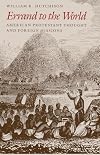
This is an excellent book about how the missionary establishment in the United States grappled with problems of modernity. Hutchinson traces the work of missionaries from the 17th century to the middle of the 20th. His main argument is that although missionaries took their cultural assumptions with them, by the mid-nineteenth century and especially in the twentieth, some were beginning to wonder about whether American culture was actually superior.
The debate reflected the developing divide show more in the United States between modernists and fundamentalists. Hutchinson prefers to look at the debate in the United States itself, but does include some missionary writings. Fundamentalists believed that proselytization was the most important goal of missions to bring their converts closer to God and salvation. Liberals believed that they should implement Christian teaching and try to raise up their fellow man's standard of living. Liberals also assumed a position of relativism, where local beliefs should be valued instead of discarded. The debate raged back and forth until after World War II. At that point, growing nationalism meant that many missionaries were unwelcome in foreign lands. Liberals often left, not wanting to try to impose their values, while evangelicals stayed and increased their numbers. The effect was the fundamentalization of missions.
This is book does a great job of explaining the splintering of missionary ideology and how they dealt with modernity. It is also an excellent book for how the United States tried to deal with the world. Hutchinson did not make grand claims for missionaries representing all of America, but he does show that they represented a crusading aspect of American exceptionalism. Their crisis of conscience reflected a larger crisis in American society. show less
The debate reflected the developing divide show more in the United States between modernists and fundamentalists. Hutchinson prefers to look at the debate in the United States itself, but does include some missionary writings. Fundamentalists believed that proselytization was the most important goal of missions to bring their converts closer to God and salvation. Liberals believed that they should implement Christian teaching and try to raise up their fellow man's standard of living. Liberals also assumed a position of relativism, where local beliefs should be valued instead of discarded. The debate raged back and forth until after World War II. At that point, growing nationalism meant that many missionaries were unwelcome in foreign lands. Liberals often left, not wanting to try to impose their values, while evangelicals stayed and increased their numbers. The effect was the fundamentalization of missions.
This is book does a great job of explaining the splintering of missionary ideology and how they dealt with modernity. It is also an excellent book for how the United States tried to deal with the world. Hutchinson did not make grand claims for missionaries representing all of America, but he does show that they represented a crusading aspect of American exceptionalism. Their crisis of conscience reflected a larger crisis in American society. show less

This is a very readable analysis of "modernism" in American Protestantism. Hutchinson uses the definition of modernism as 1) adapting religion to modern culture. 2) acceptance that God was part of human nature and development 3) optimism about progress toward the kingdom of heaven. He takes some issue with the later definition, saying that modernists were not uniformly optimistic, but he largely accepts these three issues as defining points of modernists. He argues that modernism faded in show more the wake of two world wars because that optimism of human nature was no longer easy to maintain. Yet liberalism remained, which was still adapting religion to modern culture and was accepting of other traditions because of the assumption that God was part of their creation.
He is clearly a liberal defending liberalism, but it is still an excellent read. His argument that fundamentalism is unrealistic because "the church is and must be in the world" is a good one. Definitely a good read for religious historians and for those interested in modern theology. show less
He is clearly a liberal defending liberalism, but it is still an excellent read. His argument that fundamentalism is unrealistic because "the church is and must be in the world" is a good one. Definitely a good read for religious historians and for those interested in modern theology. show less
Missions - American - History, Messianism - Political - United States
Awards

You May Also Like


Statistics
- Works
- 11
- Members
- 390
- Popularity
- #62,075
- Rating
- 3.7
- Reviews
- 3
- ISBNs
- 20