
Jonathan Ames
Author of Wake Up, Sir!: A Novel
About the Author
Jonathan Ames is a contributing writer to the New York Press and a comic monologist in the tradition of Spalding Gray. His first novel I Pass Like Night was published in 1989 and led to feature articles about Ames in USA Today and Vanity Fair. Ames has performed at PS 122, Fez, the Nuyorican Poets' show more Cafe and the New York Public Library. His work has been anthologized in the Henfield Foundation Anthology and in an anthology edited by Joyce Carol Oates. He has worked as a taxi driver, au pair, fiction writing teacher and model. He grew up in Orange, New Jersey, and currently resides in New York. (Bowker Author Biography) Jonathan Ames lives in Brooklyn, New York. (Bowker Author Biography) show less
Image credit: Photographed by Travis Roozée
Series
Works by Jonathan Ames
The Nista Affair [short story] 2 copies
Bored to Death: The Complete Series — Creator — 2 copies
o acompanhante 1 copy
Old Man, Young Girl 1 copy
GECE GİBİ GEÇİYORUM 1 copy
Associated Works
Ballad of the Whiskey Robber: A True Story of Bank Heists, Ice Hockey, Transylvanian Pelt Smuggling, Moonlighting Detectives and Broken Hearts (2004) — Narrator, some editions — 797 copies, 31 reviews
Alone in the Kitchen with an Eggplant: Confessions of Cooking for One and Dining Alone (2007) — Contributor — 586 copies, 31 reviews
Take My Advice: Letters to the Next Generation from People Who Know a Thing or Two (2002) — Contributor — 50 copies
Moonlighting: The Complete Fifth Season — Actor — 11 copies
Tagged
Common Knowledge
- Birthdate
- 1964-03-23
- Gender
- male
- Education
- Princeton University
Columbia University - Occupations
- novelist
essayist
columnist - Organizations
- New York Press
- Nationality
- USA
- Birthplace
- New York, New York, USA
- Places of residence
- New York, New York, USA
- Associated Place (for map)
- New York, New York, USA
Members
Reviews

I saw the movie a few months ago and was quite disappointed by it. But the story at the root of it seemed like something I should enjoy, so I was surprised and intrigued when I saw this novella sitting on the library shelf. I hadn't even known the movie was an adaptation.
Indeed, reading the story was much better. It is a straightforward crime noir that reminded me of Richard Stark's Parker and Andrew Vachss' Burke novel series. A damaged man does good things by way of bad means. The prose is show more lean, the plot is simple, and the lead character is sympathetic.
This is another case of a good book becoming a bad movie. The filmmakers decided to slow things way down and add layers of murk and symbolism. And while Joaquin Phoenix is a decent actor, he just didn't click in this role for me. show less
Indeed, reading the story was much better. It is a straightforward crime noir that reminded me of Richard Stark's Parker and Andrew Vachss' Burke novel series. A damaged man does good things by way of bad means. The prose is show more lean, the plot is simple, and the lead character is sympathetic.
This is another case of a good book becoming a bad movie. The filmmakers decided to slow things way down and add layers of murk and symbolism. And while Joaquin Phoenix is a decent actor, he just didn't click in this role for me. show less
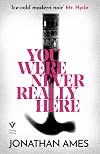
'You Were Never Really Here’ is sixty-five pages of focused, brutal violence. It tells the story of a man who has suffered traumas that have so broken him and left him so afraid of his own potential for violence that he has isolated himself, minimising his contact with people, leaving almost no trace as he moves through his days. He has turned himself into something as simple and dangerous as the hammer that is his weapon of choice. The title refers to Joe’s view of himself as a man show more passing through the world without truly being a part of it.
Joe’s only reason for continuing to live is to turn the violence that is always trying to burst out of him, into a tool he wields against those who traffick the children he is covertly commissioned to rescue. Part of Joe’s trauma comes from his years as an undercover FBI agent breaking human trafficking gangs. Now he uses the knowledge he gained from that work, but without having to keep his violence leashed while he does it.
The violence starts on the first page. There is neither joy nor rage in it, just necessity. The prose, like the protagonist, is lean, muscular and brutal. The pace is relentless rather than fast. The tone is bleak. The action scenes are vivid.
This isn’t a story of redemptive heroics. It’s the story of a man who has made himself into a hammer and who sees every obstacle as a nail.
In 2017, Lynne Ramsay adapted this novella into a film starring Joaquin Phoenix, Judith Roberts and Ekaterina Samsonov. Click on the YouTube link below to see the trailer.
https://youtu.be/R8oYYg75Qvg?si=2t7mnTgAmPb11gcr show less
Joe’s only reason for continuing to live is to turn the violence that is always trying to burst out of him, into a tool he wields against those who traffick the children he is covertly commissioned to rescue. Part of Joe’s trauma comes from his years as an undercover FBI agent breaking human trafficking gangs. Now he uses the knowledge he gained from that work, but without having to keep his violence leashed while he does it.
The violence starts on the first page. There is neither joy nor rage in it, just necessity. The prose, like the protagonist, is lean, muscular and brutal. The pace is relentless rather than fast. The tone is bleak. The action scenes are vivid.
This isn’t a story of redemptive heroics. It’s the story of a man who has made himself into a hammer and who sees every obstacle as a nail.
In 2017, Lynne Ramsay adapted this novella into a film starring Joaquin Phoenix, Judith Roberts and Ekaterina Samsonov. Click on the YouTube link below to see the trailer.
https://youtu.be/R8oYYg75Qvg?si=2t7mnTgAmPb11gcr show less
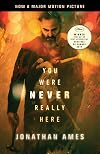
If this book was longer I'd have given it 5 stars. It is a novella. Like catholic sex, it stops just about the place where you don’t want it to stop and it leaves you gasping for more. I like Joe, he carries a hammer because it frightens people. The writing is like a hammer too, it beats you over the head and around the shoulders relentlessly. Just when you think it could not get any darker in there he whacks you again and you see stars. The writing is so tight I swear the book creaked and show more groaned from the tension.
This noir at its best and you should try it, it wont take much of your time like a quick knee trembler up a dark alley with a catholic conclusion. show less
This noir at its best and you should try it, it wont take much of your time like a quick knee trembler up a dark alley with a catholic conclusion. show less
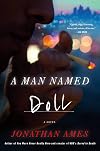
This originally appeared at The Irresponsible Reader.
---
WHAT'S A MAN NAMED DOLL ABOUT?
Happy Doll is a cop-turned-P.I. in Los Angeles, he now primarily works in doing security in a massage parlor* to make ends meet, but he used to do more investigative work.
* The employees may happen to negotiate other services.
When we first meet him, he's talking with his mentor in the LAPD, a man who took a bullet for him and who now comes to him for a big favor. He needs a kidney transplant. Hap says he'll show more think about it. That's not good enough for Lou who ends up doing some very short-sighted things to get him that kidney. Happy doesn't know that at the time, or he'd have said yes sooner.
An altercation with a high client at the parlor leaves Happy injured and under scrutiny by a couple of detectives from the LAPD. He's also loopy on painkillers (which he counters with ADHD meds to really impair his judgment).
This leaves him in a bad spot when he has to investigate what Lou had gotten himself into and with whom. But he keeps plugging along obstinately (also, fueled by undeserved confidence).
IRVING ASH
I picked this up because Chris McDonald said that this is the book that inspired him to write his novel Little Ghost. I tried, usually successfully, to not compare the two as I read.
I can see the shadow of A Man Named Doll on Little Ghost—there's a similar vibe to the protagonists being up against forces they're not ready for, but not backing down or allowing themselves to think of it. There's a similar feeling of events quickly spiraling out of control for everyone involved, and the protagonist being in a very different place when the book is over.
I'm not suggesting that McDonald borrowed much from this book, but the novels share some DNA (and the protagonists likely do, too). The two novels can—and should—be entertaining on their own, and don't need to be considered in relation to each other in any way. I just found it interesting to see how an author could draw inspiration from a novel and run with it.
SO, WHAT DID I THINK ABOUT A MAN NAMED DOLL?
There were multiple twists that I didn't see coming. I had to stop and go back to re-read a few paragraphs to make sure I just read what I thought I did, because...what author does that? Apparently, Jonathan Ames does.
I do think that this book moves a bit too quickly. I'd have liked to see Doll have to work a little harder to connect the dots between everything. I'd have liked to see the LAPD detectives play a larger roll in things (although I can't imagine how they could've without ruining things for Doll's investigation). It's not a fatal flaw, but I think the book would've been better with just a little more of everything.
Ultimately, this reminded me of Eoin Colfer's Daniel McEvoy books—just leaner and not quite as funny*. Although the latter could be a result of the former. I did laugh though at some of Doll's narration—so not quite as funny does not imply not witty or funny at all. Both series share the same kind of worldview, the same kind of violence, and the same kind of twisted logic.
* It occurs to me that Doll does tell us that he's half-Irish. But that part of his family hasn't been in Ireland for quite some time, unlike McEvoy. But maybe there's something to that heritage and the way he reacts to things. I only thought of that connection, as I was preparing to hit "Publish," so I'm not going to spend time on it. It's entirely possible that it won't hold water. But it might.
I thought the emotional and psychological elements were handled perfectly—the way that Doll (and his friends) react to the events that befall them seems perfectly handled. And I really liked the Epilogue and the repercussions of the events of the novel for the characters. It comes across as a little more realistic than some PI novels would have it.
This didn't completely wow me as I hoped—but it was a satisfying and surprising read. I want to see what else Ames is capable of and will be returning for the sequel as soon as I can.
Somehow I made it through this entire post without mentioning George, Doll's half-Chihuahua, half-terrier dog. Shame on me. Briefly, he's just adorable and goes through too much because of his doped-up human. show less
---
WHAT'S A MAN NAMED DOLL ABOUT?
Happy Doll is a cop-turned-P.I. in Los Angeles, he now primarily works in doing security in a massage parlor* to make ends meet, but he used to do more investigative work.
* The employees may happen to negotiate other services.
When we first meet him, he's talking with his mentor in the LAPD, a man who took a bullet for him and who now comes to him for a big favor. He needs a kidney transplant. Hap says he'll show more think about it. That's not good enough for Lou who ends up doing some very short-sighted things to get him that kidney. Happy doesn't know that at the time, or he'd have said yes sooner.
An altercation with a high client at the parlor leaves Happy injured and under scrutiny by a couple of detectives from the LAPD. He's also loopy on painkillers (which he counters with ADHD meds to really impair his judgment).
This leaves him in a bad spot when he has to investigate what Lou had gotten himself into and with whom. But he keeps plugging along obstinately (also, fueled by undeserved confidence).
IRVING ASH
I picked this up because Chris McDonald said that this is the book that inspired him to write his novel Little Ghost. I tried, usually successfully, to not compare the two as I read.
I can see the shadow of A Man Named Doll on Little Ghost—there's a similar vibe to the protagonists being up against forces they're not ready for, but not backing down or allowing themselves to think of it. There's a similar feeling of events quickly spiraling out of control for everyone involved, and the protagonist being in a very different place when the book is over.
I'm not suggesting that McDonald borrowed much from this book, but the novels share some DNA (and the protagonists likely do, too). The two novels can—and should—be entertaining on their own, and don't need to be considered in relation to each other in any way. I just found it interesting to see how an author could draw inspiration from a novel and run with it.
SO, WHAT DID I THINK ABOUT A MAN NAMED DOLL?
There were multiple twists that I didn't see coming. I had to stop and go back to re-read a few paragraphs to make sure I just read what I thought I did, because...what author does that? Apparently, Jonathan Ames does.
I do think that this book moves a bit too quickly. I'd have liked to see Doll have to work a little harder to connect the dots between everything. I'd have liked to see the LAPD detectives play a larger roll in things (although I can't imagine how they could've without ruining things for Doll's investigation). It's not a fatal flaw, but I think the book would've been better with just a little more of everything.
Ultimately, this reminded me of Eoin Colfer's Daniel McEvoy books—just leaner and not quite as funny*. Although the latter could be a result of the former. I did laugh though at some of Doll's narration—so not quite as funny does not imply not witty or funny at all. Both series share the same kind of worldview, the same kind of violence, and the same kind of twisted logic.
* It occurs to me that Doll does tell us that he's half-Irish. But that part of his family hasn't been in Ireland for quite some time, unlike McEvoy. But maybe there's something to that heritage and the way he reacts to things. I only thought of that connection, as I was preparing to hit "Publish," so I'm not going to spend time on it. It's entirely possible that it won't hold water. But it might.
I thought the emotional and psychological elements were handled perfectly—the way that Doll (and his friends) react to the events that befall them seems perfectly handled. And I really liked the Epilogue and the repercussions of the events of the novel for the characters. It comes across as a little more realistic than some PI novels would have it.
This didn't completely wow me as I hoped—but it was a satisfying and surprising read. I want to see what else Ames is capable of and will be returning for the sequel as soon as I can.
Somehow I made it through this entire post without mentioning George, Doll's half-Chihuahua, half-terrier dog. Shame on me. Briefly, he's just adorable and goes through too much because of his doped-up human. show less
Lists
to get (1)
Awards


You May Also Like


Associated Authors
Statistics
- Works
- 30
- Also by
- 16
- Members
- 2,895
- Popularity
- #8,851
- Rating
- 3.7
- Reviews
- 88
- ISBNs
- 117
- Languages
- 6
- Favorited
- 13
