
Steven Parissien
Author of Station to Station
About the Author
Steven Parissien is Assistant Director of Yale University's Paul Mellon Centre for the Study of British Art in London.
Works by Steven Parissien
Associated Works
Tagged
Common Knowledge
- Canonical name
- Parissien, Steven
- Gender
- male
- Education
- University College, University of Oxford (BA|D.Phil)
- Occupations
- cultural historian
architectural historian - Organizations
- Kellogg College, University of Oxford
Paul Mellon Centre for Studies in British Art
University of Plymouth
Compton Verney Art Gallery - Agent
- InkWell Management
- Nationality
- UK
- Birthplace
- London, England, UK
- Places of residence
- Chesham, Buckinghamshire, England, UK
- Associated Place (for map)
- England, UK
Members
Reviews
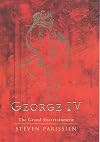
Steven Parissien has managed to write a four-hundred-odd page biography of a thoroughly objectionable man, and make it a rip-roaring page-turner. I am not a big fan of historical biographies but I am very glad I tried this one. I had few previous ideas about George IV and enormously enjoyed Parissien's dissection of his extraordinary personality. It's all here, the insane, irresponsible extravagance, the strange combination of promiscuity and childish histrionics, the fickle political show more meddling, the complete "lack of affect" - inability to see others as real beings with an emotional life apart from one's own concerns: over the course of the book we build an impression which, for all its unavoidable humour, is also quite terrifying. What is quite plain is that this was a man who, if he had not been restrained by a parliament and constitution, could in other circumstances have been another Nero or Idi Amin.
As Parissien traces George's early life, we find ourselves unsure whether the subject's problems are the product of his strict upbringing, or whether George III kept him on such a tight rein because he saw his son's dangerous flaws. No doubt the Prince Regent would have said the former. He was always obsessed with his image and previous biographies have been a little too keen to take him at his own estimation as victim and connoisseur. If Parissien has been cruel, one feels the truth of his portrait, and the sense of a balance redressed in this assessment of his life. There have been some suggestions that the disease porphyria, the cause of George III's supposed "madness", was also implicated in the Prince Regent's behaviour. Parissien does not address this hypothesis; the portrait he paints seems more like a sociopath, or a narcissistic personality disorder. At the distance of 200 years we can see him as a joke; at the time he must have been a nightmare. show less
As Parissien traces George's early life, we find ourselves unsure whether the subject's problems are the product of his strict upbringing, or whether George III kept him on such a tight rein because he saw his son's dangerous flaws. No doubt the Prince Regent would have said the former. He was always obsessed with his image and previous biographies have been a little too keen to take him at his own estimation as victim and connoisseur. If Parissien has been cruel, one feels the truth of his portrait, and the sense of a balance redressed in this assessment of his life. There have been some suggestions that the disease porphyria, the cause of George III's supposed "madness", was also implicated in the Prince Regent's behaviour. Parissien does not address this hypothesis; the portrait he paints seems more like a sociopath, or a narcissistic personality disorder. At the distance of 200 years we can see him as a joke; at the time he must have been a nightmare. show less

Caveats: Having visited English historic homes for my adult life, I have seen many of Canaletto’s Venetian and English paintings and I have also seen many of Hogarth’s paintings, mainly in museums. So although I didn’t see the 2015 exhibition of which this was the catalogue, I really like both of these painters, so this isn’t an objective review of the paintings, which are well reproduced in this Paul Holberton publication.
Canaletto (1697 - 1768) lived in England for about nine years show more from 1746 to 1756, broken by about 18 months return to Venice in 1850-51. Therefore although he is more famous for his Venetian views (verdute), the argument made in the first essay by Steven Parissien is that the English paintings represent Canaletto’s and his patrons view of England as a dynamic, modern nation with a powerful maritime future, both military and commercial. This is persuasively discussed, with brief but telling historical details, although I found Parissien’s quoting from a 2005 exhibition and critics reviews of that exhibition rather laboured (Pat Hardy’s use of quotes in the following essay is far less intrusive).
Canaletto’s London legacy is clearly discussed by Pat Hardy, who cites numerous examples, although the catalogue doesn’t illustrate a number of these. However, a lack of space probably meant that Hardy is unable to really expand with examples upon his statement that the impact of the arrival of Canaletto may have been more fragmented and complicated than may have previously been perceived.
Before leaving Canaletto, I must enthuse about William Marlow’s Capriccio: St Paul’s and a Venetian Canal (c.1795) now at the Tate Britain, which is just a delight and is usefully analysed in both essays.
The third essay, by Jacqueline Riding, explores the 1745 Jacobite rebellion through two famous pictures of Hogarth, O the Roast Beef of Old England and The March of the Guards to Finchley. Over half of this essay provides a history of the 1745 Jacobite rebellion, which whilst very interesting as I had not read such a concise summary before, talks nothing about Hogarth’s art. There follows an interesting interpretation of these pictures, but only passing reference to Canaletto’s influence, in the unconvincing form of the gateway in O the Roast Beef of Old England echoing the arches of bridges in Canaletto’s London pictures.
The final essay by Oliver Cox describes the Georgian interest in King Alfred as an English (Anglo-Saxon) leader who withstood European (Viking) aggression, to mirror Georgians’ concerns about French aggression. I found this is a very interesting historical discussion, with examples from English gardens at Stowe and Stourhead (both National Trust properties).
Overall, this was an interesting book giving real insights into Georgian Britain, but to be read as a collection of essays, suggesting, rather than providing, an overarching argument. show less
Canaletto (1697 - 1768) lived in England for about nine years show more from 1746 to 1756, broken by about 18 months return to Venice in 1850-51. Therefore although he is more famous for his Venetian views (verdute), the argument made in the first essay by Steven Parissien is that the English paintings represent Canaletto’s and his patrons view of England as a dynamic, modern nation with a powerful maritime future, both military and commercial. This is persuasively discussed, with brief but telling historical details, although I found Parissien’s quoting from a 2005 exhibition and critics reviews of that exhibition rather laboured (Pat Hardy’s use of quotes in the following essay is far less intrusive).
Canaletto’s London legacy is clearly discussed by Pat Hardy, who cites numerous examples, although the catalogue doesn’t illustrate a number of these. However, a lack of space probably meant that Hardy is unable to really expand with examples upon his statement that the impact of the arrival of Canaletto may have been more fragmented and complicated than may have previously been perceived.
Before leaving Canaletto, I must enthuse about William Marlow’s Capriccio: St Paul’s and a Venetian Canal (c.1795) now at the Tate Britain, which is just a delight and is usefully analysed in both essays.
The third essay, by Jacqueline Riding, explores the 1745 Jacobite rebellion through two famous pictures of Hogarth, O the Roast Beef of Old England and The March of the Guards to Finchley. Over half of this essay provides a history of the 1745 Jacobite rebellion, which whilst very interesting as I had not read such a concise summary before, talks nothing about Hogarth’s art. There follows an interesting interpretation of these pictures, but only passing reference to Canaletto’s influence, in the unconvincing form of the gateway in O the Roast Beef of Old England echoing the arches of bridges in Canaletto’s London pictures.
The final essay by Oliver Cox describes the Georgian interest in King Alfred as an English (Anglo-Saxon) leader who withstood European (Viking) aggression, to mirror Georgians’ concerns about French aggression. I found this is a very interesting historical discussion, with examples from English gardens at Stowe and Stourhead (both National Trust properties).
Overall, this was an interesting book giving real insights into Georgian Britain, but to be read as a collection of essays, suggesting, rather than providing, an overarching argument. show less
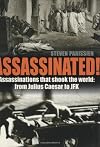
One of the best coffee table books i have ever read. There are a lot of historical people whom I would never have known were it not for this book. Everyone knows the assassination of Julius Caesar, Franz Ferdinand, JFK, Martin Luther King and Abraham Lincoln. But not everyone knew the circumstances surrounding the death of Prime Minister Canalejas, Chancellor Dollfuss, President Verwoerd and UN Mediator Bernadotte. I bet that most people would not even know the last four people I mentioned. show more This is why i appreciate this book so much. I really like the fact that the author did not focus only on who or how the assassination took place. I like how he would give historical backgrounds of the assassinated person as well as the period they live in. I also appreciate how the author discussed the effects of the assassination on the course of history, such as how the assassination of King Faisal II would affect Iraqi history or how the assassination of Lord Moyne affected the partition of Palestine. I highly recommend this book. show less
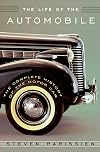
There are few inventions which have done more to define our lives today than the automobile. Because of this, any understanding of the modern world requires understanding the car and how it has changed our lives. Yet for all the promise of its subtitle, Steven Parissien doesn’t do this. His book is not so much a history of the automobile as it is a history of the companies that manufactured them. He provides numerous summaries of the lives of the executives and descriptions of some of the show more key cars their companies produced, but little in the way of the broader social or cultural impact of the car. The driver is almost completely absent from his narrative, reduced in Parissien’s narrative to a lumpenconsumerariat with as much definition as a herd of milling sheep.
But the most disappointing problem with this book is its sheer sloppiness. The book is plagued with minor factual and technical errors, the apparent result less of author ignorance than of poor editing. It gives the entire work a feeling of one of those 1980s American cars Parissien describes as being rushed to market before all of the flaws were ironed out. These flaws are unfortunate, as the author generally comes across as knowledgeable and passionate about his subject, but together they limit his labor to a book that book that only scratches the surface of a deep and fascinating subject. show less
But the most disappointing problem with this book is its sheer sloppiness. The book is plagued with minor factual and technical errors, the apparent result less of author ignorance than of poor editing. It gives the entire work a feeling of one of those 1980s American cars Parissien describes as being rushed to market before all of the flaws were ironed out. These flaws are unfortunate, as the author generally comes across as knowledgeable and passionate about his subject, but together they limit his labor to a book that book that only scratches the surface of a deep and fascinating subject. show less
You May Also Like


Associated Authors
Statistics
- Works
- 21
- Also by
- 1
- Members
- 685
- Popularity
- #36,933
- Rating
- 3.9
- Reviews
- 11
- ISBNs
- 37
- Languages
- 2