

Charlotte Fiell
Author of Design of the 20th Century
About the Author
Charlotte J. Fiell (born 1965) studied at the British Institute, Florence and at Camberwell School of Arts and Crafts, London, where she received a BA (Hons) in the History of Drawing and Printmaking with Material Science. She later trained with Sothby's Educational Studies, also in London. show more Together the Fiells run a design consultancy in London specializing in the sale, acquisition, study and promotion of design artefacts. They have lectured widely, curated a number of exhibitions and written numerous articles and books on design and designers, including Taschen's Charles Rennie Macintosh, William Morris, 1000 Chairs, Design of the 20th Century and Industrial Design A-Z. They have also edited the six-volume Decorative Art series published by Taschen GmbH (Bowker Author Biography) show less
Image credit: dezeen.com
Works by Charlotte Fiell
Women in Design: From Aino Aalto to Eva Zeisel (More than 100 profiles of pioneering women designers, from industrial to fashion design) (2019) 7 copies
Design for the 21st Century (Icons Series): Written by Charlotte Fiell, 2003 Edition, Publisher: Taschen GmbH [Paperback] (2003) 1 copy
Design 20. století 1 copy
Tagged
Common Knowledge
- Canonical name
- Fiell, Charlotte
- Birthdate
- 1965
- Gender
- female
- Education
- Camberwell School of Arts and Crafts (BA|1988)
Sotheby's Institute
The British Institute of Florence - Occupations
- design consultant
publisher
writer
editor - Organizations
- Fiell Publishing Limited
- Relationships
- Fiell, Peter (husband)
- Nationality
- UK
- Places of residence
- Chipping Campden, Gloucestershire, England, UK
- Map Location
- UK
- Associated Place (for map)
- England, UK
Members
Reviews
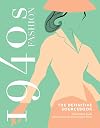
The third (and, hopefully, not the last?) of this series gives us a lot more information than the first or even the second. We’ve got 36 pages of text, and it goes over the many changes the world went through in this decade. The Second World War changed the economy, there were shortages of materials, Paris was invaded, and there were radical changes in gender roles. Women went from needing pretty dresses for visiting and shopping to needing trousers and overalls so they could safely work show more in factories and in the defense industries (my mother was an arc welder in the shipyards, so I heard tales of this in first person, too). The shape of skirts went from full to narrow to accomadate fabric rationing. Hems went up, although not as far as in the 20s. Designers, unable to change silhouettes as they usually did for new seasons, concentrated on buttons, trims, and fabric manipulation to make dresses look new.
The rest of the book is the usual feast of period photos, clothing catalogs, designer drawings, and other period ephemera. There are more pages devoted to accessories and lingerie than in the previous two volumes. I’ve got to give this one a full five stars! l show less
The rest of the book is the usual feast of period photos, clothing catalogs, designer drawings, and other period ephemera. There are more pages devoted to accessories and lingerie than in the previous two volumes. I’ve got to give this one a full five stars! l show less
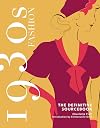
Like her volume on 1920s fashion, this book clocks in at 500 pages, almost all of them photos and drawings from the era. Once again, most of the magazine pages and ads show the back side of the clothing, which I really like as a sewist of old fashioned costume. I found the introduction to be much more interesting than the one in the 20s book; it talks about the newly burgeoning film industry affected women’s dress- French idea and design, slightly changed Hollywood version, home pattern show more with less details. (oh, how I wish Hollywood had costume designs like those these days!) Hollywood fashion was luxurious and extremely glamourous, despite of the Depression (or, perhaps, because of- huge, beautiful movies and larger than life stars to take people’s minds off their money problems) and women sewed up their own versions of backless evening gowns and fake fur stoles. After ten or so years of a boyish figure being the ideal form, women, while still slim, were expected now to have a bustline and hips. Nail polish arrived on the scene, a by-product of the car enamal industry, and eye makeup was everywhere. Four and a half stars. show less
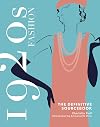
This book presents almost 500 pages of 1920s fashion. It is almost all pictures, though, so calling it a sourcebook is a bit of a misnomer. A visual sourcebook, yes. But with less than a dozen pages of text you don’t learn much about how fashion was changing and how it fit into the changes in life itself during the time. But all the images are either photos or drawn pages of advertisement from the era, so it is a huge resource for modern artists, designers, costumers, and social show more historians. Many of the images show the clothing from the rear as well as the front shot, which makes them invaluable for costumers. Four and a half stars, because I would have liked to have seen more text. show less
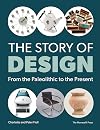
The history of design is as long as the history of humanity, being essentially the story of how all man-made things came into being...
This big (500 pages), beautiful book summarizes the evolution of design from ancient rock and bone tools to modern electronics and 3D printing, and from individually crafted objects of "art" to mass-produced commercial "products."
Organized chronologically, its generous amount of dense text gives surprising depth and historical context, and hundreds of large show more (including full-page), full-color, well-captioned photos illuminate the text. Though not an academic work, it’s a good book for serious (formal or informal) students of design. I do wish it had been a bit less serious, a bit more awe-inducing and inspiring.
(Review based on a copy of the book provided by the publisher.) show less
This big (500 pages), beautiful book summarizes the evolution of design from ancient rock and bone tools to modern electronics and 3D printing, and from individually crafted objects of "art" to mass-produced commercial "products."
Organized chronologically, its generous amount of dense text gives surprising depth and historical context, and hundreds of large show more (including full-page), full-color, well-captioned photos illuminate the text. Though not an academic work, it’s a good book for serious (formal or informal) students of design. I do wish it had been a bit less serious, a bit more awe-inducing and inspiring.
(Review based on a copy of the book provided by the publisher.) show less
You May Also Like


Associated Authors
Statistics
- Works
- 62
- Members
- 3,635
- Popularity
- #6,963
- Rating
- 3.7
- Reviews
- 16
- ISBNs
- 184
- Languages
- 11
- Favorited
- 1