
Averroes (1126–1198)
Author of Averroës on Plato's Republic
About the Author
Averroes is the name in the West of Abu al-Walid Muhammed ibn-Ahmad ibn-Rushd al-Qurtubi, an influential Muslim thinker who integrated Islamic tradition with Greek philosophy. Born in Cordoba, Spain, and educated in Muslim religious, medical, and philosophical studies, he became the chief judge of show more Cordoba and later personal physician to two caliphs. He wrote a series of summaries and commentaries on Aristotle, Plato's Republic, as well as attacks on Avicenna's view of existence. Western Christian philosophers drew inspiration from his interpretation of Aristotle, especially his assertion that reason and philosophy are superior to faith and knowledge founded on faith. Averroes died in Marrakesh, Morocco. (Bowker Author Biography) show less
Image credit: Averroes, detail of the fourteenth-century Florentine artist Andrea Bonaiuto's Triunfo de Santo Tomás.
Works by Averroes
Middle Commentary on Aristotle's De anima (Brigham Young University - Islamic Translation Series) (1986) 33 copies
The Distinguished Jurist's Primer: A Translation of Bidayat Al-Mujtahid (The Great Books of Islamic Civilization) (1994) 19 copies
Averroes' Three Short Commentaries on Aristotle's "Topics," "Rhetoric," and "Poetics (Studies in Islamic Philosophy and (1977) 16 copies
Epitome de Fisica: Filosofia de la naturaleza (Corpus philosophorum Medii Aevi) (Spanish Edition) (1987) 7 copies
Epistle on the Possibility of Conjunction With the Active Intellect (Moreshet Series, V. 7) (1982) 5 copies
al-Bayān wa-al-taḥṣīl wa-al-sharḥ wa-al-tawjīh wa-al-ta‘līl fī masā’il al-mustakhrajah. al-juz’… 4 copies
Faṣl al-maqāl. al-juz’ al-awwal 4 copies
al-Bayān wa-al-taḥṣīl wa-al-sharḥ wa-al-tawjīh wa-al-ta‘līl fī masā’il al-mustakhrajah. al-juz’… 4 copies
al-Bayān wa-al-taḥṣīl wa-al-sharḥ wa-al-tawjīh wa-al-ta‘līl fī masā’il al-mustakhrajah. al-juz’… 4 copies
al-Bayān wa-al-taḥṣīl wa-al-sharḥ wa-al-tawjīh wa-al-ta‘līl fī masā’il al-mustakhrajah. al-juz’… 4 copies
al-Bayān wa-al-taḥṣīl wa-al-sharḥ wa-al-tawjīh wa-al-ta‘līl fī masā’il al-mustakhrajah. al-juz’… 4 copies
Averroe e l'intelletto pubblico: Antologia di scritti di Ibn Rushd sull'anima (Le orme) (1996) 4 copies
al-Bayān wa-al-taḥṣīl wa-al-sharḥ wa-al-tawjīh wa-al-ta‘līl fī masā’il al-mustakhrajah. al-juz’… 3 copies
Tafsir Ma ba'd at-tabi'at Volume 2 3 copies
al-Bayān wa-al-taḥṣīl wa-al-sharḥ wa-al-tawjīh wa-al-ta‘līl fī masā’il al-mustakhrajah. al-juz’… 3 copies
al-Bayān wa-al-taḥṣīl wa-al-sharḥ wa-al-tawjīh wa-al-ta‘līl fī masā’il al-mustakhrajah. al-juz’… 3 copies
al-Bayān wa-al-taḥṣīl wa-al-sharḥ wa-al-tawjīh wa-al-ta‘līl fī masā’il al-mustakhrajah. al-juz’… 3 copies
al-Bayān wa-al-taḥṣīl wa-al-sharḥ wa-al-tawjīh wa-al-ta‘līl fī masā’il al-mustakhrajah. al-juz’… 3 copies
al-Bayān wa-al-taḥṣīl wa-al-sharḥ wa-al-tawjīh wa-al-ta‘līl fī masā’il al-mustakhrajah. al-juz’… 3 copies
al-Bayān wa-al-taḥṣīl wa-al-sharḥ wa-al-tawjīh wa-al-ta‘līl fī masā’il al-mustakhrajah. al-juz’… 3 copies
al-Bayān wa-al-taḥṣīl wa-al-sharḥ wa-al-tawjīh wa-al-ta‘līl fī masā’il al-mustakhrajah. al-juz’… 3 copies
al-Bayān wa-al-taḥṣīl wa-al-sharḥ wa-al-tawjīh wa-al-ta‘līl fī masā’il al-mustakhrajah. al-juz’… 3 copies
al-Bayān wa-al-taḥṣīl wa-al-sharḥ wa-al-tawjīh wa-al-ta‘līl fī masā’il al-mustakhrajah. al-juz’… 3 copies
al-Bayān wa-al-taḥṣīl wa-al-sharḥ wa-al-tawjīh wa-al-ta‘līl fī masā’il al-mustakhrajah. al-juz’… 3 copies
al-Bayān wa-al-taḥṣīl wa-al-sharḥ wa-al-tawjīh wa-al-ta‘līl fī masā’il al-mustakhrajah. al-juz’… 3 copies
Bidayatul Mujtahid (Jilid 2) 2 copies
الكشف عن مناهج الأدلة في عقائد الملة 2 copies
Tafsir Ma ba'd at-tabi'at. 4th ed. 2 copies
Die entscheidende Abhandlung und die Urteilsfällung über das Verhältnis von Gesetz und Philosophie Arabisch-deutsch (2009) 2 copies
La Psicología de Averroes. Comentario Al Libro Sobre el Alma de Aristóteles (AULA ABIERTA) (1987) 2 copies
Knjiga prosudbene rasprave 1 copy
Die entscheidende Abhandlung und die Urteilsfällung über das Verhältnis von Gesetz und Philosophie 1 copy
تلخيص الخطابة 1 copy
H4.1: IAverrois Cordubensis Commentarium medium in Aristotelis De generatione et corruptione libros 1 copy
Works of Averroes 1 copy
کتاب الکلیات 1 copy
Jag har en dröm 1 copy
بداية المجتهد 1 copy
Commentarium Magnum In Aristotelis Physicorum Librum Septimum (Vindobonensis, lat. 2334) (2007) 1 copy
El libro de las generalidades de la medicina (Al-Andalus. Textos y Estudios) (Spanish Edition) (2003) 1 copy
كتاب النفس 1 copy
The Distinguished Jurist's Primer - Vol 1: A Translation of Bidayat Al Mujtahid Wa Nihayat Al Muqtasid (2023) 1 copy
The Distinguished Jurist's Primer - Vol 2: A Translation of Bidayat Al Mujtahid wa Nihayat Al Muqtasid (2023) 1 copy
On Aristotle's "Metaphysics": An Annotated Translation of the So-Called "Epitome" (Scientia Graeco-Arabica) (2010) 1 copy
Associated Works
Philosophy in the Middle Ages: The Christian, Islamic, and Jewish Traditions (1983) — Contributor — 496 copies, 2 reviews
The Sheed and Ward Anthology of Catholic Philosophy (A Sheed & Ward Classic) (2005) — Contributor — 33 copies
Tagged
Common Knowledge
- Legal name
- أبو الوليد محمد بن احمد بن رشد
- Other names
- Ibn Rushd
ابن رشد
أبو الوليد محمد ابن احمد ابن رشد - Birthdate
- 1126-04-14
- Date of death
- 1198-12-10
- Gender
- male
- Occupations
- philosopher
- Relationships
- Ibn Tufail (teacher)
- Nationality
- Spain
- Birthplace
- Cordoba, Al Andalus
- Places of residence
- Cordoba, Spain
Marrakech, Morocco - Place of death
- Marrakech, Morocco
Members
Reviews
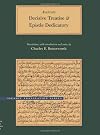
On Philosophical Tools, September 12, 2006
This is an extraordinary work. Averroes is here presenting a 'legal' case against the art of Kalam (speculative theology) with the Islamic Jurists sitting in Judgment. But, and this is important, this argument is not against religion per se. Now, the Latin West was very aware of the Aristotelian writings of Averroes but unaware of his other writings. The Christians knew his Commentaries and even of his controversy with Ghazali. But they were largely show more unaware of his works that attempt to 'harmonize' philosophy and revelation (i.e., religious law). The 'Decisive Treatise' is among the most important of these. Here Averroes is at pains to show that not only isn't philosophy forbidden by the Koran; it is in fact commanded - but only for some!
Humanity is divided into three groups by Averroes. There are the common people (the 'people of rhetoric'), people of uncommon discernment (the 'people of dialectic'), and philosophers (the 'people of demonstration'). It is a pyramid, with the ordinary people at the base and the falasifa (i.e., Islamic philosophers) at the summit. But this is no celebration of diversity, the ideal that hovers over these pages is Ijma - consensus. Averroes is charging the 'people of dialectic' with the ruin of consensus. What ruins consensus? Interpretation. The 'people of interpretation' (both Falasifa and Theologians) must keep the vagaries of interpretation from the people. In this the Islamic Theologians have, according to our author, failed miserably. The Falasifa are let off with a slap.
Now, to introduce a schema not entirely foreign to the text, one could say that in the medieval Islamic landscape there are basically three institutions: Law, Theology, Philosophy. What Averroes intends to do is forbid access to theological and philosophical speculation (i.e., interpretation) to the people. Okay, but why involve the Islamic Jurists? Because the Theologians have proven incapable of keeping their interpretational arguments from the people. This has two consequences -the ruin of consensus, and the rise of unbelief- and they are both bad. The Jurists are interjected into these interpretational arguments in order to keep these disputes from the common people. The Jurists, guided by the falasifa, are to decide what can and cannot be publicly said. One is tempted to say that this in effect leaves the falasifa as the only competent interpreter.
But it seems it would be a mistake to say that Averroes intends to do away with the Islamic Theologians. There are things in the Koran about which demonstrative certainty is impossible, thus there must be discussion of the (merely) possible - this is the legitimate realm of dialectics. It is only the overriding importance of Ijma (consensus) in the Islamic context that makes the Jurists more 'important' than the Theologians. The theologians discuss possibilities that should only be heard by a few; the Law (i.e., the Koran) however, is for all. But this last objection can be aimed at the falasifa too. The people are only capable of hearing the Law through rhetorical imagery, not speculative interpretation. Thus the theoretical (whether demonstrative or dialectical) can never be a matter of consensus.
So, if Law is for all and interpretation is not why should the Jurists consent to the leadership of the Falasifa? -Two reasons. First, the people are not One. The Law (i.e., Koran) is intended for all but It relates to each type differently. Secondly, there are passages in the Koran Itself about which there is 'legitimate' dispute. Speculation, whether of philosophy or Kalam, is required and thus not to be silenced if it is hidden from the people. Again, the Law (Koran) is One, and It has one intention. It intends "only to teach true science and true practice." But this Intention manifests itself in various ways. For this the finesse and moderation of philosophy -the first well beyond the ability of the Jurists, the latter well beyond the ability of the theologians- is required.
Averroes concludes his 'case' by noting that more could be said - and then he doesn't say it. In this manner Averroes demonstrates the restraint of philosophy vis-à-vis the Islamic Theologians.
But this review is not under any such constraint; thus I add a few points. Interpretation is only dangerous if it becomes generally known. The speculations of the philosophers are not a problem because they and they alone know how to hide. One is tempted to ask whether this is 'proven' or 'falsified' by the fact that elements of the Averroistic position are taken up in the Medieval Latin West (e.g., Siger, Marsilius, Dante) that eventually come to 'fruition' in Machiavelli and then the Enlightenment. It is not simply a mistake to consider Averroes the great-grandfather of the European Enlightenment. But the Latins did not know the whole Averroes. Thus the heirs of this misunderstanding did not realize that the Enlightenment that Averroes foresaw was never meant to be Universal. The line of descent that one can draw from the Latin radical Averroists to the Enlightenment ends by making it a point of both honor and theory to say everything to everyone. -Averroes would have been appalled.
As to the controversy between Averroes and Ghazali one can briefly say that Averroes is an inverse Ghazali; the latter demands the censure of philosophy while the former demands the censure of Kalam. In both cases consensus is not to be disturbed. Thus the argument between them is this: how is speculative mania to precede in a History in which consensus must remain undisturbed? Averroes chose the Jurists because Ghazali's choice -theological speculation- led to dissension in the community. Unfortunately, the 'secularists' in the Latin West (in the line of Radical Averrosm) will, after severing all ties to theology, take to their own brand of 'speculation'. Thus Ideology replaced Revelation and philosophy goes from pillar to post. ...Perhaps there will soon be a genuine philosopher calling for an 'alliance' with religion? And why not? There are, after all, ultimately only two things of which we have been speaking: philosophy and the tools of philosophy (i.e., theology and the political).
What theoretical speculation intends is the Truth; what the Law (understood as Nomos) intends is consensus. However, Science and Philosophy are cumulative, speculation cannot be stopped. There is no 'consensus' in theoretical matters. But Revelation (Law) -whether Jewish, Christian or Islamic- routinely claims to be at an end. Thus just as speculation (philosophical mania) and religious Law could not sync up - one wonders how long the 'honeymoon' between philosophy and secular 'enlightened' law will last. The Laws (whether religious or secular) will always have the forbidden. But philosophical mania forbids itself nothing... Even though Averroes is at pains to argue that philosophers possess theoretical virtue while the jurists possess practical virtue and thus can be reconciled we must note that this would only be true if theoretical and practical virtue were themselves reconcilable. But this could only be true if mania and moderation were reconcilable...
So, "whenever demonstration leads to something different from the apparent sense of the Law, that apparent sense admits of interpretation..." In other words, one finesses (or creates) the 'reconciliation'. But Creativity was the Ideal of the theologians (i.e., Divine Creativity) just as creativity is today an idol of 'enlightened' modernity. But for the medieval Aristotelians creativity (making) is opposed to knowing, and thus something of a bête noire. Creativity is a sign that something has gone wrong. Thus when Averroes, who all along in this text had insisted upon the tripartite division of humanity (the rhetorical, dialectical, demonstrative), at the very end creates a fourth type (for the Jurists) between the 'low level' of the traditionalists and the 'turbulence' of the theologians we are perhaps made aware of the ad hoc nature of this 'alliance' between Philosophy and Jurists.
Of this 'solution' we can say that the Law (Koran) is divided in two (surface and hidden) but humanity is divided in three. There are two interpretive classes (Demonstrative, Dialectical) and two classes that deal with the apparent/surface (Dialectical, Rhetorical) and the dialectical participates in both. Dialectic is neither demonstrative theory nor simple faith but a mixture of both. All the doctrinal problems that arise are due to the dialectical class. One closes this book wondering how the invention of a 'fourth type' of humanity -another mixture- would solve anything. After all, as Averroes says, demonstrative "interpretation ought not to be declared to those adept in dialectic, not to mention the multitude." Thus we should perhaps not mention that any alliance with philosophy (whether consisting of theologians or politicos) is an alliance in name only.
The major fault line in this alliance is best exposed by considering the fact that sound interpretation is not the same as true interpretation. The Jurists are concerned with behavior and results while the philosophers are concerned with a Truth that the Jurists (or our modern politicos) cannot possibly understand. It is in the end this lack of understanding -"and that will be grasped after the slightest examination by anyone who is cognizant of the condition of demonstration"- that dooms all philosophical alliances...
This brief essay by Averroes is magnificent; it pulls back the curtain, however briefly, on something that is rarely seen. Look away if you can. The Islamic Translation Series and C. E. Butterworth have our thanks. show less
This is an extraordinary work. Averroes is here presenting a 'legal' case against the art of Kalam (speculative theology) with the Islamic Jurists sitting in Judgment. But, and this is important, this argument is not against religion per se. Now, the Latin West was very aware of the Aristotelian writings of Averroes but unaware of his other writings. The Christians knew his Commentaries and even of his controversy with Ghazali. But they were largely show more unaware of his works that attempt to 'harmonize' philosophy and revelation (i.e., religious law). The 'Decisive Treatise' is among the most important of these. Here Averroes is at pains to show that not only isn't philosophy forbidden by the Koran; it is in fact commanded - but only for some!
Humanity is divided into three groups by Averroes. There are the common people (the 'people of rhetoric'), people of uncommon discernment (the 'people of dialectic'), and philosophers (the 'people of demonstration'). It is a pyramid, with the ordinary people at the base and the falasifa (i.e., Islamic philosophers) at the summit. But this is no celebration of diversity, the ideal that hovers over these pages is Ijma - consensus. Averroes is charging the 'people of dialectic' with the ruin of consensus. What ruins consensus? Interpretation. The 'people of interpretation' (both Falasifa and Theologians) must keep the vagaries of interpretation from the people. In this the Islamic Theologians have, according to our author, failed miserably. The Falasifa are let off with a slap.
Now, to introduce a schema not entirely foreign to the text, one could say that in the medieval Islamic landscape there are basically three institutions: Law, Theology, Philosophy. What Averroes intends to do is forbid access to theological and philosophical speculation (i.e., interpretation) to the people. Okay, but why involve the Islamic Jurists? Because the Theologians have proven incapable of keeping their interpretational arguments from the people. This has two consequences -the ruin of consensus, and the rise of unbelief- and they are both bad. The Jurists are interjected into these interpretational arguments in order to keep these disputes from the common people. The Jurists, guided by the falasifa, are to decide what can and cannot be publicly said. One is tempted to say that this in effect leaves the falasifa as the only competent interpreter.
But it seems it would be a mistake to say that Averroes intends to do away with the Islamic Theologians. There are things in the Koran about which demonstrative certainty is impossible, thus there must be discussion of the (merely) possible - this is the legitimate realm of dialectics. It is only the overriding importance of Ijma (consensus) in the Islamic context that makes the Jurists more 'important' than the Theologians. The theologians discuss possibilities that should only be heard by a few; the Law (i.e., the Koran) however, is for all. But this last objection can be aimed at the falasifa too. The people are only capable of hearing the Law through rhetorical imagery, not speculative interpretation. Thus the theoretical (whether demonstrative or dialectical) can never be a matter of consensus.
So, if Law is for all and interpretation is not why should the Jurists consent to the leadership of the Falasifa? -Two reasons. First, the people are not One. The Law (i.e., Koran) is intended for all but It relates to each type differently. Secondly, there are passages in the Koran Itself about which there is 'legitimate' dispute. Speculation, whether of philosophy or Kalam, is required and thus not to be silenced if it is hidden from the people. Again, the Law (Koran) is One, and It has one intention. It intends "only to teach true science and true practice." But this Intention manifests itself in various ways. For this the finesse and moderation of philosophy -the first well beyond the ability of the Jurists, the latter well beyond the ability of the theologians- is required.
Averroes concludes his 'case' by noting that more could be said - and then he doesn't say it. In this manner Averroes demonstrates the restraint of philosophy vis-à-vis the Islamic Theologians.
But this review is not under any such constraint; thus I add a few points. Interpretation is only dangerous if it becomes generally known. The speculations of the philosophers are not a problem because they and they alone know how to hide. One is tempted to ask whether this is 'proven' or 'falsified' by the fact that elements of the Averroistic position are taken up in the Medieval Latin West (e.g., Siger, Marsilius, Dante) that eventually come to 'fruition' in Machiavelli and then the Enlightenment. It is not simply a mistake to consider Averroes the great-grandfather of the European Enlightenment. But the Latins did not know the whole Averroes. Thus the heirs of this misunderstanding did not realize that the Enlightenment that Averroes foresaw was never meant to be Universal. The line of descent that one can draw from the Latin radical Averroists to the Enlightenment ends by making it a point of both honor and theory to say everything to everyone. -Averroes would have been appalled.
As to the controversy between Averroes and Ghazali one can briefly say that Averroes is an inverse Ghazali; the latter demands the censure of philosophy while the former demands the censure of Kalam. In both cases consensus is not to be disturbed. Thus the argument between them is this: how is speculative mania to precede in a History in which consensus must remain undisturbed? Averroes chose the Jurists because Ghazali's choice -theological speculation- led to dissension in the community. Unfortunately, the 'secularists' in the Latin West (in the line of Radical Averrosm) will, after severing all ties to theology, take to their own brand of 'speculation'. Thus Ideology replaced Revelation and philosophy goes from pillar to post. ...Perhaps there will soon be a genuine philosopher calling for an 'alliance' with religion? And why not? There are, after all, ultimately only two things of which we have been speaking: philosophy and the tools of philosophy (i.e., theology and the political).
What theoretical speculation intends is the Truth; what the Law (understood as Nomos) intends is consensus. However, Science and Philosophy are cumulative, speculation cannot be stopped. There is no 'consensus' in theoretical matters. But Revelation (Law) -whether Jewish, Christian or Islamic- routinely claims to be at an end. Thus just as speculation (philosophical mania) and religious Law could not sync up - one wonders how long the 'honeymoon' between philosophy and secular 'enlightened' law will last. The Laws (whether religious or secular) will always have the forbidden. But philosophical mania forbids itself nothing... Even though Averroes is at pains to argue that philosophers possess theoretical virtue while the jurists possess practical virtue and thus can be reconciled we must note that this would only be true if theoretical and practical virtue were themselves reconcilable. But this could only be true if mania and moderation were reconcilable...
So, "whenever demonstration leads to something different from the apparent sense of the Law, that apparent sense admits of interpretation..." In other words, one finesses (or creates) the 'reconciliation'. But Creativity was the Ideal of the theologians (i.e., Divine Creativity) just as creativity is today an idol of 'enlightened' modernity. But for the medieval Aristotelians creativity (making) is opposed to knowing, and thus something of a bête noire. Creativity is a sign that something has gone wrong. Thus when Averroes, who all along in this text had insisted upon the tripartite division of humanity (the rhetorical, dialectical, demonstrative), at the very end creates a fourth type (for the Jurists) between the 'low level' of the traditionalists and the 'turbulence' of the theologians we are perhaps made aware of the ad hoc nature of this 'alliance' between Philosophy and Jurists.
Of this 'solution' we can say that the Law (Koran) is divided in two (surface and hidden) but humanity is divided in three. There are two interpretive classes (Demonstrative, Dialectical) and two classes that deal with the apparent/surface (Dialectical, Rhetorical) and the dialectical participates in both. Dialectic is neither demonstrative theory nor simple faith but a mixture of both. All the doctrinal problems that arise are due to the dialectical class. One closes this book wondering how the invention of a 'fourth type' of humanity -another mixture- would solve anything. After all, as Averroes says, demonstrative "interpretation ought not to be declared to those adept in dialectic, not to mention the multitude." Thus we should perhaps not mention that any alliance with philosophy (whether consisting of theologians or politicos) is an alliance in name only.
The major fault line in this alliance is best exposed by considering the fact that sound interpretation is not the same as true interpretation. The Jurists are concerned with behavior and results while the philosophers are concerned with a Truth that the Jurists (or our modern politicos) cannot possibly understand. It is in the end this lack of understanding -"and that will be grasped after the slightest examination by anyone who is cognizant of the condition of demonstration"- that dooms all philosophical alliances...
This brief essay by Averroes is magnificent; it pulls back the curtain, however briefly, on something that is rarely seen. Look away if you can. The Islamic Translation Series and C. E. Butterworth have our thanks. show less

EXPOSICIÓN DE LA REPÚBLICA DE PLATÓN
La Exposición de la «República» de Platón de
Averroes es una de las obras capitales del
pensamiento político medieval. Pese a inspirarse
en el famoso diálogo de Platón, poco más de la
tercera parte procede de aquella obra. Su
originalidad aparece, ante todo, a la hora de
enfrentarse con la realidad social del mundo
islámico y del andalusí de su tiempo con un
realismo político absoluto, sin una sola
concesión al legitimismo monárquico
musulmán, ni show more siquiera a sus señores los
príncipes almohades. Lo más que hace es
dedicar obra tan crítica al sultán
Abū Yūsuf Ya'qub al-Mansur,
el vencedor de los cristianos en Alarcos. Así,
juzga los sistemas políticos islámicos como
timocracias en el mejor de los casos, y como
oligarquías, demagogias y tiranías en los más de
ellos. «No hay peor condición que la del
tirano», escribe reiteradamente. Destaca la
luego famosa dialéctica del amo y del esclavo, de
origen platónico, que Hegel haría famosa. Y es
el primero-y el único- de los pensadores del
Medievo que denuncia la situación de la mujer
en aquella sociedad, en la que se parecen a las
plantas, escribe, ya que no permite su total
realización personal y social. Su sociedad
modelo sería aquella en la que se realizara
libremente el orden necesario, en la que no se
distinguiera lo mío de lo tuyo, y en la que
nadie se considerase ajeno a la comunidad de
todos los hombres. show less
La Exposición de la «República» de Platón de
Averroes es una de las obras capitales del
pensamiento político medieval. Pese a inspirarse
en el famoso diálogo de Platón, poco más de la
tercera parte procede de aquella obra. Su
originalidad aparece, ante todo, a la hora de
enfrentarse con la realidad social del mundo
islámico y del andalusí de su tiempo con un
realismo político absoluto, sin una sola
concesión al legitimismo monárquico
musulmán, ni show more siquiera a sus señores los
príncipes almohades. Lo más que hace es
dedicar obra tan crítica al sultán
Abū Yūsuf Ya'qub al-Mansur,
el vencedor de los cristianos en Alarcos. Así,
juzga los sistemas políticos islámicos como
timocracias en el mejor de los casos, y como
oligarquías, demagogias y tiranías en los más de
ellos. «No hay peor condición que la del
tirano», escribe reiteradamente. Destaca la
luego famosa dialéctica del amo y del esclavo, de
origen platónico, que Hegel haría famosa. Y es
el primero-y el único- de los pensadores del
Medievo que denuncia la situación de la mujer
en aquella sociedad, en la que se parecen a las
plantas, escribe, ya que no permite su total
realización personal y social. Su sociedad
modelo sería aquella en la que se realizara
libremente el orden necesario, en la que no se
distinguiera lo mío de lo tuyo, y en la que
nadie se considerase ajeno a la comunidad de
todos los hombres. show less

EXPOSICIÓN DE LA "REPÚBLICA" DE PLATÓN
La Exposición de la «República de Platón de
Averroes es una de las obras capitales del
pensamiento político medieval. Pese a inspirar
en el famoso diálogo de Platón, poco más de la
tercera parte procede de aquella obra. Su
originalidad aparece, ante todo, a la hora de
enfrentarse con la realidad social del mundo
islámico y del andalusí de su tiempo con un
realismo político absoluto, sin una sola
concesión al legitimismo monarquico
musulmán, ni show more siquiera a sus señores los
príncipes almohades. Lo más que hace es
dedicar obra tan crítica al sultán
Abu Yusuf Yaqūb al-Mansur,
el vencedor de los cristianos en Alarcos. Así,
juzga a los sistemas políticos islámicos como
timocracias en el mejor de los casos, y como
oligarquías, demagogias y tiranías en los más de
ellos. «No hay peor condición que la del
tirano», escribe reiteradamente. Destaca la luego
famosa dialéctica del amo y del esclavo, de
origen platónico, que Hegel haría famosa. Y es
el primero y el único- de los pensadores del
Medievo que denuncia la situación de la mujer
en aquella sociedad, en la que se parecen a las
plantas, escribe, ya que no permite su total
realización personal y social. Su sociedad
modelo sería aquella en la que se realizara
libremente el orden necesario, en la que no se
distinguiera lo mio de lo tuyo, y en la que
nadie se considerase ajeno a la comunidad de
todos los hombres. show less
La Exposición de la «República de Platón de
Averroes es una de las obras capitales del
pensamiento político medieval. Pese a inspirar
en el famoso diálogo de Platón, poco más de la
tercera parte procede de aquella obra. Su
originalidad aparece, ante todo, a la hora de
enfrentarse con la realidad social del mundo
islámico y del andalusí de su tiempo con un
realismo político absoluto, sin una sola
concesión al legitimismo monarquico
musulmán, ni show more siquiera a sus señores los
príncipes almohades. Lo más que hace es
dedicar obra tan crítica al sultán
Abu Yusuf Yaqūb al-Mansur,
el vencedor de los cristianos en Alarcos. Así,
juzga a los sistemas políticos islámicos como
timocracias en el mejor de los casos, y como
oligarquías, demagogias y tiranías en los más de
ellos. «No hay peor condición que la del
tirano», escribe reiteradamente. Destaca la luego
famosa dialéctica del amo y del esclavo, de
origen platónico, que Hegel haría famosa. Y es
el primero y el único- de los pensadores del
Medievo que denuncia la situación de la mujer
en aquella sociedad, en la que se parecen a las
plantas, escribe, ya que no permite su total
realización personal y social. Su sociedad
modelo sería aquella en la que se realizara
libremente el orden necesario, en la que no se
distinguiera lo mio de lo tuyo, y en la que
nadie se considerase ajeno a la comunidad de
todos los hombres. show less

' C’est en 1169 qu’a lieu l’entrevue célèbre entre Averroès et le prince Abû Yûsuf Ya’qûb : le prince souhaitant qu’on lui explique les textes d’Aristote, Averroès se voit charger de faire le commentaire de toute l’œuvre du philosophe grec. C’est un tournant majeur dans l’histoire de la pensée européenne,
car les textes d’Aristote traduits et commentés en arabe entraînent ainsi au Moyen Age une floraison de nouvelles interprétations et réfutations. '
car les textes d’Aristote traduits et commentés en arabe entraînent ainsi au Moyen Age une floraison de nouvelles interprétations et réfutations. '
Sep 24, 2010French
Lists
You May Also Like


Associated Authors
Statistics
- Works
- 134
- Also by
- 2
- Members
- 885
- Popularity
- #28,943
- Rating
- 4.1
- Reviews
- 5
- ISBNs
- 119
- Languages
- 10
- Favorited
- 2