
Charles Fernyhough
Author of Pieces of Light: How the New Science of Memory Illuminates the Stories We Tell About Our Pasts
About the Author
Image credit: www.charlesfernyhough.com/
Works by Charles Fernyhough
Pieces of Light: How the New Science of Memory Illuminates the Stories We Tell About Our Pasts (2012) 163 copies, 3 reviews
A Thousand Days of Wonder: A Scientist's Chronicle of His Daughter's Developing Mind (2009) 62 copies, 2 reviews
Tagged
Common Knowledge
- Birthdate
- 1968
- Gender
- male
- Occupations
- psychologist
developmental psychologist - Nationality
- United Kingdom
- Birthplace
- Essex, England, UK
- Associated Place (for map)
- Essex, England, UK
Members
Reviews
Pieces of Light: How the New Science of Memory Illuminates the Stories We Tell About Our Pasts by Charles Fernyhough

I set out to write about some science, and I ended up by telling a lot of stories. In memory, more than in any other aspect of human experience, narrative seems to be the appropriate medium.
Narrative does seem relevant, since the new plasticity theory of memory resembles storytelling -- that memory isn't a finished "DVD" we simply re-watch, but rather is a collection of data elements that we imaginatively reconstruct, in real time, during each recollection. And Fernyhough's narrative is show more interesting, with the exception of too-long recaps of experiments with his own personal memories (which, with one exception, are so inward-focused and blinder-ed that I couldn’t play along with my own memories). He also profiles the experiences of a handful of people with memory disorders and analyzes characters' experiences from literature -- most notably Proust’s use of a madeleine to illustrate how strongly our senses evoke memory.
But I came to this book expecting a lot more of the "science" of the subtitle. Fernyhough touches on a number of promising topics: children's first memories and adult memories of childhood; conflicting sibling memories; "flashbulb memories" (the where-were-you-when-[x]-happened memories of high-emotion historical events); the correlation between older age (where there are fewer new experiences/new memories) and the faster passage of time; false memory; amnesia; and dementia. But they're only touches. I encountered just one particularly new takeaway: an exploration into why memories feel *familiar* (i.e. feel like they indeed happened to us rather than were just witnessed by us, e.g. in a dream) ... which led to a theory that deja vu may be a miscue where this familiarity is evoked during encoding the initial experience vs. later, during the remembered experience ... and led to a theory that PTSD may be another miscue that makes an experience feel like it's happening again vs. being recalled.
Overall, this is recommended for readers interested in a mostly psychological and personal, not biological, exploration of memory. Actually, Julian Barnes’s The Sense of an Ending is a much more interesting narrative of memory.
(Review based on an advance reading copy provided by the publisher.) show less
Narrative does seem relevant, since the new plasticity theory of memory resembles storytelling -- that memory isn't a finished "DVD" we simply re-watch, but rather is a collection of data elements that we imaginatively reconstruct, in real time, during each recollection. And Fernyhough's narrative is show more interesting, with the exception of too-long recaps of experiments with his own personal memories (which, with one exception, are so inward-focused and blinder-ed that I couldn’t play along with my own memories). He also profiles the experiences of a handful of people with memory disorders and analyzes characters' experiences from literature -- most notably Proust’s use of a madeleine to illustrate how strongly our senses evoke memory.
But I came to this book expecting a lot more of the "science" of the subtitle. Fernyhough touches on a number of promising topics: children's first memories and adult memories of childhood; conflicting sibling memories; "flashbulb memories" (the where-were-you-when-[x]-happened memories of high-emotion historical events); the correlation between older age (where there are fewer new experiences/new memories) and the faster passage of time; false memory; amnesia; and dementia. But they're only touches. I encountered just one particularly new takeaway: an exploration into why memories feel *familiar* (i.e. feel like they indeed happened to us rather than were just witnessed by us, e.g. in a dream) ... which led to a theory that deja vu may be a miscue where this familiarity is evoked during encoding the initial experience vs. later, during the remembered experience ... and led to a theory that PTSD may be another miscue that makes an experience feel like it's happening again vs. being recalled.
Overall, this is recommended for readers interested in a mostly psychological and personal, not biological, exploration of memory. Actually, Julian Barnes’s The Sense of an Ending is a much more interesting narrative of memory.
(Review based on an advance reading copy provided by the publisher.) show less
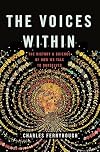
The Voices Within
Charles Fernyhough
6/4/2017
Subtitle: The History and Science of How We Talk to Ourselves
This psychological study ranges widely, from imaging studies of the brain, to literature and movies, exploring the phenomenon of inner speech. He begins with development, and argues that inner speech is an early development in childhood. He reminds the reader that almost everyone had an imaginary friend at some point when growing up. He thinks that the development of inner speech broadly show more follows the account given by Lev Vygotsky, a contemporary of Piaget, who thinks inner speech is dialogic; that is, it presumes a social interaction, and is not a egocentric commentary. The author describes the process of Descriptive Experience Sampling, in which subjects are given a beeper, and they write down what they are experiencing at the moment the beeper sounds. This method is the basis for neuroimaging of brain pathways in inner speech. The book is dense with ideas and facts, difficult to summarize.
I found it fascinating that St Augustine, writing in 385 AD, was astonished that Bishop Ambrose of Milan read silently. The ancients before that all read aloud, thinking of reading more as declaiming
There are many people who hear voices without having schizophrenia, so many that there are support groups and a weblog - the hearing voices movement
Fiction writers may imagine their characters speaking to them, Ray Bradbury was certain of it. show less
Charles Fernyhough
6/4/2017
Subtitle: The History and Science of How We Talk to Ourselves
This psychological study ranges widely, from imaging studies of the brain, to literature and movies, exploring the phenomenon of inner speech. He begins with development, and argues that inner speech is an early development in childhood. He reminds the reader that almost everyone had an imaginary friend at some point when growing up. He thinks that the development of inner speech broadly show more follows the account given by Lev Vygotsky, a contemporary of Piaget, who thinks inner speech is dialogic; that is, it presumes a social interaction, and is not a egocentric commentary. The author describes the process of Descriptive Experience Sampling, in which subjects are given a beeper, and they write down what they are experiencing at the moment the beeper sounds. This method is the basis for neuroimaging of brain pathways in inner speech. The book is dense with ideas and facts, difficult to summarize.
I found it fascinating that St Augustine, writing in 385 AD, was astonished that Bishop Ambrose of Milan read silently. The ancients before that all read aloud, thinking of reading more as declaiming
There are many people who hear voices without having schizophrenia, so many that there are support groups and a weblog - the hearing voices movement
Fiction writers may imagine their characters speaking to them, Ray Bradbury was certain of it. show less
A Thousand Days of Wonder: A Scientist's Chronicle of His Daughter's Developing Mind by Charles Fernyhough
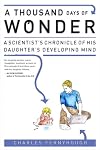
I picked this up as the grandparent of a 4- and a 2-year-old, to gain a better understanding of their development. Altho interesting, Fernyhough's narrative shifts confusingly from professional observer to loving parent. Probably for the sake of clarity, after a few examples of Athena's early lisping and inverted sentences, he transcribes daughter Athena's speech into perfectly clear English making her seem older than she is. This apparent precociousness creates a sense of overly involved show more parenting. As with Fernyhough's predecessors in the art of studying one's own child, the question arises of how the child's development may be manipulated by this intrusion. show less
Pieces of Light: How the New Science of Memory Illuminates the Stories We Tell about Our Pasts by Charles Fernyhough
I bought this book after hearing an intriguing interview with the author on my local public radio station. Many of the topics he discusses are fascinating and thought-provoking, but I found the book tiresome in some respects. Specifically, rather than focusing on the scientific evidence, Fernyhough mixes in a lot of personal stories, some in much more detail (especially at the beginning of the book) than I would have liked. He also includes quotes from novels, which I found much more show more engaging. But the personal stories and digressions, which Fernyhough no doubt would claim bring to life some of the points he is trying to make, gave me the feeling that he was trying to enlarge what could have been a long article into a reasonably sized book. Could have been just me.
Fernyhough's topic is what he calls autobiographical memory, our memories of what happened to us. He distinguishes semantic memory, or the memory of facts, from episodic memory, or the memory of events. As he writes, "Our memory for the events of our own lives involves the integration of details of what happened (episodic memory) with long-term knowledge about the facts of our lives (a kind of autobiographical semantic memory." (pp. 12-13) That is, I know (semantic memory) that I was in kindergarten when I had my tonsils out, but I remember and can picture myself (episodic memory) having ice cream for breakfast afterwards. (See, I can use personal examples too!) He also distinguishes between conscious or explicit memory and unconscious or implicit memory.
So what are some of his most interesting points? The biggest one is that we do not actually store memories in a complete form in our brains. Instead, every time we recall something we are recreating that memory not just from what we "remember" but from the perspective of who we are today and of all the other times we have recalled that memory. Each time we remember something we are adding to the way we will remember it the next time; in essence, we construct a memory anew each time we access it. Another point I found fascinating is that the brain structures that are involved in memory are also involved in thinking about the future (which Fernyhough points out are both imaginative processes) and that one evolutionary role of memory may have been to help us plan for the future.
Fernyhough covers a variety of other topics, all related to "new research in cognitive neuroscience the discipline that integrates findings from experimental psychology, neuroimaging and neuropsychology (studies of brain damage)." (pp. 14-15) Specifically, he discusses how our senses, especially smell and hearing, trigger memories; at what age children start having autobiographical memories, and whether this is related to their ability to express them; how we can remember things completely wrong, or things that never happened; traumatic memories, whether they are more likely to be accurate, and how they might be minimized if they become obsessive; why our memories are strongest of our late teenage and early adult years; and what happens to our memory as we age.
There's a lot that's worth reading in this book; I just found it annoying to have to read so much about Fernyhough and his family. For those who want to skip the book, but get the main ideas, check out this link to the radio program I heard. show less
Fernyhough's topic is what he calls autobiographical memory, our memories of what happened to us. He distinguishes semantic memory, or the memory of facts, from episodic memory, or the memory of events. As he writes, "Our memory for the events of our own lives involves the integration of details of what happened (episodic memory) with long-term knowledge about the facts of our lives (a kind of autobiographical semantic memory." (pp. 12-13) That is, I know (semantic memory) that I was in kindergarten when I had my tonsils out, but I remember and can picture myself (episodic memory) having ice cream for breakfast afterwards. (See, I can use personal examples too!) He also distinguishes between conscious or explicit memory and unconscious or implicit memory.
So what are some of his most interesting points? The biggest one is that we do not actually store memories in a complete form in our brains. Instead, every time we recall something we are recreating that memory not just from what we "remember" but from the perspective of who we are today and of all the other times we have recalled that memory. Each time we remember something we are adding to the way we will remember it the next time; in essence, we construct a memory anew each time we access it. Another point I found fascinating is that the brain structures that are involved in memory are also involved in thinking about the future (which Fernyhough points out are both imaginative processes) and that one evolutionary role of memory may have been to help us plan for the future.
Fernyhough covers a variety of other topics, all related to "new research in cognitive neuroscience the discipline that integrates findings from experimental psychology, neuroimaging and neuropsychology (studies of brain damage)." (pp. 14-15) Specifically, he discusses how our senses, especially smell and hearing, trigger memories; at what age children start having autobiographical memories, and whether this is related to their ability to express them; how we can remember things completely wrong, or things that never happened; traumatic memories, whether they are more likely to be accurate, and how they might be minimized if they become obsessive; why our memories are strongest of our late teenage and early adult years; and what happens to our memory as we age.
There's a lot that's worth reading in this book; I just found it annoying to have to read so much about Fernyhough and his family. For those who want to skip the book, but get the main ideas, check out this link to the radio program I heard. show less
Lists
Awards

You May Also Like


Associated Authors
Statistics
- Works
- 9
- Members
- 432
- Popularity
- #56,590
- Rating
- 3.4
- Reviews
- 8
- ISBNs
- 32
- Languages
- 3