

Clare Mulley
Author of The Spy Who Loved: The Secrets and Lives of Christine Granville
Works by Clare Mulley
Agent Zo: The Untold Story of Fearless WW2 Resistance Fighter Elzbieta Zawacka (2024) 88 copies, 2 reviews
Tagged
Common Knowledge
- Birthdate
- 1969
- Gender
- female
- Awards and honors
- Bene Merito
- Agent
- Andrew Lownie Literary Agency
- Birthplace
- Luton, Bedfordshire, England, UK
- Associated Place (for map)
- England, UK
Members
Reviews
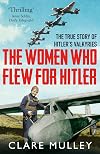
A detailed exploration of the lives of two female aviators in Nazi Germany. The one, Hanna Reitsch, is quite well-known; the other, Melitta von Stauffenberg, is not. Both transcended the social, political and professional norms of their time and place to follow their dreams of flight, and as a result received recognition. One of them (Reitsch) considered the other a rival, and engaged in what we would now call hostile briefing against her. Von Stauffenberg's response was mainly to double show more down and continue her work as an aeronautical engineer, garnering the respect and recognition of her peers and eventually the state, whilst shunning much in the way of public approval. There were good reasons for this, of course; quite apart from being by nature a more reserved person than Reitsch, von Stauffenberg was, despite being from the Junker class. one-quarter Jewish, and therefore in the eyes of the Nazi establishment, tainted. But her work was of such importance that exceptions were made. (This only added to Reitsch's antagonism towards her.)
Both women were motivated by patriotism and loyalty; but those motivations expressed themselves very differently. Melitta von Stauffenberg, as I said, was from the Junker class: she considered herself a patriot, but that was towards Germany first and to a political creed very much second. Towards the war's end, when her brother-in-law Claus attempted the assassination of Hitler, Melitta's loyalties went through a re-prioritisation. Although potentially (if very tangentially) implicated in the plot, she switched her loyalties towards her extended family first of all, and used her position to try to alleviate their conditions, without seeking special privileges or trying to intercede for them.
Hanna Reitsch, on the other hand, started out by being politically naïve, but that naivety morphed into fully-blown Nazism. Despite occasional instances where she interceded for Jewish colleagues in minor ways, she embraced Nazi racism and its ideology, and persisted in Holocaust denial to the end of her life, even when faced with direct evidence.
The book has a lot of detail and paints a clear picture of German aviation in the years following the Versailles Treaty. It also includes some interesting side details of those who met either Reitsch or von Stauffenberg, including the famous British test pilot Eric 'Winkle' Brown and Sidney Cotton. Both women had professional relationships with many of the key figures in German aviation and the Nazi regime, and these are reflected in accounts of the Nazi leadership as well as German aviation figures such as Ernst Udet and Robert von Greim. There is also a concise account of Claus von Stauffenberg's assassination plot and its aftermath.
The tragedy of Melitta von Stauffenberg's death in the closing days of the war (shot down by a USAAF Thunderbolt whilst trying to fly a Bücker Bestmann to reach her imprisoned husband) is contrasted by Hanna Reitsch's post-war career, which involved on the one hand, international recognition of her gliding achievements and on the other, her continued support for Nazi legacy groups. The author draws some wide-ranging and relevant conclusions from these two parallel lives about the nature of patriotism and its implications in an ideological regime. In particular, she also quotes Melitta's nephew Berthold, who says of wartime Germany that "not every Party member was a Nazi, and not every non-Party member wasn't". In the end, this should serve as a useful reminder to anyone looking at European politics today; trying to fit the politics of Germany, Austria, Hungary, Poland or the Ukraine into our own definitions of 'liberal' or 'authoritarian', 'left' or 'right' is going to stumble over what seems to us like contradictions.
A minor demerit to this book is the presentation and packaging. Footnotes are marked with an asterisk, which is printed so small as to be almost indistinguishable from quotation marks. And I took issue with the book's actual packaging: the title suggests something far more black-and-white than the story of these two remarkable women actually is; whilst the sub-title, The true story of Hitler's Valkyries goes further and suggests outright direct operational military flying, which was not the case. Hanna Reitsch was, at one point, described as a Valkyrie by a senior Nazi; this could never be, and was never applied to Melitta von Stauffenberg. show less
Both women were motivated by patriotism and loyalty; but those motivations expressed themselves very differently. Melitta von Stauffenberg, as I said, was from the Junker class: she considered herself a patriot, but that was towards Germany first and to a political creed very much second. Towards the war's end, when her brother-in-law Claus attempted the assassination of Hitler, Melitta's loyalties went through a re-prioritisation. Although potentially (if very tangentially) implicated in the plot, she switched her loyalties towards her extended family first of all, and used her position to try to alleviate their conditions, without seeking special privileges or trying to intercede for them.
Hanna Reitsch, on the other hand, started out by being politically naïve, but that naivety morphed into fully-blown Nazism. Despite occasional instances where she interceded for Jewish colleagues in minor ways, she embraced Nazi racism and its ideology, and persisted in Holocaust denial to the end of her life, even when faced with direct evidence.
The book has a lot of detail and paints a clear picture of German aviation in the years following the Versailles Treaty. It also includes some interesting side details of those who met either Reitsch or von Stauffenberg, including the famous British test pilot Eric 'Winkle' Brown and Sidney Cotton. Both women had professional relationships with many of the key figures in German aviation and the Nazi regime, and these are reflected in accounts of the Nazi leadership as well as German aviation figures such as Ernst Udet and Robert von Greim. There is also a concise account of Claus von Stauffenberg's assassination plot and its aftermath.
The tragedy of Melitta von Stauffenberg's death in the closing days of the war (shot down by a USAAF Thunderbolt whilst trying to fly a Bücker Bestmann to reach her imprisoned husband) is contrasted by Hanna Reitsch's post-war career, which involved on the one hand, international recognition of her gliding achievements and on the other, her continued support for Nazi legacy groups. The author draws some wide-ranging and relevant conclusions from these two parallel lives about the nature of patriotism and its implications in an ideological regime. In particular, she also quotes Melitta's nephew Berthold, who says of wartime Germany that "not every Party member was a Nazi, and not every non-Party member wasn't". In the end, this should serve as a useful reminder to anyone looking at European politics today; trying to fit the politics of Germany, Austria, Hungary, Poland or the Ukraine into our own definitions of 'liberal' or 'authoritarian', 'left' or 'right' is going to stumble over what seems to us like contradictions.
A minor demerit to this book is the presentation and packaging. Footnotes are marked with an asterisk, which is printed so small as to be almost indistinguishable from quotation marks. And I took issue with the book's actual packaging: the title suggests something far more black-and-white than the story of these two remarkable women actually is; whilst the sub-title, The true story of Hitler's Valkyries goes further and suggests outright direct operational military flying, which was not the case. Hanna Reitsch was, at one point, described as a Valkyrie by a senior Nazi; this could never be, and was never applied to Melitta von Stauffenberg. show less
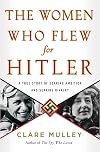
In this parallel history of two German aviatrix, the notorious Hannah Reitsch and the less well-known Melitta von Stauffenberg, one essentially has a meditation on the limits of patriotism. While both started out wanting to build a new Germany after the Great War Reitsch believed until the end of her life in the Nazi dream of one land and one people, wherein those who did not belong to that people were edited out of the picture; this is not news. Stauffenberg is the more interesting case as show more she was the sister-in-law of Claus von Stauffenberg and so was associated with the July 20th Plot. Further, while Reitsch appears to have been the better natural pilot Stauffenberg was a full-fledged engineer working in the German aviation industry until the point where her taint of Jewish ancestry caught up with her; but not before she received the Iron Cross for her work. In the end, while Reitsch lived long enough to be reviled, Stauffenberg died in the waning days of the war trying to assure the survival of her husband. Mulley ends on the note that whatever else the lives of these women demonstrate they illustrate the short-sighted and stupid limitations of the Nazi worldview. show less
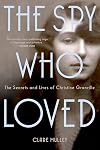
Christina Granville—the nom de guerre of Krystyna Skarbek, the daughter of a shiftless Polish count and his Jewish heiress wife—was one of the most storied and decorated members of the British Special Operations Executive (S.O.E.) during the Second World War. As an S.O.E. agent, she carried out a number of daring missions across Europe, most famously the rescue of two British agents in France mere hours before they were scheduled to be executed by the Gestapo. Christina's war was an show more adventurous one, but her post-war life was bleak: unable to return to her beloved Poland, penniless, discriminated against in the U.K. because of her nationality, ethnicity, and gender, and often it seems unable to get out of her own way. She was ultimately murdered, still only in her mid-40s, by an obsessed co-worker.
Christina's is an interesting life, but not one that I think Clare Mulley fully does justice. There's no getting around the relative lack of sources—Christina doesn't seem to have been given much to writing or to reflection, and many papers about her were accidentally or deliberately destroyed—but even taking that into account I didn't feel as if Mulley ever got a proper handle on her subject. The portrait she provides of Christina is out of focus and sometimes at odds with itself (we're often told she's an introverted loner but often encounter her at parties and celebrations, and she had multiple relationships), and the structure isn't as good as it could be. I'm glad that Christina's story has been told, though, and that Mulley made a diligent attempt to separate fact from myth (it's unlikely, for instance, that Ian Fleming had an affair with her and used her as the model for Vesper Lynd). show less
Christina's is an interesting life, but not one that I think Clare Mulley fully does justice. There's no getting around the relative lack of sources—Christina doesn't seem to have been given much to writing or to reflection, and many papers about her were accidentally or deliberately destroyed—but even taking that into account I didn't feel as if Mulley ever got a proper handle on her subject. The portrait she provides of Christina is out of focus and sometimes at odds with itself (we're often told she's an introverted loner but often encounter her at parties and celebrations, and she had multiple relationships), and the structure isn't as good as it could be. I'm glad that Christina's story has been told, though, and that Mulley made a diligent attempt to separate fact from myth (it's unlikely, for instance, that Ian Fleming had an affair with her and used her as the model for Vesper Lynd). show less
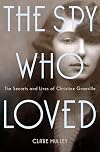
Winston Churchill's favorite spy, Christine Granville is the subject of this bio. World War II intrigue, love affairs, coded messages,and murder should have been a hoot to read. It wasn't. It was boring. The author seems to want to give a day by day account of Granville's life, including what she ate for lunch, without getting a reader excited about what must have been an astonishing life. Christine Granville does not come alive on these pages. Too bad.
Lists
Awards


You May Also Like


Associated Authors
Statistics
- Works
- 5
- Members
- 629
- Popularity
- #40,057
- Rating
- 3.9
- Reviews
- 13
- ISBNs
- 40
- Languages
- 2


