
Robert Maynard Hutchins (1899–1977)
Author of Britannica Great Books of the Western World (54 Volumes)
About the Author
Robert Hutchins wrote widely about education and is best known for his support of liberal education, which he believed "prepares the young for anything that may happen; it has value under any circumstances. . . . It gets them ready for a lifetime of learning. It connects man with man. It introduces show more all men to the dialogue about the common good of their own country and of the world community. It frees their mind of prejudice. It lays the basis of practical wisdom." He believed that the increasing complexities of civilization did not justify any modification in this approach. "The more technological the society," he says in The Learning Society (1968), "the less ad hoc education can be. The reason is that the more technological the society is, the more rapidly it will change and the less valuable ad hoc education will become. It now seems safe to say that the best practical education is the best theoretical one." After serving as dean of Yale Law School in 1929, Hutchins became (at age 29) president and in 1949 chancellor of the University of Chicago, remaining there until 1951. During this period, he and Mortimer Adler introduced the Great Books program into the Chicago curriculum. They believed that the best education is achieved through reading and understanding the great minds of the past. Later he became associate director of the Ford Foundation and president of the Fund for the Republic. In the latter post, Hutchins faced the oppressive climate for free expression brought about by McCarthyism, but he saw to it that the fund's projects included studies of the federal loyalty-security program, of political blacklisting in the entertainment industries, and of the nature of communism in the United States. He retired as the chief executive officer of the Center for the Study of Democratic Institutions in Santa Barbara, California, a "community of scholars" under the aegis of the Ford Foundation. (Bowker Author Biography) show less
Image credit: University of Chicago Library, Special Collections Research Center
Series
Works by Robert Maynard Hutchins
Great Books of The Western World: Aeschylus, Sophocles, Euripides, Aristophanes (1952) — Editor — 552 copies, 2 reviews
Britannica Great Books: American State Papers, The Federalist, and J. S. Mill (1776) — Editor — 445 copies
The Great Books of the Western World, Vol. 3: The Great Ideas, A Syntopicon II: Man - World (1952) 406 copies, 2 reviews
Great books of the Western World. Encyclopaedia Britannica, inc., in collaboration with the University of Chicago (1952) 161 copies
Hippocratic Writings + On the Natural Faculties. Great Books of the Western World, Volume 10 (1952) 11 copies
Great Books of the Western World (60 Volume Set) [Hardcover] [Jan 01, 1990] Robert Maynard Hutchins 7 copies
Decline And Fall Of The Roman Empire Volume 1 & 2; Great Books Of The Western World #40-#41 (1952) 7 copies
Great Books of The Western World 6 copies
Two faces of federalism; an outline of an argument about pluralism, unity, and law: followed by a discussion (1961) 6 copies
The Provincial Letters; Pensees; Scientific Treatises - Great Books Of The Western World, Volume 33 4 copies
Zuckerkandl! 4 copies
Britannica Great Books v.9 2 copies
Britannica Great Books v.51 2 copies
Britannica Great Books v.52 2 copies
Britannica Great Books v.53 2 copies
Britannica Great Books v.54 2 copies
Britannica Great Books v.6 2 copies
Britannica Great Books v.7 2 copies
Britannica Great Books v.8 2 copies
Britannica Great Books v.12 2 copies
Britannica Great Books v.14 2 copies
Britannica Great Books v.2 2 copies
Britannica Great Books v.13 2 copies
Britannica Great Books v.5 2 copies
Britannica Great Books v.16 2 copies
Britannica Great Books v.10 2 copies
Britannica Great Books v.1 2 copies
Britannica Great Books v.50 2 copies
Britannica Great Books v.15 2 copies
Britannica Great Books v.49 2 copies
Britannica Great Books v.3 2 copies
Britannica Great Books v.28 2 copies
Britannica Great Books v.25 2 copies
Britannica Great Books v.23 2 copies
Britannica Great Books v.30 2 copies
Britannica Great Books v.47 2 copies
Britannica Great Books v.22 2 copies
Britannica Great Books v.21 2 copies
Britannica Great Books v.31 2 copies
Britannica Great Books v.32 2 copies
Britannica Great Books v.33 2 copies
Britannica Great Books v.20 2 copies
Britannica Great Books v.34 2 copies
Britannica Great Books v.18 2 copies
Britannica Great Books v.29 2 copies
Britannica Great Books v.39 2 copies
Britannica Great Books v.46 2 copies
Britannica Great Books v.45 2 copies
Britannica Great Books v.44 2 copies
Britannica Great Books v.43 2 copies
Britannica Great Books v.42 2 copies
Britannica Great Books v.41 2 copies
Britannica Great Books v.4 2 copies
Britannica Great Books v.40 2 copies
Britannica Great Books v.36 2 copies
Britannica Great Books v.35 2 copies
The Great Ideas I. Encyclopaedia Britannica, inc., in collaboration with the University of Chicago 1 copy
The democratic dilemma 1 copy
William James 1 copy
Kant (vol. 42) 1 copy
Sheakspeare I (vol. 26) 1 copy
Tacitus (vol.15) 1 copy
Hippocrates - Galen (vol.10) 1 copy
Francis Bacon (vol. 30) 1 copy
Great Books Of The Western World by Encyclopedia Britannica 1952 (Gilbert Galileo Harvey, Vol 28) 1 copy
Great Books of the Western World (60 Volume Set) [Hardcover] [Jan 01, 1990] Robert Maynard Hutchins 1 copy
Picking Apples and Pumpkins 1 copy
Associated Works
An Inquiry into the Nature and Causes of the Wealth of Nations (1776) — Editor, some editions — 7,263 copies, 55 reviews
History by Herodotus / History of the Peloponnesian War by Thucydides (0430) — Editor, some editions — 475 copies
Britannica Great Books: Ptolemy, Copernicus, Kepler (1952) — Editor, some editions — 473 copies, 2 reviews
Britannica Great Books: Gilbert, Galileo, Harvey (1600) — Editor, some editions — 374 copies, 1 review
The Great Books of the Western World, Vol. 2: The Great Ideas, A Syntopicon I: Angel - Love (1952) — Editor, some editions — 346 copies, 1 review
Tagged
Common Knowledge
- Legal name
- Hutchins, Robert Maynard
- Birthdate
- 1899-01-17
- Date of death
- 1977-05-17
- Gender
- male
- Education
- Oberlin College
Yale University (BA|1921)
Yale Law School (LL.B | 1925) - Occupations
- college president
professor
administrator - Organizations
- United States Army
Yale Law School
University of Chicago
Ford Foundation
Center for the Study of Democratic Institutions (founder) - Awards and honors
- Croce al Merito di Guerra
- Relationships
- Hutchins, Maude (wife)
- Nationality
- USA
- Birthplace
- Brooklyn, New York, USA
- Places of residence
- Chicago, Illinois, USA
Santa Barbara, California, USA - Place of death
- Santa Barbara, California, USA
- Burial location
- Santa Barbara Cemetery, Santa Barbara, California, USA (Summit M 501)
- Associated Place (for map)
- California, USA
Members
Reviews

As I read this book, there were many times that I went to the computer, ready to share a gem of a sentence or a passage with my friends on Facebook or with my readers on my website. Each time I did so, however, I had to stop myself – fight myself even – and walk away from the computer. If I had shared every sentence and every passage I wanted to share, I would have ended up quoting the entire book! From beginning to end, this short book is a giant, shining gem.
Robert Hutchins, playing show more the part of the great social doctor of Western Civilization, diagnoses the ailment that has come to pervade nearly every aspect of our culture and offers the prescription that could cure us of this otherwise fatal illness. We ourselves have been and now educate our children as, essentially, automatons. Drunk under the influence of Dewey and decline, and at the wheel of the greatest military-economic-political-cultural bloc the world has ever seen, we are a threat to ourselves and others. Hutchins wrote this book over 50 years ago, and the situation has only gotten worse since then. We live in a nation – the United States – and, in the bigger picture, a culture – Western – and a even world, in which the masses have been given ever more leisure time, more political power, and more say in their own lives and in the lives of others through democratic and republican forms of government. And yet these same masses, as anyone can plainly see by watching the evening news or just having a conversation with the man behind the counter at the gas station, are pitifully undereducated, miseducated, and uneducated. The average person has spent 13 years (if they have a high school degree) or perhaps 17 years (if they have a bachelor's degree) on what amounts to perhaps an 8th grade education! In short, we've given the car keys to a 12 year old!
And how do we set about remedying this situation before it destroys us and the world with us? Hutchins provides the answer: a good classical, liberal education. Modern Westerners are asked to elect their leaders, to make important decisions about economics, law, and war; how can they possibly be prepared to do so without having read Plato, Adam Smith, and James Madison? Modern Westerners are asked to digest new and amazing scientific discoveries and technological advances; how can they possibly be expected to do so without some familiarity with Newton, Kepler, and Aristotle? They cannot and they will not be able to fully function in the roles the modern world demands of them until they have thoroughly familiarized themselves with the ideas and thinkers that came before them and built the world they live in.
More than that, and of more importance by far, is the exercise and attainment of the fullness of humanity. Modern man, in addition to the increased authority and responsibility already mentioned, also has more leisure time and circumstances more conducive to the production of intellectual capital than his ancestors of any previous time. The question now is: is modern man to waste his existence as a sad, pitiful half animal-half machine, working, eating, sleeping, passing the time in video games and cheap entertainment, or is he to reach for the fullness of his own humanity, to contemplate the universe and his place in it, the origin and destiny of humanity, the possibilities of what is beyond him? The answer to that question is one that each of us must make for himself and for his children.
I recommend this book to anyone with children of schooling age, to anyone who places value on education and intelligence, and to anyone who wants to be a human being in the fullest sense of the word – in other words, I recommend this book for everyone. show less
Robert Hutchins, playing show more the part of the great social doctor of Western Civilization, diagnoses the ailment that has come to pervade nearly every aspect of our culture and offers the prescription that could cure us of this otherwise fatal illness. We ourselves have been and now educate our children as, essentially, automatons. Drunk under the influence of Dewey and decline, and at the wheel of the greatest military-economic-political-cultural bloc the world has ever seen, we are a threat to ourselves and others. Hutchins wrote this book over 50 years ago, and the situation has only gotten worse since then. We live in a nation – the United States – and, in the bigger picture, a culture – Western – and a even world, in which the masses have been given ever more leisure time, more political power, and more say in their own lives and in the lives of others through democratic and republican forms of government. And yet these same masses, as anyone can plainly see by watching the evening news or just having a conversation with the man behind the counter at the gas station, are pitifully undereducated, miseducated, and uneducated. The average person has spent 13 years (if they have a high school degree) or perhaps 17 years (if they have a bachelor's degree) on what amounts to perhaps an 8th grade education! In short, we've given the car keys to a 12 year old!
And how do we set about remedying this situation before it destroys us and the world with us? Hutchins provides the answer: a good classical, liberal education. Modern Westerners are asked to elect their leaders, to make important decisions about economics, law, and war; how can they possibly be prepared to do so without having read Plato, Adam Smith, and James Madison? Modern Westerners are asked to digest new and amazing scientific discoveries and technological advances; how can they possibly be expected to do so without some familiarity with Newton, Kepler, and Aristotle? They cannot and they will not be able to fully function in the roles the modern world demands of them until they have thoroughly familiarized themselves with the ideas and thinkers that came before them and built the world they live in.
More than that, and of more importance by far, is the exercise and attainment of the fullness of humanity. Modern man, in addition to the increased authority and responsibility already mentioned, also has more leisure time and circumstances more conducive to the production of intellectual capital than his ancestors of any previous time. The question now is: is modern man to waste his existence as a sad, pitiful half animal-half machine, working, eating, sleeping, passing the time in video games and cheap entertainment, or is he to reach for the fullness of his own humanity, to contemplate the universe and his place in it, the origin and destiny of humanity, the possibilities of what is beyond him? The answer to that question is one that each of us must make for himself and for his children.
I recommend this book to anyone with children of schooling age, to anyone who places value on education and intelligence, and to anyone who wants to be a human being in the fullest sense of the word – in other words, I recommend this book for everyone. show less
This is an extended speech about the virtues of reading directly the books considered to be lasting classics. The choice of such books by the editorial board assembled by the Encyclopedia Britannica's board of directors, reflects the concerns of 1950's USA. admitting that limitation, since this book predates books like "The Medium is the Massage" by Marshal McLuhan, and "Mankind and Mother Earth" by Arnold Toynbee, which have been written since, it is a good set of epigrams to reinforce the show more idea that the ordinary mind is better off to address the content of famous books by reading them directly rather than relying on popularization and editors. Fortunately some books are great because they are brilliant explanations of the ideas they espouse. If you address the great books, you will find them quite interesting. Having a list designed by someone else is useful, see if you agree with that list, and read such titles as you can agree on.
The other fact is that life-long reading is the only method for a person seeking education, and to say that youth is the time when your reading program should be completed short-changes the population. reread an old favourite and see how well it stands up, and try a book you didn't like and see if your experience has altered your opinion. Please!
This introduction is short and snappy, and even if you disagree with the list, you will be better off for the read. show less
The other fact is that life-long reading is the only method for a person seeking education, and to say that youth is the time when your reading program should be completed short-changes the population. reread an old favourite and see how well it stands up, and try a book you didn't like and see if your experience has altered your opinion. Please!
This introduction is short and snappy, and even if you disagree with the list, you will be better off for the read. show less

I believe that herein lies, if not the answers to life, the universe, and everything, at least a minute and carefully specified description of it all. Sadly (or not) there is probably not enough time left in my life to read/comprehend it. Nice to know what he was about though. I skimmed mightily, read some, and enjoyed reading some, too.
The mind boggles at one man sitting down and writing this whole thing, let alone having students to teach and enemies to avoid. The reasoning of the workings show more of the world around him (reading specifically in the book "Atmosphere") is amazing. It is easy to think of these ancient peoples as being simple in their understanding because they lacked our scientific equipment, but they reasoned it out pretty well, considering!
I enjoyed reading his precise phrasing. He was not one to leave loopholes. Review is for both volumes. show less
The mind boggles at one man sitting down and writing this whole thing, let alone having students to teach and enemies to avoid. The reasoning of the workings show more of the world around him (reading specifically in the book "Atmosphere") is amazing. It is easy to think of these ancient peoples as being simple in their understanding because they lacked our scientific equipment, but they reasoned it out pretty well, considering!
I enjoyed reading his precise phrasing. He was not one to leave loopholes. Review is for both volumes. show less
The Great Ideas: A Syntopicon of Great Books of the Western World, Volume II (Great Books of the Western World, Volume 3) by Encyclopedia Britannica
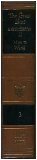
I'm probably one of a very few people who has sat and read the Synopticon from front to back. Though it might seem like a strange practice, nearly like reading the dictionary or an encyclopedia, I can't recommend the practice enough. The wealth of knowledge contained in these pages is enormous, and you will be shocked at how quickly you can read 1100+ pages because it is so absorbing and difficult to put down.
Lists
You May Also Like


Associated Authors
Statistics
- Works
- 195
- Also by
- 25
- Members
- 5,953
- Popularity
- #4,151
- Rating
- 4.1
- Reviews
- 22
- ISBNs
- 52
- Languages
- 3
- Favorited
- 6