
Loren R. Graham (1933–2024)
Author of Naming Infinity: A True Story of Religious Mysticism and Mathematical Creativity
About the Author
Loren R. Graham is Professor of History of Science at the Massachusetts Institute of Technology.
Works by Loren R. Graham
Naming Infinity: A True Story of Religious Mysticism and Mathematical Creativity (2009) 144 copies, 4 reviews
The Ghost of the Executed Engineer: Technology and the Fall of the Soviet Union (1993) 97 copies, 2 reviews
Tagged
Common Knowledge
- Canonical name
- Graham, Loren R.
- Legal name
- Graham, Loren Raymond
- Other names
- Грэхэм, Лорен
- Birthdate
- 1933-06-29
- Date of death
- 2024-12-15
- Gender
- male
- Education
- Purdue University (BS|Chemical Engineering|1955)
Colombia University (PhD|History|1964)
Moscow State University (Nongrad) - Occupations
- scholar
historian of science
professor - Organizations
- Colombia University
Harvard University
Massachusetts Institute of Technology
European University, St. Petersburg
Indiana University - Awards and honors
- American Philosophical Society (1995)
American Academy of Arts and Sciences (1981)
Russian Academy of Natural Science (2012)
George Sarton Medal (1996)
Follo Award of the Michigan Historical Society (2000)
Rockefeller Foundation Fellowship (show all 9)
Guggenheim Fellowship
Danforth Fellowship
Woodrow Wilson Fellowship - Relationships
- Graham, Patricia Albjerg (wife)
- Nationality
- USA
- Birthplace
- Hymera, Indiana, USA
- Places of residence
- Boston, Massachusetts, USA
New York, New York, USA
Moscow, Russia, USSR
Moscow, Russia
West Lafayette, Indiana, USA
Hymera, Indiana, USA (birth) (show all 7)
Bloomington, Indiana, USA - Associated Place (for map)
- USA
Members
Reviews
Naming Infinity: A True Story of Religious Mysticism and Mathematical Creativity (Belknap Press) by Loren R. Graham

From at least the days of the ancient Greek philosophers, mathematical and philosophical inquiry has gone hand in hand, especially where the infinite is involved. And infinities have always involved paradox. For instance, Zeno gave us the example of a fast runner trying to catch a tortoise. First the runner gets halfway to the tortoise, then gets halfway from that point to the tortoise, and so on. The runner can never catch the tortoise because he must make an infinite number of these show more "half-steps" to get to the tortoise. And yet in real life, runners catch tortoises quite easily. Trying to understand the nature of reality is a major effort in mathematical research - and set theory was developed in part to try to answer these questions. Georg Cantor developed an approach to explore the nature of mathematical infinities that was extended by the French mathematical community, but the reality-based nature of the French approach to mathematics prevented them from getting to what we would consider modern set theory. The French approach to philosophical thinking in the late 19th and early 20th century also struggled with the nature of the infinite in consistent ways; is infinity an ideal or can an infinity be made actual?
But in Moscow, a small group of young mathematicians discovered Cantor's work and came at it from an approach informed by their religious thinking. All were strongly aligned with the Russian Orthodox Church and a mystical approach known as "Name Worship" (sometimes even considered heretical by the church hierarchy). Name Worshipers recite prayers that recognize the names of God, and they consider that the prayers by naming God in some sense bring God into actuality. This difference in outlook from the French mathematical community led this group that became the Moscow School of Mathematics to develop descriptive set theory, an early version of modern set theory.
Naming Infinity is a nicely done history of this process of mathematical research. The set theory and Cantor's approach to infinities is well described at a level appropriate for a general audience. But the majority of the book isn't about the math. It's about the people doing the math. These are some fascinating people who lived through some difficult times, especially after the Soviet Union was established and through Stalin's reign. It's the story of competition between mathematical communities, between individuals within the Moscow School and the Soviet system, even between the Soviet government and the Russian Orthodox Church. It's a short book - about 200 pages of text - but there's a great history in it. show less
But in Moscow, a small group of young mathematicians discovered Cantor's work and came at it from an approach informed by their religious thinking. All were strongly aligned with the Russian Orthodox Church and a mystical approach known as "Name Worship" (sometimes even considered heretical by the church hierarchy). Name Worshipers recite prayers that recognize the names of God, and they consider that the prayers by naming God in some sense bring God into actuality. This difference in outlook from the French mathematical community led this group that became the Moscow School of Mathematics to develop descriptive set theory, an early version of modern set theory.
Naming Infinity is a nicely done history of this process of mathematical research. The set theory and Cantor's approach to infinities is well described at a level appropriate for a general audience. But the majority of the book isn't about the math. It's about the people doing the math. These are some fascinating people who lived through some difficult times, especially after the Soviet Union was established and through Stalin's reign. It's the story of competition between mathematical communities, between individuals within the Moscow School and the Soviet system, even between the Soviet government and the Russian Orthodox Church. It's a short book - about 200 pages of text - but there's a great history in it. show less
Naming infinity : a true story of religious mysticism and mathematical creativity by Loren R. Graham
This was a present from my parents, which makes more sense if you know that my father was a Maths Professor and my mother is half-Russian and a member of the Orthodox church. It is not a book aimed at a specific technical audience, rather a more general investigation of the philosophy and personal side of mathematical creativity.
At its heart is a group of set theorists known as the Lusitania group, who formed in Moscow in the early years of the Soviet regime. Two of its leaders (Egorov and show more Luzin) were associated with a group of religious heretics known as name worshippers, and the book explores the possibility that these ideas may have helped inspire some of their mathematical discoveries.
What makes the book far more interesting are the personal stories - growing up among mathematicians makes one realise that although they often seem to inhabit a different world, personal rivalries and domestic problems often get in the way. show less
At its heart is a group of set theorists known as the Lusitania group, who formed in Moscow in the early years of the Soviet regime. Two of its leaders (Egorov and show more Luzin) were associated with a group of religious heretics known as name worshippers, and the book explores the possibility that these ideas may have helped inspire some of their mathematical discoveries.
What makes the book far more interesting are the personal stories - growing up among mathematicians makes one realise that although they often seem to inhabit a different world, personal rivalries and domestic problems often get in the way. show less
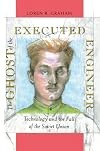
The Ghost is nominally about an engineer named Peter Palchinsky. Apparently Peter Palchinsky was all for revolution, but demanded that manufacturing and construction needed to take the human element of the worker into account, and that things should be designed before being built. (It's interesting that one of the repeated complaints I've read from computer programmers is that their bosses want them to skip the design phase and start coding immediately.) Apparently he was a good enough show more engineer to survive not only the Tsar but Lenin and the early Bolshevik days (he wasn't a huge fan of the Bolsheviks) but then ran into Stalin with a complete lack of the political sensibilities that would allow him to survive such an encounter. The author ties this into several of the engineering projects, like the White Sea Canal, where Stalin threw man-power and human lives (100,000, by some estimates) to produce as fast as possible a canal that has always been nearly completely useless.
I'm skeptical of some of the connections drawn here, but the heart of the book is in the biography and engineering stories, and they do shine through. Some mind-boggling facts jump out; in 1986, most of the members of the Politburo had engineering educations, but engineers had to take 3 non-technical classes: political economy (i.e. the Marxist stages of history), dialectic materialism, and the history of the Communist Party. I do feel that more explanation would have been useful about why so few people were interested in studying engineering, if it was the road to political power it seemed to be. show less
I'm skeptical of some of the connections drawn here, but the heart of the book is in the biography and engineering stories, and they do shine through. Some mind-boggling facts jump out; in 1986, most of the members of the Politburo had engineering educations, but engineers had to take 3 non-technical classes: political economy (i.e. the Marxist stages of history), dialectic materialism, and the history of the Communist Party. I do feel that more explanation would have been useful about why so few people were interested in studying engineering, if it was the road to political power it seemed to be. show less
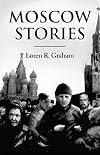
I stumbled across Moscow Stories while perusing the bookshelves at a local B&N, but left without making the purchase. What I'd read of the first chapter stayed with me until the weekend when I had to go back and pick it up. I'm so glad I did. This was a fascinating read that deserves to be on more bookshelves.
The book opens with Loren Graham's childhood recollections of communism in small-town Indiana, but quickly moves to his numerous visits from college through adulthood. What's most show more interesting is the way he balances a real love for the people he meets against a political system gone awry. Yet, in spite of his concerns about the government, he also turns down requests from the U.S. to report on his trips.
Many adventures had me laughing out loud, from life as an exchange student in the dorms to finding creative ways to dispose of the contents of many vodka bottles. Others, particularly the medical saga of his close friend, were heart-rending.
I'd recommend this for anyone who's interested in personal accounts of cold war relations or life in the former USSR. show less
The book opens with Loren Graham's childhood recollections of communism in small-town Indiana, but quickly moves to his numerous visits from college through adulthood. What's most show more interesting is the way he balances a real love for the people he meets against a political system gone awry. Yet, in spite of his concerns about the government, he also turns down requests from the U.S. to report on his trips.
Many adventures had me laughing out loud, from life as an exchange student in the dorms to finding creative ways to dispose of the contents of many vodka bottles. Others, particularly the medical saga of his close friend, were heart-rending.
I'd recommend this for anyone who's interested in personal accounts of cold war relations or life in the former USSR. show less
Lists
Awards


You May Also Like


Associated Authors
Statistics
- Works
- 17
- Members
- 474
- Popularity
- #52,000
- Rating
- 3.7
- Reviews
- 8
- ISBNs
- 52
- Languages
- 3