

Lorenzo Mattotti
Author of Hansel and Gretel: A Toon Graphic
About the Author
Works by Lorenzo Mattotti
Paul Auster's The New York Trilogy: City of Glass, Ghosts, The Locked Room -- The Graphic Adaptation (2025) — Illustrator — 63 copies, 1 review
Les lubies lunatiques de fritz leiber / dix-sept recits de fantastique et de science-fiction (1980) 4 copies
Il signor Spartaco 2 copies
Fuochi ed altre storie 1 copy
Les Affiches de Mattotti 1 copy
Tram tram rock 1 copy
A la lettre 1 copy
Un fantasma nella stanza 1 copy
Associated Works
Raw Vol. 2, No. 1: Open Wounds from the Cutting Edge of Commix (1989) — Contributor — 207 copies, 2 reviews
Linus. Settembre 2018 (Linus 2018) — Author — 1 copy
Tagged
Common Knowledge
- Canonical name
- Mattotti, Lorenzo
- Birthdate
- 1954-01-24
- Gender
- male
- Occupations
- comic artist
graphical artist
illustrator - Nationality
- Italy
- Birthplace
- Brescia, Lombardy, Italy
- Places of residence
- Paris, France
- Associated Place (for map)
- Italy
Members
Reviews
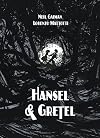
When I saw Neil Gaiman had written a new version of the old fairy tale Hansel and Gretel on Netgalley, I was excited to see what he would do with. Happily, at least to me, he stays very close to the original. This is no Disneyfied version, no friendly animals or dancing candlesticks there to help the two children. Gaiman, instead, retains all the elements that gave me shivers when I read it as a child - war, famine, two children abandoned by their parents, and of course, cannibalism. Yikes! show more
And adding to the horror of the tale are the amazing stark ink drawings by Lorenzo Mattotti, the black colouring relieved only by patches of grey and white. In the end, though, both Gaiman’s usual excellent prose and Mattotti’s drawings emphasize the truth of all fairy tales that no matter how dark, grim and frightening the world can become, there is always hope and the chance of a happy ending.
I received an arc of this book from Netgalley and the publishers in exchange for an honest review show less
And adding to the horror of the tale are the amazing stark ink drawings by Lorenzo Mattotti, the black colouring relieved only by patches of grey and white. In the end, though, both Gaiman’s usual excellent prose and Mattotti’s drawings emphasize the truth of all fairy tales that no matter how dark, grim and frightening the world can become, there is always hope and the chance of a happy ending.
I received an arc of this book from Netgalley and the publishers in exchange for an honest review show less
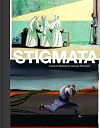
A drunkard loser awakes one day to find stigmata on his hands and so begins his trials through life as he struggles to find peace with his place in the world and to discover some meaning for the existence of his marks.
I found this novel to be quietly powerful and subtle all at once. The artwork has a scribbled quality to it and it lures you into a false sense of depth. You realise as you read on that the layers of meaning in this book are almost bottomless and you can take as much or as show more little as you please from the story.
Our protagonist stumbles through life with his bleeding hands, some calling him a saint, others calling him cursed. The one time he does find acceptance and happiness, his hands begin to heal and then the theme of cursed really comes into play, culminating in a massive storm that sweeps away his love, hope and meaning in life.
I know I didn't get all of the many ideas put forward in this book but I did enjoy this read immensely and although not an uplifting novel, it really does leave you with a lot to think about. At first I thought the style of art was 'off' for this novel but on reflection I think they chose the images wisely and it assists the struggle for meaning theme in the book.
A very modern take on an old parable. show less
I found this novel to be quietly powerful and subtle all at once. The artwork has a scribbled quality to it and it lures you into a false sense of depth. You realise as you read on that the layers of meaning in this book are almost bottomless and you can take as much or as show more little as you please from the story.
Our protagonist stumbles through life with his bleeding hands, some calling him a saint, others calling him cursed. The one time he does find acceptance and happiness, his hands begin to heal and then the theme of cursed really comes into play, culminating in a massive storm that sweeps away his love, hope and meaning in life.
I know I didn't get all of the many ideas put forward in this book but I did enjoy this read immensely and although not an uplifting novel, it really does leave you with a lot to think about. At first I thought the style of art was 'off' for this novel but on reflection I think they chose the images wisely and it assists the struggle for meaning theme in the book.
A very modern take on an old parable. show less
This originally appeared at The Irresponsible Reader.
---
WHAT'S HANSEL AND GRETEL ABOUT?
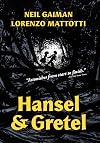
This is the story of Hansel and Gretel almost straight from the Brothers Grimm—given a quick shine by Gaiman. There's nothing particularly Gaiman-esque about the writing or the approach to the story. It's a pretty decent and straightforward approach to the story.
THE ART
In the spirit of "If you can't say anything nice....", I'm tempted to leave a few lines of blank space here and move on. I don't get it. show more Really. I just don't understand what Mattotti was going for here. The pictures are spread over two pages, and most of those pages are black. There are bits of white to help you get an image or the shadow of an image, but again—it's just black. The kind of black that would've threatened to bankrupt printers just a couple of decades ago.
Maybe a quarter to a third of each two-page spread was interesting—but the rest. Ugh.
Call me a Philistine here...but I just don't see why someone would bother.
I've looked at Mattotti's website, and I like a lot of what I saw there...but this was a swing and a miss.
SO, WHAT DID I THINK ABOUT HANSEL AND GRETEL?
So, the text was okay. The art was disappointing. Overall, I give this a "meh." If this were a person's first exposure to the story—it'd work well. And honestly, if that's what someone uses it for—I'd probably rate this higher.
But for someone wanting a little bit of that Gaiman magic applied to this familiar tale? It just doesn't deliver. show less
---
WHAT'S HANSEL AND GRETEL ABOUT?
This is the story of Hansel and Gretel almost straight from the Brothers Grimm—given a quick shine by Gaiman. There's nothing particularly Gaiman-esque about the writing or the approach to the story. It's a pretty decent and straightforward approach to the story.
THE ART
In the spirit of "If you can't say anything nice....", I'm tempted to leave a few lines of blank space here and move on. I don't get it. show more Really. I just don't understand what Mattotti was going for here. The pictures are spread over two pages, and most of those pages are black. There are bits of white to help you get an image or the shadow of an image, but again—it's just black. The kind of black that would've threatened to bankrupt printers just a couple of decades ago.
Maybe a quarter to a third of each two-page spread was interesting—but the rest. Ugh.
Call me a Philistine here...but I just don't see why someone would bother.
I've looked at Mattotti's website, and I like a lot of what I saw there...but this was a swing and a miss.
SO, WHAT DID I THINK ABOUT HANSEL AND GRETEL?
So, the text was okay. The art was disappointing. Overall, I give this a "meh." If this were a person's first exposure to the story—it'd work well. And honestly, if that's what someone uses it for—I'd probably rate this higher.
But for someone wanting a little bit of that Gaiman magic applied to this familiar tale? It just doesn't deliver. show less
Surprisingly, Gaiman does little to alter the common version of the Hansel and Gretel story. He does nothing at all to modernize it, nor to set it in a specific time period, but instead he simply gives his characters more voice. The story may be told from a relatively omniscient viewpoint, but we are given just enough of Hansel's inner dialogue and the emotional turmoil of the wood cutter to make them stand out.
What makes this book special, though, is really Mattiotti's dense illustrations. show more The overwhelming black tones give the story an appropriately horrifying feeling, while the perfectly placed patches of white keep the eye from being overwhelmed. This treatment not only accurately captures the quality of light (and lack-there-of) in the old world forest, but also serves to remind readers of the positive outcome and hope in this tale. show less
What makes this book special, though, is really Mattiotti's dense illustrations. show more The overwhelming black tones give the story an appropriately horrifying feeling, while the perfectly placed patches of white keep the eye from being overwhelmed. This treatment not only accurately captures the quality of light (and lack-there-of) in the old world forest, but also serves to remind readers of the positive outcome and hope in this tale. show less
Lists
Awards


You May Also Like


Associated Authors
Statistics
- Works
- 68
- Also by
- 9
- Members
- 1,703
- Popularity
- #15,063
- Rating
- 3.8
- Reviews
- 75
- ISBNs
- 166
- Languages
- 11
- Favorited
- 5