
James D. Jenkins
Author of The Valancourt Book of World Horror Stories, Volume 1
Series
Works by James D. Jenkins
Associated Works
Barozzi: or the Venetian Sorceress (Gothic Classics) (1977) — Editor, Introduction, some editions — 20 copies
Tagged
Common Knowledge
There is no Common Knowledge data for this author yet. You can help.
Members
Reviews
Worldwide Horror
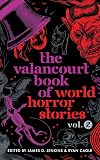
Review of the Valancourt paperback edition (February 2022) of the original Valancourt hardcover (December 2021)
[3.2 average rating of stores, but bumped up to 4 for the wide range of languages and countries and for the excellence of several of the stories]
Due to my Estonian heritage, I am always curious to discover books with Estonian in translation and that was how I came across this anthology of world horror collected by Valancourt Books. It includes a translation of show more popular crime and fantasy author Indrek Hargla's Tammõküla viljakuivati, originally available in the Estonian language anthologies Kolmevaimukivi [Estonian: Three Spirit Stone] (2018) and Pikad varjud [Estonian: Long Shadows} (2015). Hargla is one of the most popular current authors in Estonia today, especially with his Apothecary Melchior series of medieval crime mysteries. The first two books have been translated in English and also turned into feature films. He started off as more of a fantasy author and even now continues to write a considerable number of alternative history and ethno-horror stories.
So I came for the Estonian, but I was very impressed with the variety which this collection contained. I noticed that one of the editors, James D. Jenkins, did a considerable amount of the translation work as well. This was in several languages, from Danish, French, Portuguese, Spanish and even Romansh, an endangered language now mostly spoken in Switzerland.
Individual story listings and ratings are below, with brief plot set-ups which I don't think need to be spoiler blocked. The overall quality and storytelling and translation was very high. I may not have cared for the subject matter in some cases and rated accordingly, but anyone with a curiosity about the worldwide level of writing in horror and speculative fiction will be sure to find something of interest here. This collection is a follow-up to the publisher's first anthology The Valancourt Book of World Horror Stories, Volume 1 (2020) and intentionally sought to collect stories from countries not selected for the first book.
1. The Recording of the Will (2016) *** by Yavor Tsanev, translated from Bulgarian by Roberta Basarbolieva. A curse can be passed along to others via a Last Will.
2. Lucky Night (2013) *** by Gary Victor, translated from French (Haiti) by James D. Jenkins. A candidate for a Haitian Senate seat is willing to do anything that his voodoo priest commands in order to achieve his goal.
3. Whitebone Harp (2013) ** by Zhang Yueran, translated from Chinese by Jeremy Tiang. A bit too bizarre for me.
4. The War (2014) ***** by Wojciech Gunia, translated from Polish by Anthony Sciscione. Felt very "1984" inspired with a touch of "Wag the Dog". A town's population is manipulated by propaganda about a war with an invading nation.
5. Screamer (2014) *** by Braulio Tavares, translated from Portuguese (Brazil) by James D. Jenkins. Business traveller to a small town is haunted by screams in the night.
6. The Old Wound and the Sun (2008) *** by Yasumi Tsuhara, translated from Japanese by Toshiya Kamei. A woman discovers a mysterious wound in the body of her lover which seems to lead to another world.
7. The Ant (1986) *** by Anton Grasso, translated from Maltese by Joseph Camilleri. An estranged husband sends his wife a cake at the house where is now living with another man.
8. The Regensburg Festival **** (2013) by Val Votrin, translated from Russian by Maya Vinokour. A conductor is banned from a town's music festival but insists on attending anyway. I liked the music tie-in of this one.
9. Mask (2012) ** by Bora Chung, translated from Korean by Anton Hur. A family is haunted by a stain on the wall, which turns into a succubus that ensnares the husband in an addiction. Goes on too long for the material and the resolution (with the 'mask') just comes out of nowhere.
10. The Bell (2009) ** by Steinar Bragi, translated from Icelandic by Larissa Kyzer. A manifestation on a village's church bell is an omen for a plague that descends on its inhabitants. This was very creepy but didn't make any attempt to rationalize what was going on. Extra gross-out factors with the baby manifestations.
11. Shelter from the Storm (2022) ** by Jayaprakash Satyamurthy (India). Original in English. A worker has a drunken night out with friends. This did not seem like a horror story at all.
12. Train of Consequences (1999) *** by Roberto Causo, translated from Portuguese (Brazil) by James D. Jenkins. A former torturer with the military police is forced to face his past while riding on a train.
13. Dreams of Ash (2008) **** by Mélanie Fazi, translated from French by James D. Jenkins. A young develops an obsession with fire at a young age which turns into self-harm as she becomes a teenager. Very disturbing story, but well done.
14. The Nature of Love (2022) ** by Luciano Lamberti, translated from Spanish (Argentina) by James D. Jenkins. An online erotic performance turns fatal. Disturbing and repulsive.
15. The Grain Dryer of Tammõküla (2015/2018) ***** by Indrek Hargla, translated from Estonian by Kati Metsaots and Dan O'Connell. The grain drying barn on a farm becomes cursed and a spirit begins to attack those who try to tend the fire in the kiln. A soothsayer from a neighbouring farm is brought in to solve the mystery. I'm biased here due to my heritage and my previous enjoyment of Hargla's novels and stories, but I thought this was both well written and translated.
16. The Runner (2020) *** by Viola Cadruvi, translated from Romansh (Switzerland) by James D. Jenkins. Very short story (4 pages) about a jogger who ignores signs from nature while running on her regular trail.
17. Firstborn (2018) **** by Konstantinos Kellis, translated from Greek by Dimitra Nikolaidou and Victor Pseftakis. A mother tries to protect her newborn from her family, which is a cult that relies on the magically enhanced firstborn of each generation for its wealth and power.
18. Owolabi Olowolagba (2022) *** by Dare Segun Falowo, in English from Nigeria. A desperate man is willing to do anything for money, including fulfilling the commands of a shaman.
19. The Pallid Eidolon (2019) *** by Stephan Friedman, in English from Israel. In post World War II Poland, a Red Cross worker follows a mysterious orphan who appears to be under a compelling bewitchment.
20. The Footsteps of Hunger (2021) **** by Ana Maria Fuster Lavin, translated from Spanish (Puerto Rico) by James D. Jenkins. In the aftermath of the devastating Hurricane Maria in 2017, a non-aging vampiric demon child hunts animals and people in the chaos.
21. The Wonders of the Invisible World (2014) ***** by Teddy Vork, translated from Danish by James D. Jenkins. While perusing a hand-notated copy of American witch hunter Cotton Mather's (1663-1728) Wonders Of The Invisible World (1693), a rare book dealer recites an invisibility spell which allows him to secretly follow his obsessions but opens a pathway to a secret world which coexists with our own.
Trivia and Links
Valancourt Books is an American independent publisher which specializes in reprints of classic gothic, supernatural and horror literature as well as new works in those genres. It also specializes in reprints of classic gay literature. The name Valancourt is taken from a character in Ann Radcliffe's (1764-1823) gothic novel The Mysteries of Udolpho (1794). show less
Review of the Valancourt paperback edition (February 2022) of the original Valancourt hardcover (December 2021)
[3.2 average rating of stores, but bumped up to 4 for the wide range of languages and countries and for the excellence of several of the stories]
Due to my Estonian heritage, I am always curious to discover books with Estonian in translation and that was how I came across this anthology of world horror collected by Valancourt Books. It includes a translation of show more popular crime and fantasy author Indrek Hargla's Tammõküla viljakuivati, originally available in the Estonian language anthologies Kolmevaimukivi [Estonian: Three Spirit Stone] (2018) and Pikad varjud [Estonian: Long Shadows} (2015). Hargla is one of the most popular current authors in Estonia today, especially with his Apothecary Melchior series of medieval crime mysteries. The first two books have been translated in English and also turned into feature films. He started off as more of a fantasy author and even now continues to write a considerable number of alternative history and ethno-horror stories.
So I came for the Estonian, but I was very impressed with the variety which this collection contained. I noticed that one of the editors, James D. Jenkins, did a considerable amount of the translation work as well. This was in several languages, from Danish, French, Portuguese, Spanish and even Romansh, an endangered language now mostly spoken in Switzerland.
Individual story listings and ratings are below, with brief plot set-ups which I don't think need to be spoiler blocked. The overall quality and storytelling and translation was very high. I may not have cared for the subject matter in some cases and rated accordingly, but anyone with a curiosity about the worldwide level of writing in horror and speculative fiction will be sure to find something of interest here. This collection is a follow-up to the publisher's first anthology The Valancourt Book of World Horror Stories, Volume 1 (2020) and intentionally sought to collect stories from countries not selected for the first book.
1. The Recording of the Will (2016) *** by Yavor Tsanev, translated from Bulgarian by Roberta Basarbolieva. A curse can be passed along to others via a Last Will.
2. Lucky Night (2013) *** by Gary Victor, translated from French (Haiti) by James D. Jenkins. A candidate for a Haitian Senate seat is willing to do anything that his voodoo priest commands in order to achieve his goal.
3. Whitebone Harp (2013) ** by Zhang Yueran, translated from Chinese by Jeremy Tiang. A bit too bizarre for me.
4. The War (2014) ***** by Wojciech Gunia, translated from Polish by Anthony Sciscione. Felt very "1984" inspired with a touch of "Wag the Dog". A town's population is manipulated by propaganda about a war with an invading nation.
5. Screamer (2014) *** by Braulio Tavares, translated from Portuguese (Brazil) by James D. Jenkins. Business traveller to a small town is haunted by screams in the night.
6. The Old Wound and the Sun (2008) *** by Yasumi Tsuhara, translated from Japanese by Toshiya Kamei. A woman discovers a mysterious wound in the body of her lover which seems to lead to another world.
7. The Ant (1986) *** by Anton Grasso, translated from Maltese by Joseph Camilleri. An estranged husband sends his wife a cake at the house where is now living with another man.
8. The Regensburg Festival **** (2013) by Val Votrin, translated from Russian by Maya Vinokour. A conductor is banned from a town's music festival but insists on attending anyway. I liked the music tie-in of this one.
9. Mask (2012) ** by Bora Chung, translated from Korean by Anton Hur. A family is haunted by a stain on the wall, which turns into a succubus that ensnares the husband in an addiction. Goes on too long for the material and the resolution (with the 'mask') just comes out of nowhere.
10. The Bell (2009) ** by Steinar Bragi, translated from Icelandic by Larissa Kyzer. A manifestation on a village's church bell is an omen for a plague that descends on its inhabitants. This was very creepy but didn't make any attempt to rationalize what was going on. Extra gross-out factors with the baby manifestations.
11. Shelter from the Storm (2022) ** by Jayaprakash Satyamurthy (India). Original in English. A worker has a drunken night out with friends. This did not seem like a horror story at all.
12. Train of Consequences (1999) *** by Roberto Causo, translated from Portuguese (Brazil) by James D. Jenkins. A former torturer with the military police is forced to face his past while riding on a train.
13. Dreams of Ash (2008) **** by Mélanie Fazi, translated from French by James D. Jenkins. A young develops an obsession with fire at a young age which turns into self-harm as she becomes a teenager. Very disturbing story, but well done.
14. The Nature of Love (2022) ** by Luciano Lamberti, translated from Spanish (Argentina) by James D. Jenkins. An online erotic performance turns fatal. Disturbing and repulsive.
15. The Grain Dryer of Tammõküla (2015/2018) ***** by Indrek Hargla, translated from Estonian by Kati Metsaots and Dan O'Connell. The grain drying barn on a farm becomes cursed and a spirit begins to attack those who try to tend the fire in the kiln. A soothsayer from a neighbouring farm is brought in to solve the mystery. I'm biased here due to my heritage and my previous enjoyment of Hargla's novels and stories, but I thought this was both well written and translated.
16. The Runner (2020) *** by Viola Cadruvi, translated from Romansh (Switzerland) by James D. Jenkins. Very short story (4 pages) about a jogger who ignores signs from nature while running on her regular trail.
17. Firstborn (2018) **** by Konstantinos Kellis, translated from Greek by Dimitra Nikolaidou and Victor Pseftakis. A mother tries to protect her newborn from her family, which is a cult that relies on the magically enhanced firstborn of each generation for its wealth and power.
18. Owolabi Olowolagba (2022) *** by Dare Segun Falowo, in English from Nigeria. A desperate man is willing to do anything for money, including fulfilling the commands of a shaman.
19. The Pallid Eidolon (2019) *** by Stephan Friedman, in English from Israel. In post World War II Poland, a Red Cross worker follows a mysterious orphan who appears to be under a compelling bewitchment.
20. The Footsteps of Hunger (2021) **** by Ana Maria Fuster Lavin, translated from Spanish (Puerto Rico) by James D. Jenkins. In the aftermath of the devastating Hurricane Maria in 2017, a non-aging vampiric demon child hunts animals and people in the chaos.
21. The Wonders of the Invisible World (2014) ***** by Teddy Vork, translated from Danish by James D. Jenkins. While perusing a hand-notated copy of American witch hunter Cotton Mather's (1663-1728) Wonders Of The Invisible World (1693), a rare book dealer recites an invisibility spell which allows him to secretly follow his obsessions but opens a pathway to a secret world which coexists with our own.
Trivia and Links
Valancourt Books is an American independent publisher which specializes in reprints of classic gothic, supernatural and horror literature as well as new works in those genres. It also specializes in reprints of classic gay literature. The name Valancourt is taken from a character in Ann Radcliffe's (1764-1823) gothic novel The Mysteries of Udolpho (1794). show less
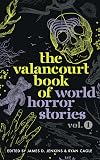
Valancourt has just added to its impressive catalogue what might well be the jewel in its (Gothic) crown: "The Valancourt Book of World Horror Stories". In this veritable labour of love, editors (and Valancourt founders) James D. Jenkins and Ryan Cagle have combed through stories in a myriad of languages to come up with a selection of twenty-one contemporary horror stories from around the world, all of which are being published in English for the first time ever. Choosing the stories must show more have been a mammoth task. What is even more remarkable is that Jenkins prepared most of the translations himself. Having a command of so many languages is an achievement – but what is even more impressive is that these are no workaday renditions, but readable, fluent translations into English which manage to retain the different narrative voices and styles of the original.
How to start reviewing such a wealth of remarkable stories? I will not even attempt to do so but will simply list some reasons why you should check out this anthology.
1. Although some of the featured authors are very well-known in their respective countries, they are hardly household names in the English-speaking world. The lover of horror stories seeking new voices from outside the established English-language canon will find plenty to discover here.
2. The authors who make an appearance in this anthology are not “different” just because they are little-known, but because they genuinely bring something new to the horror genre. More often than not, their stories reflects folklore which will be unfamiliar to most readers. To cite just a couple of examples, Yvette Tan’s All the Birds incorporates elements from Filipino mythology and folklore, while Bathie Ngoye Thiam’s The House of Leuk Dawour taps into Senegal’s long tradition of supernatural storytelling. Down, in their World by Flavius Ardelean revives the scarier aspects of Romanian folklore.
3. Even when not directly inspired by local myths, many of the stories reflect aspects, landscapes and issues of the authors’ countries of origin. Menopause by Flore Hazoumé, for instance, provides social commentary on African society’s approach to womenhood whereas Luigi Musolino’s Uironda – a strong opener to this anthology – evokes the dreary highways of Northern Italy’s industrial hinterland.
4. Diversity and variety are two key characteristics of this anthology. As the editors explain in their foreword, they aimed to ensure a high rate of inclusion of women writers, authors of colour, and LGBT-interest material. This is no mere tip of the hat to political correctness but a genuine desire to make this anthology as inclusive as possible. And, ultimately, this is reflected in the sheer literary variety found between the book’s covers. Certainly, all the featured stories qualify as horror. But this is a broad church indeed. Just come inside and take your seat in your favourite aisle – whether the horror you love is psychological and Aickman-like, Lovecraftian (cosmic or reptilian), gory, surreal, or tinged with crime, folklore or comedy… you’ll find something for you.
5. The best reason to savour this anthology however is the quality of the writing. Judging from the reviews I’ve read, the horror community is showing this anthology well-deserved love. But this should honestly be more than a “niche interest” collection – this is great contemporary world literature, independently of its genre.
Here’s the roll call of stories:
Pilar Pedraza, 'Mater Tenebrarum' (Spain)
Flavius Ardelean, 'Down, in Their World' (Romania)
Anders Fager, 'Backstairs' (Sweden)
Tanya Tynjälä, 'The Collector' (Peru)
Frithjof Spalder, 'The White Cormorant' (Norway)
Jose María Latorre, 'Snapshots' (Spain)
Luigi Musolino, 'Uironda' (Italy)
Martin Steyn, 'Kira' (South Africa)
Attila Veres, 'The Time Remaining' (Hungary)
Lars Ahn, 'Donation' (Denmark)
Bernardo Esquinca, 'Señor Ligotti' (Mexico)
Cristina Fernández Cubas, 'The Angle of Horror' (Spain)
Christien Boomsma, 'The Bones in Her Eyes' (Netherlands)
Elisenda Solsona, 'Mechanisms' (Catalonia)
Michael Roch, 'The Illogical Investigations of Inspector André Despérine' (Martinique)
Solange Rodríguez Pappe, 'Tiny Women' (Ecuador)
Bathie Ngoye Thiam, 'The House of Leuk Dawour' (Senegal)
Marko Hautala, 'Pale Toes' (Finland)
Yvette Tan, 'All the Birds' (Philippines)
Ariane Gélinas, 'Twin Shadows' (Québec)
Flore Hazoumé, 'Menopause' (Ivory Coast)
Tantalizingly, The Valancourt Book of World Horror Stories bears the subtitle “Volume 1”. The editors have announced on social media that they’re already working on the next instalment in what promises to be another great series from Valancourt. Bring them on!
https://endsoftheword.blogspot.com/2021/01/Valancourt-Book-of-World-Horror-Stori... show less
How to start reviewing such a wealth of remarkable stories? I will not even attempt to do so but will simply list some reasons why you should check out this anthology.
1. Although some of the featured authors are very well-known in their respective countries, they are hardly household names in the English-speaking world. The lover of horror stories seeking new voices from outside the established English-language canon will find plenty to discover here.
2. The authors who make an appearance in this anthology are not “different” just because they are little-known, but because they genuinely bring something new to the horror genre. More often than not, their stories reflects folklore which will be unfamiliar to most readers. To cite just a couple of examples, Yvette Tan’s All the Birds incorporates elements from Filipino mythology and folklore, while Bathie Ngoye Thiam’s The House of Leuk Dawour taps into Senegal’s long tradition of supernatural storytelling. Down, in their World by Flavius Ardelean revives the scarier aspects of Romanian folklore.
3. Even when not directly inspired by local myths, many of the stories reflect aspects, landscapes and issues of the authors’ countries of origin. Menopause by Flore Hazoumé, for instance, provides social commentary on African society’s approach to womenhood whereas Luigi Musolino’s Uironda – a strong opener to this anthology – evokes the dreary highways of Northern Italy’s industrial hinterland.
4. Diversity and variety are two key characteristics of this anthology. As the editors explain in their foreword, they aimed to ensure a high rate of inclusion of women writers, authors of colour, and LGBT-interest material. This is no mere tip of the hat to political correctness but a genuine desire to make this anthology as inclusive as possible. And, ultimately, this is reflected in the sheer literary variety found between the book’s covers. Certainly, all the featured stories qualify as horror. But this is a broad church indeed. Just come inside and take your seat in your favourite aisle – whether the horror you love is psychological and Aickman-like, Lovecraftian (cosmic or reptilian), gory, surreal, or tinged with crime, folklore or comedy… you’ll find something for you.
5. The best reason to savour this anthology however is the quality of the writing. Judging from the reviews I’ve read, the horror community is showing this anthology well-deserved love. But this should honestly be more than a “niche interest” collection – this is great contemporary world literature, independently of its genre.
Here’s the roll call of stories:
Pilar Pedraza, 'Mater Tenebrarum' (Spain)
Flavius Ardelean, 'Down, in Their World' (Romania)
Anders Fager, 'Backstairs' (Sweden)
Tanya Tynjälä, 'The Collector' (Peru)
Frithjof Spalder, 'The White Cormorant' (Norway)
Jose María Latorre, 'Snapshots' (Spain)
Luigi Musolino, 'Uironda' (Italy)
Martin Steyn, 'Kira' (South Africa)
Attila Veres, 'The Time Remaining' (Hungary)
Lars Ahn, 'Donation' (Denmark)
Bernardo Esquinca, 'Señor Ligotti' (Mexico)
Cristina Fernández Cubas, 'The Angle of Horror' (Spain)
Christien Boomsma, 'The Bones in Her Eyes' (Netherlands)
Elisenda Solsona, 'Mechanisms' (Catalonia)
Michael Roch, 'The Illogical Investigations of Inspector André Despérine' (Martinique)
Solange Rodríguez Pappe, 'Tiny Women' (Ecuador)
Bathie Ngoye Thiam, 'The House of Leuk Dawour' (Senegal)
Marko Hautala, 'Pale Toes' (Finland)
Yvette Tan, 'All the Birds' (Philippines)
Ariane Gélinas, 'Twin Shadows' (Québec)
Flore Hazoumé, 'Menopause' (Ivory Coast)
Tantalizingly, The Valancourt Book of World Horror Stories bears the subtitle “Volume 1”. The editors have announced on social media that they’re already working on the next instalment in what promises to be another great series from Valancourt. Bring them on!
https://endsoftheword.blogspot.com/2021/01/Valancourt-Book-of-World-Horror-Stori... show less
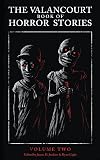
Once again, the gentlemen over at Valancourt Books knocked their anthology out of the park-maybe even out of the state! Last year's Volume 1 was outstanding and Volume 2 is as well. My favorites of this volume are as follows:
Stephen Gregory's never before published: "The Boys Who Wouldn't Wake Up" was poignant and, in a way, beautiful. It was also very much unlike any other Gregory story I've read. I'm a huge fan of this author and this tale did NOT disappoint.
"The Nice Boys" by Isabel show more Colegate was a spectacularly eerie story, set in a relentlessly foggy Venice, Italy. A young woman heads there to vacation away a recent bad break up and meets two young men. As the tension grows the reader is drawn in, but the vivid and disturbing scene towards the end ensures this story will not soon be forgotten.
"Herself" by M.E. Braddon involved two of my favorite tropes-haunted houses and haunted mirrors. I'm not sure which it was, exactly, but I'm going with a combination of the two. I love these types of stories-where people are called in to help but are rendered helpless by circumstance and can only witness as bystanders the evil that occurs.
"Halley's Passing" by Michael McDowell. It's no secret that I adore Michael McDowell. (You do too, if you love Beetlejuice or The Nightmare Before Christmas.) This tale, however, is shocking and extra bloody which is unusual for him, but at the same time: so much FUN.
"The Elemental" by R. Chetwynd-Hayes. Another FUN tale featuring a psychic that no one takes seriously. At first.
"Samhain" by Bernard Taylor. Taylor is an author that I was unfamiliar with until Valancourt Books republished some of his work. I am now an unabashed fan and stories like this are exactly why. Everything is going along, you think you have a handle on things, and then BAM! He punches you right in the face. It's often a bloody punch too, and this is no exception. I laughed out loud at the ending because I was surprised, it was bloody and I loved it!
"The Bell" by Beverly Nichols. A beautifully told tale about a man who was completely dependent upon his valet/butler and what happens when that butler dies. Who will then come to the insistent ringing of the bell?
Just like with Volume 1, I could list each and every story as a standout, because they were ALL just that good. Also like with Volume 1, is the fact that most of these stories have not been published over and over again. I'm not sure if it happens with all genres, but the same horror stories often appear ad nauseam in anthologies and it's irritating. With the cost of books these days, it's disappointing to buy an anthology only to discover you've read half the stories already in other anthologies. Rest easy, because that is not the case here.
Each story in this volume is prefaced by a bit of background on the story and on the author, many of whom were not known for writing in the horror genre. I think that fact brings a certain freshness to this collection that is often lacking in others. The Valancourt Book of Horror Stories: Volume Two is simply EXCEPTIONAL and belongs in the collection of any serious fan of the genre.
My highest recommendation!
You can pre-order your copy here: The Valancourt Book of Horror Stories: Volume Two
*This book was provided by Valancourt in exchange for my honest review. This is it.* show less
Stephen Gregory's never before published: "The Boys Who Wouldn't Wake Up" was poignant and, in a way, beautiful. It was also very much unlike any other Gregory story I've read. I'm a huge fan of this author and this tale did NOT disappoint.
"The Nice Boys" by Isabel show more Colegate was a spectacularly eerie story, set in a relentlessly foggy Venice, Italy. A young woman heads there to vacation away a recent bad break up and meets two young men. As the tension grows the reader is drawn in, but the vivid and disturbing scene towards the end ensures this story will not soon be forgotten.
"Herself" by M.E. Braddon involved two of my favorite tropes-haunted houses and haunted mirrors. I'm not sure which it was, exactly, but I'm going with a combination of the two. I love these types of stories-where people are called in to help but are rendered helpless by circumstance and can only witness as bystanders the evil that occurs.
"Halley's Passing" by Michael McDowell. It's no secret that I adore Michael McDowell. (You do too, if you love Beetlejuice or The Nightmare Before Christmas.) This tale, however, is shocking and extra bloody which is unusual for him, but at the same time: so much FUN.
"The Elemental" by R. Chetwynd-Hayes. Another FUN tale featuring a psychic that no one takes seriously. At first.
"Samhain" by Bernard Taylor. Taylor is an author that I was unfamiliar with until Valancourt Books republished some of his work. I am now an unabashed fan and stories like this are exactly why. Everything is going along, you think you have a handle on things, and then BAM! He punches you right in the face. It's often a bloody punch too, and this is no exception. I laughed out loud at the ending because I was surprised, it was bloody and I loved it!
"The Bell" by Beverly Nichols. A beautifully told tale about a man who was completely dependent upon his valet/butler and what happens when that butler dies. Who will then come to the insistent ringing of the bell?
Just like with Volume 1, I could list each and every story as a standout, because they were ALL just that good. Also like with Volume 1, is the fact that most of these stories have not been published over and over again. I'm not sure if it happens with all genres, but the same horror stories often appear ad nauseam in anthologies and it's irritating. With the cost of books these days, it's disappointing to buy an anthology only to discover you've read half the stories already in other anthologies. Rest easy, because that is not the case here.
Each story in this volume is prefaced by a bit of background on the story and on the author, many of whom were not known for writing in the horror genre. I think that fact brings a certain freshness to this collection that is often lacking in others. The Valancourt Book of Horror Stories: Volume Two is simply EXCEPTIONAL and belongs in the collection of any serious fan of the genre.
My highest recommendation!
You can pre-order your copy here: The Valancourt Book of Horror Stories: Volume Two
*This book was provided by Valancourt in exchange for my honest review. This is it.* show less
Valancourt has just added to its impressive catalogue what might well be the jewel in its (Gothic) crown: "The Valancourt Book of World Horror Stories". In this veritable labour of love, editors (and Valancourt founders) James D. Jenkins and Ryan Cagle have combed through stories in a myriad of languages to come up with a selection of twenty-one contemporary horror stories from around the world, all of which are being published in English for the first time ever. Choosing the stories must show more have been a mammoth task. What is even more remarkable is that Jenkins prepared most of the translations himself. Having a command of so many languages is an achievement – but what is even more impressive is that these are no workaday renditions, but readable, fluent translations into English which manage to retain the different narrative voices and styles of the original.
How to start reviewing such a wealth of remarkable stories? I will not even attempt to do so but will simply list some reasons why you should check out this anthology.
1. Although some of the featured authors are very well-known in their respective countries, they are hardly household names in the English-speaking world. The lover of horror stories seeking new voices from outside the established English-language canon will find plenty to discover here.
2. The authors who make an appearance in this anthology are not “different” just because they are little-known, but because they genuinely bring something new to the horror genre. More often than not, their stories reflects folklore which will be unfamiliar to most readers. To cite just a couple of examples, Yvette Tan’s All the Birds incorporates elements from Filipino mythology and folklore, while Bathie Ngoye Thiam’s The House of Leuk Dawour taps into Senegal’s long tradition of supernatural storytelling. Down, in their World by Flavius Ardelean revives the scarier aspects of Romanian folklore.
3. Even when not directly inspired by local myths, many of the stories reflect aspects, landscapes and issues of the authors’ countries of origin. Menopause by Flore Hazoumé, for instance, provides social commentary on African society’s approach to womenhood whereas Luigi Musolino’s Uironda – a strong opener to this anthology – evokes the dreary highways of Northern Italy’s industrial hinterland.
4. Diversity and variety are two key characteristics of this anthology. As the editors explain in their foreword, they aimed to ensure a high rate of inclusion of women writers, authors of colour, and LGBT-interest material. This is no mere tip of the hat to political correctness but a genuine desire to make this anthology as inclusive as possible. And, ultimately, this is reflected in the sheer literary variety found between the book’s covers. Certainly, all the featured stories qualify as horror. But this is a broad church indeed. Just come inside and take your seat in your favourite aisle – whether the horror you love is psychological and Aickman-like, Lovecraftian (cosmic or reptilian), gory, surreal, or tinged with crime, folklore or comedy… you’ll find something for you.
5. The best reason to savour this anthology however is the quality of the writing. Judging from the reviews I’ve read, the horror community is showing this anthology well-deserved love. But this should honestly be more than a “niche interest” collection – this is great contemporary world literature, independently of its genre.
Here’s the roll call of stories:
Pilar Pedraza, 'Mater Tenebrarum' (Spain)
Flavius Ardelean, 'Down, in Their World' (Romania)
Anders Fager, 'Backstairs' (Sweden)
Tanya Tynjälä, 'The Collector' (Peru)
Frithjof Spalder, 'The White Cormorant' (Norway)
Jose María Latorre, 'Snapshots' (Spain)
Luigi Musolino, 'Uironda' (Italy)
Martin Steyn, 'Kira' (South Africa)
Attila Veres, 'The Time Remaining' (Hungary)
Lars Ahn, 'Donation' (Denmark)
Bernardo Esquinca, 'Señor Ligotti' (Mexico)
Cristina Fernández Cubas, 'The Angle of Horror' (Spain)
Christien Boomsma, 'The Bones in Her Eyes' (Netherlands)
Elisenda Solsona, 'Mechanisms' (Catalonia)
Michael Roch, 'The Illogical Investigations of Inspector André Despérine' (Martinique)
Solange Rodríguez Pappe, 'Tiny Women' (Ecuador)
Bathie Ngoye Thiam, 'The House of Leuk Dawour' (Senegal)
Marko Hautala, 'Pale Toes' (Finland)
Yvette Tan, 'All the Birds' (Philippines)
Ariane Gélinas, 'Twin Shadows' (Québec)
Flore Hazoumé, 'Menopause' (Ivory Coast)
Tantalizingly, The Valancourt Book of World Horror Stories bears the subtitle “Volume 1”. The editors have announced on social media that they’re already working on the next instalment in what promises to be another great series from Valancourt. Bring them on!
https://endsoftheword.blogspot.com/2021/01/Valancourt-Book-of-World-Horror-Stori... show less
How to start reviewing such a wealth of remarkable stories? I will not even attempt to do so but will simply list some reasons why you should check out this anthology.
1. Although some of the featured authors are very well-known in their respective countries, they are hardly household names in the English-speaking world. The lover of horror stories seeking new voices from outside the established English-language canon will find plenty to discover here.
2. The authors who make an appearance in this anthology are not “different” just because they are little-known, but because they genuinely bring something new to the horror genre. More often than not, their stories reflects folklore which will be unfamiliar to most readers. To cite just a couple of examples, Yvette Tan’s All the Birds incorporates elements from Filipino mythology and folklore, while Bathie Ngoye Thiam’s The House of Leuk Dawour taps into Senegal’s long tradition of supernatural storytelling. Down, in their World by Flavius Ardelean revives the scarier aspects of Romanian folklore.
3. Even when not directly inspired by local myths, many of the stories reflect aspects, landscapes and issues of the authors’ countries of origin. Menopause by Flore Hazoumé, for instance, provides social commentary on African society’s approach to womenhood whereas Luigi Musolino’s Uironda – a strong opener to this anthology – evokes the dreary highways of Northern Italy’s industrial hinterland.
4. Diversity and variety are two key characteristics of this anthology. As the editors explain in their foreword, they aimed to ensure a high rate of inclusion of women writers, authors of colour, and LGBT-interest material. This is no mere tip of the hat to political correctness but a genuine desire to make this anthology as inclusive as possible. And, ultimately, this is reflected in the sheer literary variety found between the book’s covers. Certainly, all the featured stories qualify as horror. But this is a broad church indeed. Just come inside and take your seat in your favourite aisle – whether the horror you love is psychological and Aickman-like, Lovecraftian (cosmic or reptilian), gory, surreal, or tinged with crime, folklore or comedy… you’ll find something for you.
5. The best reason to savour this anthology however is the quality of the writing. Judging from the reviews I’ve read, the horror community is showing this anthology well-deserved love. But this should honestly be more than a “niche interest” collection – this is great contemporary world literature, independently of its genre.
Here’s the roll call of stories:
Pilar Pedraza, 'Mater Tenebrarum' (Spain)
Flavius Ardelean, 'Down, in Their World' (Romania)
Anders Fager, 'Backstairs' (Sweden)
Tanya Tynjälä, 'The Collector' (Peru)
Frithjof Spalder, 'The White Cormorant' (Norway)
Jose María Latorre, 'Snapshots' (Spain)
Luigi Musolino, 'Uironda' (Italy)
Martin Steyn, 'Kira' (South Africa)
Attila Veres, 'The Time Remaining' (Hungary)
Lars Ahn, 'Donation' (Denmark)
Bernardo Esquinca, 'Señor Ligotti' (Mexico)
Cristina Fernández Cubas, 'The Angle of Horror' (Spain)
Christien Boomsma, 'The Bones in Her Eyes' (Netherlands)
Elisenda Solsona, 'Mechanisms' (Catalonia)
Michael Roch, 'The Illogical Investigations of Inspector André Despérine' (Martinique)
Solange Rodríguez Pappe, 'Tiny Women' (Ecuador)
Bathie Ngoye Thiam, 'The House of Leuk Dawour' (Senegal)
Marko Hautala, 'Pale Toes' (Finland)
Yvette Tan, 'All the Birds' (Philippines)
Ariane Gélinas, 'Twin Shadows' (Québec)
Flore Hazoumé, 'Menopause' (Ivory Coast)
Tantalizingly, The Valancourt Book of World Horror Stories bears the subtitle “Volume 1”. The editors have announced on social media that they’re already working on the next instalment in what promises to be another great series from Valancourt. Bring them on!
https://endsoftheword.blogspot.com/2021/01/Valancourt-Book-of-World-Horror-Stori... show less
Lists
Awards

You May Also Like


Associated Authors
Statistics
- Works
- 7
- Also by
- 3
- Members
- 398
- Popularity
- #60,945
- Rating
- 4.0
- Reviews
- 17
- ISBNs
- 14