
Anne Fleming
Author of The Goat
About the Author
Works by Anne Fleming
Associated Works
Tagged
Common Knowledge
- Birthdate
- 1964-04-25
- Gender
- female
- Education
- University of Waterloo
- Nationality
- Canada
- Birthplace
- Toronto, Ontario, Canada
- Places of residence
- Kelowna, British Columbia, Canada
- Associated Place (for map)
- Canada
Members
Reviews
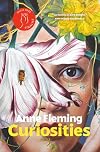
It's hard to express how much I appreciate this novel. It feels like one of those custom-made stories that I couldn't help but deeply love. There's also some literary merit though—so let's get into it.
The story of Curiosities is twofold: the story of documents and the story within documents. Framed by "Anne" (who we are to take as the titular author), who "discovers" three fragments of early 17th-century writers, we are taken on a journey spanning a plague, the high seas, and a witchcraft show more trial. Our players are Tom(asina)—a (tom)boy and sailor, Jane—his childhood friend and later lover, and Lady Margaret—a well-to-do scientist and creator of this small love triangle.
The story, as noted, is framed by the "documents" found by Anne. Each is given an introduction by the author, and each is copied for our reading "as-is." It took me far longer than I should admit to figure out that these major characters are made-up—and I hope I'm not ruining the fun for anyone by saying it here! I've worked in archives in some capacity since I was 19, spending the last year at the reference desk of an academic library. I'm pretty good at finding stuff, but even Fleming got the best of me at times. Various factual figures do make an appearance though, so watch out!
What follows then is a heartbreaking, harrowing, and deeply personal story of three individuals navigating their gender, sex, and desires amid a turbulent and unforgiving landscape. This is a historical world that is deeply foreign: people languish, people die, and fortunes turn ceaselessly at Fortuna's wheel. Just as all good historical fiction should accomplish, the small glimmers of joy sustain the usual bleakness and heartache of life. I don't cry reading, but I almost shed a tear or two. That's impressive.
What makes the conceit of veracity so tangible is the writing itself. Fleming has written her prose in an early-modern English style, with odd words, punctuation, and syntax to match. It reminded me at times of two of my other most favourite gay/transgender historical-fiction books: As Meat Loves Salt and Days Without End. Just as those two do, Curiosities utilizes the language of the period to make a startling unique contemporary piece that evokes the past in the clearest way possible. It is absolutely and utterly what I look for in historical fiction, moreso, I think than anything. Fleming isn't perfect though—I could tell a few pages in that it was not from a seventeenth-century hand—but I don't she was necessarily trying to fool anyone. It's subtle, but having read enough older texts, the weight of contemporary syntax, emotional consciousness, and punctuation is detectable.
Fleming has obviously drawn biographical styles from this period, emulating the sobriety of their words while softening them with her subtle contemporary flair. As I said, this is subtle: writing of the past is a tell, don't show affair. Writers of these centuries have an amazing command of language, with upstanding, ascension-prone prose that, to our ears, is quite stiff. Biographies, more than anything, were informed by classical rhetoric and meant to argue a solid point. Fleming turns it: with a more contemporary syntactical structure paired with an emphasis on the characters' internal emotions, the author has made it a modern story we can relate to. And man, can we relate to it!
My years in the archives have sent me through some particularly painful dead-end searches. I have utilized archives to understand difficult and sometimes contradictory aspects of my identities, and there really is nothing like "finding yourself" in the archive. Archival studies as an academic field is grappling with this new role too, in fact, and I can tell the author has had those same, omnipresent moments when we can see ourselves through the reflection of centuries past. I'm not trying to project, but as someone who lived two years as transgender man and left it to come back to "womanhood" still a bit confused, finding conceptions of masculine identities that validate the okayness you feel with your physical body is exceedingly hard to find. I've only ever felt normal when I see myself through crossdressing women in the past, and that, as a breed, is dying.
In all, Curiosities is a gem. I am so, so happy to have been gifted this as an ARC and to win a giveaway copy from Goodreads. I've been looking for that transgender historical-literary-fiction novel for half a decade now, and the existence of this tells me the next half-decade might treat us well. While I found some parts in the last third of the novel coming together a bit too cleanly for my taste, the amount of work I can tell went into it, and the sheer uniqueness of it, really trumps a lot of the criticisms. I also rate quite harshly, so a four-star is nothing to shake your head at.
Again, thank you NetGalley for an early copy in exchange for an honest review 🙏 show less
The story of Curiosities is twofold: the story of documents and the story within documents. Framed by "Anne" (who we are to take as the titular author), who "discovers" three fragments of early 17th-century writers, we are taken on a journey spanning a plague, the high seas, and a witchcraft show more trial. Our players are Tom(asina)—a (tom)boy and sailor, Jane—his childhood friend and later lover, and Lady Margaret—a well-to-do scientist and creator of this small love triangle.
The story, as noted, is framed by the "documents" found by Anne. Each is given an introduction by the author, and each is copied for our reading "as-is." It took me far longer than I should admit to figure out that these major characters are made-up—and I hope I'm not ruining the fun for anyone by saying it here! I've worked in archives in some capacity since I was 19, spending the last year at the reference desk of an academic library. I'm pretty good at finding stuff, but even Fleming got the best of me at times. Various factual figures do make an appearance though, so watch out!
What follows then is a heartbreaking, harrowing, and deeply personal story of three individuals navigating their gender, sex, and desires amid a turbulent and unforgiving landscape. This is a historical world that is deeply foreign: people languish, people die, and fortunes turn ceaselessly at Fortuna's wheel. Just as all good historical fiction should accomplish, the small glimmers of joy sustain the usual bleakness and heartache of life. I don't cry reading, but I almost shed a tear or two. That's impressive.
What makes the conceit of veracity so tangible is the writing itself. Fleming has written her prose in an early-modern English style, with odd words, punctuation, and syntax to match. It reminded me at times of two of my other most favourite gay/transgender historical-fiction books: As Meat Loves Salt and Days Without End. Just as those two do, Curiosities utilizes the language of the period to make a startling unique contemporary piece that evokes the past in the clearest way possible. It is absolutely and utterly what I look for in historical fiction, moreso, I think than anything. Fleming isn't perfect though—I could tell a few pages in that it was not from a seventeenth-century hand—but I don't she was necessarily trying to fool anyone. It's subtle, but having read enough older texts, the weight of contemporary syntax, emotional consciousness, and punctuation is detectable.
Fleming has obviously drawn biographical styles from this period, emulating the sobriety of their words while softening them with her subtle contemporary flair. As I said, this is subtle: writing of the past is a tell, don't show affair. Writers of these centuries have an amazing command of language, with upstanding, ascension-prone prose that, to our ears, is quite stiff. Biographies, more than anything, were informed by classical rhetoric and meant to argue a solid point. Fleming turns it: with a more contemporary syntactical structure paired with an emphasis on the characters' internal emotions, the author has made it a modern story we can relate to. And man, can we relate to it!
My years in the archives have sent me through some particularly painful dead-end searches. I have utilized archives to understand difficult and sometimes contradictory aspects of my identities, and there really is nothing like "finding yourself" in the archive. Archival studies as an academic field is grappling with this new role too, in fact, and I can tell the author has had those same, omnipresent moments when we can see ourselves through the reflection of centuries past. I'm not trying to project, but as someone who lived two years as transgender man and left it to come back to "womanhood" still a bit confused, finding conceptions of masculine identities that validate the okayness you feel with your physical body is exceedingly hard to find. I've only ever felt normal when I see myself through crossdressing women in the past, and that, as a breed, is dying.
In all, Curiosities is a gem. I am so, so happy to have been gifted this as an ARC and to win a giveaway copy from Goodreads. I've been looking for that transgender historical-literary-fiction novel for half a decade now, and the existence of this tells me the next half-decade might treat us well. While I found some parts in the last third of the novel coming together a bit too cleanly for my taste, the amount of work I can tell went into it, and the sheer uniqueness of it, really trumps a lot of the criticisms. I also rate quite harshly, so a four-star is nothing to shake your head at.
Again, thank you NetGalley for an early copy in exchange for an honest review 🙏 show less
Anne Fleming’s “genre-bending” novel, Curiosities, is an astounding work of imaginative reconstruction that takes the reader back to 17th-century Britain, a time when society was subject to and sometimes shaped by rampant outbreaks of disease and instances of mass hysteria. The novel is constructed as an assortment of documents from the 1600’s that, brought together from various sources, collectively and from several perspectives tell the story of a small and obscure, but remarkable show more group of characters. The novel is introduced by an historian named Anne Fleming, who explains that her research has serendipitously given her access to these papers and that, finding her interest stimulated, has taken it upon herself to reproduce them in book form. The meat of the story begins in the English hamlet of Wormshill in 1603 with an outbreak of plague that decimates the population. The two survivors, Joan Palmer and toddler Thomasina (who prefers to be called Tom), are first taken in by deaf recluse Barrows Mary, whom they call Old Nut, and then another family, remaining together until Tom’s father returns and takes Tom away. Joan grows into a young woman of great poise with an inquiring nature and sophisticated intelligence who ends up in the service of, and eventually as companion to, widowed noblewoman Margaret Long. Tom’s father takes his family on a ship heading to the colony of Virginia, a journey during which Tom’s entire family succumbs to disease and shipboard mishaps. As a matter of survival, Tom adopts a masculine persona and remains at sea, travelling around the world, eventually landing back in England with a medical degree. By chance, Joan and Thomasina, who’s still living as Tom, meet and their love is rekindled. But before they can declare themselves, they are discovered naked with one another by a young cleric, John Heard, an enthusiastic recruit in the cause of rooting out witchcraft and devil worship. Seeing Tom has no penis, Heard decides that Joan is a witch who has “unmanned” him, and sets out to have Joan arrested. Meanwhile, Tom, fearing exposure as a woman, leaves the country on board a ship bound for the north Atlantic in search of a passage to Asia.
Curiosities is a bit of a puzzle that asks the reader to piece together a story from several fragments, but the effort is more than worth the trouble. Fleming navigates her way through her material with ease, persuasively writing in the archaic voices of people who lived hundreds of years ago and spinning a pulsating narrative that never loses steam. Without exception, Fleming’s characters emerge as three-dimensional people, and a tempestuous era of scientific exploration and religious fanaticism comes vividly alive, with its fears and prejudices intact.
Anne Fleming’s elegant and skillfully crafted novel about lovers in a dangerous time is a gripping and fascinating triumph. show less
Curiosities is a bit of a puzzle that asks the reader to piece together a story from several fragments, but the effort is more than worth the trouble. Fleming navigates her way through her material with ease, persuasively writing in the archaic voices of people who lived hundreds of years ago and spinning a pulsating narrative that never loses steam. Without exception, Fleming’s characters emerge as three-dimensional people, and a tempestuous era of scientific exploration and religious fanaticism comes vividly alive, with its fears and prejudices intact.
Anne Fleming’s elegant and skillfully crafted novel about lovers in a dangerous time is a gripping and fascinating triumph. show less
This book made it onto the 2024 Giller Prize shortlist but was not the ultimate winner. I have read the winner (Held by Anne Michaels) and it was also very good but I think I would give this one slightly more points.
The book revolves around a number of supposed historical documents found by a researcher named Anne. She tells the reader about the circumstances of finding a particular document but then will let the document tell the story. In the first portion, Lady Margaret Long, a learned show more woman with many interests but particularly astronomy and birds, introduces her maid, Joan. Then Joan's story, as transcribed by Lady Long, tells about her childhood in a village where the Bubonic plague killed everyone except herself and one other young girl called Thomasina. Joan and Thomasina might have died from starvation if it was not for being taken in by a woman known as Old Nut. When people who had fled from the plague returned home, Joan was kept as a servant but Thomasina (who prefers to be called Tom) is taken off by her father. He plans to set sail for Virginia with a new wife and to take Thomasina with him. However, before we learn of Tom/Thomasina's life we are introduced to a clergyman, John Heard, who becomes fixated with the idea of witches and witchcraft. His former classmate, Tom Barrow, has come to visit Lady Long and John is invited to her estate. He is caught in a rainstorm and seeks refuge in a small cabin on the estate where he sees Joan and Tom both naked. The cleric immediately assumes Joan is a witch and has stolen Tom's penis because Tom has no male parts. Of course, Tom Barrow is Joan's childhood friend Thomasina and they are now sexually attracted to each other. With John Heard's discovery of them, Tom sets sail with a ship that is set for the Northwest Passage. He intends to return to Joan after the voyage and settled down with her as man and wife. In his absence, Joan is accused of witchcraft. Although she is not tried, she becomes very ill. Tom's letters to Joan from the Hudson's Bay form part of the narrative but they are listed as never delivered. The fate of Joan and Tom is still a mystery to researcher Anne.
This was a very cleverly constructed book. More than that, the story is one that intrigues. show less
The book revolves around a number of supposed historical documents found by a researcher named Anne. She tells the reader about the circumstances of finding a particular document but then will let the document tell the story. In the first portion, Lady Margaret Long, a learned show more woman with many interests but particularly astronomy and birds, introduces her maid, Joan. Then Joan's story, as transcribed by Lady Long, tells about her childhood in a village where the Bubonic plague killed everyone except herself and one other young girl called Thomasina. Joan and Thomasina might have died from starvation if it was not for being taken in by a woman known as Old Nut. When people who had fled from the plague returned home, Joan was kept as a servant but Thomasina (who prefers to be called Tom) is taken off by her father. He plans to set sail for Virginia with a new wife and to take Thomasina with him. However, before we learn of Tom/Thomasina's life we are introduced to a clergyman, John Heard, who becomes fixated with the idea of witches and witchcraft. His former classmate, Tom Barrow, has come to visit Lady Long and John is invited to her estate. He is caught in a rainstorm and seeks refuge in a small cabin on the estate where he sees Joan and Tom both naked. The cleric immediately assumes Joan is a witch and has stolen Tom's penis because Tom has no male parts. Of course, Tom Barrow is Joan's childhood friend Thomasina and they are now sexually attracted to each other. With John Heard's discovery of them, Tom sets sail with a ship that is set for the Northwest Passage. He intends to return to Joan after the voyage and settled down with her as man and wife. In his absence, Joan is accused of witchcraft. Although she is not tried, she becomes very ill. Tom's letters to Joan from the Hudson's Bay form part of the narrative but they are listed as never delivered. The fate of Joan and Tom is still a mystery to researcher Anne.
This was a very cleverly constructed book. More than that, the story is one that intrigues. show less
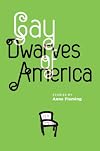
Have I mentioned lately that I love Anne Fleming’s writing? (I would say I love her, but we’ve never met and are facebook friends, and that feels a bit awkward). Reading her recently released short story collection Gay Dwarves of America was a bittersweet experience for me, because I knew once I finished it, I wouldn’t have anything new to read by her until her next book came out. As in Fleming’s other work, Pool-Hopping and Other Stories (her first collection that was shortlisted show more for the Governor General’s Award for Fiction) and Anomaly (a critically acclaimed novel born out of one of the stories from Pool-Hopping), Gay Dwarves—I’ll get to this awesome title momentarily—peels away the layers of everyday people in everyday situations to reveal their surprising peculiarities. Or perhaps these peculiarities are not so shocking, considering what we all figure out when we get to know new folks: everyone’s pretty weird, right? Fleming shows us that, in fact, it’s our eccentricities, in all their diverse glory, which make us human; in fact, they’re what we all have in common...
See the rest of the review on my website: http://caseythecanadianlesbrarian.wordpress.com/2012/11/29/a-collection-at-once-... show less
See the rest of the review on my website: http://caseythecanadianlesbrarian.wordpress.com/2012/11/29/a-collection-at-once-... show less
Lists
Titoli bestiali (1)
Awards


You May Also Like


Associated Authors
Statistics
- Works
- 17
- Also by
- 3
- Members
- 207
- Popularity
- #106,919
- Rating
- 3.7
- Reviews
- 14
- ISBNs
- 46
- Languages
- 3