
Nicole Lea Helget
Author of The End of the Wild
About the Author
Nicole Lea Helget teaches writing at Minnesota State University, Mankato.
Series
Works by Nicole Lea Helget
Tagged
Common Knowledge
- Gender
- female
Members
Reviews
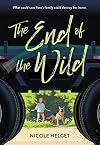
Fern lives with her stepdad Toivo and two little brothers; her baby brother and her mother were killed in a car accident. Toivo, a veteran, struggles to find and hold work (often through no fault of his own), and Fern's maternal grandpa wants custody of the children, but Fern wants to stay with Toivo and her brothers in the woods, where she often forages for berries, mushrooms, fiddleheads, and more. Fern has her mom's old recipe cards, which become the basis for her STEM project about food show more in the woods - the same woods that are in danger from a new fracking operation. Her two best friends, Mark-Richard and Alkomso, pair up to work on a "What Is Fracking?" project. Mark-Richard and his brother have recently been split up and put in different foster homes, and Fern knows that CPS is visiting her family soon as well - but caseworker Miss Tassel (actually Dr. Tassel) breaks the stereotypical social worker mold, listens to Fern, and stands up to Fern's grandpa. There is less resolution than in some middle grade books - there is a moratorium on fracking in Fern's woods, but it's still a possibility - and a dog does die, but life (in the form of puppies) goes on.
See also: Me and Marvin Gardens by Amy Sarig King
Quotes
"True learning comes from being open to wrong answers." (Mr. Flores, 13)
"Grandpa thinks he knows what's best for everyone without asking them." (25)
"I've seen corporations convince governments to do lots of crazy things." (Toivo, 91)
I don't know how he's making connections in his head. I've noticed that adults sometimes do this thing where they don't answer the question a kid has asked and instead start going on about something they're comfortable talking about instead. (94)
"Adults do all kinds of dumb things to handle problems." (Alkomso to Fern, 122)
It was easier when we agreed about everything.
But now I have to have my own mind. And she has to have her own mind. And somehow we have to figure out how to be a different kind of friend to each other. (180)
From Author's Note:
The struggles of Fern's family are ones I see often, which is why there's sometimes a rush to embrace any new industry promising employment, even when it is temporary, even when the downside is environmental destruction. (264)
We can't make informed decisions about food, water, or energy from a position of ignorance. (266) show less
See also: Me and Marvin Gardens by Amy Sarig King
Quotes
"True learning comes from being open to wrong answers." (Mr. Flores, 13)
"Grandpa thinks he knows what's best for everyone without asking them." (25)
"I've seen corporations convince governments to do lots of crazy things." (Toivo, 91)
I don't know how he's making connections in his head. I've noticed that adults sometimes do this thing where they don't answer the question a kid has asked and instead start going on about something they're comfortable talking about instead. (94)
"Adults do all kinds of dumb things to handle problems." (Alkomso to Fern, 122)
It was easier when we agreed about everything.
But now I have to have my own mind. And she has to have her own mind. And somehow we have to figure out how to be a different kind of friend to each other. (180)
From Author's Note:
The struggles of Fern's family are ones I see often, which is why there's sometimes a rush to embrace any new industry promising employment, even when it is temporary, even when the downside is environmental destruction. (264)
We can't make informed decisions about food, water, or energy from a position of ignorance. (266) show less

This historical novel sat languishing on my Overdrive wish list for a few years - so long, in fact, that I don't recall what made me put it on there in the first place. But I am so pleased I finally borrowed and read it, as it's exactly what I want in historical fiction. The sense of time and place are impeccably rendered, and the diverse cast of characters are well-developed and fascinating. Combining aspects of American history (Minnesota statehood, the Underground Railroad, European show more settlement, Native American displacement), Native American mythology, and the intertwining stories of several characters, it's a rich tapestry of a narrative that drew me in immediately and kept me rapt until the final pages.
5 stars show less
5 stars show less
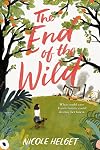
Wow, there's a lot to unpack in this book -- in a good way, too -- sophisticated stuff presented in an accessible narrative. Good page space, nicely broken up by recipes, so it never bogs down. 11 year old girl, Fern, with a prematurely grey hair streak. In 6th grade, with 2 younger brothers and a stepfather. Her mom and the baby died in a car accident some time previous.
Her wealthy grandfather is trying to get custody of the kids from the stepfather. Stepfather, Toivo, is an Iraq vet who's show more coping, and who's struggling to find work. Supplements food sources by hunting. Fern learned a lot of foraging and cooking from her mom, so also brings in food that way. There is definitely a lot on Fern's shoulders -- a lot of child care, a lot of food prep and cleaning, but I think this is a perspective that many older kids in impoverished families would identify with.
Frakking has arrived in their community, and the book centers on the raging debate over whether the new jobs created outweigh the loss of wild spaces. This is well developed and presented for kids to think about -- Fern's Somali best friend comes down on opposite sides from her, and they still find ways to preserve their friendship and communicate.
As a counterpoint to the environmental relationships that are in flux, the book has diverse family relationships that are also shifting -- Fern and family, grieving for their lost mother and younger brother, torn between the money her grandfather has on hand and the ugly custody battle he's bringing. Fern's isolated neighbor, Millner, who owns the woods that are in danger and is the cause of her mother's death (fell asleep at the wheel), and also the owner of a pack of dogs that play a heavy role in the story. Fern's 2 best friends -- Mark Richard and his 2 siblings, taken into care when their house burns down and Alkomso, recent Somali immigrant, who's father is away looking for work and is relieved when he can return to take a frakking job. All of the kids have younger siblings, which adds another facet to their friendships. There's a mean girl club at school that periodically reappears, and have divorce as a unifying theme. The social worker who is in the middle of all of this is pretty kindly portrayed -- Fern wants nothing to do with her, but her influence helps solve some problems, and she turns into an unexpected ally.
On top of all of this, there's a STEM science fair competition coming up, their beloved science teacher is put on leave for protesting the frakking, and the new, fast moving trucks on Fern's road nearly kill her brothers. Heroic dog sacrifice happens instead. Grrrr. No more dead dogs, guys, that's not cool. Realistic, but not cool. Anyway, it's a lot. It's a surprisingly cohesive, quick moving read considering how much is going on. The characters are sympathetically portrayed, and it's a convincing encapsulation of daily life in a rural area where everyone's just trying to get by. show less
Her wealthy grandfather is trying to get custody of the kids from the stepfather. Stepfather, Toivo, is an Iraq vet who's show more coping, and who's struggling to find work. Supplements food sources by hunting. Fern learned a lot of foraging and cooking from her mom, so also brings in food that way. There is definitely a lot on Fern's shoulders -- a lot of child care, a lot of food prep and cleaning, but I think this is a perspective that many older kids in impoverished families would identify with.
Frakking has arrived in their community, and the book centers on the raging debate over whether the new jobs created outweigh the loss of wild spaces. This is well developed and presented for kids to think about -- Fern's Somali best friend comes down on opposite sides from her, and they still find ways to preserve their friendship and communicate.
As a counterpoint to the environmental relationships that are in flux, the book has diverse family relationships that are also shifting -- Fern and family, grieving for their lost mother and younger brother, torn between the money her grandfather has on hand and the ugly custody battle he's bringing. Fern's isolated neighbor, Millner, who owns the woods that are in danger and is the cause of her mother's death (fell asleep at the wheel), and also the owner of a pack of dogs that play a heavy role in the story. Fern's 2 best friends -- Mark Richard and his 2 siblings, taken into care when their house burns down and Alkomso, recent Somali immigrant, who's father is away looking for work and is relieved when he can return to take a frakking job. All of the kids have younger siblings, which adds another facet to their friendships. There's a mean girl club at school that periodically reappears, and have divorce as a unifying theme. The social worker who is in the middle of all of this is pretty kindly portrayed -- Fern wants nothing to do with her, but her influence helps solve some problems, and she turns into an unexpected ally.
On top of all of this, there's a STEM science fair competition coming up, their beloved science teacher is put on leave for protesting the frakking, and the new, fast moving trucks on Fern's road nearly kill her brothers. Heroic dog sacrifice happens instead. Grrrr. No more dead dogs, guys, that's not cool. Realistic, but not cool. Anyway, it's a lot. It's a surprisingly cohesive, quick moving read considering how much is going on. The characters are sympathetically portrayed, and it's a convincing encapsulation of daily life in a rural area where everyone's just trying to get by. show less
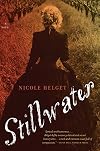
Set in Stillwater, Minnesota Territory in the mid-19th century, Helget's novel presents a fascinating portrait of America's still-developing frontier in the years before statehood and the Civil War. Clement and Angel are fraternal twins, born in a Catholic orphanage to a girl escaping her trapper husband, an older man who bought her from her stepmother. Lydia has no intention of returning to Beaver Jean and his two Indian wives and leaves shortly after giving birth, hoping that the twins show more will find adoptive parents. Angel is adopted by the wealthiest family in town--a family whose newborn had recently died under questionable circumstances, but they refuse to take Clement, who appears to be weak and unhealthy. He will stay at the orphanage, raised by Big Waters, an Indian woman who works there. Clement has always felt that there is someone out there who silently communicates with him, and when he meets Angel, both seem to know immediately that they are separated twins. While it would appear that Angel has everything and Clement nothing, things are not always as they seem . . .
Helget brings a number of interesting characters attached to the story. There's Beaver Jean, who, despite his crude nature, seems to truly love his Lydia and sets out to find her and what he assumes is his son. Mother St. John, the youngish nun-out-of-habit who runs the orphanage/infirmary. Big Waters, who devotes her life to the sickly Clement. Little Davis Christmas and his mother, a runaway slave who is trying to get to Canada via the Underground Railroad. Beaver Jean's Indian wives, jealous of Lydia, practical, and devoted to the man who has taken them in. Father Paul, the local priest, who helps to move runaway slaves.
The story takes place over about 30 years, through the Civil War period and beyond. In the course of time, these characters meet and interact, often in very unexpected and sometimes tragic ways. I really enjoyed Helget's unique plot and engaging characters as well as her vivid, sensitive writing. I had never heard of this author before, but Stillwater is the only book that has made my "Best of 2020" list so far, easily surpassing two highly acclaimed recent novels (The Stationery Shop and Africaville) and one by a well-known author (Leila Aboulela). show less
Helget brings a number of interesting characters attached to the story. There's Beaver Jean, who, despite his crude nature, seems to truly love his Lydia and sets out to find her and what he assumes is his son. Mother St. John, the youngish nun-out-of-habit who runs the orphanage/infirmary. Big Waters, who devotes her life to the sickly Clement. Little Davis Christmas and his mother, a runaway slave who is trying to get to Canada via the Underground Railroad. Beaver Jean's Indian wives, jealous of Lydia, practical, and devoted to the man who has taken them in. Father Paul, the local priest, who helps to move runaway slaves.
The story takes place over about 30 years, through the Civil War period and beyond. In the course of time, these characters meet and interact, often in very unexpected and sometimes tragic ways. I really enjoyed Helget's unique plot and engaging characters as well as her vivid, sensitive writing. I had never heard of this author before, but Stillwater is the only book that has made my "Best of 2020" list so far, easily surpassing two highly acclaimed recent novels (The Stationery Shop and Africaville) and one by a well-known author (Leila Aboulela). show less
Awards


You May Also Like


Statistics
- Works
- 17
- Members
- 585
- Popularity
- #42,855
- Rating
- 3.4
- Reviews
- 27
- ISBNs
- 56
- Languages
- 1