
Padma Venkatraman
Author of The Bridge Home
About the Author
Image credit: Venkatraman at the 2019 Texas Book Festival By Larry D. Moore, CC BY-SA 4.0, https://commons.wikimedia.org/w/index.php?curid=84495820
Works by Padma Venkatraman
Associated Works
Tagged
Common Knowledge
- Legal name
- Venkatraman, Padma Tiruponithura
- Gender
- female
- Education
- College of William and Mary (PhD|Oceanography)
- Occupations
- oceanographer
professor
author - Organizations
- University of Rhode Island
- Nationality
- India (birth)
USA (naturalized) - Birthplace
- Chennai, India
- Places of residence
- Germany
UK
Rhode Island, USA - Associated Place (for map)
- Chennai, India
Members
Reviews
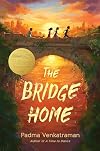
Venkatraman’s middle-grade debut tackles sisterhood, chosen families, and loss.
Eleven-year-old Viji and her sister, Rukku, flee their abusive father after he breaks Amma’s arm and kicks Rukku. They find themselves, overwhelmed, in the big city of Chennai, where they are temporarily employed by kind Teashop Aunty, who offers them bananas and vadais, and fall in love with a puppy, Kutti, who becomes their constant companion. The sisters meet Muthu and Arul, two boys who live under an show more abandoned bridge, and join them; Viji tells Rukku elaborate stories to reassure herself and her sister that they will be OK. Soon, Viji finds herself telling the young boys her stories as well; in return, the boys show the girls how to earn money on the streets: by scavenging for resalable trash in a very large garbage dump Muthu calls “the Himalayas of rubbish.” When tragedy strikes, it is this new family who helps Viji come to terms. Craftwise, the book is thoughtful: Venkatraman employs the second person throughout as Viji writes to Rukku, and readers will ultimately understand that Viji is processing her grief by writing their story. Viji’s narration is vivid and sensory; moonlight “slip[s] past the rusty iron bars on our window”; “the taste of half an orange…last[s] and last[s].” The novel also touches on social justice issues such as caste, child labor, and poverty elegantly, without sacrificing narrative.
A blisteringly beautiful book. (Fiction. 10-14)
-Kirkus Review show less
Eleven-year-old Viji and her sister, Rukku, flee their abusive father after he breaks Amma’s arm and kicks Rukku. They find themselves, overwhelmed, in the big city of Chennai, where they are temporarily employed by kind Teashop Aunty, who offers them bananas and vadais, and fall in love with a puppy, Kutti, who becomes their constant companion. The sisters meet Muthu and Arul, two boys who live under an show more abandoned bridge, and join them; Viji tells Rukku elaborate stories to reassure herself and her sister that they will be OK. Soon, Viji finds herself telling the young boys her stories as well; in return, the boys show the girls how to earn money on the streets: by scavenging for resalable trash in a very large garbage dump Muthu calls “the Himalayas of rubbish.” When tragedy strikes, it is this new family who helps Viji come to terms. Craftwise, the book is thoughtful: Venkatraman employs the second person throughout as Viji writes to Rukku, and readers will ultimately understand that Viji is processing her grief by writing their story. Viji’s narration is vivid and sensory; moonlight “slip[s] past the rusty iron bars on our window”; “the taste of half an orange…last[s] and last[s].” The novel also touches on social justice issues such as caste, child labor, and poverty elegantly, without sacrificing narrative.
A blisteringly beautiful book. (Fiction. 10-14)
-Kirkus Review show less
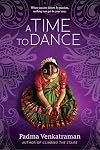
In this novel in verse set in India, Veda is a Bharatanatyam dancer; her father and beloved grandmother Paati support her, but her mother wishes she would study harder and become an engineer. On the way home after winning a competition, Veda is in a car accident; when she wakes in the hospital, she discovers her right leg has been amputated below the knee. Veda grieves the loss of her leg, but heals and learns to walk again with crutches and a temporary prosthetic while a visiting American show more doctor makes her a better one. The new prosthetic is better, but Veda's old dance teacher won't take her back; determined to dance, Veda finds a new teacher (and her assistant, handsome Govinda). As Veda relearns her dancing skills and rebuilds her life, she comes to a different, deeper understanding of dance than she had before.
Quotes
God's grace moves the mute to eloquence
and inspires the lame to climb mountains. (43)
"Some things you never get used to being without." (Paati to Veda, 51)
"To me, Karma isn't about divine reward or retribution.
Karma is about making wise choices to create a better future.
It's taking responsibility for your actions.
Karma helps me see every hurdle as a chance to grow
into a stronger, kinder soul." (Paati to Veda, 98)
"Your strength...reminds me of the demon
whom Shiva fought,
the demon whose strength doubled
whenever he fell to the ground." (Govinda to Veda, 186)
"Inside you, Veda, I sense the flame of extraordinary courage,
but not enough compassion." (Akka to Veda, 197)
"For me that feeling
of wonder, of awe, of mystery,
of being in touch with something larger,
is as close as God comes." (Govinda to Veda, 240)
She is a pebble skipping
over the surface of a lake.
As I once was.
Not a deep sinking stone that leaves widening ripples behind
after it's disappeared.
As I hope to be. (288)
"There are three kinds of love, Veda.
A healthy love of one's physical self,
compassion for others,
and an experience of God." (Akka, 296)
See also: The Sea in Winter by Christine Day, Amal Unbound by Aisha Saeed show less
Quotes
God's grace moves the mute to eloquence
and inspires the lame to climb mountains. (43)
"Some things you never get used to being without." (Paati to Veda, 51)
"To me, Karma isn't about divine reward or retribution.
Karma is about making wise choices to create a better future.
It's taking responsibility for your actions.
Karma helps me see every hurdle as a chance to grow
into a stronger, kinder soul." (Paati to Veda, 98)
"Your strength...reminds me of the demon
whom Shiva fought,
the demon whose strength doubled
whenever he fell to the ground." (Govinda to Veda, 186)
"Inside you, Veda, I sense the flame of extraordinary courage,
but not enough compassion." (Akka to Veda, 197)
"For me that feeling
of wonder, of awe, of mystery,
of being in touch with something larger,
is as close as God comes." (Govinda to Veda, 240)
She is a pebble skipping
over the surface of a lake.
As I once was.
Not a deep sinking stone that leaves widening ripples behind
after it's disappeared.
As I hope to be. (288)
"There are three kinds of love, Veda.
A healthy love of one's physical self,
compassion for others,
and an experience of God." (Akka, 296)
See also: The Sea in Winter by Christine Day, Amal Unbound by Aisha Saeed show less

Told in verse, this is a quick read though still feels like it has plenty of depth.
I felt for Geetha every step of the way, her transition from India to the US isn’t easy, missing her grandparents and best friend/cousin, even her dog has to stay behind, and there’s niggling worries that her mom’s mental health struggles could return, on top of that an awful classmate ridicules everything about Geetha from the way she speaks to what she eats and wears.
The author strongly conveys the show more weight of all those emotional challenges yet seeing this girl and her mom doing this brave thing of moving to a foreign country, watching Geetha’s confidence, her comfort level, and her connections to new people grow through her love of music, interest in nature and trying to help a seal in need, this is very much a feel good read, too, with a young heroine who’s as easy to love as she is to admire. show less
I felt for Geetha every step of the way, her transition from India to the US isn’t easy, missing her grandparents and best friend/cousin, even her dog has to stay behind, and there’s niggling worries that her mom’s mental health struggles could return, on top of that an awful classmate ridicules everything about Geetha from the way she speaks to what she eats and wears.
The author strongly conveys the show more weight of all those emotional challenges yet seeing this girl and her mom doing this brave thing of moving to a foreign country, watching Geetha’s confidence, her comfort level, and her connections to new people grow through her love of music, interest in nature and trying to help a seal in need, this is very much a feel good read, too, with a young heroine who’s as easy to love as she is to admire. show less
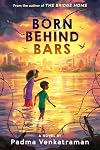
Ayoung boy is forced to leave the Chennai jail that is the only home he’s ever known.
When Kabir is deemed too old to stay and is sent out into the world all alone, separated from his wrongfully imprisoned mother, he decides to search for the family of the father he has never met to try to save his mother from her unjustly long sentence. Armed with faith, instinctive wits, and the ability to run fast, Kabir escapes danger and meets Rani, a teenage girl from the marginalized Kurava, or Roma, show more people who is traveling with her parrot. She teaches Kabir, who has a Hindu mother and a Muslim father, about caste dynamics and survival on the streets. She accompanies him to Bengaluru, where Kabir eventually meets his paternal grandparents. Along the way, their experiences reveal the invisibility of low-caste people in Indian society, tensions between neighboring states over water supplies, and the unexpected kindness of helpful strangers. Kabir’s longing for freedom and justice underscores bittersweet twists and turns that resolve in an upbeat conclusion, celebrating his namesake, a saint who sought to unify Muslims and Hindus. Kabir engages readers by voicing his thoughts, vulnerability, and optimism: While his early physical environment was confined within prison walls, his imagination was nourished by stories and songs. This compelling novel develops at a brisk pace, advanced by evocative details and short chapters full of action.
A gritty story filled with hope and idealism. (author's note) (Fiction. 8-12)
-Kirkus Review show less
When Kabir is deemed too old to stay and is sent out into the world all alone, separated from his wrongfully imprisoned mother, he decides to search for the family of the father he has never met to try to save his mother from her unjustly long sentence. Armed with faith, instinctive wits, and the ability to run fast, Kabir escapes danger and meets Rani, a teenage girl from the marginalized Kurava, or Roma, show more people who is traveling with her parrot. She teaches Kabir, who has a Hindu mother and a Muslim father, about caste dynamics and survival on the streets. She accompanies him to Bengaluru, where Kabir eventually meets his paternal grandparents. Along the way, their experiences reveal the invisibility of low-caste people in Indian society, tensions between neighboring states over water supplies, and the unexpected kindness of helpful strangers. Kabir’s longing for freedom and justice underscores bittersweet twists and turns that resolve in an upbeat conclusion, celebrating his namesake, a saint who sought to unify Muslims and Hindus. Kabir engages readers by voicing his thoughts, vulnerability, and optimism: While his early physical environment was confined within prison walls, his imagination was nourished by stories and songs. This compelling novel develops at a brisk pace, advanced by evocative details and short chapters full of action.
A gritty story filled with hope and idealism. (author's note) (Fiction. 8-12)
-Kirkus Review show less
Lists
Awards


You May Also Like


Associated Authors
Statistics
- Works
- 11
- Also by
- 4
- Members
- 2,142
- Popularity
- #12,010
- Rating
- 4.0
- Reviews
- 86
- ISBNs
- 71
- Languages
- 3
- Favorited
- 1