
Nancy Bo Flood
Author of I Will Dance
About the Author
Works by Nancy Bo Flood
Tagged
Common Knowledge
- Legal name
- Flood, Nancy Bohac
- Gender
- female
- Occupations
- psychologist
Members
Reviews
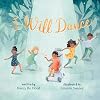
Agirl who uses a motorized wheelchair longs to dance.
The 10-year-old narrator can’t blow out the candles on her birthday cake, but she has one wish: to dance. But how can she “swirl, leap, twirl” when she can move only her head, arms, and fingers? Pretending isn’t enough. At breakfast one morning (a spill-proof cup at the child’s place adds cozy realism), one of her moms reads that the real-life company Young Dance is auditioning dancers of “all abilities, all ages.” Though show more apprehensive, she needs to try. At the instructor’s balletic welcome, she “swirl[s]” her fingers, joining a multiracial circle of dancers. Some dance unaided; some use “canes and crutches, / walkers and wheels.” One wears a prosthesis. Their dancing is emphatically “not pretend”—neither imaginary nor relegated to a form of therapy. Eva’s narration brims with elation as together they “create space, / create shape, / create dance,” culminating in a triumphant performance. The text itself dances across the page, lines tiptoeing phrase by phrase and echoing the shapes of dancers’ movements. Swaney’s simply drawn dancers are rosy-cheeked and cheerful; magic shimmers from their fingers, proudly joining them “[a]s one, / as us.” An author’s note explains that Eva is based on a real dancer; a note from Young Dance’s executive director describes the company. Eva presents as a child of color and wears glasses; her moms present white.
A gorgeous, immersive celebration of dancing and the grace within all bodies. (Picture book. 6-10)
-Kirkus Review show less
The 10-year-old narrator can’t blow out the candles on her birthday cake, but she has one wish: to dance. But how can she “swirl, leap, twirl” when she can move only her head, arms, and fingers? Pretending isn’t enough. At breakfast one morning (a spill-proof cup at the child’s place adds cozy realism), one of her moms reads that the real-life company Young Dance is auditioning dancers of “all abilities, all ages.” Though show more apprehensive, she needs to try. At the instructor’s balletic welcome, she “swirl[s]” her fingers, joining a multiracial circle of dancers. Some dance unaided; some use “canes and crutches, / walkers and wheels.” One wears a prosthesis. Their dancing is emphatically “not pretend”—neither imaginary nor relegated to a form of therapy. Eva’s narration brims with elation as together they “create space, / create shape, / create dance,” culminating in a triumphant performance. The text itself dances across the page, lines tiptoeing phrase by phrase and echoing the shapes of dancers’ movements. Swaney’s simply drawn dancers are rosy-cheeked and cheerful; magic shimmers from their fingers, proudly joining them “[a]s one, / as us.” An author’s note explains that Eva is based on a real dancer; a note from Young Dance’s executive director describes the company. Eva presents as a child of color and wears glasses; her moms present white.
A gorgeous, immersive celebration of dancing and the grace within all bodies. (Picture book. 6-10)
-Kirkus Review show less
Sophie's pregnant mother falls and goes into premature labor. With the help of Aunt Rae and her grandmother, the baby is safely delivered however Sophie's mother is weak and on death's door. Sophie finds herself returning to the row of gravestone where three non-name babies are buried, her mother's previous three miscarriages.
I thought the book a bit heavy for teenagers and a bit simple for adults. I thought it was extremely well written and engaging. Sophie is very relatable and your heart show more goes out to her family. Overall, not a bad read. show less
I thought the book a bit heavy for teenagers and a bit simple for adults. I thought it was extremely well written and engaging. Sophie is very relatable and your heart show more goes out to her family. Overall, not a bad read. show less
When the fighting of WWII reaches the strategic island of Saipan, it falls to 12-year-old Joseph to help his family survive. The war exposes a rift between Joseph and his best friend and cousin, Kento. While Kento's mother and Joseph's mother are sisters from one of the local tribes, Kento's father is Japanese. Should Joseph trust Kento once the fighting begins? Which ties are stronger for Kento – family or nation?
This coming of age novel explores themes of war, family, friendship, show more loyalty, courage, fear, and grief. The point of view of the non-Japanese, non-American inhabitants of a Pacific island is probably unfamiliar to many readers. Each chapter opens with a short free verse poem, adding an emotional dimension to the story. The novel could be used as supplemental reading for a study of the Pacific Theater in World War II. Recommended for middle school age and up. show less
This coming of age novel explores themes of war, family, friendship, show more loyalty, courage, fear, and grief. The point of view of the non-Japanese, non-American inhabitants of a Pacific island is probably unfamiliar to many readers. Each chapter opens with a short free verse poem, adding an emotional dimension to the story. The novel could be used as supplemental reading for a study of the Pacific Theater in World War II. Recommended for middle school age and up. show less
A girl in a wheelchair who can only move her head, arms and fingers, longs to dance and feel the movements of other dancers. Her mother brings her to a class for dancers of all abilities. There the girl meets dancers with canes, crutches and bare feet. She soon discovers the joy and unity of dance. The rhythm of the prose expresses the free movement of an improvisational dance.
Lists
Awards


You May Also Like


Associated Authors
Statistics
- Works
- 20
- Members
- 480
- Popularity
- #51,407
- Rating
- 4.0
- Reviews
- 28
- ISBNs
- 37