
Juwanda G. Ford
Author of Together for Kwanzaa (Pictureback(R))
About the Author
Series
Works by Juwanda G. Ford
Kwanzaa 1 copy
Tagged
Common Knowledge
There is no Common Knowledge data for this author yet. You can help.
Members
Reviews
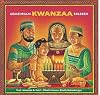
(German below.)
The drawings are all very nice and look like they’ve been drawn with coloring pencils, alas, hand-drawn on paper, which definitely is more work than drawing digitally. Wonderful.
I especially loved the mandalas and patterns in the background or as a frame, which remind me of rug art.
I loved the detail in the background of the first page, where you can see a calendar with the marked days. That way you can easily see when the holiday is celebrated!
There are a few words and show more sentences in Swahili, and I liked that they wrote the pronunciation in brackets right behind the word/sentence and a translation as well.
At the end, there’s an index anyway though, which is good too.
I did learn quite a lot. For example, it’s interesting that corn is symbolic for children in a family. Why corn specifically? Will research it afterwards.
Also, I always thought the order was the other way round (from the outer candles to the middle, so that the middle candle is lit at the end). But it does make more sense that the black candle is lit from the beginning on. The meaning of the colors of the candles are also interesting.
Definitely an educational book for children and adults alike. The pictures are colorful, which surely will draw a lot of children in; it did do it for me, especially the decorations and patterns in the backgrounds.
I can highly recommend this little book to anyone, especially those, who like to read about different cultures!
~
A little unrealistic was the reason why the brother couldn’t be there from the beginning. Is it common in the USA to be stuck in a school for days because of a snow storm?
I mean, it’s not a big deal and most kids probably won’t even care about that, but maybe it could’ve been changed into a little more realistic reason.
~
Overall it was a very pleasant read and I enjoyed it a lot. Big thanks to the gratitude publisher for sending me a review copy!
~~~
Die Zeichnungen sind schön und sehen aus, als wären sie mit Buntstiften ausgemalt, also auf Papier, was durchaus mehr Arbeit ist, als es digital zu machen. Schön.
Gefallen haben mir immer wieder die Mandalas und Verzierungen im Hintergrund oder als Rahmen, welche an einen Teppich erinnern.
Am Anfang hat mich das Detail mit dem Kalender im Hintergrund sehr entzückt. So sieht man gleich, von wann bis wann das Fest geht!
Es gibt einige Begriffe und Sätze, die in Swahili geschrieben wurden und hier gefällt mir, dass die Aussprache gleich dahinter in Klammern steht und ebenso eine Übersetzung im nächsten Satz folgt.
Ganz am Ende gibt es trotzdem ein Verzeichnis, was ebenfalls toll ist.
Ich hab einiges dazu gelernt. Zum Beispiel ist interessant, dass Mais für die Kinder in der Familie steht. Warum gerade Mais? Da werde ich mich gleich mal schlau machen.
Ebenso dachte ich immer, die Reihenfolge der Kerzen wird andersrum angezündet (also von außen nach innen, sodass die mittige Kerze als letztes brennt). Macht aber schon mehr Sinn, dass die schwarze Kerze die ganze Zeit über brennt. Interessant sind auch die Bedeutungen der Farben.
Durchaus ein lehrreiches Buch für Kinder sowie Erwachsene. Die Bilder sind bunt, was Kinder sicherlich anspricht; mich hat es auf jeden Fall, besonders die Verzierungen und Muster fand ich wunderschön.
Ich kann das Buch jedem ans Herz legen, vor allem diejenigen, die gern mehr über andere Kulturen lesen!
~
Etwas unrealistisch fand ich den Grund, warum der Bruder nicht anwesend war. Ist es üblich in den USA, dass man mehrere Tage in der schule wegen einem Schneesturm festsitzt?
Kleine Sache, wird wahrscheinlich kein Kind stören, aber joa, hätte man vielleicht ändern können.
~
Insgesamt hat es mir aber sehr gefallen und deshalb möchte ich mich beim Gratitude Verlag herzlich bedanken, mir ein Rezensionsexemplar zuzuschicken!
-30.12.23 show less
The drawings are all very nice and look like they’ve been drawn with coloring pencils, alas, hand-drawn on paper, which definitely is more work than drawing digitally. Wonderful.
I especially loved the mandalas and patterns in the background or as a frame, which remind me of rug art.
I loved the detail in the background of the first page, where you can see a calendar with the marked days. That way you can easily see when the holiday is celebrated!
There are a few words and show more sentences in Swahili, and I liked that they wrote the pronunciation in brackets right behind the word/sentence and a translation as well.
At the end, there’s an index anyway though, which is good too.
I did learn quite a lot. For example, it’s interesting that corn is symbolic for children in a family. Why corn specifically? Will research it afterwards.
Also, I always thought the order was the other way round (from the outer candles to the middle, so that the middle candle is lit at the end). But it does make more sense that the black candle is lit from the beginning on. The meaning of the colors of the candles are also interesting.
Definitely an educational book for children and adults alike. The pictures are colorful, which surely will draw a lot of children in; it did do it for me, especially the decorations and patterns in the backgrounds.
I can highly recommend this little book to anyone, especially those, who like to read about different cultures!
~
A little unrealistic was the reason why the brother couldn’t be there from the beginning. Is it common in the USA to be stuck in a school for days because of a snow storm?
I mean, it’s not a big deal and most kids probably won’t even care about that, but maybe it could’ve been changed into a little more realistic reason.
~
Overall it was a very pleasant read and I enjoyed it a lot. Big thanks to the gratitude publisher for sending me a review copy!
~~~
Die Zeichnungen sind schön und sehen aus, als wären sie mit Buntstiften ausgemalt, also auf Papier, was durchaus mehr Arbeit ist, als es digital zu machen. Schön.
Gefallen haben mir immer wieder die Mandalas und Verzierungen im Hintergrund oder als Rahmen, welche an einen Teppich erinnern.
Am Anfang hat mich das Detail mit dem Kalender im Hintergrund sehr entzückt. So sieht man gleich, von wann bis wann das Fest geht!
Es gibt einige Begriffe und Sätze, die in Swahili geschrieben wurden und hier gefällt mir, dass die Aussprache gleich dahinter in Klammern steht und ebenso eine Übersetzung im nächsten Satz folgt.
Ganz am Ende gibt es trotzdem ein Verzeichnis, was ebenfalls toll ist.
Ich hab einiges dazu gelernt. Zum Beispiel ist interessant, dass Mais für die Kinder in der Familie steht. Warum gerade Mais? Da werde ich mich gleich mal schlau machen.
Ebenso dachte ich immer, die Reihenfolge der Kerzen wird andersrum angezündet (also von außen nach innen, sodass die mittige Kerze als letztes brennt). Macht aber schon mehr Sinn, dass die schwarze Kerze die ganze Zeit über brennt. Interessant sind auch die Bedeutungen der Farben.
Durchaus ein lehrreiches Buch für Kinder sowie Erwachsene. Die Bilder sind bunt, was Kinder sicherlich anspricht; mich hat es auf jeden Fall, besonders die Verzierungen und Muster fand ich wunderschön.
Ich kann das Buch jedem ans Herz legen, vor allem diejenigen, die gern mehr über andere Kulturen lesen!
~
Etwas unrealistisch fand ich den Grund, warum der Bruder nicht anwesend war. Ist es üblich in den USA, dass man mehrere Tage in der schule wegen einem Schneesturm festsitzt?
Kleine Sache, wird wahrscheinlich kein Kind stören, aber joa, hätte man vielleicht ändern können.
~
Insgesamt hat es mir aber sehr gefallen und deshalb möchte ich mich beim Gratitude Verlag herzlich bedanken, mir ein Rezensionsexemplar zuzuschicken!
-30.12.23 show less

(German below.) The drawings are all very nice and look like they’ve been drawn with coloring pencils, alas, hand-drawn on paper, which definitely is more work than drawing digitally. Wonderful. I especially loved the mandalas and patterns in the background or as a frame, which remind me of rug art. I loved the detail in the background of the first page, where you can see a calendar with the marked days. That way you can easily see when the holiday is celebrated! There are a few show more words and sentences in Swahili, and I liked that they wrote the pronunciation in brackets right behind the word/sentence and a translation as well. At the end, there’s an index anyway though, which is good too. I did learn quite a lot. For example, it’s interesting that corn is symbolic for children in a family. Why corn specifically? Will research it afterwards. Also, I always thought the order was the other way round (from the outer candles to the middle, so that the middle candle is lit at the end). But it does make more sense that the black candle is lit from the beginning on. The meaning of the colors of the candles are also interesting. Definitely an educational book for children and adults alike. The pictures are colorful, which surely will draw a lot of children in; it did do it for me, especially the decorations and patterns in the backgrounds. I can highly recommend this little book to anyone, especially those, who like to read about different cultures! ~ A little unrealistic was the reason why the brother couldn’t be there from the beginning. Is it common in the USA to be stuck in a school for days because of a snow storm? I mean, it’s not a big deal and most kids probably won’t even care about that, but maybe it could’ve been changed into a little more realistic reason. ~ Overall it was a very pleasant read and I enjoyed it a lot. Big thanks to the gratitude publisher for sending me a review copy! show less

This picture book uses the frame of a little girl waiting on her college-age brother to come home (he's stuck in a snowstorm) to illustrate the principles of Kwanzaa. It does a good job of introducing those principles and what they mean (and includes a pronunciation guide for the Swahili words, which is great). It is very focused on the information rather than the story, but as such is probably a good way of introducing and/or discussing Kwanzaa with slightly older kids.
Kayla loves celebrating Kwanzaa but is sad that her brother Khari is away at school this year. Will he make it home in time for Kwanzaa with the family?
I appreciate that this book tries to present factual information about this holiday by cloaking it in a family story. But most of the pages were chock full of didactic and almost textbook-like narrative with only a line or two thrown in about what Kayla was up to or thinking. It's a very wordy book so it's definitely meant for a slighter show more older audience but not one so old that the preachy tone would be a turn off - probably best for children in first or second grade. Still, I don't think it's the best Kwanzaa book out there; I would personally prefer something that was strictly factual or a book that had fewer facts but more story. show less
I appreciate that this book tries to present factual information about this holiday by cloaking it in a family story. But most of the pages were chock full of didactic and almost textbook-like narrative with only a line or two thrown in about what Kayla was up to or thinking. It's a very wordy book so it's definitely meant for a slighter show more older audience but not one so old that the preachy tone would be a turn off - probably best for children in first or second grade. Still, I don't think it's the best Kwanzaa book out there; I would personally prefer something that was strictly factual or a book that had fewer facts but more story. show less
Awards


You May Also Like


Statistics
- Works
- 11
- Members
- 1,529
- Popularity
- #16,828
- Rating
- 3.9
- Reviews
- 18
- ISBNs
- 33
- Languages
- 1
- Favorited
- 1