
Gwendolyn Hooks
Author of Just For You!: The Mystery of the Missing Dog
About the Author
Series
Works by Gwendolyn Hooks
Ona Judge Outwits the Washingtons: An Enslaved Woman Fights for Freedom (Encounter: Narrative Nonfiction Picture Books) (2019) 30 copies
Nathan and the Secret Project 3 copies
Fiesta en el barrio (Confetti Kids #3): (Block Party, Dive Into Reading) (Niños Confeti) (Spanish Edition) (2023) 2 copies
Oscar quiere cazar un oso (Bobby's Big Bear Hunt): Safety: Buddy System (Funny Bone Readers ™ — en español) (Spanish Edition) (2018) 1 copy
Someone Like Me 1 copy
Associated Works
Tagged
Common Knowledge
- Gender
- female
Members
Reviews
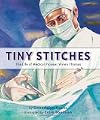
Vivien Thomas dreamed of becoming a doctor from a young age, but most schools in Tennessee were segregated and moreover cost a great deal of money. But he wanted to be as close to the practice of medicine as he could. At a job interview for a research assistant at the Vanderbilt Medical School, he convinced Dr. Alfred Blalock to hire him. Thomas was so good that before long, he was doing his own experiments. He also learned surgical techniques, and “Dr. Blalock was impressed by Vivien’s show more tiny stitches.”
One day, however, Thomas learned that while white men with his duties were called “research technicians” and earned more money, his official job title was “janitor” and he earned less. He told Dr. Blalock he would quit unless he made the amount commensurate with his actual the job description and a few days later, he noticed his paycheck had increased.
When Dr. Blalock was asked to become Chief of Surgery at Johns Hopkins in Baltimore in 1941, he accepted on the condition that Vivien Thomas would be hired also. Thomas and his family had a hard time finding housing in segregated Baltimore, and Johns Hopkins was even more segregated than Vanderbilt had been. But, as the author reports, “Viven refused to let the prejudice of others interfere with his work.”
When a pediatric cardiologist, Dr. Helen Taussig, asked Dr. Blalock to help with the problem of babies born with heart defects, known then as “blue babies,” Blalock assigned Thomas to do the research. Thomas not only came up with the cause but also a solution. He tried out his surgery on research animals, with Dr. Blalock assisting only once. On November 29, 1944, Dr. Taussig asked for help with a baby that would die without immediate surgery. Dr. Blalock had to do the actual surgery but he needed Vivien Thomas to stand on a stool behind him and guide him through the operation.
The baby survived. After two more successful operations, Drs. Blalock and Taussig wrote a paper describing the procedure which they named “the Blalock-Taussig shunt.” They received coverage in Time and Life, but of course Vivien Thomas’s name did not appear anywhere.
Meanwhile, Johns Hopkins got inundated with requests for the surgery, and Thomas remained behind Dr. Blalock on a stool, coaching him through more than one hundred fifty operations.
In 1947, Drs. Blalock and Taussig were nominated for the Nobel prize in Medicine for the procedure.
Vivien Thomas was not publicly acknowledged for his research and surgical innovations until 1971 when a group of doctors he had trained opted to grant him recognition. In 1976, Johns Hopkins awarded him an honorary doctorate degree and appointed him to the faculty as Instructor of Surgery.
The author concludes: “Today about forty thousand children are born each year with heart problems. Because of Vivien Thomas, these children now have a chance to live full and healthy lives.”
At the end of the book, there is more information about the “blue baby” heart defect (technically “tetralogy of Fallot”) and about Vivien Thomas. In this section, the author mentions some of the people helped and inspired by Thomas, including an elevator operator at Johns Hopkins who, because of Vivien Thomas, became a surgical technician and later the first African American physician’s assistant in the cardiac department at Johns Hopkins Hospital. There is also a small glossary of medical terms, and a list of sources.
Full-page watercolors by Colin Bootman with a muted palette display his usual talent; he excels at showing nuanced emotion.
Evaluation: Without any education past high school, Thomas overcame racism and poverty to become a cardiac surgery pioneer. But the historical and scientific world took a long time to acknowledge his contributions. This book will help show readers a side of racism with which they may not be aware, and perhaps lead them to question how many others have been overlooked because of the color of their skin, or gender, or sexual orientation. show less
One day, however, Thomas learned that while white men with his duties were called “research technicians” and earned more money, his official job title was “janitor” and he earned less. He told Dr. Blalock he would quit unless he made the amount commensurate with his actual the job description and a few days later, he noticed his paycheck had increased.
When Dr. Blalock was asked to become Chief of Surgery at Johns Hopkins in Baltimore in 1941, he accepted on the condition that Vivien Thomas would be hired also. Thomas and his family had a hard time finding housing in segregated Baltimore, and Johns Hopkins was even more segregated than Vanderbilt had been. But, as the author reports, “Viven refused to let the prejudice of others interfere with his work.”
When a pediatric cardiologist, Dr. Helen Taussig, asked Dr. Blalock to help with the problem of babies born with heart defects, known then as “blue babies,” Blalock assigned Thomas to do the research. Thomas not only came up with the cause but also a solution. He tried out his surgery on research animals, with Dr. Blalock assisting only once. On November 29, 1944, Dr. Taussig asked for help with a baby that would die without immediate surgery. Dr. Blalock had to do the actual surgery but he needed Vivien Thomas to stand on a stool behind him and guide him through the operation.
The baby survived. After two more successful operations, Drs. Blalock and Taussig wrote a paper describing the procedure which they named “the Blalock-Taussig shunt.” They received coverage in Time and Life, but of course Vivien Thomas’s name did not appear anywhere.
Meanwhile, Johns Hopkins got inundated with requests for the surgery, and Thomas remained behind Dr. Blalock on a stool, coaching him through more than one hundred fifty operations.
In 1947, Drs. Blalock and Taussig were nominated for the Nobel prize in Medicine for the procedure.
Vivien Thomas was not publicly acknowledged for his research and surgical innovations until 1971 when a group of doctors he had trained opted to grant him recognition. In 1976, Johns Hopkins awarded him an honorary doctorate degree and appointed him to the faculty as Instructor of Surgery.
The author concludes: “Today about forty thousand children are born each year with heart problems. Because of Vivien Thomas, these children now have a chance to live full and healthy lives.”
At the end of the book, there is more information about the “blue baby” heart defect (technically “tetralogy of Fallot”) and about Vivien Thomas. In this section, the author mentions some of the people helped and inspired by Thomas, including an elevator operator at Johns Hopkins who, because of Vivien Thomas, became a surgical technician and later the first African American physician’s assistant in the cardiac department at Johns Hopkins Hospital. There is also a small glossary of medical terms, and a list of sources.
Full-page watercolors by Colin Bootman with a muted palette display his usual talent; he excels at showing nuanced emotion.
Evaluation: Without any education past high school, Thomas overcame racism and poverty to become a cardiac surgery pioneer. But the historical and scientific world took a long time to acknowledge his contributions. This book will help show readers a side of racism with which they may not be aware, and perhaps lead them to question how many others have been overlooked because of the color of their skin, or gender, or sexual orientation. show less
In telling the astounding story of a medical pioneer, the author hooks young listeners at the same time letting readers know how important this man is: “Needles didn’t scare Vivien Thomas. In fact, he designed the ones lying on the operating table…In a few hours, they would help save the life of a little girl.” Vivien Thomas had always known he wanted to be a doctor but when banks failed in the crash of 1929, he lost the money he’d saved. No longer able to afford college, he took a show more job with Dr. Blalock at Vanderbilt Medical School. Although distinguishing himself as a research assistant, he learned that his job description was janitor and his pay much less than his white counterparts. Blalock not only raised his pay then but also asked that Thomas come with him when he was hired at Johns Hopkins as Chief of Surgery. Racial barriers were even greater in Baltimore, but Thomas proved his mettle with research on “blue babies,” and virtually guided Blalock every step of the way in groundbreaking surgical techniques. It would be 26 years, however, before Thomas was publicly acknowledged for his role in the operation. With beautiful detailed watercolors, Bootman captures the intensity of the emotions from the mutual admiration between Blalock and Thomas to the cynicism of colleagues who doubted Thomas’s skills and knowledge and the pain of racist exclusion. show less
These two titles are from Lee & Low's Dive into Reading series. Both are labeled as "emergent", "Predictable story episodes, simple dialogue, high frequency words and familiar vocabulary." I usually consider "emergent" to be much lower level - these come in around the 400s in lexiles or a E level. They are easier stories in the Confetti Kids series.
In The perfect Gift, Mei, an Asian-American girl, tries to figure out the perfect gift for her baby brother Ming when he turns 100 days old. The show more story includes notes about Chinese culture, making red eggs and a 100-day celebration, as well as Mei's sweet gift, a book of drawings, for her beloved baby brother.
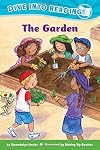
In The Garden, Lily and her mom miss their garden at home so they join a community garden, along with Lily's friends. Their neighbor Mr. Sam, an experienced gardener, walks them through the work of planting, weeding, and watering until they have a great harvest.
The illustrator's work is soft and colorful, showing a diverse group of children; Henry, Lily, Mei, Pablo, and Padma, in an idyllic urban setting.
Verdict: It's nice to see easy readers with some diversity and the simple stories are reader-friendly. On the other hand, they're not particularly memorable; the trend for easy readers right now is humor and cartoon-style art and layouts and these are a more traditional layout. There's no real conflict or story to grab hold of, just some everyday events. This is what I'd purchase as filler for my easy readers - the kids won't ask for them specifically, but when they need a nice, big stack of books to work their way through these are a good choice to pop onto the stack.
The Garden
ISBN: 9781620145654
The Perfect Gift
ISBN: 9781620145678
Published May 2018 by Lee & Low; Borrowed from another library in my consortium show less
In The perfect Gift, Mei, an Asian-American girl, tries to figure out the perfect gift for her baby brother Ming when he turns 100 days old. The show more story includes notes about Chinese culture, making red eggs and a 100-day celebration, as well as Mei's sweet gift, a book of drawings, for her beloved baby brother.
In The Garden, Lily and her mom miss their garden at home so they join a community garden, along with Lily's friends. Their neighbor Mr. Sam, an experienced gardener, walks them through the work of planting, weeding, and watering until they have a great harvest.
The illustrator's work is soft and colorful, showing a diverse group of children; Henry, Lily, Mei, Pablo, and Padma, in an idyllic urban setting.
Verdict: It's nice to see easy readers with some diversity and the simple stories are reader-friendly. On the other hand, they're not particularly memorable; the trend for easy readers right now is humor and cartoon-style art and layouts and these are a more traditional layout. There's no real conflict or story to grab hold of, just some everyday events. This is what I'd purchase as filler for my easy readers - the kids won't ask for them specifically, but when they need a nice, big stack of books to work their way through these are a good choice to pop onto the stack.
The Garden
ISBN: 9781620145654
The Perfect Gift
ISBN: 9781620145678
Published May 2018 by Lee & Low; Borrowed from another library in my consortium show less
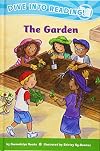
Lily visits the community garden and stumbles upon a neighbor looking for help with his fruits and vegetables. Lily and her friends agree to help grow the garden.
This is a nice book, which showcases a lot of diversity. I hadn't realized when I read The Perfect Gift that this series rotates which one of the children is the protagonist of any given book, with different authors writing the various titles. What a great way to give prominence to characters (and authors) of different ethnic and show more racial backgrounds.
There were parts of this book that seemed a little too repetitive to me (e.g., each of the children saying "I like to plant [insert fruit/vegetable name here]" in succession), but that is probably useful for beginning readers, and kids tend to like repetition in general.
I did enjoy the parts about gardening, as they were accurate but not overly scientific.
Once again, I was not the hugest fan of the illustrations, for their style seems too much like what I saw in books from the 1990s and not in current children's literature. show less
This is a nice book, which showcases a lot of diversity. I hadn't realized when I read The Perfect Gift that this series rotates which one of the children is the protagonist of any given book, with different authors writing the various titles. What a great way to give prominence to characters (and authors) of different ethnic and show more racial backgrounds.
There were parts of this book that seemed a little too repetitive to me (e.g., each of the children saying "I like to plant [insert fruit/vegetable name here]" in succession), but that is probably useful for beginning readers, and kids tend to like repetition in general.
I did enjoy the parts about gardening, as they were accurate but not overly scientific.
Once again, I was not the hugest fan of the illustrations, for their style seems too much like what I saw in books from the 1990s and not in current children's literature. show less
Lists
Awards


You May Also Like


Associated Authors
Statistics
- Works
- 34
- Also by
- 1
- Members
- 1,538
- Popularity
- #16,740
- Rating
- 4.2
- Reviews
- 79
- ISBNs
- 136
- Languages
- 1
- Favorited
- 1