
Angela Shelf Medearis
Author of The 100th Day of School
About the Author
Angela Shelf Medearis is the author of many books about African-American history, including Little Louis and the Jazz Band. Anna Rich also illustrated Joshua's Masai Mask.
Image credit: Photographed at BookPeople in Austin, Texas by Paul F. Burns, V
Works by Angela Shelf Medearis
Houghton Mifflin Reading: The Nation's Choice: Theme Paperbacks, On-Level Grade 2.2 Theme 4 - Annie's Gifts (1994) 118 copies, 1 review
The Ethnic Vegetarian: Traditional and Modern Recipes from Africa, America, and the Caribbean (2004) 61 copies
Entertaining Ideas from the African-American Kitchen: Recipes and Traditions for Holidays Throughout the Year (1997) 17 copies
The Kwanzaa Celebration: Festive Recipes and Homemade Gifts from an African-American Kitchen (1995) 16 copies
Little Louis and the Jazz Band: The Story of Louis "Satchmo" Armstrong (Rainbow Biography) (1994) 15 copies, 1 review
The Kitchen Diva's Diabetic Cookbook: 150 Healthy, Delicious Recipes for Diabetics and Those Who Dine with Them (2012) 10 copies
Ideas for Entertaining from the African-American Kitchen: Recipes and Traditions for Holidays Throughout the Year (1998) 7 copies
Here Comes the Snow 4 copies
Papá Salvó la fiesta 2 copies
On the Tex-Mex Border 1 copy
Ku lus paga! 1 copy
The Biggest Snowball Fight 1 copy
Sounds All Around 1 copy
Go! 1 copy
Native Americans 1 copy
Comeos en la Tina 1 copy
Singing for Dr. King 1 copy
Associated Works
Tagged
Common Knowledge
- Gender
- female
Members
Reviews

Based upon the short story A Riddle for Freedom - told to author William J. Faulkner by a farmhand who worked for his mother, and contained in the collection The Days When the Animals Talked: Black American Folktales and How They Came to Be - this picture-book follows the story of Jim, an enslaved man who uses the Christmas traditions on Master Brown's plantation to win his freedom. Knowing that his owner cannot resist a riddle, Jim proposes that, if he can ask a riddle his master cannot show more answer, he be liberated.
I enjoyed this story of a slave who uses his wits to win his freedom, particularly since - according to Medearis' brief foreword - it is based upon an actual incident in 1850s Virginia. The harsh realities of slavery are presented realistically - Jim's separation, as a young boy, from his family, the poverty of the slave quarters - but not in such a way that they will overwhelm the young readers who are the target audience. I did find Jim's riddle a little "un-riddlish," but that's a small quibble. All in all, an excellent picture-book presentation of the days of slavery, and the human desire for freedom - I thank my friend Wilhelmina for pointing it out to me! show less
I enjoyed this story of a slave who uses his wits to win his freedom, particularly since - according to Medearis' brief foreword - it is based upon an actual incident in 1850s Virginia. The harsh realities of slavery are presented realistically - Jim's separation, as a young boy, from his family, the poverty of the slave quarters - but not in such a way that they will overwhelm the young readers who are the target audience. I did find Jim's riddle a little "un-riddlish," but that's a small quibble. All in all, an excellent picture-book presentation of the days of slavery, and the human desire for freedom - I thank my friend Wilhelmina for pointing it out to me! show less
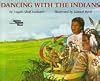
A beautiful picture book and a moving, interesting story based on the author's family history. Unfortunately the story is told in awkwardly rhymed doggerel verse with a limping metre ("Mama's packed the supper, the sheep are in their pens, it's time to go and visit the Seminole Indians") which, to my taste, seriously detracts from the impact of what could be a truly outstanding book.
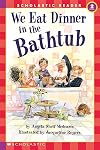
This book is good for two reasons. The first reason is the illustrations. The illustrator uses, vivid, colorful detail, to help the words express how silly the family is when they eat in the bathtub, and do other silly things. The second reason is the development of the story. Every silly description, has a reason, and in the end when every room has been explained, the boy who eats in the bathtub calls his friend silly for not doing the same as his family. The overall theme of this book is show more to treat everyone, no matter how unusual their family traditions are, with respect. show less
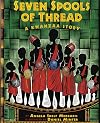
Any family with seven sons must hear plenty of bickering, but the seven Ashanti brothers in this family quarrel from dawn to dusk and into the night. Their father leaves them a legacy in more than material terms, with the requirement that they must spin seven spools of thread (each in a different shade) into gold in only one day—with no arguing. Medearis has crafted an original story with the timeless tone of a traditional folktale, subtly incorporating the seven principles of Kwanzaa into show more her plot. The brothers learn to cooperate in both words and deeds, weaving their seven colors of silken thread into multicolored cloth so beautiful it is purchased for the king (with a bag of gold, of course). Demonstrating the Kwanzaa principle of cooperative economics, the brothers teach their whole village to weave the patterned fabric known as kente cloth. Minter’s striking linoleum block-print illustrations complement the story perfectly, with the seven decidedly different brothers shown in silhouette against jewel-bright backgrounds full of intriguing details of African village life. The history and seven principles of Kwanzaa are clearly explained in the introduction; directions for making a simple loom from straws and weaving a cloth belt are included in an appendix. This added information as well as the satisfying story will make this beautifully designed book a valuable selection for elementary-school teachers and librarians. A fine choice for a Kwanzaa gift, and a first choice for most school and public-library collections. (Picture book. 6-10)
-Kirkus Review show less
-Kirkus Review show less
Lists
Awards


You May Also Like


Associated Authors
Statistics
- Works
- 98
- Also by
- 1
- Members
- 13,942
- Popularity
- #1,652
- Rating
- 3.8
- Reviews
- 112
- ISBNs
- 280
- Languages
- 3
- Favorited
- 3